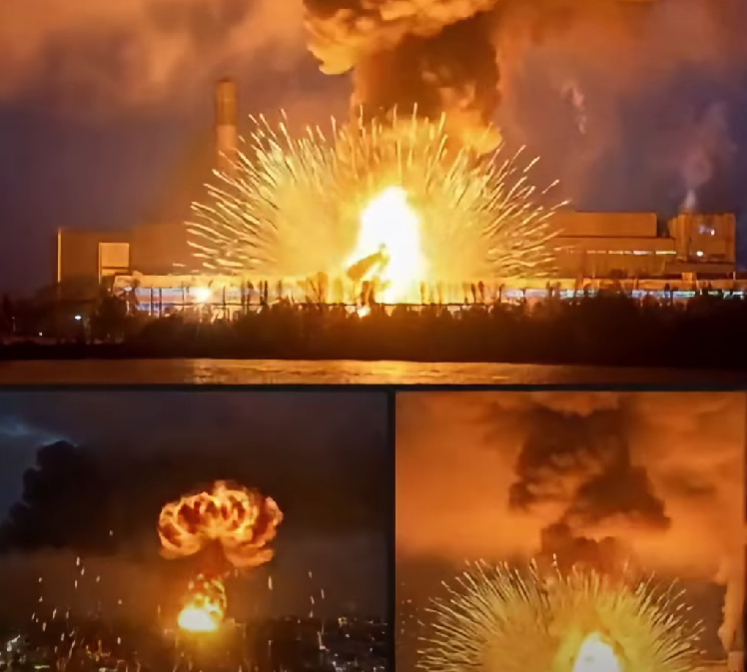
A dramatic warning describing a “maximum worldwide alert” and declaring that “the war begins” has been circulating rapidly across social media, creating concern among people who are trying to understand whether the world has entered a new and dangerous phase of international conflict. The headline is deliberately alarming, suggesting that a major global confrontation has already begun and that governments around the world are responding to an immediate emergency. However, the actual article behind the headline presents a considerably more cautious picture. Rather than confirming that a new worldwide war has officially started, the article describes a rise in international tensions, increased military activity and growing concerns among governments and security agencies. It specifically states that a full-scale war had not officially begun and characterizes the alert as a precautionary response to a series of escalating conflicts and diplomatic breakdowns.
That distinction is extremely important at a time when international tensions can generate enormous amounts of information, speculation and fear within minutes. A headline containing words such as “breaking news,” “maximum worldwide alert” and “the war begins” naturally encourages people to believe that an extraordinary event has already taken place. Yet the body of the linked article tells readers that the situation is more uncertain. According to the article, officials are monitoring developments closely, while diplomatic channels remain open and efforts are still being made to prevent further escalation.
The article was published on June 14, 2026, and describes a period of heightened geopolitical tension involving multiple regions. It points to stalled negotiations, strained diplomatic relationships and reports of increased military activity near sensitive border areas. These developments have created concern among governments and international observers, but military movements by themselves do not automatically mean that a global war has begun.
That is one of the most important facts to understand when looking at dramatic international headlines. Governments routinely monitor military movements, conduct exercises, increase intelligence gathering and adjust security preparations when tensions rise. Such actions can be signs that officials are concerned about the possibility of escalation, but they are not necessarily proof that a full-scale conflict is underway.
The phrase “maximum worldwide alert” also deserves careful attention. It sounds like a formal international emergency classification, but the linked article does not identify a specific worldwide alert system or a single international organization that issued such an alert. Instead, it describes a general increase in vigilance among governments and security agencies.
That difference between a dramatic headline and the details underneath it is increasingly important in the age of social media. Posts can be shared thousands of times before readers have an opportunity to examine the original source. A short video or Facebook post may contain only a few seconds of information, while the accompanying headline may suggest that events are much more definitive than the evidence actually shows.
The current international environment is undeniably serious. Wars and military confrontations have demonstrated how quickly regional conflicts can create consequences far beyond the countries directly involved. Energy markets can react to instability, shipping routes can be disrupted, financial markets can become more volatile and governments can be forced to reconsider security policies.
The possibility of escalation is therefore something that governments take seriously even when a full-scale international war has not begun.
One reason tensions can become so dangerous is that modern countries are deeply interconnected. A conflict in one region can affect countries thousands of miles away through energy supplies, trade routes, technology networks, food prices and financial markets. The linked article makes this same point, noting that events in one region can quickly influence economies, supply chains, energy markets and political stability elsewhere.
Energy is particularly important. Modern economies depend heavily on predictable supplies of oil, natural gas and electricity. When military tensions develop near major energy-producing regions or shipping routes, markets often react before any physical shortage occurs. Traders may begin anticipating disruptions, companies may increase costs to account for risk and consumers may eventually feel the effects through higher transportation and household expenses.
Shipping is another major concern. International commerce depends on a relatively small number of important maritime routes. When one of these routes becomes threatened, ships may be forced to take longer and more expensive journeys. Insurance costs can increase, deliveries can be delayed and businesses can experience shortages of critical materials.
These consequences explain why governments around the world pay close attention to seemingly distant conflicts. International security is no longer something that affects only countries sharing a border with an active war zone. Economic and technological connections mean that instability can travel across continents.
The linked article emphasizes that international organizations have been encouraging countries to return to dialogue and use diplomatic channels to prevent further deterioration. It says officials continue to stress that opportunities remain for negotiations and de-escalation.
Diplomacy may not always produce immediate results, but it remains one of the most important tools available to governments attempting to prevent military escalation. Even countries that strongly disagree with one another generally maintain some form of communication because the alternative can be dangerous.
When military forces are operating close to one another, communication can also help prevent misunderstandings. A military exercise can be interpreted as preparation for an attack if the other side does not understand its purpose. A defensive deployment can be viewed as offensive preparation. Without diplomatic channels, governments have fewer opportunities to clarify intentions and reduce the possibility of accidental escalation.
History provides many examples of moments when international tensions appeared to be moving toward a much larger conflict but were ultimately contained through negotiations, political pressure or changes in strategy. That does not mean current concerns should be ignored. It means that a dangerous moment is not necessarily an irreversible one.
The linked article makes this point by describing the situation as a pivotal moment rather than confirmation that a major conflict is inevitable. Some analysts believe the tensions could lead to renewed diplomacy, while others fear that continued failures could push relationships closer to confrontation.
For ordinary people watching these developments, uncertainty can be especially difficult. Social media feeds may contain videos of military equipment, maps showing troop movements, dramatic predictions and claims that governments are preparing for an immediate global conflict. Some of these materials may be genuine, while others may be old, misleading or presented without context.
The article itself warns about the spread of misinformation during periods of international uncertainty. It notes that rumors and unverified claims can spread rapidly and create unnecessary panic.
This is one of the most important issues surrounding breaking international news today. Technology has made it possible for people to receive information almost instantly, but speed does not guarantee accuracy. A post published five minutes ago is not necessarily more reliable than a report published several hours earlier. In fact, the opposite can sometimes be true because established news organizations may need time to verify information before publishing it.
The temptation to share an alarming headline immediately is understandable. People want to warn family members and friends when they believe something dangerous is happening. But during international crises, sharing an unverified claim can contribute to fear and confusion.
A responsible approach is to look for confirmation from multiple credible sources. Official government statements, international organizations, established news agencies and direct statements from relevant officials can provide a much stronger foundation than anonymous social-media accounts.
The same principle applies to images and videos. A video showing tanks or military aircraft does not automatically prove that a new war has started. The footage could have been recorded weeks, months or even years earlier. Without a verified location and date, visual material can easily be misunderstood.
This is particularly important when international conflicts are involved because old footage can be recycled whenever a new crisis emerges. A dramatic image may look convincing while having nothing to do with the current situation.
The global economy is also watching developments closely. Investors generally dislike uncertainty, and geopolitical instability can cause sudden changes in markets. Oil prices, stock markets, currencies and shipping costs can all respond to fears about conflict.
For consumers, the effects may not be immediately visible. A geopolitical crisis can take time to influence prices, especially if supply chains remain operational. But prolonged instability can eventually affect transportation, manufacturing, food production and household expenses.
Businesses also prepare for potential disruptions when tensions rise. Companies may examine alternative suppliers, increase inventories or change shipping routes. Governments may review emergency reserves and contingency plans.
The existence of contingency planning should not be interpreted as proof that authorities expect a global war. Governments and businesses routinely prepare for worst-case scenarios precisely because preparation is intended to reduce the consequences if something goes wrong.
Humanitarian organizations follow a similar approach. The linked article says aid groups have been reviewing contingency plans in case communities are affected by rising instability. It emphasizes that these preparations are precautionary and should not be interpreted as evidence of an active worldwide humanitarian emergency.
That distinction is important because humanitarian organizations must prepare before crises become severe. Waiting until a conflict has already produced large numbers of displaced people would make it much more difficult to provide food, water, shelter and medical assistance.
Preparation is therefore a sign of caution rather than necessarily a prediction.
The same can be said about governments increasing security monitoring. Intelligence agencies are expected to identify possible threats before they become emergencies. If officials see military activity increasing in a sensitive region, they may raise their level of observation. That does not automatically mean they believe war is inevitable.
The international community is therefore facing a complicated situation in which several possibilities remain open. Tensions could decline through negotiations. They could remain at an elevated but manageable level. Or they could worsen if governments make decisions that trigger further confrontation.
The coming days and weeks can be especially important during such periods because political statements and military decisions can influence how other governments respond.
A leader who makes a threatening statement may cause another country to increase military readiness. That response could then be interpreted as aggression, leading to another reaction. This type of cycle can create a dangerous escalation even if neither side originally wanted a full-scale war.
Diplomacy is intended to break that cycle.
International leaders can use direct negotiations, intermediaries and international organizations to communicate with one another. Even when formal peace agreements are impossible, discussions can establish limits, clarify intentions and create opportunities for compromise.
The linked article stresses that diplomatic channels remain open. That means the situation described in the article should not be interpreted as an irreversible march toward worldwide war.
At the same time, the concerns should not simply be dismissed. The article describes weeks of strained negotiations, increased military activity and diplomatic breakdowns. Those developments can represent genuine risks, particularly when several disputes are occurring simultaneously.
The possibility of multiple regional conflicts interacting with one another is one of the reasons international observers remain cautious. A conflict can create alliances, economic pressures and security commitments that involve countries that were initially outside the dispute.
This is how a regional crisis can become an international crisis.
Modern military alliances also mean that governments cannot always treat conflicts as isolated events. Security commitments can influence decisions about military deployments, intelligence cooperation and defense planning. At the same time, countries may attempt to avoid direct confrontation even while supporting allies through diplomatic, economic or humanitarian measures.
The balance between supporting partners and avoiding escalation is one of the most difficult challenges facing governments during international crises.
For the public, the most useful response is awareness without panic. People should stay informed, but they should also distinguish between verified information and speculation. The linked article’s own message is that the global alert is intended to increase awareness rather than create fear.
That is a valuable distinction.
Being informed means understanding what governments have actually announced, what military activity has been confirmed and what diplomatic efforts are underway. Panic, by contrast, can cause people to interpret every rumor as evidence of an imminent catastrophe.
There is currently no reason to assume that every alarming post circulating online represents an official warning. People should be particularly cautious with messages that provide no location, no government source, no named official and no verifiable evidence.
The phrase “the war begins” is especially powerful because it leaves the impression that a specific event has already crossed a clear threshold. But the article linked to that phrase actually says that a full-scale war had not officially begun.
Therefore, the headline should be understood as a dramatic description of heightened tensions rather than as confirmation of a new worldwide war.
The broader international situation remains something worth watching. Governments are monitoring military activity, diplomatic negotiations continue to face difficulties and international organizations are encouraging restraint. These developments can change quickly, and decisions made by political leaders may influence whether tensions decrease or intensify.
The world has experienced many moments when the possibility of a much larger conflict appeared frighteningly close. In those situations, communication and diplomacy have often played a decisive role in preventing further escalation.
The present moment should therefore be viewed with seriousness but also with perspective.
People should not ignore credible warnings, but neither should they assume that every sensational headline represents a confirmed emergency.
The most responsible approach is to follow developments through reliable sources, verify major claims before sharing them and remember that international affairs rarely fit neatly into a single dramatic sentence.
The headline claiming “Maximum worldwide alert. The war begins” is certainly designed to capture attention. But the actual article presents a more complicated reality. It describes escalating tensions, increased military activity, diplomatic difficulties and international concern while explicitly stating that a full-scale war had not officially begun.
That difference between headline and evidence is the central point readers should keep in mind.
The world may be experiencing a period of serious geopolitical uncertainty, but uncertainty is not the same as confirmed global war. Governments can raise their level of preparedness without declaring war. Military forces can move without launching an invasion. Diplomats can struggle without negotiations being completely over.
What happens next will depend on decisions made by governments, military commanders and diplomats in the days ahead.
For now, the international community continues to watch closely, while officials and organizations urge restraint. The possibility of escalation remains a concern, but opportunities for diplomacy remain as well.
The strongest message for the public is therefore simple: stay informed, verify what you see and do not allow an alarming headline to replace the facts.
In a world where information can cross the globe in seconds, understanding the difference between a warning and a confirmed event has never been more important. The current tensions deserve attention, but they also deserve careful reporting and responsible discussion.
Whether the current period ultimately becomes remembered as the beginning of a larger geopolitical crisis or as another moment when diplomacy prevented escalation remains uncertain. What happens next will depend on whether leaders choose confrontation or dialogue.
For millions of people watching events unfold, that uncertainty can be frightening. But uncertainty also means the outcome has not yet been determined.
The future remains open, and the decisions made now may determine whether the world moves closer to confrontation or back toward stability.
Another factor making the current situation especially difficult to understand is the speed at which international developments are now communicated to the public. In previous generations, major geopolitical developments could take hours or even days to reach ordinary households. Today, a military statement, diplomatic announcement or unexpected incident can become a global social-media trend almost immediately. This creates an unprecedented level of access to information, but it also creates an environment in which incomplete information can spread before the facts are established.
When people see the phrase “maximum worldwide alert,” it is natural to wonder whether governments have issued an extraordinary emergency warning. In reality, different countries use different security systems, terminology and alert levels. There is no single universal global switch that automatically places the entire planet on one standardized military alert. Governments make their own assessments based on intelligence, military activity, diplomatic developments and potential threats.
That means readers should pay attention to exactly who issued a warning and what the warning actually says. If a government raises its national security posture, that does not automatically mean every country has entered the same state of emergency. Similarly, if military forces increase readiness in one region, it does not necessarily mean that a worldwide conflict has begun.
The distinction may sound technical, but it can make a major difference in how the public understands a developing crisis.
International crises are often made up of dozens of separate developments happening at the same time. One government may announce a military exercise while another conducts an emergency diplomatic meeting. A third country may issue a travel warning, while an international organization calls for restraint. News reports can combine these separate events into a single narrative, making the overall situation appear more coordinated or immediate than it actually is.
This is one reason responsible reporting requires context.
A military exercise, for example, can have many explanations. It may be part of a previously scheduled training program, a demonstration of military capability or a response to changing security conditions. It could also be intended to send a political message without an intention to begin combat.
Likewise, moving troops closer to a border can be defensive, offensive or simply precautionary. Without information about the government’s objectives, the movement alone does not tell the public what will happen next.
This uncertainty is exactly why intelligence agencies and diplomatic services monitor developments so closely. Their purpose is not simply to determine what has already happened. They also attempt to understand what governments may do next.
That work becomes particularly challenging when several countries are making decisions at the same time.
One government’s defensive action can be interpreted by another government as an aggressive move. The second government may respond by increasing its own military readiness. The first government may then see that response as confirmation that its original concerns were justified.
This can create what analysts often describe as an escalation cycle.
Breaking such a cycle requires communication and confidence-building measures. Leaders may need to clarify their intentions, establish communication channels between military forces or agree to temporary restrictions on certain activities.
Even during periods of intense disagreement, these measures can reduce the possibility that a misunderstanding becomes a much larger crisis.
Another issue is the role of nuclear weapons. Whenever tensions rise between countries that possess significant military capabilities, international observers become particularly concerned about escalation. Nuclear deterrence has historically been based partly on the idea that the consequences of direct conflict between nuclear powers would be catastrophic for everyone involved.
That reality creates a powerful incentive for governments to avoid uncontrolled escalation.
However, it also means that statements made during tense periods can receive enormous attention. A threatening comment from a political leader, a change in military posture or an unusual deployment can be interpreted as a signal about future intentions.
This is why international diplomacy remains so important.
Diplomats often work behind the scenes even when public statements from governments appear hostile. Private discussions can continue even when leaders publicly criticize one another. Those conversations can provide an opportunity for governments to communicate without making immediate concessions in front of their domestic audiences.