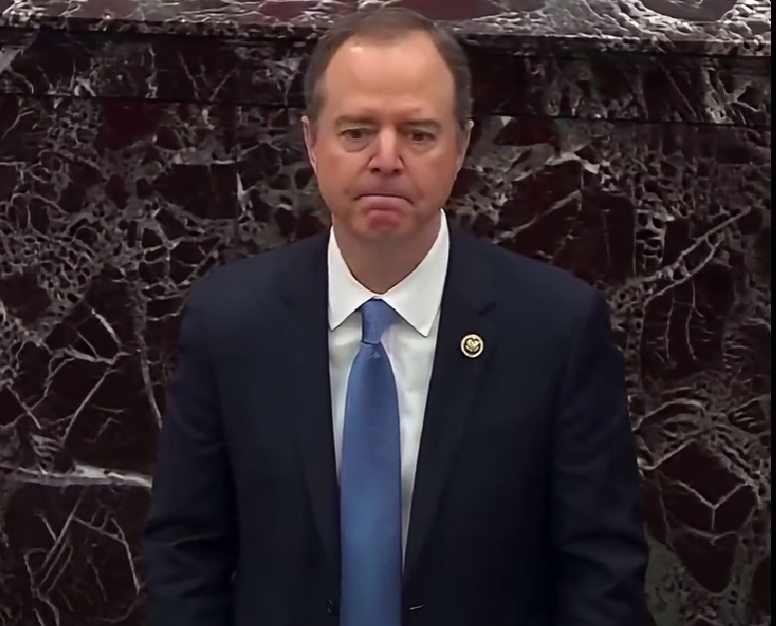
A political headline claiming that California Senator Adam Schiff had been “confirmed” in a dramatic new development began circulating online, attracting attention from readers who were eager to understand what had happened and what the reported confirmation could mean for California and Washington. The headline suggested that something major had occurred only moments earlier and that Schiff had suddenly entered a new phase of his political career. However, when the claim is examined more carefully, the situation is considerably different from the impression created by the headline.
The article circulating on Smart Bear Media is dated May 30, 2026, and describes an alleged confirmation of Adam Schiff as a major political turning point. Its language focuses heavily on reactions from supporters and opponents, describing a wave of celebration, criticism, political strategy and speculation about what might happen next. Yet the article does not clearly identify a specific new federal office to which Schiff was supposedly confirmed, nor does it provide the kind of concrete information normally expected from a report about an important Senate confirmation, such as the position involved, the vote total, the nomination process, or an official statement from the Senate.
That distinction matters because Adam Schiff is not a political newcomer waiting to be confirmed for his first major federal position. He is already a United States senator representing California. Schiff entered the Senate after the 2024 election and was sworn into office in December 2024. CBS Los Angeles reported at the time that Schiff would officially begin his Senate term after defeating former Los Angeles Dodgers player Steve Garvey in the election for California’s Senate seat.
The confusion surrounding the headline may therefore come from the word “confirmed.” Schiff’s transition from the House of Representatives to the Senate involved an oath of office and the formal beginning of his service, but that is fundamentally different from a sitting senator being newly confirmed for another federal position. Public records and current reporting continue to identify Schiff as California’s junior U.S. senator, serving alongside Senator Alex Padilla.
The distinction is particularly important in an era when political headlines can spread across social media much faster than the underlying facts can be checked. A phrase such as “30 minutes ago” creates a strong sense of urgency. It encourages readers to click immediately, share the information and react before asking a basic question: What exactly happened?
In Schiff’s case, that question is essential.
Adam Schiff has been one of the most recognizable figures in American politics for years. Before entering the Senate, he spent more than two decades in the U.S. House of Representatives. He became nationally prominent through his work on intelligence and national security matters and later served as chairman of the House Intelligence Committee. His role in major congressional investigations, particularly those involving Donald Trump, placed him at the center of some of the most contentious political debates in Washington.
His political career has therefore been associated with both strong support and intense opposition. Supporters see Schiff as a determined advocate for congressional oversight, institutional accountability and the rule of law. Critics have accused him of contributing to political polarization and have questioned his approach during some of the most divisive investigations of the past decade.
That history helps explain why a headline involving Schiff can generate such an immediate reaction. Even when the underlying claim is unclear, the name itself carries considerable political weight.
Schiff first became nationally prominent while serving in the House and eventually became one of the leading Democratic voices on intelligence issues. His position as chairman of the House Intelligence Committee placed him in a particularly powerful role during investigations involving national security and presidential conduct.
He also became one of the most visible Democratic figures during the first impeachment proceedings against President Donald Trump. Schiff served as a lead House impeachment manager, putting him directly in the national spotlight. His televised appearances and public statements made him a familiar figure to millions of Americans, while also making him a frequent target of Republican criticism.
The political disagreements surrounding Schiff did not disappear when he moved to the Senate. If anything, his transition to the upper chamber gave him another platform from which to participate in national debates.
His election to the Senate followed the death of longtime California Senator Dianne Feinstein. After Feinstein’s death in September 2023, Governor Gavin Newsom appointed Laphonza Butler to temporarily fill the Senate vacancy. Schiff then competed in the 2024 election for the seat and ultimately defeated Republican candidate Steve Garvey. CBS reported that Schiff’s Senate term marked a transition after more than two decades representing the Los Angeles area in the House.
The 2024 election was significant because Schiff was not simply moving from one congressional district to another. He was moving from the House, where he had spent years building a national profile, into a Senate environment where individual senators can exercise considerable influence over legislation, nominations, investigations and oversight.
That background makes the wording of the viral “confirmed” headline especially important. If a report claims that Schiff has been confirmed to a new position, readers should expect specific information. Was he nominated by the president? Was the nomination considered by a Senate committee? Was there a confirmation vote? How did senators vote? What position was involved? When did the vote occur?
Those details are absent from the linked article.
Instead, the article describes the alleged confirmation in broad political terms. It says that reactions spread quickly, that supporters viewed the event as a victory, that critics saw it as an escalation and that political organizations began recalculating their strategies. It repeatedly discusses what the confirmation might symbolize without establishing the underlying event in concrete terms.
That style can make a story feel significant while leaving readers uncertain about what actually happened.
There is nothing unusual about Schiff generating political controversy. His career has repeatedly placed him at the center of disagreements about the role of Congress, executive power, intelligence agencies, investigations and presidential accountability. His supporters have frequently praised his willingness to challenge powerful political figures, while opponents have argued that he has used congressional investigations as political weapons.
The intensity of those disagreements means that almost any major development involving Schiff could become a partisan talking point.
For Democrats, Schiff has often represented an aggressive form of congressional oversight. His supporters argue that lawmakers must be willing to investigate government officials when they believe the public interest requires it. They point to his experience on intelligence matters and his willingness to confront political opponents as evidence that he is prepared to take difficult positions.
Republicans and conservative critics have frequently interpreted the same behavior differently. They argue that Schiff has contributed to Washington’s increasingly confrontational political culture and that his involvement in high-profile investigations demonstrated a willingness to push partisan narratives.
These competing interpretations have followed Schiff into the Senate.
Current reporting shows that he remains actively involved in major national political issues. In August 2026, for example, Schiff participated in Senate discussions surrounding the confirmation of Todd Blanche as attorney general. UPI reported that Schiff opposed Blanche’s confirmation and criticized the nominee’s relationship with President Donald Trump. Blanche was ultimately confirmed by a 50-49 Senate vote in the early morning hours of August 8.
That development illustrates why a headline claiming Schiff himself had suddenly been confirmed to something new could be confusing. Schiff was participating in the Senate confirmation process as a senator; he was not the nominee being confirmed.
In fact, current Senate-related sources continue to identify Schiff as a California senator. A congressional record from November 2024 welcomed Schiff as a senator-elect and noted that he would take the place of Laphonza Butler.
His continued presence in the Senate also means that his political influence is likely to remain significant even without a new confirmation.
California itself adds another dimension to Schiff’s political importance. The state is home to one of the largest populations in the United States and has enormous economic, technological and cultural influence. Its senators regularly participate in debates involving federal spending, technology, environmental policy, immigration, national security, housing and the economy.
For a politician with Schiff’s background, national security and oversight remain particularly important areas. His experience on the House Intelligence Committee gave him years of exposure to classified information and complex questions involving foreign governments, intelligence agencies and national security institutions.
That experience can be valuable in the Senate, particularly when lawmakers debate the activities of federal agencies or consider nominees for important national security and law-enforcement positions.
At the same time, Schiff’s political identity means that nearly every major action involving him is likely to be interpreted through a partisan lens.
Supporters may see an aggressive Senate role as evidence of effective leadership. Opponents may see the same activity as further polarization.
This dynamic helps explain why online political stories often produce such strong reactions. A headline can become part of a larger political narrative even before readers know whether the underlying event is accurately described.
The Smart Bear Media article follows that pattern. Rather than providing a detailed account of a specific confirmation vote, it spends much of its text discussing how different groups might interpret the supposed event. The article describes supporters celebrating and opponents mobilizing, while also suggesting that political strategists and donors were immediately reassessing their plans.
Those are broad claims that would require substantial evidence if presented as factual reporting. Without names, quotations, vote totals, official documents or identifiable statements from political organizations, readers should treat such descriptions cautiously.
The phrase “confirmed” is also important because confirmation has a specific meaning in the United States government. Presidential nominees to many federal positions require Senate confirmation. The process typically involves nomination, committee consideration and a Senate vote. A report about such an event should normally identify the office, the nominee’s qualifications, the committee involved and the result of the vote.
Schiff does not currently appear to be undergoing such a process for a new federal appointment based on the reliable information available.
Instead, he is serving in the Senate, where his role includes voting on legislation, participating in committees and considering nominations submitted by the president.
That does not mean there are no important developments involving Schiff. Quite the opposite is true. His Senate role continues to place him in the middle of national political conflicts.
The confirmation of other officials, debates over the Justice Department, congressional oversight and disputes between the executive and legislative branches all provide opportunities for Schiff to influence the national conversation.
His recent comments about Todd Blanche demonstrate that role. Schiff criticized the Senate’s decision to confirm Blanche as attorney general, arguing that Blanche’s previous work as a criminal defense lawyer for Trump raised concerns about whether he would act independently as the nation’s top law-enforcement official.
Regardless of whether someone agrees with Schiff’s assessment, his participation illustrates the responsibilities he currently holds as a senator. He is part of the institution that evaluates and confirms presidential nominees; he is not himself a newly confirmed nominee.
This distinction should remain at the center of any discussion surrounding the viral headline.
The broader lesson is that political information requires context. A headline may be technically constructed to attract attention without giving readers enough information to understand what happened. Words such as “breaking,” “confirmed,” “just now” and “everything changed” can create a sense of urgency, but urgency is not the same thing as verification.
Readers should look for the original government announcement, official Senate records, established news organizations and direct statements from the politician involved. When a major senator is supposedly confirmed for a new position, the event should leave a substantial public record.
In Schiff’s case, established reporting provides a clear picture of his current status. He is a U.S. senator from California. He entered the Senate after winning the 2024 election and was sworn into office in December 2024.
That does not match the impression created by a headline suggesting that an entirely new confirmation has just occurred.
The political significance of Adam Schiff, however, remains real.
His move from the House to the Senate represents the continuation of a career that has placed him at the center of some of America’s most consequential political debates. His work on intelligence, impeachment and congressional oversight established a national profile that few members of Congress achieve.
Now, as a senator, he has a different platform but many of the same political battles remain.
The coming years are likely to continue testing his ability to balance aggressive oversight with the need for legislative cooperation. The Senate’s role in confirming federal officials, approving legislation and overseeing the executive branch means that Schiff will remain involved in disputes that attract national attention.
Whether voters see him as a defender of democratic institutions or as a symbol of Washington’s partisan divisions will depend heavily on their political perspective. His record guarantees that he will continue to receive intense scrutiny from both sides.
For California, the question is ultimately larger than one headline. Voters are interested in whether their senators can deliver results on issues affecting everyday life, including housing costs, jobs, infrastructure, public safety, environmental challenges and the economy. National political controversies may dominate television and social media, but senators are also judged by their ability to represent their state’s interests.
Schiff’s challenge will be to demonstrate that his national profile can translate into practical results for Californians.
At the same time, his position gives California another powerful voice in Washington. Alongside Senator Alex Padilla, Schiff represents one of the country’s most influential states at a time when federal policy is undergoing intense political debate.
For those following Schiff’s career, the most important developments may therefore not come from sensational headlines but from his actual votes, committee work, investigations and legislative priorities.
The viral story may generate clicks, comments and political arguments, but the underlying facts remain more straightforward.
Adam Schiff is already a United States senator from California. He was elected to the Senate in 2024 and sworn into office that December. He continues to serve in that position in 2026.
The claim that he was suddenly “confirmed” in a new role should therefore not be repeated as an established fact without additional evidence identifying exactly what was supposedly confirmed.
What is undeniable is that Schiff remains one of the most closely watched Democratic politicians in Washington. His history in the House, his leadership on intelligence matters and his involvement in major congressional investigations have made him a familiar figure to Americans across the political spectrum.
Supporters will continue to view his experience as an asset. Critics will continue to challenge his methods and political positions. And the media will continue to follow his every major move because few members of Congress generate the same level of political reaction.
The immediate lesson from the circulating story is simple: before sharing a dramatic political headline, identify the event behind the headline.
What was confirmed?
Who voted?
When did the vote occur?
What position was involved?
Where is the official record?
Those questions are especially important when the story involves a high-profile public official.
In this case, the available evidence does not substantiate the suggestion that Adam Schiff was newly confirmed to a different federal office in the manner implied by the viral headline. The linked article provides a dramatic narrative about reactions to an alleged confirmation, but it does not establish the specific office or provide supporting details for the claim.
Meanwhile, reliable sources continue to identify Schiff as a sitting U.S. senator from California. His political career remains active, his influence remains significant and his involvement in national debates continues.
For now, the real story is not that California suddenly gained a new senator or that Schiff unexpectedly received a new federal appointment. The real story is that one of California’s most recognizable political figures continues to occupy an important role in Washington while remaining at the center of America’s ongoing political battles.
As the political environment grows more polarized, figures such as Schiff will continue to attract both enthusiastic support and intense criticism. That makes accurate reporting more important, not less.
A dramatic headline may capture attention for a few seconds, but verified facts provide the context needed to understand what is actually happening.
And when it comes to Adam Schiff, the verified picture is clear: he is serving as a United States senator for California, a position he won in the 2024 election and assumed in December of that year. Any claim of a new confirmation should be evaluated separately and supported by official evidence before being treated as breaking news.
The political conversation surrounding Schiff is certainly not over. His record, his positions and his role in the Senate ensure that his actions will continue to attract national attention. Whether the next chapter brings new investigations, legislative battles, confirmation fights or political controversy, Schiff is likely to remain one of the figures shaping the conversation.
For readers, the best approach is to remain interested but skeptical, especially when a headline promises that everything changed “30 minutes ago.”
Sometimes the most important part of a breaking political story is not the headline.
It is finding out what actually happened.
As the debate surrounding Adam Schiff continues, another important factor is the role that social media now plays in shaping political narratives. A story can move from one Facebook page to thousands of users within minutes, often reaching people before traditional news organizations have had an opportunity to investigate the original claim. This can create a difficult situation for readers because a headline may appear to have been independently confirmed simply because it has been repeated many times.
The Adam Schiff story is a good example of why repetition should not automatically be treated as verification. If several pages copy the same headline, they may all ultimately be relying on the same original article. The number of posts circulating online does not necessarily tell readers whether the underlying information is accurate. What matters is whether the claim can be supported by official records, direct statements and reputable reporting.
This is particularly important with Senate confirmations because the federal government maintains extensive public records. A major confirmation involving a sitting senator would normally be accompanied by clear documentation. The Senate would identify the position, the nominee and the outcome of the vote. News organizations would also report the development because a senator leaving the chamber for another major federal position could have significant political consequences.
That is why readers should be cautious when an article provides emotional descriptions but few concrete details. Phrases about political shock, celebration, outrage or an unexpected turning point can make a story compelling, but they do not replace evidence. Political reporting is strongest when it tells readers precisely what happened, who was involved and what official action took place.
For Adam Schiff, the larger political story remains his continuing role in the United States Senate. His transition from the House represented a significant change in his career, but it did not remove him from the controversies that had already made him a national figure. Instead, his Senate position has given him another opportunity to participate in major debates affecting the federal government and California.
His supporters are likely to continue emphasizing his experience in intelligence and congressional oversight. His opponents will continue examining his past statements and political decisions. Neither perspective changes the importance of establishing the basic facts before accepting a dramatic claim.
California voters also have a direct interest in Schiff’s work because the decisions made in Washington can have significant consequences for the state. Federal policies involving infrastructure, technology, environmental protection, immigration, healthcare, taxes and national security can affect millions of Californians. A senator’s job therefore extends well beyond appearing in high-profile political debates.
Schiff’s future influence will ultimately depend not only on his ability to attract media attention but also on his ability to work within the Senate and deliver results. The Senate requires negotiation, coalition-building and compromise, even during periods of intense partisan conflict. How Schiff uses his experience and political visibility will help determine how his Senate career is remembered.