It was just another shift.
Two local police officers were driving through their assigned patrol zone, scanning the streets with the quiet alertness that comes from routine work. The night wasn’t particularly busy. No urgent calls. No visible disturbances. Just the steady rhythm of observation and presence.
This was the kind of shift officers often prefer — calm, predictable, controlled.
They passed familiar corners, dim streetlights casting long shadows across sidewalks. A few late-night pedestrians. A car parked slightly out of place. Nothing serious. Nothing alarming.
Until they reached the convenience store.
From the outside, it looked completely ordinary. A small shop with bright fluorescent lights, a couple of posters on the window, and a nearly empty parking space.
But something about it pulled their attention.
Not the store itself.
The man inside.
The Man Who Didn’t Fit
Through the glass, they saw him.
Standing near one of the aisles.
Still.
Too still.
He wasn’t browsing like a typical customer. He wasn’t on his phone. He wasn’t carrying anything.
He was watching.
And in law enforcement, watching is often more suspicious than moving.
One of the officers leaned slightly forward in his seat.
“You see that guy?”
The other nodded.
There was something off.
Not obvious.
Not enough to confirm anything.
But enough to investigate.
And that’s all it takes.
Inside the Store — A Different Reality
Inside, the man was anything but random.
He was focused.
Calculated.
Aware of every detail in the room.
His clothing was plain, but deliberate — designed to blend in while still allowing mobility. A light tactical vest sat beneath his outer layer, subtle but functional.
His posture was relaxed, but his eyes weren’t.
They moved carefully, scanning reflections, exits, people.
Because he wasn’t just standing there.
He was working.
For months, he had been embedded in a high-level investigation targeting a network of organized crime operating quietly in the area. It wasn’t a loud operation. No raids. No headlines.
Just slow, precise infiltration.
Building trust.
Collecting information.
Waiting for the right moment.
And tonight?
Tonight was part of that process.
Or at least, it was supposed to be.
The Entry That Changed Everything
The door opened.
A soft chime echoed through the store.
The agent noticed immediately.
He didn’t turn.
Didn’t react.
But internally, everything shifted.
Because that sound — that specific sound — meant something had changed.
The officers stepped inside.
Confident.
Alert.
Focused.
And already forming conclusions.
The Approach
They didn’t hesitate.
No casual observation.
No distance.
They walked straight toward him.
“Sir.”
The tone wasn’t friendly.
It wasn’t neutral.
It was authoritative.
Direct.
And already confrontational.
The agent slowly turned to face them.
Calm.
Composed.
Neutral.
“Yes, officers?”
The First Mistake
It started small.
A tone.
A posture.
An assumption.
The officers had already decided something wasn’t right.
And once that mindset locks in, everything that follows is filtered through it.
“Can you tell us what you’re doing here?”
A simple question.
But not asked simply.
There was pressure behind it.
Suspicion.
Expectation.
The agent paused briefly.
Choosing his words carefully.
Because every word mattered.
“I’m just standing here.”
It was true.
But not enough.
Escalation Begins
The officers exchanged a glance.
Not convinced.
“Do you have identification on you?”
The question came quickly.
Too quickly.
And now the situation was shifting from curiosity…
To control.
The agent knew this moment.
This exact moment.
Because this is where undercover work becomes dangerous.
If he complies fully, he risks exposing his identity.
If he refuses, he raises suspicion.
There is no perfect answer.
Only calculated risk.
Staying in Character Under Pressure
“I’d rather not show ID right now.”
Polite.
Measured.
Controlled.
But that response?
It changed everything.
To the officers, it wasn’t caution.
It was resistance.
And resistance triggers escalation.
The Room Begins to Shift
The atmosphere in the store changed.
Subtle at first.
Then obvious.
The cashier stopped scanning items.
A customer looked over.
Another stepped back slightly.
Because confrontation has a way of pulling attention.
And attention?
Is the enemy of undercover work.
Authority Takes Over
“Sir, I’m going to need you to cooperate.”
The tone hardened.
The space between them tightened.
This wasn’t a conversation anymore.
It was a command.
The agent remained still.
Not defensive.
Not aggressive.
Just present.
And that presence — that control — only made the officers more suspicious.
Because most people react.
He didn’t.
The Invisible Clock
What no one else in the room understood was this:
Time was running out.
Every second this interaction continued:
-
Increased exposure
-
Increased risk
-
Increased attention
And somewhere outside…
The operation continued.
Or tried to.
A Subtle Signal
The agent shifted slightly.
A small movement.
Barely noticeable.
But intentional.
Because he wasn’t alone.
Across the street.
Inside vehicles.
Behind glass.
There were others.
Watching.
Monitoring.
Waiting.
And that signal?
It meant:
“Intervene.”
The Officers Push Further
One officer reached toward his radio.
“This isn’t adding up.”
His partner stepped closer.
“Step back, sir.”
Now it was physical positioning.
Control of space.
Control of movement.
And in that moment…
Everything was on the edge.
The Breaking Point
“Dispatch, I need—”
And then—
A phone rang.
Sharp.
Sudden.
Cutting through the tension like a blade.
The officer paused.
Annoyed at first.
Then answered.
The Call That Changed Everything
The voice on the other end wasn’t routine.
It wasn’t casual.
It was direct.
Controlled.
Serious.
And within seconds…
Everything shifted.
The officer’s expression changed.
Confidence faded.
Replaced by realization.
Then something else.
Shock.
Recognition Without Words
He lowered the phone slowly.
Looked at the man again.
But this time…
Not as a suspect.
As something else.
Something important.
Something protected.
The Truth Comes Out
“Sir…”
The tone had changed completely.
“We weren’t informed…”
It wasn’t an apology.
Not yet.
But it was close.
Because now they knew.
They had just interfered with a federal operation.
Too Late to Undo It
The tension dropped.
But the consequences didn’t.
Because what had already happened…
Couldn’t be reversed.
People had seen.
Heard.
Noticed.
And in undercover work, that’s enough.
Outside — The Real Concern
While the situation inside calmed, outside it escalated.
Teams began communicating rapidly.
Assessing risk.
Evaluating exposure.
Asking the most important question:
“Is the operation still viable?”
The Harsh Reality of Undercover Work
Undercover operations rely on one thing above all:
Invisibility.
Not just physically.
But socially.
Behaviorally.
Situationally.
And once that invisibility is broken…
Even slightly…
Everything changes.
The Decision No One Wants to Make
Soon after, the decision came.
The agent would be pulled.
Reassigned.
Not because he failed.
But because the environment was no longer safe.
That’s the reality.
It doesn’t matter how skilled you are.
Once compromised…
You’re done.
Months of Work — Gone in Minutes
What makes this story powerful isn’t just the confrontation.
It’s what it cost.
Months of:
-
Planning
-
Surveillance
-
Relationship building
-
Risk
All disrupted.
In minutes.
The Real Problem: Communication
At the center of everything was one issue:
Lack of coordination.
Local police didn’t know.
Federal agents didn’t inform.
Systems didn’t connect.
And when that happens…
Mistakes happen.
Experts Weigh In
Professionals called it exactly what it was:
“A failure of interagency communication.”
Because in complex operations, information is everything.
Too much secrecy?
You risk conflict.
Too little?
You risk exposure.
It’s a balance.
And in this case…
That balance broke.
The Internet Reacts
When the footage surfaced, it exploded online.
Millions watched.
Thousands commented.
The narrative spread fast:
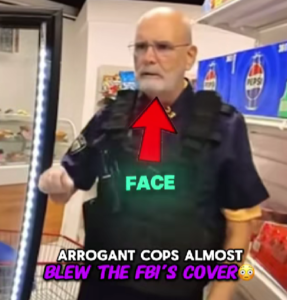
“Arrogant cops almost blew the FBI’s cover.”
Some agreed.
Some didn’t.
But everyone had an opinion.
Two Sides of the Same Story
One side saw arrogance.
Overconfidence.
Unnecessary escalation.
The other saw procedure.
Caution.
Officers doing their job.
And both?
Were right.
The Human Factor
Because at the end of the day…
This wasn’t just about systems.
It was about people.
People making decisions.
Quickly.
Under pressure.
With limited information.
What Could Have Happened
The scariest part?
This was the best-case scenario.
Because if things had gone differently:
-
The agent could have been detained
-
His identity exposed
-
Suspects alerted
-
The operation destroyed completely
Or worse…
Lives could have been at risk.
A Lesson That Can’t Be Ignored
This incident leaves behind a clear message:
Authority requires awareness.
Confidence requires control.
And communication is everything.
Because without it…
Even the best systems fail.
A Moment That Nearly Changed Everything
It lasted only minutes.
A short interaction.
A simple misunderstanding.
But the impact?
Massive.
Because in the world of undercover operations…
There is no room for error.
And sometimes…
The biggest threat isn’t the one you’re investigating.
It’s the one who doesn’t know you’re there.