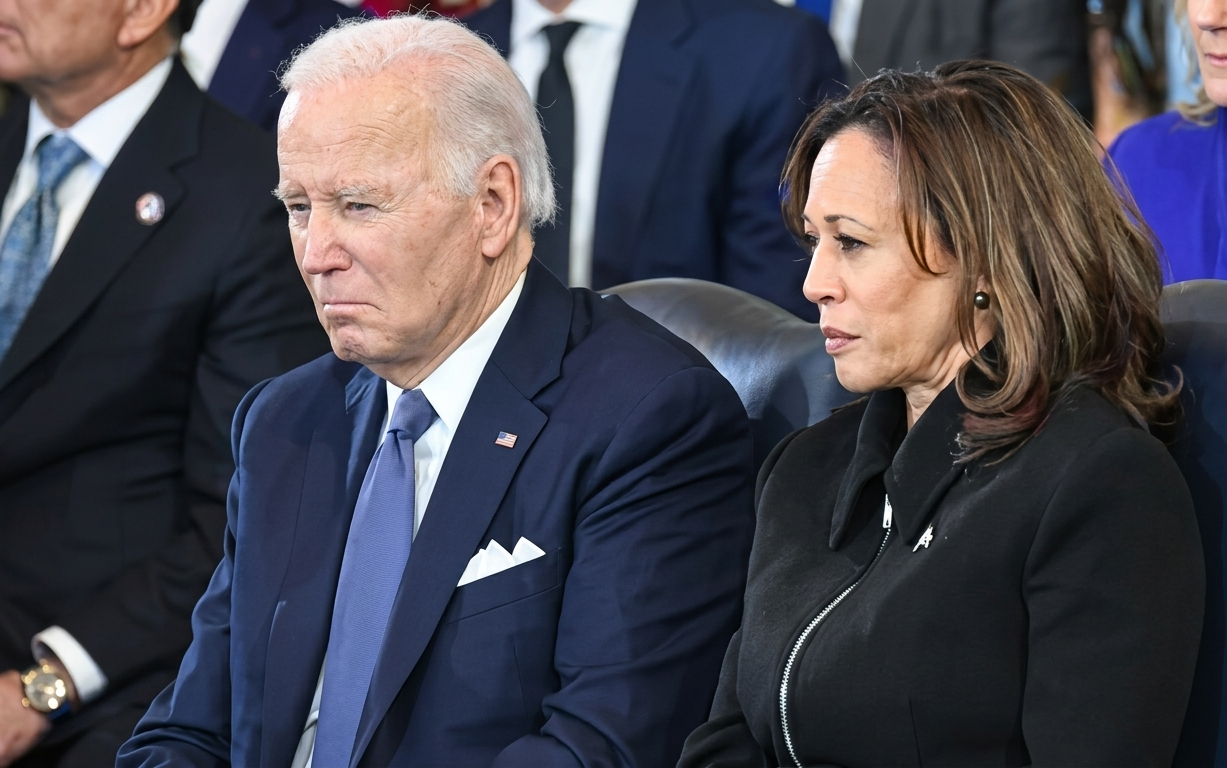
The growing tension between national security concerns and campaign finance has taken center stage in Washington following new reports that Democratic political figures have received millions of dollars in campaign contributions from employees working at companies recently labeled by the Pentagon as “Chinese military companies.” The revelation has ignited a wave of political debate, raising serious questions about foreign influence, transparency in political funding, and the challenges of regulating financial contributions in an increasingly globalized world.
According to campaign finance data reviewed in recent reporting, employees affiliated with major Chinese-linked corporations such as Alibaba, Baidu, and BYD have contributed approximately $2.6 million to Democratic political committees since 2020. These contributions include donations to high-profile political figures and organizations, including President Joe Biden, Vice President Kamala Harris, the Democratic National Committee, and prominent lawmakers such as Nancy Pelosi and Adam Schiff. While some donations were also directed toward Republican candidates, the overall amount received by Democrats was significantly higher, making the issue a focal point for political criticism and national security concerns.
At the center of the controversy is the Pentagon’s decision to include Alibaba, Baidu, and BYD on its Section 1260H list, which identifies companies believed to have ties to China’s military through the country’s “civil-military fusion” strategy. This strategy encourages cooperation between civilian industries and military development, allowing technological and industrial advancements to support both economic growth and defense capabilities. Although inclusion on the list does not automatically result in sanctions or prohibit Americans from doing business with these companies, it signals that U.S. defense officials believe these firms may be connected in some capacity to China’s military infrastructure.
The distinction between corporate donations and individual contributions has become one of the most important aspects of the debate. Under U.S. law, foreign nationals and foreign corporations are prohibited from directly contributing to federal political campaigns. However, individuals who are legally permitted to work in the United States, including U.S. citizens and green card holders, are allowed to make personal donations regardless of their employer. This means that the contributions in question were not made by the companies themselves, but by employees working within those organizations, including executives, lawyers, lobbyists, and technical staff.
Supporters of the current campaign finance system argue that it would be unfair and potentially unconstitutional to restrict individuals from participating in the political process based solely on where they work. They emphasize that employees of multinational companies often come from diverse backgrounds and operate independently of their employer’s political affiliations or strategic interests. In their view, these contributions represent personal political expression rather than corporate influence.
Critics, however, argue that the situation raises deeper concerns that cannot be ignored. They suggest that even indirect financial connections between individuals associated with companies linked to foreign military structures and U.S. political figures could create perceived conflicts of interest. In an era where geopolitical tensions between the United States and China continue to escalate, such connections are being scrutinized more closely than ever before. The concern is not necessarily about direct wrongdoing, but about the potential for influence, perception of bias, or unintended consequences in policymaking.
The broader geopolitical context plays a significant role in shaping how this issue is being interpreted. Over the past decade, the relationship between the United States and China has shifted from one of economic cooperation to strategic competition. Trade disputes, technological rivalry, and military concerns have all contributed to a growing sense of mistrust between the two nations. As a result, any financial or institutional link between the two countries is now viewed through a more critical lens.
Reports over the years have highlighted the close relationship between Chinese corporations and the Chinese government, including the presence of Communist Party structures within major companies. While these relationships vary in scope and influence, they have contributed to the perception that Chinese firms operate within a system that aligns with national strategic goals. This perception has been reinforced by China’s emphasis on technological advancement in areas such as artificial intelligence, surveillance, and data management, all of which have both commercial and military applications.
The companies named in the controversy have strongly rejected the implications of their inclusion on the Pentagon’s list. Representatives from Alibaba and Baidu have stated that there is no factual basis for labeling them as military-linked entities, emphasizing that their operations are commercial and not related to defense activities. These responses highlight the ongoing tension between government assessments and corporate self-representation, as well as the difficulty of defining what constitutes a meaningful connection to military activity in a modern, interconnected economy.
The issue has also brought renewed attention to the structure and purpose of the Pentagon’s Section 1260H list. Established under U.S. law, the list is intended to identify companies that may pose potential risks due to their connections to China’s military-civil fusion strategy. While the list does not impose immediate sanctions, it serves as a warning to businesses, investors, and policymakers about potential risks associated with engaging with these entities. Recent legislative changes have increased the practical impact of the list, with future restrictions set to limit certain types of government procurement involving listed companies.
In addition to national security concerns, the controversy raises broader questions about the nature of political fundraising in a globalized world. Modern economies are deeply interconnected, with companies operating across multiple countries and employing individuals from diverse backgrounds. This interconnectedness makes it increasingly difficult to draw clear lines between domestic and foreign influence, particularly when financial contributions come from individuals rather than corporate entities.
The complexity of the issue has led to calls for reform, with some policymakers and advocacy groups suggesting increased transparency requirements or new regulations to address potential risks. Proposals have included enhanced disclosure rules for campaign donations, greater scrutiny of contributions from individuals working at foreign-linked companies, and the development of guidelines to assess national security implications in campaign finance. However, implementing such measures presents significant legal and practical challenges, particularly when it comes to balancing security concerns with constitutional protections for individual political participation.
The controversy also reflects a broader shift in how the United States approaches its relationship with China. As competition between the two nations intensifies, areas that were once considered separate from national security, such as commerce and technology, are now being viewed as potential points of vulnerability. This shift has led to increased scrutiny of everything from supply chains to academic partnerships, as policymakers seek to understand and mitigate potential risks.
At the same time, the situation highlights the difficulty of navigating these issues without oversimplifying complex realities. Not all employees of multinational companies have any connection to government or military activities, and treating them as such could lead to unintended consequences. Striking the right balance between vigilance and fairness remains one of the central challenges in addressing concerns about foreign influence.
Public reaction to the report has been shaped in part by political polarization, with different groups interpreting the information through their own perspectives. Some view the contributions as evidence of a concerning overlap between foreign-linked entities and domestic politics, while others see it as a routine aspect of a globalized workforce participating in the democratic process. This divergence in interpretation underscores the importance of careful analysis and clear communication when addressing complex issues.
Ultimately, the controversy serves as a reminder of how interconnected modern political, economic, and security systems have become. It illustrates the challenges of maintaining transparency and accountability in a world where borders are increasingly blurred and influence can take many forms. As the debate continues, it is likely to shape future discussions about campaign finance, national security, and the evolving relationship between the United States and China.
The outcome of this debate may not lead to immediate policy changes, but it will almost certainly contribute to a broader reassessment of how political funding is regulated in an era of global competition. It will also influence how policymakers approach the delicate balance between protecting democratic institutions and preserving the rights of individuals to participate in the political process.
In the end, the issue is not just about the specific contributions that have been identified, but about what they represent in a larger context. They highlight the complexities of modern governance, the challenges of managing international relationships, and the need for thoughtful, informed decision-making in an increasingly interconnected world.
As the controversy continues to unfold, it is also beginning to intersect with a wider national conversation about the role of influence in modern politics and how foreign-linked economic power can indirectly shape domestic decision-making. While the immediate focus remains on campaign contributions tied to employees of companies flagged by the Pentagon, the deeper concern among policymakers and analysts is about long-term structural vulnerabilities within the U.S. political system. These vulnerabilities are not always visible in direct actions, but rather in the accumulation of small, legally permissible interactions that may collectively influence the environment in which policy decisions are made.
In recent months, lawmakers on both sides of the political spectrum have increasingly acknowledged that the traditional definitions of foreign influence may no longer be sufficient. The concept of influence has evolved beyond direct financial contributions from foreign governments or corporations. It now includes more subtle forms of engagement, such as professional networks, technological partnerships, academic collaboration, and workforce integration across borders. In this context, the idea that employees of globally connected firms are participating in U.S. political fundraising has raised questions not just about legality, but about perception and strategic awareness.
At the same time, intelligence and defense communities have been expanding their focus on what is often described as “gray zone competition.” This refers to activities that fall below the threshold of direct conflict but still carry strategic implications. Economic relationships, supply chain dependencies, and access to advanced technologies all fall into this category. When viewed through this lens, even routine interactions between individuals working in multinational environments and U.S. political institutions can take on a different significance, especially when those companies are later identified as having potential ties to foreign military structures.
The timing of the Pentagon’s decision to expand its Section 1260H list has also added another layer to the discussion. The inclusion of companies such as Alibaba, Baidu, and BYD reflects a broader shift in U.S. defense policy toward a more proactive identification of entities that may be involved in China’s military-civil fusion strategy. This shift has been accompanied by new legislative measures that aim to strengthen oversight and limit the involvement of such companies in U.S. government procurement and critical infrastructure.
Recent developments suggest that this trend is likely to continue. Lawmakers have been discussing additional measures that would expand the scope of restrictions associated with the 1260H list, potentially affecting not only government contracts but also private sector partnerships in sensitive industries. These discussions are still in the early stages, but they indicate a growing willingness to take a more comprehensive approach to managing perceived risks associated with foreign-linked entities.
In parallel, federal agencies have been increasing their efforts to monitor and assess the impact of foreign economic activity within the United States. This includes closer scrutiny of investment flows, technology transfers, and corporate governance structures. The goal is not necessarily to restrict all forms of engagement, but to ensure that potential risks are identified and managed in a way that protects national interests without unnecessarily disrupting economic activity.
The intersection of these policy developments with campaign finance issues highlights the complexity of the current situation. On one hand, there is a clear legal framework governing political contributions, which allows individuals to participate in the democratic process regardless of their employer. On the other hand, there is a growing recognition that the broader context in which these contributions occur may have implications that extend beyond the scope of existing regulations.
This tension has led to renewed calls for greater transparency in political fundraising. Some experts have suggested that more detailed disclosure requirements could help address concerns by providing clearer information about the background of donors and the nature of their professional affiliations. Others have proposed the creation of advisory guidelines that would help political campaigns assess potential risks associated with certain types of contributions.
However, implementing such measures is not straightforward. Any attempt to introduce new restrictions or requirements must navigate a complex legal landscape that includes constitutional protections for free speech and political participation. Courts have historically been cautious about limiting individual contributions, particularly when those limitations are based on factors that could be seen as discriminatory or overly broad.
Another important dimension of the issue is the role of public perception. In politics, perception can be just as influential as reality. Even if all contributions are legally permissible and made without any intent to influence policy, the association with companies identified as having potential ties to foreign military structures can create a narrative that is difficult to manage. This narrative can be amplified by media coverage, political messaging, and public discourse, shaping how voters interpret the actions of elected officials.
The impact of this perception is not limited to domestic politics. It also affects how the United States is viewed internationally. Allies and partners may interpret these developments as indicators of internal challenges in managing foreign influence, while competitors may see them as opportunities to highlight perceived inconsistencies in U.S. policy. In this way, the issue becomes part of a larger global conversation about governance, transparency, and the integrity of political systems.
At the same time, it is important to consider the perspective of the individuals whose contributions are at the center of the controversy. Many of these individuals are professionals working in global industries, often with no direct involvement in the strategic decisions of their employers. Their participation in political fundraising may be motivated by personal beliefs, policy preferences, or civic engagement, rather than any connection to their employer’s activities.
This raises a fundamental question about how to balance individual rights with collective concerns. Restricting contributions based on employment could have unintended consequences, potentially discouraging participation and creating barriers for individuals who are otherwise fully integrated into the U.S. political and economic system. Finding a solution that addresses both sides of this equation will require careful consideration and a nuanced approach.
The broader economic implications of the controversy should also not be overlooked. Companies like Alibaba, Baidu, and BYD are major players in global markets, with extensive operations that extend beyond China. Their activities influence supply chains, technology development, and international trade. Any policy changes that affect their relationship with the United States could have ripple effects across multiple industries.
For example, BYD’s role in the electric vehicle sector is particularly significant at a time when the U.S. is seeking to expand its own capabilities in clean energy and transportation. Similarly, Baidu’s involvement in artificial intelligence development places it at the forefront of one of the most competitive and strategically important technological fields. Alibaba’s influence in e-commerce and cloud computing further underscores the interconnected nature of these companies with global economic systems.
These considerations add another layer of complexity to the policy debate. While national security concerns are paramount, they must be balanced against the potential economic impact of any measures taken in response. This balance is not easy to achieve, especially in an environment where geopolitical tensions are already high.
Looking ahead, it is likely that the issue will continue to evolve as new information emerges and policy discussions progress. Investigations into campaign finance patterns, corporate structures, and potential links to foreign military activities are ongoing, and their findings could shape future decisions. At the same time, political campaigns and organizations may begin to reassess their fundraising strategies in light of the increased scrutiny.
The controversy also serves as a case study in how modern political systems are adapting to the realities of globalization. It highlights the need for frameworks that can accommodate complex relationships while maintaining transparency and accountability. As these frameworks develop, they will need to address not only the specific issues raised by this case, but also the broader challenges of managing influence in a connected world.
In the end, the situation underscores a central truth about contemporary politics: that the boundaries between domestic and international spheres are increasingly blurred. Decisions made in one context can have implications in another, and actions that appear routine on the surface may carry deeper significance when viewed through a strategic lens.
The ongoing debate over campaign contributions linked to employees of companies identified as “Chinese military companies” is therefore more than a single controversy. It is a reflection of larger shifts in how nations interact, how economies function, and how political systems respond to new forms of influence. As these shifts continue, the need for informed, balanced, and thoughtful approaches will become even more important.
And while the immediate headlines may focus on specific figures, amounts, and organizations, the long-term impact of this discussion will likely be felt in the policies, practices, and perceptions that shape the future of political engagement in the United States.
As this issue continues to gain attention, it is also beginning to influence how future political campaigns approach fundraising in an era of heightened scrutiny. Campaign teams are becoming increasingly aware that even legally compliant contributions can carry reputational risks if they are later connected to broader geopolitical concerns. This awareness may lead to more cautious vetting processes, internal guidelines, or voluntary limitations on certain types of donations, even in the absence of formal legal requirements.
At the same time, the controversy is likely to contribute to ongoing discussions about how the United States defines and responds to foreign-linked economic activity within its borders. Policymakers may seek to refine existing frameworks to better reflect the realities of modern global business structures, where the lines between domestic and international influence are not always clearly defined. These discussions could extend beyond campaign finance, touching on areas such as corporate transparency, lobbying practices, and regulatory oversight.
Public awareness will also play a crucial role in shaping the direction of this debate. As more information becomes available and media coverage continues, voters may develop stronger opinions about how such issues should be handled. This, in turn, could influence political priorities and the willingness of elected officials to pursue reforms.
Ultimately, the situation highlights a broader challenge that extends far beyond any single report or political cycle. It reflects the ongoing effort to adapt long-standing democratic systems to a rapidly changing global environment, where economic interdependence and strategic competition coexist in increasingly complex ways. How the United States navigates this challenge will not only affect its internal political processes but also its position on the global stage in the years ahead.