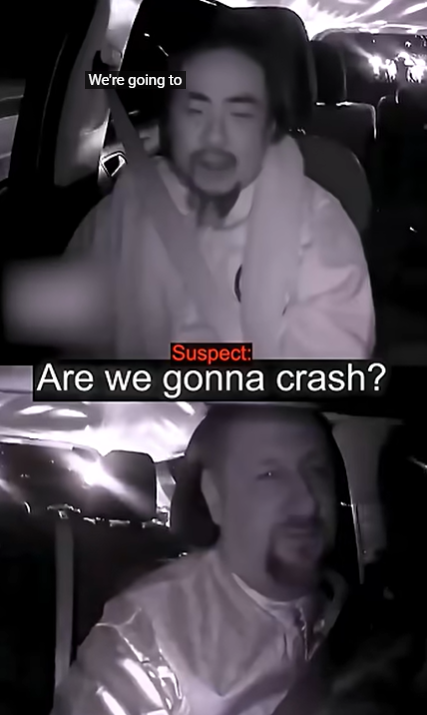
A frightening rideshare trip turned into a dangerous freeway emergency after a passenger allegedly grabbed the steering wheel while the driver was operating the vehicle. What began as an uncomfortable exchange between a concerned passenger and a reassuring driver quickly escalated into a struggle for control of the car, leaving the driver forced to defend himself, stop the vehicle, and call 911 from the middle of the freeway.
The video begins inside the rideshare vehicle, where the passenger appears anxious and expresses concern that they might crash. The driver tries to calm him, reassuring him that they are not going to crash and that everything is under control. At that point, the situation seems tense but still manageable. The driver is focused on the road, while the passenger appears uneasy, possibly intoxicated or confused.
Then the situation changes suddenly. The passenger reaches over and grabs the steering wheel. That single action creates immediate danger for everyone inside the vehicle and for other drivers nearby. A car moving on a roadway, especially near freeway traffic, can become unstable in a split second if someone interferes with the steering. The driver reacts quickly, shouting at the passenger to stop and warning him not to do it again.
The driver’s reaction is understandable. Steering control is one of the most important parts of driving, and any sudden movement from a passenger can cause a vehicle to drift, swerve, or lose control. The driver had to respond immediately because hesitation could have led to a crash. In that moment, his priority was not politeness or customer service. It was survival and safety.
After the first attempt, the driver appears to hope the passenger understands the seriousness of what just happened. He warns him clearly not to touch the wheel again. That warning should have ended the matter. But shortly afterward, the passenger reaches for the steering wheel a second time. This second attempt makes the situation far more alarming because it shows the passenger either does not understand the danger or is too impaired to control himself.
A physical struggle follows as the driver fights to keep control of the vehicle. He becomes angry and demands that the passenger let go. His voice reflects the fear and frustration of someone trying to prevent a crash while also dealing with a person inside the car who is creating the danger. This is not a normal argument between a driver and passenger. It is a direct interference with the operation of a moving vehicle.
For any rideshare driver, this kind of moment is one of the worst possible scenarios. Drivers often pick up strangers, sometimes late at night, sometimes after passengers have been drinking, and sometimes in unpredictable moods. They expect complaints, confusion, or difficult conversations from time to time. But a passenger grabbing the wheel crosses into a much more serious threat because it endangers the driver, the passenger, and everyone else on the road.
The passenger’s earlier comment about crashing becomes especially troubling after he grabs the wheel. He may have been afraid, paranoid, intoxicated, or disoriented. But whatever his reason, his action made the very thing he feared more likely. The driver had been reassuring him that they would not crash, yet the passenger’s interference created an actual risk of losing control.
The video concludes with the driver holding the passenger down while speaking to a 911 dispatcher. By that point, the vehicle is reportedly stuck in the middle of the freeway. The driver tells the dispatcher that he has a highly intoxicated passenger who tried to take control of the steering wheel. His call is urgent because the situation is still dangerous. They are not safely parked in a normal area. They are on or near a freeway, where passing traffic can pose a serious risk.
The driver’s decision to call 911 was necessary. Once a passenger has twice grabbed the steering wheel, the situation cannot be treated as a simple rideshare dispute. The driver needs law enforcement and possibly emergency assistance. He also needs to make sure there is an official record of what happened, especially because the incident involved physical restraint, intoxication, and a vehicle stopped in a dangerous location.
The fact that the driver had to hold the passenger down shows how serious the situation had become. He was not simply asking the passenger to exit the car or canceling the ride. He was trying to prevent the passenger from grabbing the wheel again or creating more danger while help was on the way. In a confined vehicle, especially on a freeway, the driver had limited options. He had to keep the passenger away from the controls and keep the scene from getting worse.
The incident highlights the vulnerability of rideshare drivers. They are alone in a vehicle with passengers they usually do not know. Unlike bus drivers or train operators, rideshare drivers often have no physical barrier separating them from passengers. A person in the back seat or front seat can reach toward the driver, touch controls, open doors, or interfere with the vehicle. That creates a unique safety risk.
In this case, the passenger’s intoxication appears to be a major factor. The driver tells the dispatcher that the passenger is highly intoxicated. Intoxicated passengers may become confused, emotional, aggressive, or unpredictable. They may misunderstand the situation, panic, or act without recognizing the danger. But intoxication does not remove responsibility for creating a life-threatening situation by grabbing the steering wheel.
The driver’s anger during the struggle is also understandable. He was responsible for keeping the car under control, and a passenger repeatedly interfered with that control. A driver in that position may feel fear, adrenaline, and frustration all at once. His shouting was not just anger; it was an attempt to stop the passenger immediately before someone got hurt.
The situation also shows how quickly a rideshare trip can shift from routine to emergency. A passenger gets into a car, expresses anxiety, and within moments the driver is fighting to keep the vehicle straight. There may be no warning signs strong enough to predict that someone will suddenly grab the wheel. That unpredictability is part of what makes the incident so alarming.
For other drivers on the freeway, the situation could have been dangerous as well. If the rideshare vehicle swerved unexpectedly, nearby cars might have had to brake or change lanes quickly. A sudden stop in the middle of the freeway can also create risk because approaching drivers may not immediately realize there is a stopped vehicle ahead. The passenger’s actions therefore endangered more people than just those inside the car.
The driver’s report to 911 helps explain the seriousness of the event. He does not simply say the passenger is being annoying or refusing to leave. He says the passenger tried to take control of the steering wheel. That detail tells dispatchers and responding officers that the passenger’s behavior created an immediate safety threat. It also explains why the driver may have had to physically restrain him until help arrived.
The passenger’s first grab might have been dismissed by some as a panicked mistake, but the second grab changes the interpretation. After the driver clearly warned him not to do it again, the passenger repeated the behavior. That repetition suggests the driver could not trust him to sit safely in the car. Once trust is gone inside a moving vehicle, the driver has to stop and seek help.
The incident also raises questions about where passengers sit in rideshare vehicles. Some drivers prefer passengers to sit in the back seat for safety and comfort. If a passenger is in the front seat, they may have easier access to the steering wheel, gear shift, or other controls. While front-seat riding is not always unsafe, this video shows why drivers may feel more comfortable keeping passengers farther from the wheel.
The driver’s ability to react quickly likely prevented a crash. When the passenger grabbed the wheel, the driver had to regain control immediately. If he had reacted even a moment later, the vehicle could have moved into another lane, hit a barrier, or collided with another car. His fast response turned a dangerous interference into a contained emergency.
The passenger’s fear about crashing may have been real, but it became dangerous because he acted on it in the worst possible way. If a passenger feels unsafe, the proper response is to ask the driver to slow down, pull over, or end the ride. Grabbing the wheel is never safe. It removes control from the person trained and responsible for operating the vehicle.
The driver’s position was also complicated because he had to manage both the vehicle and the passenger at the same time. A driver normally uses both hands, eyes, and attention to operate safely. In this case, he had to divide attention between the road and a passenger reaching for the controls. That kind of distraction can be extremely dangerous, especially at highway speeds.
The final moments, with the driver on the phone with 911, show the aftermath of that pressure. He had survived the immediate struggle, but the danger was not fully over. He still had an intoxicated passenger, a stopped vehicle, and a freeway location. He needed police to arrive quickly so the passenger could be removed safely and the roadway situation could be handled.
The video also serves as a warning for passengers. Rideshare vehicles are not personal spaces where a passenger can interfere with the driver. The driver is responsible for the vehicle, and touching the steering wheel is a serious act. Even if a passenger is scared, intoxicated, or upset, grabbing the wheel can lead to arrest, injury, or a crash.
For rideshare companies, incidents like this highlight the importance of driver safety tools. Emergency buttons, trip tracking, dashcams, audio recording where legal, and clear passenger accountability policies can help protect drivers. But even with tools, the driver is still the first person forced to respond when something goes wrong inside the car.
The driver’s decision to physically restrain the passenger may be debated by viewers, but the context matters. He was not dealing with a passenger who merely argued. He was dealing with someone who had already grabbed the steering wheel twice. His immediate concern was preventing another attempt while stuck in a dangerous location. In that moment, restraint may have felt like the only way to keep the passenger away from the controls until police arrived.
The incident is also a reminder of how dangerous impaired judgment can become inside a vehicle. Alcohol or other substances can reduce impulse control and increase panic or confusion. A passenger who might normally understand basic safety may suddenly act irrationally. That is why intoxicated riders can be difficult for drivers to handle, especially if they become fearful or aggressive.