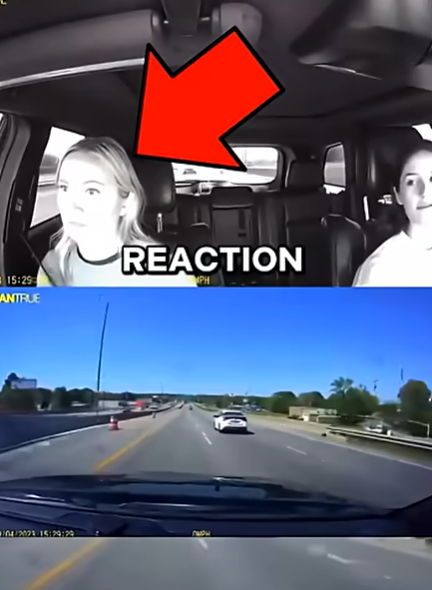
A dramatic highway crash was captured on video after an aggressive overtaking attempt went badly wrong, leaving two sisters shaken but unharmed. The footage shows how quickly a normal drive can turn into a frightening emergency, and how one calm voice inside the car helped prevent panic from taking over after the crash unfolded just feet away from them.
The incident began while the two sisters were traveling along the highway. Everything appeared ordinary at first, with traffic moving and the sisters continuing in their lane. Then, another vehicle came up quickly from behind. The driver of that car appeared to be attempting a dangerous overtake on the left, moving with speed and little room for error.
As the overtaking vehicle pushed forward, the situation changed in an instant. The driver failed to notice a highway barrier ahead and slammed directly into it. The impact caused the car to lose control and spin out across the lanes, right next to the sisters’ vehicle. The crash happened so suddenly that the sister driving had almost no time to react.
In moments like this, the shock can be overwhelming. A driver may see movement in the mirror, hear the sound of impact, and suddenly find another vehicle spinning dangerously close. There is very little time to think. The priority becomes staying in control, avoiding further danger, and making sure everyone inside the car is safe.
The sisters were understandably startled. The driver appeared shaken by how close the crash came to their vehicle. Even though she was not responsible for the collision, the suddenness of the incident could easily make someone feel confused or guilty. When a crash happens beside you, especially at highway speed, it can feel as if you were somehow part of it, even when you did nothing wrong.
That is where the passenger sister’s reaction becomes the emotional center of the video. Instead of panicking, screaming, or adding to the fear, she immediately begins calming her sister down. She reassures her repeatedly that they are okay. She tells her that the crash was not her fault. She reminds her to stay in the car and directs her to call 911.
Her response is calm, clear, and deeply supportive. She seems to understand that her sister, who was driving, is overwhelmed by what just happened. Rather than focusing only on the damaged vehicle outside or the chaos on the road, she focuses first on stabilizing the person beside her. That kind of emotional control can make a huge difference after a sudden crash.
The passenger’s reassurance that “it was not your fault” is especially important. After a near miss or nearby accident, drivers often replay the moment in their minds, wondering whether they could have done something differently. But in this situation, the other vehicle was the one attempting the risky overtake and crashing into the barrier. The sister driving appears to have simply been in the wrong place at the wrong time.
By telling her sister that they were okay and that she was not to blame, the passenger helped prevent panic from spiraling. Those words may sound simple, but in a high-stress moment, simple instructions are often exactly what someone needs. Instead of letting fear take over, she gave her sister something clear to focus on: stay in the car, breathe, and call 911.
The instruction to stay inside the vehicle was also practical. After a highway crash, stepping out too quickly can be dangerous. Other vehicles may still be moving nearby, debris may be on the road, and drivers behind may not immediately understand what happened. Remaining inside the car, if it is safe to do so, can sometimes be the safest immediate choice while emergency services are contacted.
The passenger’s decision to direct her sister to call 911 also shows strong awareness. Once the immediate danger had passed and they knew they were okay, the next priority was getting help to the scene. The other driver had crashed into a barrier and spun across lanes, so there could have been injuries, road hazards, or a need for police and emergency responders. Calling 911 was the right next step.
The video stands out because it captures not only the crash, but also the emotional aftermath. Many crash videos focus only on the impact. This one also shows what happens inside a nearby vehicle afterward: the fear, the shock, the trembling voices, and the need for someone to take control emotionally. The passenger sister’s calmness becomes just as important as the crash itself.
Her reaction shows how important it is to have someone steady in a crisis. When one person is overwhelmed, another person’s calm voice can become an anchor. She did not need special training to help. She simply stayed composed, spoke clearly, and reminded her sister of what mattered most. They were safe. The crash was not her fault. Help needed to be called.
The overtaking driver’s actions are the reason the entire situation happened. Attempting to pass at high speed near a highway barrier left little room for correction. Once the driver misjudged the space, the crash became unavoidable. The vehicle struck the barrier and spun out, creating danger not only for the driver but for everyone nearby, including the sisters.
This is one of the reasons dangerous overtaking is so risky. A driver may think they can squeeze through or get ahead quickly, but highways leave little margin for error. A barrier, a lane shift, another car, or a slight miscalculation can turn a reckless move into a serious crash within seconds. The sisters’ vehicle happened to be close enough that they could have been caught in the aftermath.
Fortunately, the sisters appear to have avoided being hit directly. That does not make the experience any less frightening. A near miss can still leave people shaken. The sound and sight of a car slamming into a barrier and spinning beside them would be enough to frighten anyone. The driver’s emotional reaction was completely understandable.
The passenger’s response also shows the bond between the sisters. Her first instinct was to care for her sister, not blame her or overwhelm her with questions. She recognized that the driver needed reassurance. In that moment, she became the calming presence in the car, helping her sister move from shock into action.
The phrase “we are okay” carries a lot of weight after a crash. It helps the brain separate fear from reality. The event was terrifying, but they were still safe. The car had not been struck in a way that trapped them. They could speak, think, and call for help. Repeating that message helped bring the situation back under control.
The video also shows how important it is not to rush into the road after a crash. People often feel an immediate urge to get out, look around, or check damage. But on a highway, the danger may not be over just because the first crash has happened. Other drivers may swerve, brake suddenly, or fail to see stopped vehicles. Staying inside and calling emergency services can prevent a second incident.
The sisters’ experience is a reminder that safe driving is not only about your own actions. You can be careful, alert, and responsible, yet still be placed in danger by another driver’s reckless decision. That can be one of the most frightening parts of driving. You cannot control every vehicle around you. All you can do is stay aware, react as safely as possible, and avoid making the situation worse.
In this case, the sister driving had almost no time to respond to the sudden crash. That is why the passenger’s reassurance mattered so much. She made it clear that her sister had not caused the accident and could not have prevented the other driver’s mistake. That kind of reassurance can help reduce guilt and panic after a traumatic moment.
The crash also likely created a dangerous scene for other drivers on the highway. A vehicle spinning across lanes can cause chain reactions if nearby cars brake or swerve suddenly. Debris from the impact may also scatter across the road. Emergency responders would need to secure the area, check for injuries, and manage traffic. The sisters calling 911 helped start that process.
What makes the passenger’s behavior impressive is that she was also likely scared. She had just witnessed the same crash. She was sitting in the car when another vehicle spun nearby. She could have panicked too. But she chose to focus on helping her sister. That kind of composure under stress is not easy.
The video becomes less about the reckless driver and more about the way the sisters handled the aftermath. The crash was sudden and frightening, but the passenger’s calm response helped keep the inside of their vehicle from becoming chaotic. She gave reassurance, instructions, and emotional support all at once.
For viewers, the clip offers a practical lesson. After witnessing or being near a crash, the first steps should be to check whether you and your passengers are safe, avoid stepping into traffic, call emergency services, and stay as calm as possible. Panic can make it harder to think clearly, but simple instructions can help everyone focus.
The sisters’ situation also shows why passengers can play an important role in road emergencies. The driver may be too shaken to know what to do next. A passenger can help by checking surroundings, calling 911, reading road signs or location markers, reassuring the driver, and reminding them not to make sudden unsafe moves. In this video, the passenger did exactly what was needed.
The emotional tone of the aftermath is what makes the video memorable. The passenger does not criticize her sister. She does not make the moment more frightening. She keeps repeating the most important truth: they are okay, and it was not her fault. That kindness and steadiness helped de-escalate the panic.
The overtaking driver’s crash could have ended much worse. Had the spinning vehicle struck the sisters’ car, or had another driver reacted poorly, the incident could have become a multi-vehicle collision. The fact that the sisters were able to remain in their car and call for help is a relief. Still, the near miss was enough to leave them visibly shaken.
The video is also a reminder of how reckless driving affects innocent people. The driver attempting the dangerous overtake did not only put themselves at risk. They endangered everyone nearby. The sisters had no part in that decision, yet they were forced to experience the fear and aftermath of it.
In the end, the footage captures both danger and composure. A vehicle attempted a risky pass, struck a highway barrier, and spun out near two sisters who had no time to prepare for what was happening. The driver sister was shaken, but the passenger sister responded with calm reassurance and clear direction. She reminded her that they were safe, told her the crash was not her fault, kept her inside the car, and guided her to call 911.
The incident stands as a powerful example of how calm support can make a major difference after a sudden emergency. The crash itself was frightening, but the passenger’s response helped turn panic into action. In a moment when fear could have taken over, one sister’s steady voice helped protect both of them and ensured that help would be called for the driver who crashed.
The passenger sister’s reaction is also a reminder that after a sudden crash, emotional safety matters almost as much as physical safety. The driver may not have been physically injured, but she was clearly shaken by what happened beside her. A crash that close can make someone feel as if they narrowly escaped something much worse. In those first seconds, the body reacts before the mind can fully understand what happened. The heart races, hands shake, breathing changes, and the person may struggle to think clearly.
That is why the passenger’s calm voice was so important. She helped bring her sister back into the present moment. Instead of letting her spiral into fear or guilt, she kept repeating the facts that mattered most: they were okay, they were safe, and the crash was not her fault. Those simple words helped separate the driver’s emotions from the reality of the situation. The crash was terrifying, but they had survived it.
The driver’s shock was completely understandable because the crash happened with almost no warning. One moment she was driving normally, and the next a vehicle was suddenly crashing into a barrier and spinning out beside her. That kind of sudden danger can make a person question everything. Even if she did nothing wrong, she might wonder whether she should have slowed down sooner, moved over, or reacted differently. The passenger recognized that and immediately reassured her that there was nothing she could have done.
That reassurance may have prevented the driver from making a dangerous decision after the crash. A panicked driver might try to stop abruptly in an unsafe place, get out of the car too quickly, or step into traffic to check what happened. By telling her sister to stay in the car, the passenger helped keep both of them protected from the secondary dangers that often follow highway crashes.
Secondary crashes are a real concern after any highway incident. Drivers approaching the scene may be distracted, speeding, or unsure which lane is blocked. Debris may be scattered across the road. The crashed vehicle may still be in a dangerous position. People who get out of their cars too quickly can put themselves directly in the path of traffic. The passenger’s instruction to stay inside was not only comforting; it was practical.
The call to 911 was also a necessary next step because the crash involved another vehicle striking a barrier and spinning across lanes. Even if the sisters were safe, the other driver may have needed medical help. The roadway may have needed to be cleared. Police may have needed to manage traffic and investigate what happened. Calling emergency services ensured that trained responders would be sent to the scene rather than leaving drivers to handle it alone.
The passenger’s ability to think about that while still shaken shows strong composure. She did not freeze. She did not focus only on her own fear. She quickly moved through the priorities: confirm they were okay, calm the driver, stay in the car, call for help. In an emergency, that kind of order can make a chaotic moment manageable.
The crash itself also shows how reckless driving can create danger for people who are doing everything right. The sisters were simply traveling along the highway. They were not racing, swerving, or causing trouble. Yet another driver’s attempt to overtake dangerously placed them in immediate danger. That is one of the most frightening realities of driving: you can control your own behavior, but you cannot fully control the choices of other drivers.
The overtaking driver’s mistake appears to have been a combination of speed, poor judgment, and failure to notice the barrier. Highway barriers are there to guide and protect traffic, but they can also become extremely dangerous when a driver approaches them at speed and at the wrong angle. Once the vehicle struck the barrier, the driver lost control, and the car spun back across the lanes. That loss of control created risk for everyone nearby.
The sisters were fortunate that their vehicle was not hit directly. A spinning car can move unpredictably, and drivers nearby may have only fractions of a second to react. Had the car spun slightly differently, it could have struck their side, pushed them into another lane, or caused a larger collision. The narrowness of the escape likely explains why the driver was so shaken afterward.
The passenger’s response also reflects a deep sense of care between the sisters. She was not just reacting as a passenger; she was reacting as someone who knew her sister needed emotional grounding. Her words were protective. She understood that her sister might blame herself, so she addressed that immediately. She understood that her sister might panic, so she gave calm instructions. She understood that the situation needed action, so she directed her toward calling 911.
That kind of support can make a lasting difference after a traumatic event. People often remember not only what happened, but who was with them and how that person responded. The driver may remember the crash, the sound, and the fear, but she may also remember her sister’s voice telling her she was okay. That reassurance can become part of how she processes the event afterward.
The video also shows the value of emotional leadership. A person does not need to be the driver, the oldest, or the most experienced to take control in a crisis. The passenger was not controlling the vehicle, but she controlled the atmosphere inside the car after the crash. She helped set the tone. Instead of panic spreading between them, calm began to spread from her to her sister.
For anyone watching, the situation offers a practical example of what to do after witnessing a serious crash nearby. First, check whether you and your passengers are safe. Second, stay out of traffic unless there is an immediate danger that requires leaving the vehicle. Third, call emergency services and provide the location as clearly as possible. Fourth, stay calm and avoid blaming yourself for another driver’s reckless actions.
The sisters’ experience also shows why dashcams and recordings can be helpful in understanding what happened. A crash can occur so quickly that witnesses may struggle to describe it accurately afterward. Video can capture the overtaking attempt, the barrier impact, and the path of the spinning vehicle. That record can help police, insurance companies, and the people involved understand the sequence clearly.
The emotional aftermath may continue even after the scene is cleared. A near crash can leave someone nervous about driving for days or weeks. The driver sister may replay the moment, feel startled by fast-approaching vehicles, or become anxious near barriers and passing lanes. That reaction is normal after a frightening road incident. The passenger’s reassurance in the moment may help, but it can still take time for the shock to fade.
The other driver’s actions also serve as a warning about impatience on the road. A dangerous overtake may save only a few seconds, but it can create consequences that last much longer. The driver who tried to pass likely misjudged the space and paid the price instantly. Their decision also forced innocent people nearby to experience fear and danger. Reckless driving is never isolated; it affects everyone around the reckless driver.
The sisters’ calm decision to call 911 rather than chase, confront, or exit into traffic was the right response. In the aftermath of a crash, emotions can run high. People may feel angry at the driver who caused the danger. They may want to get out and yell or check damage immediately. But on a highway, the safest response is often to remain protected and let emergency services handle the scene.