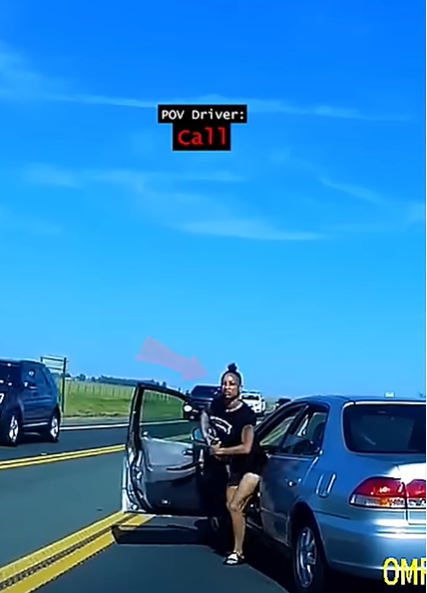
The video starts with a moment of calm on a highway, as a silver Honda is seen stopped in the middle of the road. At first glance, everything seems ordinary, but as the camera zooms in, a sense of tension begins to build. The woman driving the silver Honda suddenly exits the vehicle, and her actions immediately indicate that this is no ordinary situation. She throws an object at the car filming the incident, a seemingly unprovoked act of aggression. This move is both startling and dangerous, as throwing objects at moving vehicles can cause significant harm. After the act, the woman hastily returns to her car and speeds off, clearly agitated.
The driver of the filming vehicle, now shaken by the woman’s reckless actions, responds immediately by calling 911. Their voice is filled with frustration and concern, describing the situation in detail for the dispatcher. The first piece of information provided is a description of the vehicle—a silver or grey Honda. As the situation unfolds, the caller notes the woman’s increasingly erratic driving behavior, which only heightens the urgency of the call. The Honda, having already demonstrated reckless behavior by throwing an object, continues to escalate the situation on the road.
The woman in the Honda begins to swerve onto the shoulder of the highway in an attempt to pass the caller, cutting them off in the process. This aggressive maneuver is yet another sign of her erratic driving and lack of concern for the safety of others on the road. As if that wasn’t enough, she begins to “brake check” the caller, a dangerous and irresponsible act where a driver abruptly slams on the brakes in front of another vehicle. This maneuver is particularly dangerous because it forces the driver behind to react quickly, potentially leading to a rear-end collision.
The caller, now visibly distressed, relays their fear to the 911 dispatcher, emphasizing the escalating nature of the situation. They express their concern about the possibility of the situation turning violent, especially as the woman seems to be intentionally provoking them. In a calm but urgent tone, the caller pleads with the dispatcher to send police assistance quickly, as the situation has become increasingly hazardous. Their frustration is palpable as they try to maintain their composure, all while trying to stay at a safe distance from the Honda, ensuring they are near other witnesses in case things turn even more violent.
As the caller continues to describe the situation, they also provide their location, mentioning that they are near Highway 12 and Denverton Road. The specific location is crucial, as it helps law enforcement pinpoint where the incident is happening and respond more quickly. The caller is attempting to stay near other vehicles on the road, likely hoping that the presence of more witnesses will discourage the woman from escalating the situation further.
The escalating nature of the road rage incident in the video is alarming. What began as an object being thrown at the filming driver quickly spirals into dangerous driving behavior, with the Honda repeatedly cutting off the caller, brake checking them, and engaging in aggressive maneuvers that could easily lead to an accident. The video captures not just the physical danger of the driving, but also the psychological toll it takes on the caller. The fear and frustration they express during the call to 911 highlight the emotional impact of dealing with such a situation.
This road rage incident is a stark reminder of how quickly situations on the road can escalate. What might have started as a minor disagreement or moment of impatience on the part of the Honda driver turned into a high-risk encounter involving reckless driving and potential harm to other road users. Road rage incidents like this can have serious consequences, both for the individuals involved and for innocent bystanders who may be caught in the crossfire. The filming driver’s quick thinking in calling 911, along with their decision to stay near other witnesses, may have prevented the situation from turning worse.
While road rage is not uncommon, this particular incident underscores how erratic and dangerous aggressive driving can be. The woman’s decision to throw an object at the other car, swerve onto the shoulder to pass, and engage in brake checking shows a complete disregard for the safety of others. This behavior not only puts the people in the vehicles directly involved in the confrontation at risk, but also anyone else on the road who might be in the vicinity. The video serves as a powerful reminder of the importance of staying calm behind the wheel and avoiding unnecessary escalation, even in frustrating or stressful situations.
The role of law enforcement in addressing road rage incidents is also highlighted in this video. The caller’s decision to contact 911 and provide as much information as possible about the situation, including the vehicle description, the driver’s erratic behavior, and the location, is critical in ensuring that the authorities can respond in a timely and effective manner. Road rage is a serious issue, and the involvement of law enforcement is often necessary to prevent further escalation and to hold aggressive drivers accountable for their actions.
One of the most concerning aspects of this video is the unpredictability of the woman’s behavior. Road rage incidents often arise from a combination of factors, including stress, impatience, and frustration. However, in this case, the woman’s behavior seems to indicate that she is actively seeking to escalate the situation, going beyond typical road rage actions and intentionally provoking the other driver. The decision to throw an object at the other vehicle, followed by aggressive driving maneuvers, suggests that this was not just a reaction to frustration, but a deliberate attempt to intimidate or cause harm.
As the video progresses, the presence of other vehicles on the road becomes an important factor in preventing the situation from escalating further. The caller’s decision to stay near other cars and provide as much information as possible to 911 helps to create a sense of accountability. With more witnesses on the road, the woman’s actions are less likely to go unnoticed, and her chances of getting away with such behavior are significantly reduced. In this case, the caller’s decision to involve others in the situation—whether through direct interaction or by providing information to law enforcement—may have been one of the key factors in preventing a violent outcome.
The video also serves as a reminder of the importance of defensive driving and staying calm in the face of aggression on the road. While it’s natural to feel frustrated when other drivers exhibit dangerous or aggressive behavior, responding with similar aggression only heightens the risk of a dangerous situation. The filming driver’s decision to stay calm, call 911, and focus on documenting the incident rather than engaging in further confrontation likely helped to defuse the situation and avoid a physical altercation.
This incident also highlights the need for education and awareness about road rage and aggressive driving. Many people may not realize the potential consequences of their actions behind the wheel. A moment of frustration or anger can quickly escalate into dangerous driving, endangering not only the individuals involved but also others on the road. By raising awareness about the dangers of road rage and promoting safe driving habits, we can help prevent incidents like this from happening in the future.
In the end, this video captures not just a tense road rage encounter, but also the importance of quick thinking, calmness, and the willingness to involve authorities when necessary. The filming driver’s decision to stay calm, document the incident, and call 911 was key in ensuring that the situation didn’t spiral into something far more dangerous. The woman’s aggressive driving and attempt to escalate the situation ultimately failed, in part due to the quick action taken by the filming driver and the presence of other witnesses. While the road rage incident was unsettling, the video serves as a reminder that, in moments of crisis, staying calm and thinking strategically can make all the difference.
The road rage incident caught on video provides not just a snapshot of a tense encounter between two drivers but a deeper look into the ways in which frustration and aggression on the road can quickly escalate into dangerous behavior. This video serves as a poignant reminder of the critical need for both emotional control and situational awareness behind the wheel.
When a simple traffic interaction turns into an aggressive confrontation, it showcases how easily an otherwise minor issue can snowball into something much larger. The initial action, a seemingly small road rage incident, quickly morphed into a situation where one driver was not only angry but also intent on provoking further confrontation. The woman in the video, seemingly undeterred by the consequences of her actions, chose to escalate the situation by intentionally cutting off the filming driver, throwing an object at their car, and engaging in highly aggressive driving behavior.
This escalation serves as an example of how dangerous it can be when drivers allow their tempers to dictate their actions. Road rage is not just about getting frustrated behind the wheel; it’s about the conscious decisions to act out that frustration, to engage in aggressive driving, and to ignore the potential harm it could cause. The situation in the video is a stark reminder of how rapidly a frustrating situation can turn dangerous if not controlled. While the initial mistake or irritation—perhaps a minor driving error—could have been resolved calmly, the response from the woman took the situation to an entirely different level.
One of the most striking aspects of this incident is the woman’s seeming lack of consideration for the consequences of her actions. After initially throwing an object at the filming driver’s car, she could have backed off and allowed the situation to diffuse. Instead, she doubled down by swerving into the shoulder of the road and brake checking the filming vehicle. These dangerous maneuvers, designed to provoke or intimidate the other driver, illustrate an alarming level of aggression. This was not just an isolated incident of bad driving—it was an intentional attempt to escalate the situation and force the other driver into a more aggressive confrontation. The woman in the video clearly didn’t care for the safety of others on the road, only focusing on asserting her own control over the situation in the way that she believed was most effective.
The woman’s actions, though frightening, were not entirely unpredictable. Many road rage incidents follow a similar pattern of escalation. What starts as an aggressive honk, a tailgating maneuver, or a verbal exchange can quickly turn into reckless driving, dangerous confrontations, and, in extreme cases, even violent altercations. Road rage often arises from deep-rooted emotional reactions to stress, impatience, or frustration. Individuals involved in road rage incidents are often not thinking rationally but are instead driven by an emotional need to control the situation or “win” the interaction. This emotional turmoil clouds judgment, leading to decisions that disregard the potential consequences of one’s actions.
In this case, the woman’s behavior—swerving onto the shoulder, aggressively cutting off the filming driver, and brake checking—was indicative of someone who felt entitled to control the road and the situation. Such actions, often seen in road rage incidents, can be incredibly dangerous for several reasons. First, aggressive driving can quickly lead to accidents, whether it’s from the immediate risk of a collision due to tailgating or cutting off other vehicles or from the long-term danger of encouraging other drivers to become involved in similar reckless behavior. Additionally, it creates a hostile environment on the road, making it harder for other drivers to feel safe and be able to react appropriately.
One of the most remarkable elements of this encounter, however, is the filmed driver’s response to the escalating situation. Rather than engaging in the same aggressive driving or retaliating with similar behavior, the driver remained calm and focused. The filmed driver, likely aware of how dangerous escalating road rage can be, chose not to engage in the provocations but instead did the smart thing—called 911. This decision was not just an act of responsible driving; it was also a strategic move that ensured law enforcement could intervene and potentially prevent further escalation.
In moments of crisis, it can be difficult to maintain a level of calm, particularly when confronted with someone who is intentionally trying to provoke or intimidate. The filming driver’s decision to stay composed, document the incident, and involve law enforcement at the earliest sign of danger was a critical step in ensuring that the situation didn’t escalate into something more dangerous. By focusing on safety and following the appropriate steps to address the issue legally, the filming driver not only protected themselves but potentially other road users who might have found themselves in harm’s way if the situation had continued to escalate.
Another significant point of analysis is the role of law enforcement and its ability to de-escalate situations. The filming driver’s call to 911 and the detailed information provided—such as the vehicle description, the woman’s erratic driving, and the location—set the stage for an effective law enforcement response. Road rage incidents, especially those involving dangerous driving behaviors such as swerving, cutting off other drivers, and brake checking, can be challenging to control. However, with timely intervention from law enforcement, these incidents can be defused before they spiral into more serious events, such as physical confrontations or collisions.
In this particular instance, the quick thinking of the filming driver was crucial in ensuring that the situation was appropriately handled by the authorities. The 911 call allowed the dispatcher to collect the necessary information about the incident, and it gave law enforcement the heads-up needed to respond quickly. By providing the make and model of the vehicle, the driver’s erratic behavior, and the location of the incident, the filming driver ensured that police officers would be able to locate the woman and hold her accountable for her reckless actions on the road. The involvement of law enforcement in such situations can significantly reduce the risk of escalation and potential harm to the public.
One must consider the broader implications of road rage incidents like this, not just for those directly involved but for society as a whole. These incidents contribute to the overall sense of stress and anxiety on the road, affecting not just the people in the immediate situation but all drivers who may be influenced by or witness the aggressive behavior. As road rage incidents continue to rise across the country, it becomes clear that there needs to be more focus on education and awareness campaigns to reduce the occurrence of these types of confrontations. Drivers must be taught how to respond in moments of frustration—how to remain calm, take a step back, and avoid allowing their emotions to dictate their driving behavior.
Moreover, the continued rise in aggressive driving underscores the need for more widespread discussions about mental health and stress management. Road rage, as a manifestation of emotional tension and external stressors, is often fueled by a variety of factors—stress at work, personal issues, or financial pressure, to name a few. In today’s world, many drivers are carrying the weight of multiple stressors, and these external pressures sometimes make their way onto the road, where they manifest as aggressive driving or impulsive behavior. Mental health programs, particularly those focusing on emotional regulation and stress management, could have a significant positive impact in reducing the frequency and intensity of road rage incidents.
Public awareness campaigns can also play a pivotal role in preventing road rage. By educating drivers about the dangers of aggressive driving, offering strategies for dealing with frustration in healthy ways, and encouraging a more thoughtful approach to driving, we can reduce the number of incidents on the road. In addition to individual responsibility, greater societal awareness about road rage could foster a more cooperative and less hostile driving environment. While road rage has long been an issue in society, the ability to address it through education, mental health awareness, and greater law enforcement presence could dramatically shift the current trajectory.
For those involved in road rage incidents, such as the woman in the silver Honda, the consequences can be severe. The potential for physical harm, property damage, or even loss of life is a real risk whenever aggressive driving is involved. In addition to the immediate risks, aggressive drivers often face legal consequences such as fines, license suspension, or even criminal charges depending on the severity of the incident. The woman in this video, for example, may have been subject to legal repercussions for her reckless driving behaviors. In extreme cases, road rage incidents lead to violent confrontations or crashes, which can cause significant damage to both individuals and property.
The societal costs of road rage go beyond just the immediate physical risks. The stress that comes from being involved in or witnessing such an incident can leave long-lasting emotional scars. Victims of road rage, particularly those who are directly targeted or involved in aggressive confrontations, can experience heightened levels of anxiety, fear, and frustration. In some cases, these emotional consequences can affect a person’s overall well-being and their approach to driving in the future. They may develop a heightened fear of driving or an increased level of caution, both of which can affect their quality of life.
For law enforcement, the challenges of dealing with road rage incidents extend beyond just responding to the immediate situation. Police officers must be trained to handle situations that involve aggressive behavior and unpredictable drivers. When responding to road rage incidents, officers need to be able to quickly assess the level of threat and de-escalate the situation before it turns violent. This requires a high degree of emotional intelligence, training, and experience in managing conflict. Additionally, law enforcement must work together with other organizations and agencies to promote safe driving and reduce road rage on a systemic level.
In conclusion, this video captures not only a single instance of road rage but also illustrates the broader issues that exist around aggressive driving. It serves as a powerful reminder of how one individual’s behavior can affect everyone else on the road and why it’s so important to stay calm and collected in situations where frustration and anger could easily take over. By learning to control our emotions, drive defensively, and be mindful of others on the road, we can reduce the number of road rage incidents and create a safer, more cooperative driving environment for everyone. Through greater public awareness, mental health support, and law enforcement involvement, we can address the root causes of road rage and work toward building a society where calmness, respect, and safety are prioritized on the road.