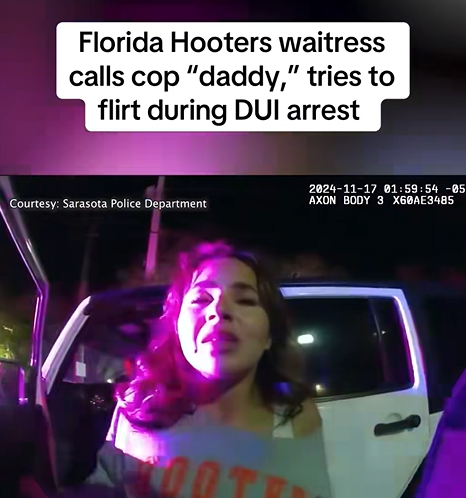
This video presents a strange, uncomfortable, and at times almost unbelievable DUI arrest captured through Sarasota Police Department bodycam footage. What makes the clip stand out is not only the arrest itself, but the way the woman behaves throughout the encounter. Instead of responding calmly to the seriousness of the situation, she acts erratically, repeatedly flirts with the officer, denies responsibility, admits she has been drinking, and tries to redirect the interaction away from the legal process. The result is a video that feels chaotic, awkward, and serious at the same time. Beneath the viral moments and strange comments, the footage is still about a dangerous situation: a suspected impaired driver being taken off the road before someone could be hurt.
The interaction appears to begin after officers respond to a situation involving a vehicle and a woman suspected of driving under the influence. From the start, the woman’s behavior seems unstable. She denies being the driver, even while the circumstances of the stop suggest that officers believe she was connected to the vehicle. That denial becomes one of the main patterns in the footage. She repeats that she was not driving, tries to distance herself from responsibility, and speaks in a way that suggests she is trying to avoid the consequences of the moment. But at the same time, she also admits more than once that she is drunk, creating a contradiction that makes the encounter even more chaotic.
That contradiction is important because it shows one of the common features of DUI arrests: the person involved may try to minimize the situation while also saying things that make the situation worse for them. A person may deny driving, deny being too impaired, or insist they are fine, while their speech, behavior, or admissions suggest otherwise. In this case, the woman’s own words become part of the tension. She seems to understand that being drunk is a problem, but she does not fully accept the seriousness of what police believe happened. That disconnect gives the video much of its uneasy energy.
The woman’s flirtatious behavior is what makes the clip especially viral. She repeatedly calls the officer “Daddy,” suggests that they should “make out,” and tries to use charm or personal attention as a way to change the direction of the encounter. In a different context, those comments might be brushed off as bizarre or embarrassing, but during a DUI arrest, they reveal something more concerning. She is not treating the moment like a serious legal situation. She appears to be trying to distract, persuade, or confuse the officer, even as he continues with the arrest process. The officer’s professionalism becomes one of the central parts of the video because he does not take the bait. He does not flirt back. He does not lose focus. He keeps redirecting the situation toward the facts and the procedure.
That professional restraint matters. Bodycam footage often becomes public because it shows how officers handle difficult or unusual behavior. In this case, the officer is dealing with someone who is not simply upset or argumentative, but unpredictable in a very awkward way. She shifts between denial, flirtation, nervous questions, bathroom requests, and strange attempts to explain herself. The officer has to remain calm while also protecting boundaries. When she tries to pull up her shirt to show him something related to her contact lenses, he immediately tells her to stop and put her shirt back down. That quick response is important because it prevents the situation from becoming even more inappropriate or uncomfortable. It shows that he understands the need to keep the encounter controlled, respectful, and clearly professional.
The woman’s repeated mention of needing to use the bathroom adds another layer of pressure to the interaction. In arrests, officers often have to balance a person’s immediate needs with safety and procedure. A person in custody may ask to use the restroom, complain of discomfort, or try to delay the process. Sometimes those needs are genuine. Sometimes they are also part of a pattern of distraction. In this footage, her urgent bathroom requests contribute to the overall sense of instability. The officer still has to manage the arrest carefully, making sure she is secured and that the situation does not become unsafe.
Her question about whether the officer is going to tase her also shows the fear and confusion underneath the performance. Even though she is acting flirtatious and erratic, there are moments where she seems worried about what will happen next. That is part of why the video feels uncomfortable rather than simply funny. It is easy for online viewers to focus on the strange comments, but the deeper reality is that this is a person in a serious situation who appears impaired and emotionally scattered. Her behavior may be entertaining to some viewers, but it is also a reminder of how alcohol can affect judgment, communication, and self-control.
The officer’s response throughout the footage is measured. He does not appear to escalate unnecessarily. He does not allow her comments to pull him into an inappropriate exchange. He continues working through the process, asking questions, giving directions, and eventually placing her in handcuffs. That steady approach is what keeps the video from spiraling further. When a person under arrest behaves unpredictably, the officer’s calmness can determine whether the scene stays controlled or becomes more chaotic. In this case, his patience and boundaries are central to the way the arrest unfolds.
The woman’s occupation as a Hooters waitress becomes part of the conversation because she appears to bring it up or use it as a way to shape the interaction. That detail adds to the viral nature of the video, but it should not distract from the actual issue. Her job is not the reason for the arrest. Her appearance, personality, or attempts to flirt are not the reason either. The reason is the suspected DUI. The clip may spread online because of the unusual things she says, but the core of the incident remains public safety. Driving while impaired puts the driver, passengers, pedestrians, and other motorists at risk. No amount of charm or humor changes that.
This is one of the reasons DUI footage often attracts public attention. These videos reveal the gap between how a person sees themselves in the moment and how they appear to everyone else. Someone who is impaired may believe they are being convincing, charming, or reasonable. But bodycam footage can show slurred logic, poor judgment, repeated contradictions, and emotional swings. Viewers can see how alcohol changes behavior in ways the person may not recognize at the time. In this case, the woman’s repeated flirtation and denial make it clear that she is not fully processing the gravity of the arrest.
The video also highlights how DUI arrests can become complicated even when the legal issue is straightforward. An officer is not simply dealing with a possible traffic crime. They are dealing with a person whose behavior may be unpredictable because of intoxication. The person may not follow instructions. They may say inappropriate things. They may move suddenly, argue, cry, laugh, flirt, panic, or become angry. The officer must manage all of that while preserving evidence, protecting the person’s safety, and making sure the arrest is lawful. That is why professionalism matters so much in these encounters.
The woman’s denial that she was driving is especially notable because it is a common type of defense people try to use in DUI situations. If someone believes police cannot prove they were behind the wheel, they may repeatedly deny driving, even when other evidence suggests otherwise. But DUI investigations are not based only on a person’s statement. Officers may consider witness accounts, vehicle position, keys, damage, observations, video, admissions, and physical signs of impairment. A denial alone does not end the investigation. In the footage, the officer does not appear to be swayed by her repeated claims. He continues to handle the situation as an investigation and arrest.
Her admission that she is drunk makes the denial more complicated. Saying “I am drunk” does not automatically prove driving, but it does support the officer’s concern that she may be impaired. It also creates a strange contrast with her attempts to avoid responsibility. She seems to admit one important part of the issue while denying another. That kind of inconsistency can happen when someone is intoxicated, scared, or trying to talk their way out of trouble without thinking clearly.
The clip also shows how flirtation can be used as a form of avoidance. Instead of answering directly or cooperating fully, the woman tries to make the interaction personal. She calls the officer affectionate names, suggests inappropriate alternatives to the arrest, and attempts to shift the tone from official to playful. But a DUI arrest is not a social interaction. The officer’s job is not to be entertained or persuaded. His job is to determine what happened, follow procedure, and prevent danger. The fact that he keeps the boundary clear is one of the most important parts of the footage.
There is also a broader lesson about accountability. When someone is suspected of DUI, the issue is not only whether they are embarrassed or sorry afterward. The issue is that impaired driving can cause serious harm very quickly. A person may think they are only going a short distance, that they are not “that drunk,” or that they can handle the road. But alcohol affects reaction time, attention, coordination, decision-making, and risk judgment. The woman’s behavior in the footage becomes a visible example of impaired judgment. If someone is behaving that erratically during a police interaction, it raises serious concern about how safely they could operate a vehicle.
The viral nature of the video can make the arrest seem comedic, but the underlying subject is not funny. DUI cases can end with injuries, deaths, destroyed families, and lifelong consequences. In this particular clip, the unusual dialogue may be what catches attention, but the real takeaway should be the danger of getting behind the wheel after drinking. The fact that officers intervened means the situation stopped before it could potentially become worse. That is the public safety purpose behind DUI enforcement.
The officer’s decision to handcuff her and proceed with custody is the moment where the legal reality fully replaces her attempts at distraction. No matter how many times she flirts, denies, jokes, or complains, the process continues. That can be a harsh realization for someone in the moment. It shows that consequences do not disappear just because a person tries to charm their way out of them. The officer treats her behavior as something to manage, not something that changes the facts.
The footage also shows why body cameras are important in unusual arrests. Without video, a written description of the woman repeatedly calling the officer “Daddy,” suggesting they should “make out,” denying she was driving, admitting she was drunk, and attempting to lift her shirt might sound exaggerated. Bodycam footage provides a record of what was said and how the officer responded. It protects the officer by showing his professionalism, and it documents the suspect’s behavior in a way that can be reviewed later. In cases where someone’s conduct is unusual or inappropriate, video evidence can clarify what actually happened.
At the same time, viral bodycam footage raises ethical questions. The woman’s behavior is embarrassing, and once clips like this spread online, they can follow a person for years. That does not erase accountability, but it does mean viewers should remember they are watching someone at a low point. Public embarrassment can become an additional consequence beyond the legal process. It is possible to recognize that her behavior was inappropriate and dangerous while still understanding that the internet often turns real people’s worst moments into entertainment.
This balance is important. The woman should be held accountable if she drove impaired. The officer’s professionalism should be recognized. The public safety risk should be taken seriously. But viewers should also avoid reducing the entire person to one intoxicated arrest video. People can make serious mistakes and still have the ability to learn from them. The hope in any DUI case is that the person understands the danger, accepts responsibility, and never repeats the behavior.
The video also offers a clear example of how officers must handle boundary-testing behavior. The woman repeatedly tries to pull the officer into a different kind of interaction. She uses flirtation, humor, personal comments, and strange physical gestures. Each time, the officer has to remain firm without becoming cruel. That is not always easy. Responding with anger could escalate the situation. Responding playfully could make the encounter inappropriate. Ignoring safety concerns could create risk. The officer’s calm redirection is what keeps the arrest focused.
Another important part of the video is how it shows the loss of control that can come with intoxication. Alcohol does not only affect balance or speech. It can affect dignity, self-awareness, and decision-making. A person may say things they would never say sober. They may behave in ways that embarrass them later. They may misread social situations, ignore boundaries, or become emotionally unpredictable. The woman’s actions in the clip demonstrate that kind of impaired self-control. That is one of the quieter but strongest warnings in the footage.
For viewers, the video may also create a sense of secondhand embarrassment. Watching someone try to flirt their way out of a DUI arrest can feel awkward because it is so clearly ineffective. The officer is not there for a date, a joke, or a personal conversation. He is there because of a suspected crime. The mismatch between her tone and the seriousness of the situation creates the strange energy of the clip. She acts as if she can redirect the scene, while the officer remains anchored in reality.
The arrest also reinforces the idea that DUI enforcement is not personal. The officer does not appear to arrest her because she is annoying, flirtatious, or embarrassing. He arrests her because the evidence and situation lead him to proceed with a DUI custody decision. That distinction matters. Professional law enforcement requires officers to focus on behavior relevant to the law, not personal irritation. In the footage, the officer appears to tolerate the awkwardness while continuing with the necessary steps.
In the end, this video is memorable because it combines absurd behavior with a serious public safety issue. The woman’s comments make the footage viral, but the suspected DUI is what gives it weight. Her denial, admissions, bathroom complaints, fear of being tased, inappropriate flirting, and attempt to show her contact lenses all create a chaotic scene. Yet the officer’s response remains steady. He sets boundaries, gives instructions, stops inappropriate behavior, and completes the arrest.
The larger lesson is simple: impaired driving is not something charm can erase. A person may try to joke, deny, flirt, or distract, but the danger remains. Alcohol can turn judgment into confusion and confidence into recklessness. This footage shows how quickly a night can become a legal and personal disaster when drinking and driving are involved. It also shows the importance of officers staying professional when suspects behave unpredictably. Beneath the viral awkwardness, the video is a reminder that DUI arrests exist to prevent harm before a bad decision becomes something far worse.
What makes the footage especially memorable is the contrast between the woman’s behavior and the officer’s steady response. She repeatedly tries to change the mood of the encounter, but the officer never allows the situation to become personal. That difference is what gives the video its structure. On one side, there is an intoxicated person trying to avoid consequences through denial, flirtation, and distraction. On the other side, there is an officer who keeps returning to procedure, safety, and control. The more unpredictable she becomes, the more important his professionalism appears.
The video also shows how intoxication can create a false sense of confidence. A person who has been drinking may believe they are being persuasive, funny, charming, or clever, even when their behavior is actually making the situation worse. The woman appears to think that her comments might soften the officer or make him see her differently. But from the outside, those comments only make the level of impairment seem more obvious. That is one of the most damaging parts of drunk decision-making: the person often does not realize how they are coming across until much later, when the consequences are already in motion.
Her repeated denial that she was driving also shows how people sometimes try to create distance between themselves and the most serious part of the accusation. She may understand that being drunk is embarrassing, but being drunk behind the wheel is far more serious. That may be why she keeps separating those two ideas. She can admit drinking while still insisting she was not the driver. But the officer’s job is not to accept the simplest version she offers. His job is to investigate the whole situation, compare her statements with the evidence, and make a decision based on what he observes.
This is where bodycam footage becomes important. It captures the person’s words, tone, movements, and behavior in real time. It also captures the officer’s instructions and responses. In a DUI case, those details can matter because impairment is not always shown by one single fact. It can be shown through a pattern: inconsistent statements, poor judgment, unusual behavior, difficulty following instructions, emotional swings, or admissions about alcohol use. In this footage, the pattern is what makes the interaction so striking.
The woman’s question about whether she will be tased also adds to the strange emotional rhythm of the video. One moment she is flirtatious, and another moment she seems nervous or fearful. That shift is common in chaotic arrest footage. People under stress, especially when impaired, may bounce between joking, crying, denying, pleading, flirting, arguing, and panicking. The officer has to respond to each shift without letting the encounter become unsafe. That requires patience, but it also requires firmness. He cannot treat every dramatic comment as the central issue. He has to keep moving the situation toward a safe conclusion.
Her urgent bathroom requests also create a practical challenge. Officers cannot ignore a person’s basic needs, but they also cannot allow those needs to become a reason for unsafe movement or loss of control during an arrest. When someone is suspected of DUI and behaving unpredictably, even simple requests require caution. The officer must think about safety first: whether she is secured, whether she might run, whether she might resist, whether she might suddenly move toward traffic or a vehicle, and whether another officer is needed. What may seem like a small request on video can become complicated in the middle of an arrest.
The moment where she attempts to lift her shirt to show her contact lenses is also important because it shows how quickly boundaries can be crossed when a person is impaired. The officer’s immediate reaction prevents the situation from becoming inappropriate. He does not encourage it, joke about it, or allow it to continue. He tells her to stop and put her shirt back down. That matters because a professional response protects both the officer and the person being arrested. It keeps the encounter clear, documented, and respectful, even when the suspect’s behavior is not.
The video can easily be shared online as a funny or outrageous DUI clip, but it also carries a more serious lesson about dignity. Alcohol can put people in positions where they behave in ways they would never choose with a clear mind. The woman’s comments may be embarrassing, but they also show how impaired judgment can damage a person’s image, reputation, and future. A DUI arrest already carries legal consequences, but a viral video adds public humiliation. That does not remove accountability, but it does show how one night of poor decisions can spread far beyond the original incident.