Tense Parking Lot Arrest Raises Questions About Rights, Police Authority, and Public Accountability
Introduction
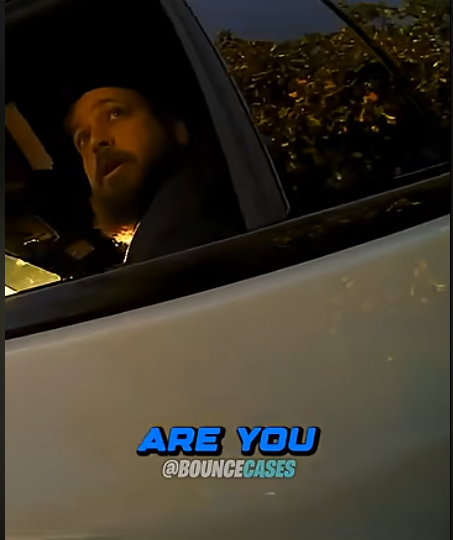
A tense video showing a confrontation between a man sitting inside his vehicle in a public parking lot and several law enforcement officers has drawn attention because of the difficult questions it raises about personal rights, police authority, escalation, and accountability. The encounter begins with what appears to be a verbal exchange over whether the man is required to identify himself. It then moves quickly into a physical arrest, with officers attempting to remove him from the vehicle while he repeatedly states that he is not resisting.
The incident, as captured in the video, centers on a familiar but deeply controversial situation: a private citizen believes he has a right to remain where he is and to refuse identification, while officers appear to believe they have enough authority to demand compliance and eventually make an arrest. What begins as a dispute over words becomes a confrontation involving an open car door, commands to exit the vehicle, allegations of trespassing, and the man’s warning that the city could face a significant lawsuit.
Although the full legal context of the situation is not visible from the video alone, the footage highlights the fragile nature of police-citizen encounters. A few words, a few decisions, and a few seconds can transform a routine interaction into a major public controversy. The video also shows how quickly tensions can rise when both sides believe they are standing on principle: the officers on the principle of enforcement and control, and the citizen on the principle of constitutional rights and personal liberty.
At the heart of the encounter is a question that continues to appear in communities across the country: when does a person have to identify themselves to law enforcement, and when can they simply refuse? The man in the video appears to believe that sitting in a public parking lot does not create any legal obligation to provide identification. The officers, however, appear to treat his refusal and his presence in the lot as grounds for further action. The result is an arrest that the man says will not end on the pavement or inside a patrol car, but in court.
The Setting: A Public Parking Lot Becomes the Center of a Dispute
The encounter takes place in a public parking lot, a setting that might normally seem ordinary and uneventful. Parking lots are places where people sit in their cars, make phone calls, wait for friends, check messages, or simply pause before going somewhere else. Because of that, the sight of someone sitting in a vehicle is not unusual on its own. Yet, in this case, the man’s presence appears to have attracted law enforcement attention.
The video begins with the man inside his vehicle while an officer questions him. The exact reason officers first approached him is not fully clear from the summary, but the conversation quickly turns toward whether the man is a “First Amendment auditor.” That phrase is commonly used to describe people who record public officials, government buildings, police activity, or public spaces in order to test whether officials respect constitutional rights. Some auditors view themselves as watchdogs, while many officers and public employees view their activities as provocative or disruptive.
When the officer asks the man if he is a First Amendment auditor, the question itself appears to frame the encounter in a particular way. Instead of simply asking why he is there or whether he needs help, the officer seems to suspect that the man may be intentionally testing police conduct. The man denies being an auditor and says that he simply knows his rights. That response becomes one of the central themes of the video. He does not present himself as someone trying to provoke police. Instead, he presents himself as a person who understands that he cannot be forced to provide identification without a lawful reason.
This distinction matters because police interactions often depend heavily on perception. If officers believe someone is intentionally challenging them, they may approach the situation with more suspicion or less patience. If a citizen believes officers are trying to pressure them into giving up rights, they may respond with resistance, even if that resistance is verbal and not physical. In this case, both sides appear to enter the exchange with distrust. The officer seems skeptical of the man’s purpose, and the man seems skeptical of the officer’s authority.
The Question of Identification
One of the main issues in the video is whether the man is required to provide identification while sitting in his car in a public parking lot. The man insists that he is not required to do so. His argument appears to be that he is not driving, not committing a crime, and not obligated to identify himself simply because an officer asks. This is a common point of conflict in police encounters because many citizens believe that refusing to identify themselves is a protected right unless officers have reasonable suspicion of a crime.
The officer, however, continues questioning him. The tension seems to rise because the man does not treat the officer’s request as a command he must obey. Instead, he responds by asserting his understanding of the law. This type of exchange can be difficult because police officers often expect direct compliance, while citizens who are focused on rights often expect officers to explain the legal basis for their demands.
The man’s refusal to provide identification appears to become a turning point. Instead of calming the situation, it seems to increase the officer’s frustration. The question then becomes whether the refusal itself influenced the decision to escalate. If the only issue was that the man would not provide identification, then the arrest raises serious concerns. If there were other facts not visible in the video, such as a valid trespass warning, a complaint from a property owner, or a lawful order based on specific circumstances, those details would matter. However, based on the described footage, the man appears to believe no such lawful basis exists.
This is why videos like this often become controversial. Viewers are left asking what happened before the camera captured the main conflict. Was there a call for service? Did someone complain? Was the parking lot truly public, or was it private property open to the public? Had the man already been told to leave? Did the officers have reasonable suspicion that a crime had occurred, was occurring, or was about to occur? Without those answers, the video cannot provide a complete legal judgment. Still, it can show the tone, decisions, and actions that shaped the encounter.
The “First Amendment Auditor” Question
The officer’s question about whether the man is a First Amendment auditor is one of the most notable moments in the encounter. It suggests that the officer may have associated the man’s behavior with a broader movement of people who record government officials and police activity. First Amendment auditing has become a major source of tension between citizens and law enforcement because it often involves people intentionally filming in places where officials may not be used to being recorded.
Some auditors argue that they perform an important public service by testing whether government workers respect constitutional protections. They say that recording in public spaces is a lawful activity and that officials should not interfere with it unless there is a legitimate legal reason. Critics, however, argue that some auditors intentionally provoke confrontations in order to create viral videos, file complaints, or pursue lawsuits.
In this video, the man denies being an auditor. He says he simply knows his rights. That denial is important because it separates his stated purpose from the label placed on him by the officer. Whether he was recording, watching, waiting, or simply sitting in his car, he appears to object to being categorized as someone suspicious merely because he is aware of his rights.
The officer’s question may also reveal something about modern policing. Officers today often know that their actions may be recorded, posted online, and analyzed by thousands or even millions of people. That reality can create pressure. Some officers may become more cautious, while others may become more defensive. When an officer suspects that someone is trying to create a confrontation for public viewing, the officer may treat the situation differently from the start.
However, even if someone is recording or testing officials, that alone does not automatically make their conduct unlawful. The important question remains whether there is a lawful basis for detention, identification, removal, or arrest. A person’s attitude, knowledge of rights, or willingness to record police may be irritating to officers, but irritation is not the same as criminal behavior.
The Escalation at the Vehicle Door
The situation escalates sharply when the officer attempts to open the man’s car door and orders him to step out. This moment changes the nature of the encounter. Before that point, the interaction appears to be verbal. Once an officer reaches for the door, the encounter becomes physical and far more serious.
A vehicle can create complicated legal and safety issues during police encounters. Officers are often trained to treat vehicles with caution because they can contain weapons, conceal movement, or be used to flee. At the same time, a person sitting in a vehicle may view the car as a personal space, even if it is located in public. When an officer opens or attempts to open the door, the person inside may feel invaded, threatened, or unlawfully seized.
The man appears to resist the officer’s authority verbally, not by attacking or fleeing, but by questioning the legality of the command. He does not seem to accept that the officer has the right to remove him from the vehicle. The officer, however, appears to move forward with the command regardless of the man’s objection.
This is another point where police-citizen encounters often break down. Officers may believe that once they issue a lawful command, debate is over and compliance must follow. Citizens may believe they have a right to challenge the command if they think it is unlawful. In the real world, that conflict can become dangerous because officers may interpret hesitation or refusal as resistance, while citizens may interpret physical enforcement as aggression.
The video’s tension grows because the man’s body remains inside the vehicle while officers are trying to gain control. Removing someone from a vehicle can quickly become chaotic. Arms, legs, seatbelts, steering wheels, and door frames can all become obstacles. Even a person who says he is not resisting may appear physically difficult to remove if he is tense, confused, or being pulled from different angles.
The Trespassing Arrest
The officers eventually tell the man that he is under arrest for trespassing. This statement becomes the legal justification presented in the video for the arrest. Trespassing generally involves being on property without permission or remaining after being lawfully ordered to leave. However, the details matter greatly. If the parking lot is public, the claim of trespassing may be more complicated. If it is private property open to the public, officers may need a valid request from someone with authority over the property. If the man had already been clearly ordered to leave and refused, that could change the analysis.
Based on the man’s statements, he does not believe the trespassing accusation is valid. He appears to argue that he is in a public lot and has not done anything wrong. His position is that sitting in a car in a public place is not a crime, and refusing to identify himself does not transform lawful presence into trespassing.
The trespassing claim is important because it shifts the encounter from a rights discussion to a criminal accusation. Once officers state that he is under arrest, the situation becomes more difficult for the man. Even if he believes the arrest is unlawful, physically refusing to comply can create additional charges or risks. This is why many legal advocates tell people to state their objections clearly but avoid physical resistance during an arrest, even if they plan to challenge the arrest later in court.
Still, from a public accountability perspective, the officers’ explanation matters. Viewers will naturally want to know what facts supported the trespassing arrest. Was the man given a prior warning? Was there signage? Was the property actually public? Did a property manager ask for him to be removed? Did officers tell him he had to leave before arresting him? The strength of the officers’ case depends on those details.
In the absence of a clear explanation, the arrest can appear questionable to viewers. When officers move from asking questions to opening a door to announcing an arrest, the public expects a clear legal basis. If that basis is not obvious, mistrust grows.
“I Am Not Resisting”
As officers remove the man from the vehicle, he repeatedly states that he is not resisting. This phrase is one of the most emotionally charged parts of the video. It suggests that the man is aware of how the situation may be interpreted and wants to make a record that he is not physically fighting officers. By saying it out loud, he appears to be protecting himself from a possible claim that he resisted arrest.
The statement also reveals his fear that the physical confusion of the arrest could be used against him. He points out that he is being pulled in two different directions by multiple officers. This is significant because when several officers are trying to control one person, the person’s movements may not be entirely voluntary. If one officer pulls an arm one way and another officer pulls the body another way, the person may twist, stumble, or tense up. To officers, that movement can sometimes look like resistance. To the person being arrested, it may feel like being physically forced into impossible positions.
The man’s repeated insistence that he is not resisting serves two purposes. First, it communicates to the officers that he is not trying to fight. Second, it communicates to the camera and future viewers that he wants the record to show his non-resistance. In modern police encounters, people often speak not only to the officers in front of them, but also to the future audience that may watch the video later.
This moment also raises broader concerns about arrest tactics. When officers remove someone from a confined space such as a vehicle, coordination matters. Clear commands, controlled movements, and communication between officers can reduce the chance of injury or confusion. If a person is pulled in conflicting directions, the risk of escalation increases. A person who is frightened or in pain may cry out, stiffen, or move unpredictably, even without intending to resist.
The man’s words show that he understands the seriousness of the situation. Being accused of resisting can have major legal consequences. His repeated denial is not just emotional; it is strategic. He is creating a verbal record in real time.
The Role of Communication
One of the clearest lessons from the video is the importance of communication. The entire encounter appears to deteriorate because neither side accepts the other’s position. The officer asks questions and gives commands. The man responds by asserting rights and denying any obligation to comply. The officer escalates. The man protests. More officers become involved. The result is an arrest.
Better communication may not have prevented the conflict entirely, but it could have clarified the situation. If officers had clearly explained why they believed the man was trespassing, whether someone had requested his removal, and what would happen if he did not leave, the encounter may have been easier for viewers and the man to understand. On the other hand, if the man had chosen to leave while continuing to state that he did not consent or agree, he may have avoided arrest while preserving his objection.
However, the burden of clear legal authority rests especially heavily on law enforcement. Officers have the power to detain, search, arrest, and use force under certain circumstances. Because those powers are so serious, the public expects officers to explain their actions when possible. A command without explanation may be lawful in some urgent situations, but in a parking lot encounter where the person is sitting in a vehicle and asking questions, a clear explanation can make a major difference.
The officer’s use of the term “First Amendment auditor” may have also affected the tone. That label can sound accusatory or dismissive. It may suggest that the officer viewed the man as a problem before fully explaining the legal issue. For a citizen who already believes his rights are being violated, that kind of label can confirm suspicion that the officer is acting based on attitude rather than law.
The man’s communication style also matters. When citizens assert rights forcefully, officers may perceive them as confrontational. But asserting rights is not automatically unlawful. A person can be firm, even argumentative, without committing a crime. The difficult task for officers is to distinguish between actual obstruction or resistance and verbal disagreement.
Public Spaces, Private Property, and Confusion
One of the complicated issues in this kind of encounter is the difference between a public place and public property. A location can be open to the public without being owned by the government. Shopping center parking lots, business lots, and apartment complex lots may feel public because people can enter them freely, but they may still be private property. Government building lots, public parks, and municipal parking areas may be public property but still subject to rules.
The man in the video appears to describe the location as a public parking lot. That phrase can mean different things. It may mean a government-owned lot. It may mean a privately owned lot open to customers or visitors. It may mean a place where the public commonly parks but where access can still be limited. This distinction could be critical to the trespassing accusation.
If the lot is truly public property, officers may need a specific lawful reason to remove someone. Public property does not always mean unlimited access, but restrictions must generally be based on rules, hours, conduct, safety, or other legitimate grounds. If the lot is private property, a person with authority over the property may be able to ask someone to leave, and refusal can potentially lead to trespassing.
The video summary does not provide enough detail to resolve that issue. But it does show how easily confusion over property status can lead to confrontation. Citizens may believe that “open to the public” means they have a right to remain. Officers may believe that a property owner’s complaint gives them authority to remove someone. Both may be partially right depending on the facts.
This is why clear statements are important. If an officer says, “The property manager has asked you to leave, and if you do not leave you may be arrested for trespassing,” the legal issue becomes clearer. If the officer instead focuses on whether the person is an auditor or whether he will identify himself, the encounter may appear less grounded in trespassing and more grounded in frustration.