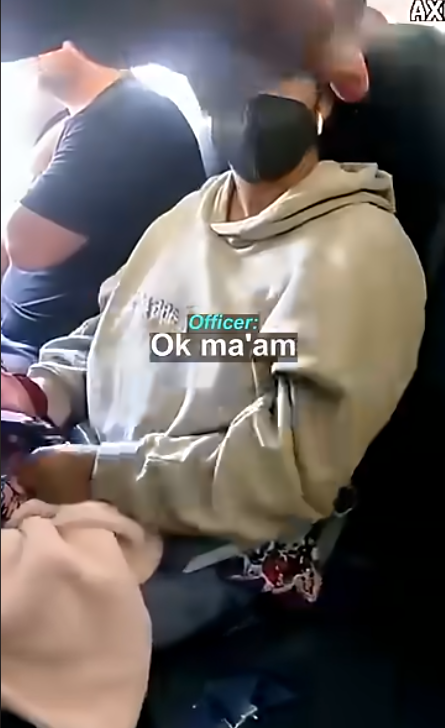
The scene unfolded in a way that has become increasingly familiar in modern air travel: a tense confrontation between a passenger and airline authorities, sparked by what initially appeared to be a simple seating discrepancy. Yet, as with many such incidents, what might have been resolved quietly instead escalated into a deeply emotional and highly disruptive conflict that ultimately affected not only the individuals directly involved but an entire plane full of travelers. At the center of the situation was a woman who firmly believed she was seated in the correct place—seat 13E—based on the boarding pass she presented. Opposing her was a police officer, backed by airline staff, who insisted that her assigned seat was actually 37E and that the boarding pass she was referencing could not be verified as valid in its current form. What followed was not just a disagreement over numbers and rows but a complex interaction shaped by stress, grief, procedural rigidity, and miscommunication.
From the passenger’s perspective, the situation likely began as a straightforward attempt to settle into her assigned seat. Boarding a plane is often a hurried and stressful process even under normal circumstances, with passengers navigating crowded aisles, overhead luggage constraints, and the pressure of adhering to strict timelines. In this case, the passenger had an additional emotional burden weighing on her: she stated that she was traveling to attend a funeral. This detail is significant because grief can heighten emotional sensitivity and reduce one’s tolerance for confusion or perceived injustice. When she was confronted and told she was not in the correct seat, it is understandable that she may have reacted defensively, especially if she genuinely believed her documentation supported her position.
On the other side of the exchange, the police officer and flight crew were operating within a framework that prioritizes order, safety, and adherence to established procedures. Airlines must maintain strict control over seating assignments for multiple reasons, including weight distribution, passenger manifests, and security protocols. Any discrepancy, particularly one involving potentially invalid or unverifiable boarding documentation, raises concerns that cannot be ignored. The officer’s assertion that the boarding pass presented by the passenger was merely a screenshot rather than an official, scannable document added a layer of suspicion to the situation. Screenshots can be easily manipulated or outdated, making them unreliable as proof of a current seat assignment.
The disagreement quickly evolved into a standoff. The passenger insisted that she was correct, repeatedly pointing to seat 13E as her rightful place, while the officer maintained that her actual assignment was 37E. Attempts to clarify the situation were complicated by the limitations of communication in a crowded, time-sensitive environment. While the officer reportedly tried to verify the passenger’s claim with flight staff, the process was not immediate, and the tension in the cabin continued to build. Other passengers, already seated and awaiting departure, became unwilling witnesses to the unfolding drama. In such confined spaces, even minor conflicts can feel amplified, and the presence of law enforcement adds an unmistakable seriousness to the situation.
As the interaction continued, the emotional toll on the passenger became increasingly evident. Her mention of traveling for a funeral underscored the personal stakes involved and may have been an attempt to elicit understanding or compassion from those around her. However, from the perspective of airline staff and law enforcement, emotional circumstances, while unfortunate, do not override procedural requirements. This disconnect between human emotion and institutional policy is often at the heart of such conflicts. The passenger likely felt unheard and unfairly targeted, while the authorities likely viewed her resistance as non-compliance with necessary instructions.
At some point, the situation reached a critical threshold. The flight crew determined that the passenger was not complying with their directives, a designation that carries serious consequences in the context of air travel. Non-compliance is treated as a safety issue because it can disrupt the orderly operation of the flight and potentially escalate into more significant problems. The officer then issued a clear warning: if the passenger refused to leave the aircraft, she would be arrested, and all other passengers would be required to deplane. This ultimatum highlights the extent to which individual actions can impact an entire flight. Airlines operate on tight schedules, and delays can have cascading effects across multiple routes and passengers.
Despite this warning, the passenger did not immediately comply. Whether this was due to confusion, disbelief, or a continued conviction that she was in the right is difficult to determine. What is clear is that the situation had moved beyond a simple dispute over seating and had become a matter of enforcement. The presence of a police officer meant that the authority to remove the passenger was not merely symbolic but actionable. For the other passengers on board, the prospect of being forced to deplane due to one individual’s refusal must have been frustrating, particularly given the lack of direct involvement in the conflict.
Interestingly, there were reports that some fellow passengers offered to give up their seats in an attempt to resolve the situation peacefully. This gesture reflects a common human instinct to de-escalate conflict and restore normalcy, even at personal inconvenience. However, by this stage, the issue was no longer just about seating. Once a situation has been formally categorized as non-compliance, airlines and authorities are often reluctant to accept ad hoc solutions. Allowing a passenger to remain after defying instructions could set a precedent that undermines the enforcement of rules in future situations. As a result, these offers, while well-intentioned, were deemed insufficient to resolve the conflict.
The final outcome was severe. The passenger was removed from the aircraft and subsequently banned from flying with the airline for five years. Such bans are not issued lightly and typically reflect a determination that the individual’s behavior posed a significant disruption or safety concern. For the passenger, this consequence likely compounded an already distressing experience, potentially affecting her ability to travel for important personal reasons in the future. For the airline, the decision serves as both a disciplinary measure and a deterrent, signaling to other passengers that non-compliance will have serious repercussions.
This incident raises broader questions about the nature of conflict in high-stress environments like airports and airplanes. Air travel combines a unique set of pressures: tight schedules, security protocols, physical confinement, and diverse groups of people with varying needs and emotional states. In such settings, even minor misunderstandings can escalate بسرعة if not handled with clarity and empathy. At the same time, airlines and authorities must balance the need for compassion with the imperative to maintain order and safety.
One of the key factors in this case appears to be the issue of documentation. The reliance on a screenshot rather than a verifiable boarding pass created ambiguity that could not be easily resolved in the moment. This highlights the importance of ensuring that travel documents are up-to-date and accessible in their proper format. While digital conveniences have made travel more efficient in many ways, they also introduce new points of failure, particularly when systems are not synchronized or when passengers rely on outdated information.
Another important aspect is communication. The passenger and the officer were operating with fundamentally different assumptions about the situation, and there may not have been sufficient opportunity to reconcile those perspectives before the conflict escalated. Clear, calm, and patient communication is essential in resolving disputes, but it can be difficult to achieve in environments where time is limited and emotions are high. Training for airline staff and law enforcement in de-escalation techniques can play a crucial role in preventing such incidents from reaching a breaking point.
The role of empathy is also worth considering. While procedures must be followed, acknowledging a passenger’s emotional state can sometimes help to defuse tension. In this case, the passenger’s mention of attending a funeral was a clear indication of distress. Even if it did not change the outcome, a more explicit acknowledgment of her situation might have helped to reduce the sense of confrontation. Conversely, passengers also have a responsibility to recognize the constraints under which airline staff operate and to cooperate with instructions, even when they feel unfair.
The involvement of other passengers adds another layer to the story. Their willingness to intervene, even in a limited way, reflects the social dynamics of shared spaces. People often feel a collective interest in resolving disruptions that affect them all. However, their inability to influence the outcome also underscores the hierarchical nature of authority in such situations. Ultimately, decisions rest with the flight crew and law enforcement, not with the collective will of the passengers.
In the aftermath of the incident, discussions are likely to focus on what could have been done differently. Could the situation have been resolved without involving law enforcement? Was there a way to verify the passenger’s claim more quickly? Should there be more flexibility in handling cases where documentation is unclear? These are complex questions without easy answers, but they are important for improving the overall travel experience.
From a systemic perspective, airlines may consider reviewing their processes for handling seat discrepancies and documentation issues. Investing in technology that allows for real-time verification of boarding passes, even in cases where passengers present screenshots, could reduce the likelihood of similar conflicts. Additionally, providing clear guidance to passengers about acceptable forms of documentation can help to prevent misunderstandings before they occur.
For passengers, the incident serves as a reminder of the importance of preparation and compliance. Ensuring that boarding passes are accessible in their official format, double-checking seat assignments, and being willing to cooperate with staff can go a long way in avoiding unnecessary stress. At the same time, it is important for passengers to feel that their concerns will be heard and addressed fairly, even when they are ultimately found to be mistaken.
The emotional dimension of the story should not be overlooked. Travel often intersects with significant life events, both positive and negative. In this case, the passenger’s journey was tied to a funeral, a context that inherently involves grief and vulnerability. When logistical issues arise in such moments, they can feel disproportionately overwhelming. Recognizing this human element is essential for creating a more compassionate travel environment, even within the constraints of necessary procedures.
Ultimately, this incident is a microcosm of the challenges inherent in modern air travel. It illustrates how quickly a situation can escalate when there is a breakdown in communication, a mismatch of expectations, and a lack of immediate resolution. It also highlights the tension between individual circumstances and institutional rules, a dynamic that is not easily reconciled. While the outcome was unfortunate for the passenger involved, it also serves as a case study for improving practices and fostering a better understanding of the factors that contribute to such conflicts.
In reflecting on this event, it becomes clear that there are no simple villains or heroes. The passenger was navigating a difficult personal situation and believed she was in the right. The officer and flight crew were enforcing rules designed to ensure safety and order. Both perspectives have validity, yet they collided in a way that led to an undesirable outcome. The challenge moving forward is to find ways to bridge such gaps more effectively, reducing the likelihood of similar incidents and creating a travel experience that is both efficient and humane.
The broader implications extend beyond this single flight. As air travel continues to grow and evolve, the potential for such conflicts will remain. Addressing them requires a multifaceted approach that includes better technology, improved training, clearer communication, and a commitment to empathy. By learning from incidents like this one, airlines, authorities, and passengers alike can contribute to a more resilient and understanding travel system, where disputes are resolved with minimal disruption and maximum respect for all involved.
As the story continues to resonate, it becomes increasingly important to examine the layers beneath the immediate confrontation, because incidents like this are rarely about a single disagreement. Instead, they reflect a convergence of systemic pressures, human emotion, institutional authority, and the fragile balance that must be maintained in shared public environments. The aircraft cabin, in particular, represents a uniquely sensitive setting where personal autonomy is naturally limited, and compliance becomes not just expected but essential. When that balance is disrupted, even slightly, the ripple effects can quickly spread beyond the individuals directly involved, influencing the entire atmosphere of the flight and the experience of every passenger on board.
In this case, the passenger’s insistence that she was seated correctly can be interpreted as more than stubbornness. It may have been rooted in a genuine belief reinforced by whatever information she had at hand, even if that information was incomplete or outdated. The reliance on a screenshot, while convenient in everyday situations, becomes problematic in contexts where real-time verification is crucial. Airlines depend on dynamic systems that can update seat assignments, gate information, and boarding details within seconds. A screenshot, by contrast, is static. It captures a moment in time but does not reflect subsequent changes, and in an industry where timing and accuracy are critical, that distinction can be the difference between compliance and conflict.
The officer’s role in the situation also deserves closer attention. Law enforcement officers who are called to assist in airline disputes are often placed in challenging positions where they must make quick judgments based on limited information. Their primary objective is to maintain order and ensure that the instructions of the flight crew are followed. In doing so, they may appear rigid or unsympathetic, particularly when dealing with emotionally distressed individuals. However, their actions are guided by protocols that prioritize the collective safety and efficiency of the flight over individual preferences or disputes. This can create a perception of imbalance, where the passenger feels overpowered, while the officer views their actions as necessary and justified.
The concept of non-compliance, which ultimately determined the outcome of this incident, is a critical one in aviation. It is not merely about refusing to follow a rule; it is about disrupting a system that depends on predictability and coordination. When a passenger is labeled as non-compliant, the situation shifts from a customer service issue to a security concern. This shift changes the way the incident is handled, often limiting the flexibility of the response. What might have been resolved through negotiation or compromise at an earlier stage becomes subject to stricter enforcement measures once it crosses that threshold.
Another dimension worth exploring is the psychological impact of authority in confined spaces. Airplanes are environments where authority is clearly defined and highly visible. Flight attendants, pilots, and law enforcement officers all represent different aspects of that authority, and their instructions carry weight that is not easily challenged. For some passengers, this can create a sense of reassurance, knowing that there is a structured system in place. For others, particularly those already under stress, it can feel overwhelming or even intimidating. The passenger in this scenario may have experienced a sense of being cornered, where her options were limited and her voice felt diminished, leading her to double down on her position rather than concede.
The involvement of other passengers introduces an element of collective psychology that is both fascinating and complex. In situations of conflict, bystanders often experience a mix of curiosity, empathy, frustration, and self-interest. Some may sympathize with the distressed individual, especially when personal hardship, such as attending a funeral, is mentioned. Others may feel irritation at the delay and the disruption to their own plans. The offers from fellow passengers to give up their seats suggest that at least some individuals were motivated by a desire to resolve the conflict quickly and compassionately. However, their inability to influence the final decision highlights the limits of informal social solutions in structured environments governed by strict rules.
From an operational standpoint, the airline’s decision to proceed with enforcement rather than accommodation reflects a broader strategy aimed at maintaining consistency. Airlines must ensure that their policies are applied uniformly to avoid accusations of favoritism or inconsistency. If exceptions are made in highly visible situations, it can create expectations among other passengers that similar exceptions will be granted in the future. This can undermine the authority of the crew and make it more difficult to manage compliance across the board. Therefore, even when alternative solutions are available, such as voluntary seat exchanges, they may be rejected if the situation has already escalated beyond a certain point.
The five-year ban imposed on the passenger is another aspect that warrants deeper reflection. Such bans serve multiple purposes: they act as a punitive measure, a deterrent, and a statement of the airline’s commitment to enforcing its policies. However, they also raise questions about proportionality and long-term impact. For the individual involved, a ban of this length can have significant consequences, particularly if the airline operates routes that are essential for personal or professional travel. It also highlights the enduring nature of decisions made in moments of conflict, where actions taken under stress can lead to consequences that extend far beyond the immediate situation.
The incident also invites discussion about the role of technology in modern travel. While digital boarding passes and mobile apps have streamlined many aspects of the travel experience, they have also introduced new challenges. Issues such as connectivity problems, outdated information, and user error can all contribute to misunderstandings. In this case, the reliance on a screenshot may have been a simple matter of convenience or necessity, but it ultimately became a point of contention. This suggests a need for clearer guidelines and perhaps more robust systems that can accommodate a wider range of scenarios without compromising accuracy.
Training and preparedness are additional factors that play a crucial role in how such situations unfold. Airline staff and law enforcement officers are trained to handle a wide range of scenarios, but each incident is unique, shaped by the personalities and circumstances involved. Enhancing training programs to include more emphasis on de-escalation, cultural sensitivity, and emotional intelligence could help to mitigate conflicts before they reach a critical stage. Similarly, providing passengers with clearer information about their rights and responsibilities can empower them to navigate disputes more effectively.
The broader cultural context cannot be ignored either. In recent years, there has been an increase in public awareness and scrutiny of incidents involving authority figures, particularly when they are captured on video and shared widely. This has created an environment where both passengers and officials are more conscious of how their actions may be perceived. While this can encourage accountability, it can also add pressure to already tense situations, potentially influencing behavior in ways that are not always conducive to resolution.
At its core, this incident is a reminder of the delicate interplay between individual needs and collective systems. Air travel is designed to move large numbers of people efficiently and safely, but it must also accommodate the diverse and often unpredictable realities of human life. Striking the right balance between these priorities is an ongoing challenge, one that requires continuous adaptation and reflection.
The passenger’s experience, while unfortunate, provides valuable insights into the points of friction that can arise within this system. Her distress, her insistence on being heard, and her ultimate removal from the aircraft all highlight the importance of communication, empathy, and clarity. At the same time, the response from the airline and law enforcement underscores the necessity of maintaining order and adhering to established protocols, even in the face of emotional appeals.
Looking ahead, there is an opportunity for all stakeholders to learn from this event. Airlines can explore ways to improve their processes and communication strategies, reducing the likelihood of similar disputes. Passengers can take steps to ensure that they are adequately prepared and informed, minimizing the potential for misunderstandings. Authorities can continue to refine their approaches to conflict resolution, balancing firmness with compassion.
In the end, the story is not just about a seating dispute or a ban from an airline. It is about the human experience within a highly structured system, where moments of confusion and emotion can collide with rules and procedures in ways that are difficult to predict or control. By examining these interactions in depth, it becomes possible to identify areas for improvement and to move toward a travel environment that is not only efficient but also responsive to the complexities of human behavior.
The incident serves as a powerful illustration of how small issues can escalate when they are not addressed effectively and how the consequences of such escalation can extend far beyond the initial trigger. It also reinforces the idea that while systems and rules are essential, they must be implemented in a way that recognizes and respects the human element. Only by integrating these perspectives can the challenges of modern air travel be met with solutions that are both practical and compassionate.
As discussions continue and similar cases emerge, the importance of dialogue between airlines, passengers, and regulatory bodies will remain paramount. Each perspective brings valuable insights, and by working collaboratively, it is possible to create a more harmonious and resilient travel ecosystem. The lessons drawn from this incident, therefore, have the potential to contribute not only to preventing future conflicts but also to enhancing the overall experience of air travel for everyone involved.