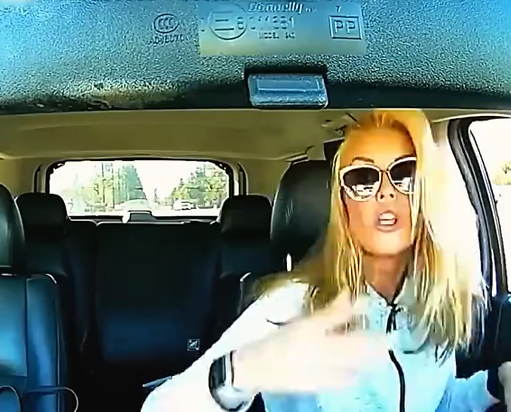
Few interactions between police and civilians escalate faster than a disagreement over what actually happened during a traffic stop. Unlike major criminal investigations, routine traffic stops often come down to one officer’s observation versus one driver’s explanation. In many cases, the dispute is simple and resolved quickly. But when accusations of dishonesty enter the conversation — especially claims that an officer fabricated the reason for a stop — even a minor seatbelt violation can become emotionally charged and deeply confrontational. That tension is exactly what unfolds in the viral video showing a woman passionately arguing with an officer after being accused of driving without a seatbelt.
The incident begins as what appears to be a standard roadside stop captured on dashcam footage. The woman has already been pulled over when the interaction starts becoming more heated. According to the officer, she was observed driving without wearing her seatbelt. The woman immediately disputes the accusation, insisting firmly and repeatedly that she absolutely had her seatbelt on while driving. From the very beginning, her tone reflects frustration and disbelief rather than confusion. She does not appear uncertain about the accusation — she appears offended by it.
As the conversation continues, she gestures toward herself and says directly, “I have a seatbelt on.” The statement becomes the central point of the entire interaction. To her, the issue is not merely about receiving a traffic ticket; it is about being accused of something she believes is untrue. That distinction matters because many viral police encounters escalate not over the severity of the alleged violation, but over perceived dishonesty or disrespect during the interaction.
The woman’s explanation quickly becomes more specific. She tells the officer that she removed her seatbelt only after being pulled over because it is her “habit” to unbuckle once she stops the car. According to her version of events, the officer saw her after she had already unbuckled, not while she was actively driving. She repeatedly emphasizes this point, trying to separate her behavior while parked from her behavior while operating the vehicle.
This detail may sound small, but it becomes critically important in the argument because the entire stop hinges on timing. Was she actually driving unrestrained, or did the officer misinterpret what he saw after the stop had already begun? In many traffic disputes, those few seconds make all the difference. The officer’s perspective and the driver’s perspective collide over a moment that cannot easily be recreated once it passes.
What makes the encounter particularly compelling is the woman’s persistence. She does not simply deny the accusation once and move on. Instead, she continues defending herself throughout the interaction, repeatedly returning to the same explanation. Her insistence reflects a common psychological reaction people have when they feel falsely accused. Even relatively minor allegations can feel deeply personal when someone believes they are being unfairly labeled dishonest or irresponsible.
The emotional intensity of the encounter also highlights how symbolic traffic stops can become. On paper, a seatbelt violation is a minor infraction. But emotionally, the stop evolves into something larger about credibility, authority, and trust. The woman clearly feels that the officer is refusing to believe her explanation, while the officer appears confident in his original observation. Neither side seems willing to back down, creating a standoff rooted less in the seatbelt itself and more in competing versions of reality.
The video overlays referring to a “Corrupt Cop Caught Lying” further intensify the situation by framing the officer’s actions before viewers even analyze the footage themselves. Titles and captions play a major role in shaping public perception online. By labeling the officer corrupt from the start, the video encourages viewers to approach the encounter with suspicion toward law enforcement. This framing matters because viral videos are rarely consumed neutrally. Audiences are often emotionally guided toward a specific interpretation before the interaction even begins.
At the same time, the footage itself appears less definitive than the title suggests. Much of the clip focuses on the woman verbally defending herself while searching through the vehicle for identification or documents. Viewers do not necessarily see a clear, indisputable moment proving whether the seatbelt was on or off before the stop occurred. This ambiguity is exactly why the encounter becomes so divisive online. People interpret uncertainty differently depending on their preexisting beliefs about police credibility and civilian honesty.
One of the most fascinating aspects of traffic stop disputes is how differently officers and drivers often interpret the same moment. Police officers conduct traffic enforcement constantly, relying heavily on visual observation and instinct developed through experience. Drivers, meanwhile, may focus entirely on their own intentions and habits. Misunderstandings can happen genuinely. An officer may believe they saw a violation clearly, while a driver may honestly believe they complied with the law. The conflict emerges because both perspectives feel real and accurate to the individuals involved.
The woman’s statement that it is her “habit” to remove the seatbelt once stopped is particularly important psychologically because habits are automatic behaviors people rarely think about consciously. If her explanation is truthful, it is entirely possible she unbuckled reflexively without considering how it might appear to the approaching officer. This type of routine action can easily create confusion during roadside encounters, especially when officers are observing drivers through windows and mirrors from a distance.
Another key element of the encounter is body language. The woman’s gestures, tone, and repeated emphasis suggest genuine frustration rather than casual denial. She appears emotionally invested in defending her version of events. Whether viewers ultimately believe her or not, her reactions feel authentic to her emotional experience in the moment. This authenticity is one reason the video resonates online. Viewers often connect more strongly to emotional conviction than to factual certainty.
The officer’s role in the interaction also reflects the difficult position law enforcement faces during disputed violations. Officers are expected to enforce laws based on their observations and judgment. However, once a driver disputes those observations, especially aggressively, the encounter can quickly become tense. Officers must maintain authority while also avoiding unnecessary escalation. Every word, facial expression, and response becomes scrutinized both in real time and later by online audiences.
The encounter also raises broader questions about trust in modern policing. Decades ago, most traffic stops existed only in written reports and personal recollections. Today, dashcams and body cameras allow the public to watch these interactions directly. While this increased transparency can improve accountability, it also creates a new phenomenon where every disputed encounter becomes subject to public trial on social media.
Viewers analyze tiny details obsessively: hand movements, voice tone, timing, and officer wording. In some cases, footage clearly exposes misconduct. In others, ambiguity remains unresolved, but online audiences still divide passionately into opposing sides. This seatbelt dispute fits squarely into that modern reality. The lack of absolute visual clarity leaves room for interpretation, which fuels debate rather than resolution.
Another reason the video captures attention is because many drivers can relate to the fear or frustration of feeling misunderstood during a traffic stop. Being accused of violating the law — even for something minor — can immediately trigger defensiveness. Traffic stops place ordinary people into stressful encounters with authority figures who hold significant power over the situation. Even calm individuals may become emotional when they believe they are not being heard fairly.
The woman’s continued insistence also reflects a deeper human need to protect personal integrity. To her, admitting guilt for something she believes she did not do may feel morally wrong, even if arguing prolongs the encounter. People often fight hardest over accusations they perceive as inaccurate because those accusations threaten their sense of honesty and fairness.
Meanwhile, the officer likely views the situation through an entirely different lens. From a law enforcement perspective, arguing extensively over a routine citation may appear unnecessary or evasive. Officers conduct countless traffic stops, and many are accustomed to hearing excuses or denials from drivers attempting to avoid tickets. This dynamic can create mutual frustration because each side interprets the other’s behavior negatively.
The phrase “corrupt cop” itself also deserves examination because it reflects how quickly public discourse around policing becomes polarized. True corruption absolutely exists in some cases and deserves exposure. However, not every disputed traffic stop automatically proves intentional dishonesty. Sometimes disagreements stem from perspective, timing, or human error rather than deliberate misconduct. Viral culture often struggles with nuance because outrage spreads faster than uncertainty.
The footage ultimately becomes compelling precisely because certainty remains elusive. Viewers are forced to interpret emotional cues, verbal explanations, and partial visual evidence rather than relying on a perfectly clear answer. Some people leave convinced the officer lied. Others believe the officer simply observed what he thought was a legitimate violation. The inability to resolve the dispute completely is what keeps conversations around videos like this alive online.
Another important theme within the encounter is the emotional imbalance built into traffic stops themselves. Officers generally control the setting, timing, and legal authority of the interaction. Drivers often feel anxious, vulnerable, or defensive simply because they are being stopped unexpectedly. This imbalance can magnify even small disagreements into emotionally charged confrontations.
The woman’s determination not to concede the accusation may also reflect fear about broader consequences. Traffic citations can affect insurance rates, finances, driving records, and personal pride. What appears minor from the outside can feel much more significant to the person receiving the ticket. This emotional investment explains why some drivers argue intensely over relatively small violations.
At its core, the video is not really about a seatbelt. It is about perception, credibility, and trust. It is about what happens when two people experience the same moment differently and neither side feels willing to surrender their version of reality. The emotional tension comes not from danger or violence, but from frustration and disbelief.
Ultimately, the encounter serves as a reminder that modern traffic stops are no longer private roadside conversations. Cameras, social media, and viral culture have transformed them into public spectacles open to endless interpretation. Every disputed interaction becomes part legal issue, part social debate, and part emotional performance viewed by thousands or even millions of strangers online.
And in this case, what began as a simple seatbelt stop became something far more complicated — a public argument over honesty, authority, and whether the truth of a single moment can ever truly be proven once trust breaks down on the side of the road.
What makes the encounter even more fascinating is how quickly a routine traffic stop transforms into a battle over perception. At the heart of the dispute is not simply whether a seatbelt was worn, but whether the officer’s observation should automatically outweigh the driver’s explanation. This tension reflects a broader issue present in many roadside encounters: the imbalance between observation and interpretation. Officers are trained to trust what they believe they saw, while drivers naturally trust their own memory and intentions. When those two realities conflict, frustration often replaces cooperation almost instantly.
The woman’s emotional reaction throughout the stop suggests she feels deeply misunderstood. Her repeated statements are not casual objections; they sound like someone trying desperately to defend her credibility. That emotional intensity matters because people often become far more upset over accusations they believe are false than over accusations they know are true. In her mind, the issue appears personal. She is not just contesting a citation — she is contesting the idea that she is lying.
One reason these types of encounters spread so rapidly online is because they tap into universal experiences involving authority and fairness. Almost everyone has experienced a moment where they felt unfairly judged, dismissed, or not believed. Traffic stops amplify those emotions because they occur in situations where one person holds clear legal authority while the other feels immediately vulnerable. Even a simple misunderstanding can feel emotionally overwhelming when it occurs under flashing lights on the side of the road.
The woman’s explanation about unbuckling out of habit is also psychologically believable to many viewers because habits are often unconscious. People perform countless automatic actions every day without actively thinking about them. Some drivers immediately turn down music when police lights appear. Others instinctively reach for documentation, lower windows, or remove seatbelts once stopped. These routines happen quickly and often without deliberate thought. If the woman genuinely removed the seatbelt automatically after pulling over, it is easy to see how the officer may have observed only the aftermath rather than the full sequence of events.
At the same time, the officer likely believes his observation was accurate. Traffic enforcement relies heavily on quick visual assessments made from patrol vehicles, intersections, and roadside positioning. Officers routinely identify seatbelt violations based on shoulder movement, strap visibility, and driver posture. From the officer’s perspective, there may have been no ambiguity at all. This disconnect demonstrates how two people can experience the same moment with total confidence in opposite conclusions.
Another layer of tension comes from the setting itself. Traffic stops are inherently stressful because they interrupt ordinary life suddenly and publicly. Drivers often feel embarrassed, nervous, or defensive before the conversation even begins. The presence of a uniform, flashing lights, and the possibility of fines or penalties creates immediate emotional pressure. Under stress, people tend to speak more emotionally, interpret tone more personally, and react more strongly to disagreement.
The woman’s body language throughout the encounter reinforces how emotionally invested she is in being believed. She gestures while speaking, emphasizes key phrases repeatedly, and continues defending herself even while searching for documents inside the vehicle. These actions suggest her focus remains locked on proving her honesty. She does not appear interested in simply accepting the citation and moving on. Instead, she seems determined to challenge the very basis of the stop.
This determination is important because it changes the emotional balance of the interaction. Many drivers become passive during traffic stops, either out of fear or resignation. In contrast, this woman actively resists the officer’s version of events verbally, creating a more confrontational dynamic. While the encounter never appears physically dangerous, it becomes emotionally charged because both sides remain fixed in their positions.
The phrase “Corrupt Cop Caught Lying” dramatically intensifies that emotional framing online. Social media thrives on certainty and outrage, especially when authority figures are involved. By presenting the encounter as proof of corruption, the video title encourages viewers to see the officer not merely as mistaken, but as intentionally dishonest. That framing changes how audiences interpret every detail. Small pauses, tone shifts, or expressions suddenly become “evidence” supporting a predetermined narrative.
Yet the footage itself seems more ambiguous than the title suggests. There is no definitive cinematic reveal proving beyond doubt whether the seatbelt was fastened moments before the stop. Instead, viewers are left evaluating verbal claims, body language, and partial visual evidence. This ambiguity fuels endless debate because people project their own beliefs onto uncertain situations. Those skeptical of law enforcement may see dishonesty immediately. Others may view the interaction as a simple misunderstanding or routine enforcement dispute.
This phenomenon reflects a larger issue in modern viral culture: people increasingly expect video footage to provide absolute truth. However, cameras rarely capture reality perfectly. Angles, timing, perspective, and missing context all shape interpretation. A dashcam may record the conversation but not the precise second an alleged violation occurred. Even body cameras, often praised for transparency, cannot fully replicate human perception or intention. As a result, viewers are frequently left filling gaps with assumptions.
Another reason the video resonates is because seatbelt laws themselves occupy an unusual place in public consciousness. Unlike laws against violent crime, seatbelt regulations are often viewed through a more personal lens. Some people see them as necessary public safety measures, while others resent being policed over what they consider private choices. This existing tension can make seatbelt stops feel more emotionally charged than their legal severity would suggest.
The encounter also illustrates how small disagreements can escalate emotionally when neither side feels heard. The officer likely views the stop as straightforward enforcement based on observation. The woman, however, appears convinced the officer is ignoring or dismissing her explanation unfairly. Once people feel unheard, conversations often become repetitive. That repetition is visible throughout the encounter as she continues returning to the same central argument: she was wearing the seatbelt while driving.
Interestingly, repetition during disputes often reflects emotional urgency rather than stubbornness alone. People repeat themselves when they believe the core issue has not been acknowledged. The woman may feel that unless the officer directly accepts her explanation, the interaction remains unresolved emotionally regardless of what citation is issued. Her persistence becomes less about changing the outcome and more about defending her integrity.
The stop also highlights how quickly authority encounters become performative in the era of cameras and viral clips. Both officer and driver are aware — consciously or subconsciously — that their behavior may later be reviewed publicly. This awareness changes interactions. Drivers may become more assertive because they know footage exists. Officers may become more procedural knowing their actions could be scrutinized online. The camera transforms a private disagreement into a potential public spectacle.
Another fascinating aspect is how differently viewers interpret confidence. Some audiences see the woman’s certainty as evidence she is telling the truth. Others interpret it as defensiveness designed to avoid responsibility. Similarly, some viewers may interpret the officer’s calm insistence as professionalism, while others see it as dismissive authority. Human beings naturally associate emotional cues with truthfulness even though confidence alone does not reliably indicate accuracy.
The broader distrust surrounding policing in modern society also shapes reactions to the video. Over the past decade, viral footage exposing misconduct has changed public attitudes dramatically. Many people now approach police encounters with skepticism by default. While increased accountability is valuable, this environment also means that even routine disputes quickly become framed as potential abuse of power. The officer in this encounter is not judged solely on the specific stop itself, but within the larger cultural context surrounding law enforcement.
At the same time, officers often feel growing frustration about being publicly accused of dishonesty during ordinary enforcement situations. Traffic stops involve rapid observations made under imperfect conditions. Mistakes can happen without malicious intent. However, once accusations of lying or corruption emerge online, nuance often disappears completely. Public opinion tends to demand simple heroes and villains rather than acknowledging uncertainty.
The encounter also raises deeper philosophical questions about evidence and credibility. In situations without definitive proof, how should conflicts between officer testimony and civilian testimony be resolved? Historically, officers were often presumed more credible automatically. Today, video evidence has complicated that assumption. But when footage remains inconclusive, society is left wrestling with competing narratives once again.
Another subtle but important element is the woman’s focus on habit rather than technicality. She does not appear to argue obscure legal definitions or procedural loopholes. Instead, she frames her explanation around normal human behavior. This makes her defense feel relatable. Many viewers can imagine themselves instinctively removing a seatbelt once parked, especially while distracted by the stress of being stopped.
The emotional core of the video ultimately revolves around trust. Traffic stops depend heavily on mutual trust for smooth resolution. Officers trust drivers to comply honestly. Drivers trust officers to act fairly and accurately. Once either side believes that trust has been broken, even minor interactions can become emotionally exhausting.
The stop also demonstrates how power dynamics affect communication. The officer holds legal authority to issue citations, control the pace of the encounter, and interpret observations officially. The driver, meanwhile, has limited ability to challenge those conclusions in the moment. This imbalance can intensify frustration because arguments often feel one-sided regardless of who is correct factually.
Online audiences then step into the role of unofficial jury. Social media users analyze footage frame by frame, debating credibility based on incomplete evidence. This phenomenon has transformed routine law enforcement encounters into forms of public entertainment, activism, and cultural debate simultaneously. Millions of strangers may develop strong opinions about a thirty-second roadside interaction without ever knowing the full truth.
The emotional impact of the encounter comes precisely from that uncertainty. There is no dramatic confession or definitive proof. Instead, viewers are left watching two people defend conflicting realities passionately. The officer believes he saw a violation. The woman believes she is falsely accused. The camera captures the argument but not absolute certainty.
In many ways, this ambiguity reflects broader modern society. People increasingly distrust institutions, question authority, and rely on personal interpretation of fragmented evidence. Viral videos become symbolic battlegrounds where larger cultural frustrations about fairness, honesty, and accountability are projected onto individual moments.
Ultimately, the seatbelt dispute is compelling not because of the violation itself, but because it exposes how fragile trust has become between authority and the public. A single traffic stop evolves into a larger debate about credibility, perception, and whether objective truth can still exist when every moment is filtered through cameras, emotions, and competing narratives.
And in the end, what remains most memorable is not the citation or the law itself, but the unresolved tension between two people who both believed completely in their own version of what happened on the side of the road.