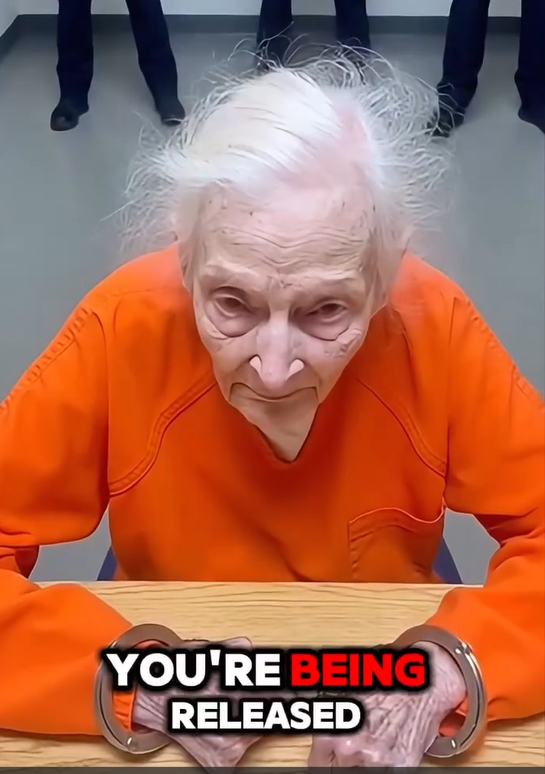
In a heart-wrenching and sobering scene, an elderly woman, shackled and worn, sits in an interrogation room, hearing the words, “You’re being released.” The image captures the emotional toll of a long period of incarceration, followed by the bittersweet moment of release. Yet, this freedom comes at a high price—she is being let out with no place to go, no support system, and no resources to help her navigate life after incarceration.
This article explores the tragic reality faced by many elderly individuals who find themselves in the criminal justice system. As this woman’s release shows, the system does not always offer the necessary support for elderly individuals, especially those who have been incarcerated for long periods. The article delves into the psychological and social consequences of late-life incarceration, the challenges of reintegration into society for older individuals, and the broader societal issues that contribute to such situations.
The Case of Elderly Incarceration: A Growing Issue in the U.S.
The United States has one of the highest incarceration rates in the world, and while the focus has often been on younger populations, the issue of elderly incarceration is becoming more prominent. According to the National Institute of Justice, the number of elderly prisoners in the U.S. has been steadily increasing, with individuals aged 55 and older making up a significant portion of the prison population. This demographic has grown by over 400% over the past two decades, a trend that continues to rise as the overall aging population increases.
Elderly prisoners often face unique challenges that younger inmates do not experience. Many elderly individuals in prison are there because of crimes committed decades ago, but due to the slow pace of the criminal justice system, they remain incarcerated well into their old age. For these individuals, the prospect of freedom may come too late, as they are physically and mentally unable to reintegrate into society in a meaningful way.
In some cases, elderly inmates are released from prison because they have served their sentences or due to health conditions that require them to receive medical care outside the prison system. However, upon release, many find themselves without any support network, financial resources, or home to return to. This lack of preparation for reintegration into society can result in feelings of isolation, depression, and hopelessness.
The case of the elderly woman depicted in the image and video is a perfect example of how the system fails to address the needs of elderly individuals who have served long sentences and are released without support. Her freedom, though seemingly a positive outcome, comes with a deep sense of abandonment and uncertainty about the future.
The Psychological and Social Impact of Incarceration on the Elderly
Incarceration has a profound psychological impact on individuals of all ages, but for the elderly, the effects can be especially debilitating. Elderly prisoners often face a unique set of challenges, including physical and mental health issues, the loss of family and social connections, and a lack of autonomy. For many, prison is not just a place of punishment but a harsh environment where aging and illness exacerbate their already difficult lives.
The psychological toll of prison life on elderly individuals is significant. As people age, they often experience physical decline, including loss of mobility, hearing, and eyesight, which can make it difficult to navigate the harsh and sometimes dangerous conditions of prison. The added stress of incarceration can exacerbate existing health conditions, leading to a faster rate of deterioration and chronic health issues. Elderly inmates often suffer from conditions such as arthritis, dementia, hypertension, and other age-related ailments that require ongoing care. However, prison systems are often ill-equipped to provide adequate medical care to older prisoners, which can further complicate their situation.
Additionally, elderly prisoners are often isolated from family and friends, as many of their loved ones may have passed away or no longer have the resources to visit. The loss of social support is particularly harmful to older adults, who are more vulnerable to depression and anxiety. Social isolation in prison can exacerbate feelings of abandonment, leading to a decline in mental health.
When elderly individuals are released from prison, the emotional and psychological effects can be even more pronounced. After spending decades incarcerated, they may feel disconnected from society and overwhelmed by the challenges of reintegration. The transition to freedom is not always a joyous occasion, as these individuals are often left to navigate a world that has changed dramatically during their time behind bars. The lack of a support system and the difficulty of adjusting to new technology, social norms, and daily activities can lead to profound feelings of confusion and helplessness.
The Struggles of Reintegration: Why the System Fails the Elderly
Elderly individuals released from prison often face significant challenges in reintegrating into society. Unlike younger individuals who may have the ability to find work, access housing, or receive support from family and friends, older individuals often struggle to meet these basic needs. The inability to return to their previous lives—due to aging, the loss of family, or the lack of economic resources—can create a deep sense of hopelessness.
For one, finding stable housing is one of the most difficult challenges for elderly ex-prisoners. Many do not have families to take them in or offer them the necessary financial support to secure a home. Even if they can find housing, it may not be suitable for their needs, particularly if they have health conditions that require specialized care. Many elderly people also lack the financial means to support themselves, as their years in prison may have led to a loss of work experience and savings.
Furthermore, employment opportunities for elderly ex-prisoners are scarce. Age discrimination in the workforce is a significant barrier for seniors trying to re-enter the job market. This is compounded by the stigma of having been incarcerated. Employers may be reluctant to hire individuals with criminal records, and older workers may not have the skills or experience to compete with younger applicants.
Additionally, without a support system, elderly ex-prisoners are vulnerable to social isolation. They may struggle to navigate a world that has changed significantly since their incarceration, facing difficulties in building new relationships, accessing community resources, or simply adjusting to modern life. This isolation can contribute to further mental health struggles, such as depression or anxiety, making it even harder for them to reintegrate successfully.
The lack of programs designed specifically for elderly ex-prisoners exacerbates these issues. While there are some initiatives aimed at supporting individuals who have been incarcerated, there is a significant gap when it comes to services tailored to the unique needs of older adults. Community-based organizations, social services, and mental health programs are essential in helping elderly individuals navigate life after incarceration. However, these resources are often underfunded and difficult to access.
The Need for Comprehensive Support Systems for Elderly Ex-Prisoners
To address the challenges faced by elderly individuals after their release from prison, there is an urgent need for comprehensive support systems. These systems should focus on providing access to housing, healthcare, financial assistance, and social services to help elderly ex-prisoners reintegrate into society. Additionally, mental health services should be made available to address the psychological toll of incarceration and assist individuals in navigating the emotional and social challenges they face upon release.
One of the most critical aspects of supporting elderly ex-prisoners is ensuring they have access to affordable healthcare. Many elderly individuals released from prison are in poor health and require ongoing medical care. Without access to healthcare, these individuals are at risk of further physical and mental decline, making it even more difficult for them to reintegrate into society. Expanding access to healthcare for elderly ex-prisoners is essential to improving their quality of life and helping them build a foundation for success after release.
In addition, there needs to be a stronger focus on community-based programs that provide emotional support and social services to elderly individuals. These programs should focus on reducing social isolation, helping individuals rebuild their lives, and ensuring that they are equipped with the resources they need to thrive. Programs that offer job training, mentorship, and housing assistance can help elderly ex-prisoners regain their independence and reintegrate into society.
Finally, public awareness and advocacy are necessary to raise awareness about the specific needs of elderly ex-prisoners. By highlighting the challenges faced by this vulnerable population, we can encourage policymakers and community leaders to take action and implement policies that provide better support for elderly individuals in the criminal justice system. The goal is to create a system that recognizes the unique challenges faced by older adults and provides the resources and support necessary to help them transition back into society with dignity and respect.
The release of elderly individuals from prison, like the woman shown in the video, comes with significant challenges. While the idea of freedom is usually associated with joy and new opportunities, for elderly ex-prisoners, it can often feel like a burden, especially if they are released without adequate support or resources. As society continues to face issues of aging, incarceration, and reintegration, it is crucial to develop systems that provide support for those who are released from prison in their later years.
By improving access to healthcare, housing, employment, and mental health services, and by creating more supportive programs for elderly individuals, we can begin to address the needs of this vulnerable population. The case of this elderly woman, though tragic, serves as an important reminder that our justice system must consider the unique needs of older adults in order to provide a more just and equitable future for all.
Incarcerating elderly individuals is a systemic issue that has been largely overlooked in the larger criminal justice reform discussions. Historically, the focus of prison reform has centered on younger offenders and the mass incarceration of young adults. However, the elderly population in prisons has been steadily increasing over the last few decades, highlighting a shift in the makeup of the incarcerated population.
There are several reasons why elderly individuals are becoming a larger portion of the prison system. Some of these individuals are serving sentences that were handed down years ago, while others may be incarcerated later in life for crimes committed when they were younger. This shift in demographics poses significant challenges for the prison system, as elderly individuals have unique needs that are often not met in the traditional correctional facilities.
As people age, they experience a variety of physical and mental health issues that can make it difficult to live in prison, where healthcare and accommodations may be insufficient. Many elderly individuals suffer from chronic conditions, such as arthritis, diabetes, and cardiovascular disease, which require ongoing medical care. In addition, cognitive decline associated with age, including dementia and Alzheimer’s disease, can exacerbate the challenges of living in a correctional environment.
Prisons were never designed to accommodate the unique needs of the elderly. While younger inmates may have the physical stamina to endure the harsh conditions of prison life, older prisoners often face significant challenges. These include difficulty moving through the prison, issues with healthcare, and the emotional toll of being separated from family and loved ones for extended periods. For elderly individuals, prison is not just a place of punishment—it’s often a place where their physical and mental health deteriorates.
Moreover, elderly inmates who are released after long sentences may face additional challenges. They have often missed out on decades of social and technological advancements, making it harder to adjust to life on the outside. They may lack the skills to navigate modern technology or find employment, and they may not have the financial resources to support themselves.
Reentry Challenges for Older Adults: The Difficulty of Starting Over
For elderly individuals released from prison, reintegration into society can be an overwhelming and disheartening process. After spending years or even decades incarcerated, the idea of starting over at an advanced age may seem daunting. Many elderly ex-prisoners face numerous obstacles when attempting to reintegrate, including financial instability, lack of housing, social isolation, and limited job opportunities.
One of the most significant barriers that elderly ex-prisoners face is securing stable housing. Upon release, many do not have a family to return to, or their family members may no longer be able or willing to take them in. Without a stable home, elderly individuals are often forced to rely on shelters or temporary housing arrangements, which may not meet their needs. These conditions can exacerbate feelings of loneliness and hopelessness, making it harder for elderly ex-prisoners to adapt to life outside of prison.
In addition, the lack of stable housing often impacts an individual’s ability to find and maintain employment. Many older individuals are unable to compete in the job market, where younger, more tech-savvy applicants dominate. The stigma of having a criminal record also complicates matters—many employers are reluctant to hire individuals with a history of incarceration, especially if the individual has been out of the workforce for years.
Older adults are also more vulnerable to health issues, both physical and mental, which further complicates their reintegration into society. Many elderly ex-prisoners suffer from chronic health conditions that require ongoing medical care, yet they may not have access to affordable healthcare upon release. Inadequate healthcare, coupled with the trauma of incarceration and the challenges of reintegration, can lead to depression, anxiety, and other mental health issues, which further hinder the reintegration process.
Social isolation is another major concern for elderly ex-prisoners. While younger individuals may have an easier time re-establishing connections with family and friends after release, older adults often have fewer social support networks. Over time, family members may have passed away, or relationships may have deteriorated due to the long duration of the individual’s incarceration. This lack of social support can contribute to a sense of abandonment and despair, making the transition to life outside prison even more difficult.
The Need for Specialized Programs for Elderly Ex-Prisoners
Given the unique challenges faced by elderly ex-prisoners, it is crucial that society provides specialized programs and services designed to help them reintegrate successfully. These programs should focus on providing the necessary support to address the specific needs of older adults, including access to housing, healthcare, employment assistance, and social services.
1. Housing Assistance Programs: One of the most pressing needs for elderly ex-prisoners is stable housing. Public housing programs should be designed to accommodate elderly individuals who have been released from prison. These programs could provide affordable housing options for seniors, along with access to social services and support networks. Additionally, policies should be put in place to ensure that elderly ex-prisoners are not discriminated against in housing applications due to their criminal history.
2. Healthcare Access: Elderly ex-prisoners often suffer from chronic health conditions that require ongoing medical care. It is essential that these individuals have access to affordable healthcare upon release. Medicare and Medicaid should be expanded to cover the medical needs of elderly ex-prisoners, ensuring that they can receive the care they need to stay healthy and manage any pre-existing conditions. In addition, mental health services should be made readily available to help ex-prisoners cope with the emotional challenges of reintegration.
3. Employment Opportunities: Reintegrating into the workforce can be one of the most difficult aspects of life after incarceration. Many elderly ex-prisoners may struggle to find work due to age discrimination and the stigma of having a criminal record. Governments and nonprofits should partner to create job training programs specifically for older adults who have been incarcerated. These programs could offer skills training, mentorship, and job placement services to help elderly individuals regain their independence and reintegrate into society.
4. Social Support Programs: Social isolation is a significant issue for elderly ex-prisoners, and it is important to provide opportunities for these individuals to connect with others. Community organizations should create social support programs specifically for seniors who have been released from prison. These programs could provide opportunities for older ex-prisoners to engage in social activities, receive counseling, and build relationships with others who are going through similar experiences.
The Role of Advocacy and Policy Change
In addition to providing support services for elderly ex-prisoners, there is a need for greater advocacy and policy change to address the systemic issues of aging in the criminal justice system. Advocates for criminal justice reform have long pushed for changes to how elderly individuals are treated in prison and after their release.
One area of focus is the use of alternatives to incarceration for elderly individuals. Instead of sentencing elderly individuals to long prison terms, courts could explore alternatives such as house arrest, electronic monitoring, or other community-based programs. These alternatives would allow elderly individuals to remain in their communities and receive the care they need, without subjecting them to the harsh conditions of prison life.
Additionally, reforms to parole and sentencing laws could ensure that elderly individuals are not incarcerated for longer than necessary. Many elderly individuals are serving sentences for crimes they committed decades ago, and their continued incarceration may no longer serve the interests of justice. By implementing more lenient parole policies for elderly prisoners and providing opportunities for compassionate release, the criminal justice system can help individuals live out their final years with dignity.
The case of the elderly woman being released from prison with nowhere to go is a stark reminder of the challenges that elderly individuals face when they are caught in the criminal justice system. The current system fails to adequately address the needs of elderly prisoners and ex-prisoners, leaving them vulnerable to isolation, neglect, and poor health outcomes.
By creating specialized programs for elderly individuals, expanding access to healthcare and housing, and implementing policies that promote rehabilitation and reintegration, society can provide a more compassionate and effective approach to criminal justice. These changes will not only improve the lives of elderly ex-prisoners but also create a more just and humane system for all individuals, regardless of age.
Furthermore, society must recognize that elderly individuals who have been incarcerated often face a unique set of obstacles, and therefore, the resources allocated to their reintegration should be tailored to address their specific needs. Providing elderly individuals with the support they need can significantly reduce the likelihood of recidivism, as they are given the tools to succeed outside of prison and live fulfilling, dignified lives.