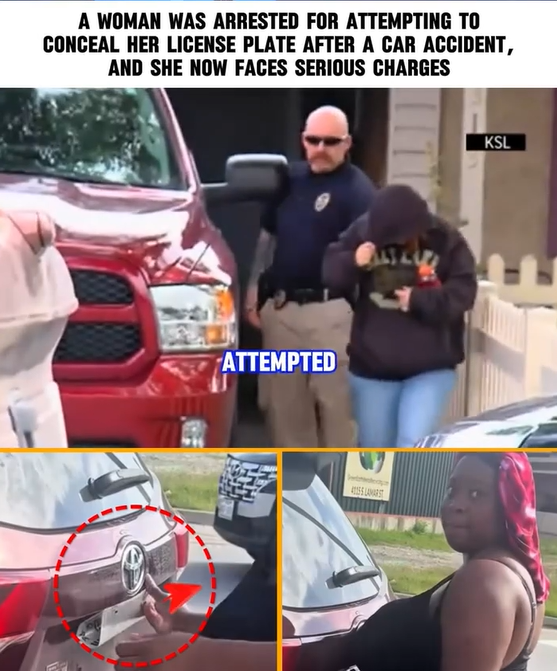
In the case of the woman arrested for attempting to conceal her license plate after a car accident, the legal implications are severe and far-reaching. Concealing or attempting to hide a vehicle’s identity after a crash is not only a crime in many jurisdictions but is also an act of deception that can hinder justice. The role of a license plate in identifying the vehicle involved in an accident is paramount, as it allows law enforcement officials to track the responsible party, gather evidence, and ensure accountability.
The Legal Consequences of Attempting to Evade Responsibility
When individuals involved in a car accident attempt to conceal their identity by tampering with or hiding their license plate, they are committing an offense. Depending on the severity of the incident and the laws in the area, the individual may face charges ranging from hit-and-run to obstruction of justice. The consequences for such actions are significant and can lead to criminal penalties, including fines, license suspension, and potential jail time.
In many cases, a hit-and-run offense is considered a serious crime. If the accident resulted in property damage, injury, or, worse, death, the individual responsible may face heightened penalties. By attempting to evade responsibility through the act of hiding the license plate, the perpetrator is not only avoiding accountability but also exacerbating the situation.
Attempting to Conceal Evidence in Legal Terms
In legal terms, attempting to conceal evidence can be classified as obstruction of justice. In the context of a car accident, this could involve deliberately removing, damaging, or hiding important identifying features of the vehicle. In the case of the woman in this incident, her decision to hide her license plate would have been seen as an attempt to obstruct the investigation into the crash.
This action, whether or not it was successful in evading law enforcement at first, sets in motion a chain of events that can complicate the legal process. Concealing evidence undermines the integrity of the investigation and delays the pursuit of justice for the victims involved. This is why authorities take such actions very seriously, as it disrupts the proper course of law enforcement and accountability.
The Role of Law Enforcement in Investigating Car Accidents
Law enforcement agencies play an essential role in investigating car accidents, ensuring that responsible parties are held accountable for their actions. In situations where there is an attempt to conceal evidence, such as hiding a license plate, officers must work diligently to uncover the truth and ensure that justice is served.
Identifying Suspects and Gathering Evidence
When an accident occurs, officers typically respond by securing the scene, assessing damage, gathering witness statements, and taking photographs or video footage. In modern times, surveillance cameras, both public and private, can be critical tools in assisting with the investigation. License plates provide crucial information for tracking down the vehicle and the driver involved.
In cases where evidence is concealed or tampered with, law enforcement often needs to work harder to identify the individual responsible. This may involve further investigation, such as checking traffic cameras, using forensic techniques, or conducting interviews with witnesses. The removal or concealment of a license plate can prolong the investigation, making it more difficult for officers to identify the driver and hold them accountable for their actions.
Criminal Charges and Penalties for Concealment
When law enforcement discovers that an individual has attempted to conceal evidence in a car accident, the driver can face a range of charges. For example, in cases of hit-and-run accidents, penalties can include:
- Criminal Charges: Depending on the severity of the accident and the jurisdiction, the driver may face criminal charges related to hit-and-run, obstruction of justice, or tampering with evidence. These charges can carry severe penalties, including imprisonment.
- Financial Penalties: In addition to criminal charges, individuals found guilty of concealing evidence may face significant fines. The fines may increase depending on whether there were injuries, property damage, or fatalities involved.
- Loss of Driving Privileges: A conviction may result in the suspension or revocation of the driver’s license. This is particularly damaging, as losing driving privileges can severely affect a person’s ability to work, commute, and carry out everyday tasks.
- Restitution to Victims: In some cases, the driver may be required to pay restitution to the victims of the accident. This could involve compensation for medical expenses, lost wages, and property damage.
The consequences for concealing evidence after a car accident are clear. The justice system recognizes the severity of attempting to evade responsibility, and those found guilty face serious legal ramifications.
Understanding the Motivation Behind Hiding Evidence
It is essential to understand why someone might attempt to conceal evidence after an accident. Often, this decision is rooted in fear, guilt, or the desire to avoid responsibility.
Fear of Consequences
One of the most common reasons people try to hide evidence is fear of the consequences. If the accident caused significant damage or injury, the individual involved might fear legal repercussions, such as a hit-and-run charge, hefty fines, or imprisonment.
The fear of criminal charges may cause someone to act impulsively and attempt to hide their involvement in the crash. However, while the initial instinct might be to avoid accountability, this often leads to further legal complications. In some cases, individuals may even face more severe consequences for tampering with evidence than if they had simply stayed at the scene and cooperated with law enforcement.
Guilt and Regret
Guilt and regret often drive individuals to act out of fear or desperation. After an accident, especially if the driver knows they were at fault, they may feel overwhelmed by guilt and be motivated to avoid the consequences of their actions. The shame associated with causing harm to others, coupled with the desire to avoid the legal and social consequences, may lead to the ill-fated decision to conceal evidence.
This psychological drive to evade accountability can cloud judgment, leading the individual to make choices that ultimately make the situation worse.
The Impact of Reckless Behavior on Public Safety
Reckless behavior, such as attempting to conceal a license plate after a car accident, has a direct impact on public safety. When drivers choose to evade responsibility, they not only undermine the legal process but also set a dangerous precedent for others.
The Ripple Effect on the Community
When a driver attempts to evade justice, they not only place themselves in legal jeopardy but also undermine trust in the legal system and public safety. It creates a sense of fear and unease in the community, particularly for those who are involved in the accident or those who witness the event. This lack of accountability fosters a sense that justice can be avoided, potentially emboldening others to act similarly.
Increased Risk for Other Drivers
Concealing evidence after an accident also increases the risk for other drivers. Without the proper investigation, there may be unresolved issues regarding insurance claims, vehicle identification, and liability. Failing to hold individuals accountable for their actions can make the roads less safe for everyone, as it fosters a culture where people feel they can escape responsibility after engaging in reckless or negligent driving.
The Importance of Accountability in Driving
Driving is a privilege that comes with immense responsibility. It is vital for the safety of everyone on the road that individuals take their responsibilities seriously. Accountability in driving means not only following traffic laws but also accepting responsibility when accidents occur.
Promoting Responsible Driving
In order to foster safer driving habits, it is essential to promote responsible driving behavior through education, awareness campaigns, and strong law enforcement. Drivers must understand that their actions have consequences, and that evading responsibility, as demonstrated in this case, only serves to harm others.
Public campaigns highlighting the importance of being accountable for one’s actions on the road can go a long way in raising awareness about the dangers of reckless driving and the importance of upholding the law.
Preventive Measures to Avoid Accidents and Ensure Public Safety
While accidents are sometimes inevitable, there are steps that can be taken to minimize their frequency and severity. Drivers must be educated on safe driving practices, and communities should invest in infrastructure that reduces the risk of accidents.
Driver Education and Safety Awareness
Ongoing driver education programs can help reinforce the importance of safe driving habits, such as wearing seat belts, obeying traffic signals, and avoiding distractions. Schools, employers, and community organizations should promote driver safety campaigns to raise awareness of the dangers of speeding, drunk driving, and distracted driving.
Improvements in Road Infrastructure
Investing in road infrastructure is also a key measure in reducing accidents. Well-lit roads, clear signage, and safer intersections can help prevent accidents and encourage drivers to follow the rules of the road. Highways and city streets should be designed with safety in mind to reduce the likelihood of crashes.
The incident in which a woman attempted to conceal her license plate after a car accident serves as a stark reminder of the importance of accountability in driving. The consequences of attempting to evade responsibility for an accident can be far-reaching, not just for the individual involved but for the entire community. Law enforcement plays a critical role in ensuring that those who engage in reckless behavior face the appropriate consequences, while public awareness campaigns and preventive measures can help reduce the likelihood of future accidents.
As a society, we must continue to promote responsible driving and foster a culture of accountability on the roads. Only by taking these steps can we create a safer environment for everyone who uses public roads.
The Broader Societal Implications of Concealing Evidence in Car Accidents
While the incident involving the woman who attempted to conceal her license plate after a car accident might seem like an isolated case, it highlights several broader societal issues. Concealing evidence after an accident, especially in the context of a hit-and-run or other reckless behavior, can create a ripple effect throughout the community and society. It raises important questions about how we perceive responsibility, law enforcement, and accountability in driving.
Erosion of Public Trust in the Legal System
When individuals evade responsibility for their actions, it erodes public trust in the justice system. The idea that people can escape consequences by covering up their involvement in an accident can create a sense of lawlessness. This damages the public’s confidence in the fairness and effectiveness of the legal system. For the legal system to maintain its integrity, it is crucial that law enforcement agencies not only investigate incidents thoroughly but also hold offenders accountable for their actions.
The case of the woman attempting to conceal her license plate after the accident serves as a powerful reminder that each act of evasion, no matter how small, contributes to a larger pattern of non-compliance with the law. For the community to feel secure, it must believe that the justice system is capable of holding people accountable, no matter the circumstances.
The Impact on Victims and Witnesses
The emotional impact of an accident can be far-reaching, not just for the person directly involved in the crash but for the witnesses and victims as well. When a driver attempts to flee or hide evidence, it compounds the trauma that those affected by the accident experience. The victim in a hit-and-run or concealed accident may be left feeling abandoned, neglected, or disrespected by the person who caused their injuries. The failure to take responsibility for the harm done can exacerbate the emotional and psychological toll on those involved.
For bystanders and witnesses, knowing that someone involved in an accident is trying to escape responsibility can also increase feelings of fear or mistrust. It creates an atmosphere where the public feels unsure about whether they can trust the people around them, especially in potentially dangerous situations.
Addressing the Root Causes of Reckless Driving and Concealing Evidence
To effectively reduce incidents like the one involving the woman concealing her license plate, it’s necessary to address the root causes of reckless driving and the temptation to evade responsibility. While specific motivations for evading justice can vary, there are common factors that contribute to this behavior.
Fear of Legal and Financial Repercussions
One of the primary motivators for people to flee the scene of an accident or attempt to conceal evidence is the fear of the legal and financial consequences. Drivers may panic when they realize they are at fault, and this panic can cloud their judgment. They may not consider the long-term repercussions of their actions and may instead choose to hide the truth to avoid immediate consequences.
For many people, the fear of losing their driver’s license, facing a hefty fine, or even being jailed for a hit-and-run incident can feel overwhelming. Additionally, they may worry about the financial burden of paying for medical bills, property damage, or insurance claims that result from the accident. These concerns can push drivers to act impulsively and make decisions that further complicate the situation.
However, the consequences of attempting to evade responsibility for an accident can often be more severe than facing the initial charges. Fleeing the scene can result in additional criminal charges, higher fines, and even longer jail sentences. In this sense, drivers who choose to conceal evidence or leave the scene of an accident are often inadvertently making their situation worse.
Psychological and Emotional Factors in the Decision to Conceal Evidence
In some cases, the decision to conceal evidence is influenced by psychological and emotional factors. Guilt, anxiety, and panic can trigger impulsive reactions that override an individual’s better judgment. A person who is afraid of facing the consequences of their actions may resort to irrational behavior, such as attempting to hide their involvement.
In cases where the driver was involved in a particularly serious accident, such as one that caused injury or death, the emotional toll may lead them to believe they can escape the legal and emotional burden by running away. These reactions are often driven by fear and shame, which can cloud the individual’s perception of what is right and legal.
Lack of Moral Responsibility or Empathy
Another factor contributing to reckless driving and evading responsibility is the lack of moral responsibility and empathy. Some individuals may not fully understand or care about the impact their actions have on others. This lack of empathy can lead to irresponsible driving behavior, as well as a failure to acknowledge the harm caused by their actions.
This moral indifference can contribute to both reckless driving and the subsequent attempt to conceal evidence. In this case, the woman who hid her license plate may have done so because she did not feel the full weight of her actions, or she may have thought she could avoid responsibility by evading the scene. This lack of accountability is a significant issue in addressing the larger problem of reckless behavior on the roads.
The Importance of Driver Education and Awareness
One of the key ways to reduce incidents like this and encourage safer driving is through comprehensive driver education. Driving is a privilege that comes with significant responsibility, and educating drivers about the legal, ethical, and social consequences of reckless driving can help reduce incidents of negligence and evasion.
Incorporating Accountability into Driver Education
Driver education programs should place a greater emphasis on the legal and ethical responsibilities that drivers face after an accident. Many current programs focus on the basics of road safety, traffic laws, and vehicle maintenance, but they do not delve deeply enough into the moral responsibility of drivers once an accident occurs.
Drivers need to understand the potential consequences of attempting to flee the scene of an accident or conceal evidence. Including lessons about the importance of taking responsibility for one’s actions and the impact of evasion on victims could help foster a more conscientious generation of drivers. Through education, drivers can be made aware that avoiding accountability only exacerbates the consequences of their actions, making it more difficult to repair the damage caused.
Increasing Public Awareness of the Legal Consequences
In addition to driver education, public awareness campaigns can play a crucial role in reducing reckless driving and the temptation to conceal evidence. By making it clear that leaving the scene of an accident or attempting to hide evidence will only lead to more severe penalties, public campaigns can help deter such behavior.
These campaigns can be particularly effective if they target high-risk groups, such as young or inexperienced drivers, who may not fully understand the legal and social consequences of their actions. Highlighting real-life examples of individuals who faced harsh penalties for fleeing the scene or hiding evidence can serve as a powerful deterrent for others.
Strengthening Law Enforcement and Legal Penalties
While education and awareness are important, law enforcement must play a central role in ensuring that those who engage in reckless driving and attempt to conceal evidence are held accountable. Strengthening legal penalties for hit-and-run accidents and acts of evidence concealment can serve as an effective deterrent.
Enhanced Penalties for Concealing Evidence
One way to address this issue is by implementing enhanced penalties for those who attempt to conceal evidence after an accident. In many jurisdictions, the legal system already imposes severe penalties for hit-and-run offenses, but additional charges related to obstruction of justice and evidence tampering could further emphasize the seriousness of attempting to evade responsibility.
For example, individuals who are caught attempting to hide their license plates or flee the scene could face charges that increase the legal consequences of their actions. The imposition of higher fines, longer prison sentences, and mandatory community service can help ensure that those who engage in reckless behavior face the full consequences of their actions.
Improving Law Enforcement Training
In addition to strengthening legal penalties, law enforcement agencies should invest in better training for officers to detect and handle cases involving concealed evidence and hit-and-run accidents. Officers should be equipped with the tools and knowledge to investigate accidents thoroughly, including identifying when evidence has been tampered with or concealed.
By improving law enforcement training in these areas, police officers will be better prepared to investigate accidents, identify perpetrators, and gather the necessary evidence to hold offenders accountable. This can also increase public trust in the justice system, as individuals will feel confident that those who commit crimes, including attempting to escape responsibility for an accident, will be caught and penalized accordingly.
The incident of a woman attempting to conceal her license plate after a car accident raises important questions about responsibility, accountability, and the consequences of reckless behavior. The legal and emotional implications of such actions are far-reaching, and it is essential that society continues to address these issues in meaningful ways.
By strengthening driver education, increasing public awareness, improving law enforcement practices, and implementing harsher penalties for concealing evidence, we can create safer roads and communities. It is crucial for drivers to recognize the importance of taking responsibility for their actions, not just for their own sake, but for the safety and well-being of others on the road. By fostering a culture of accountability, we can reduce incidents of reckless driving, improve public safety, and ensure that justice is served when accidents occur.