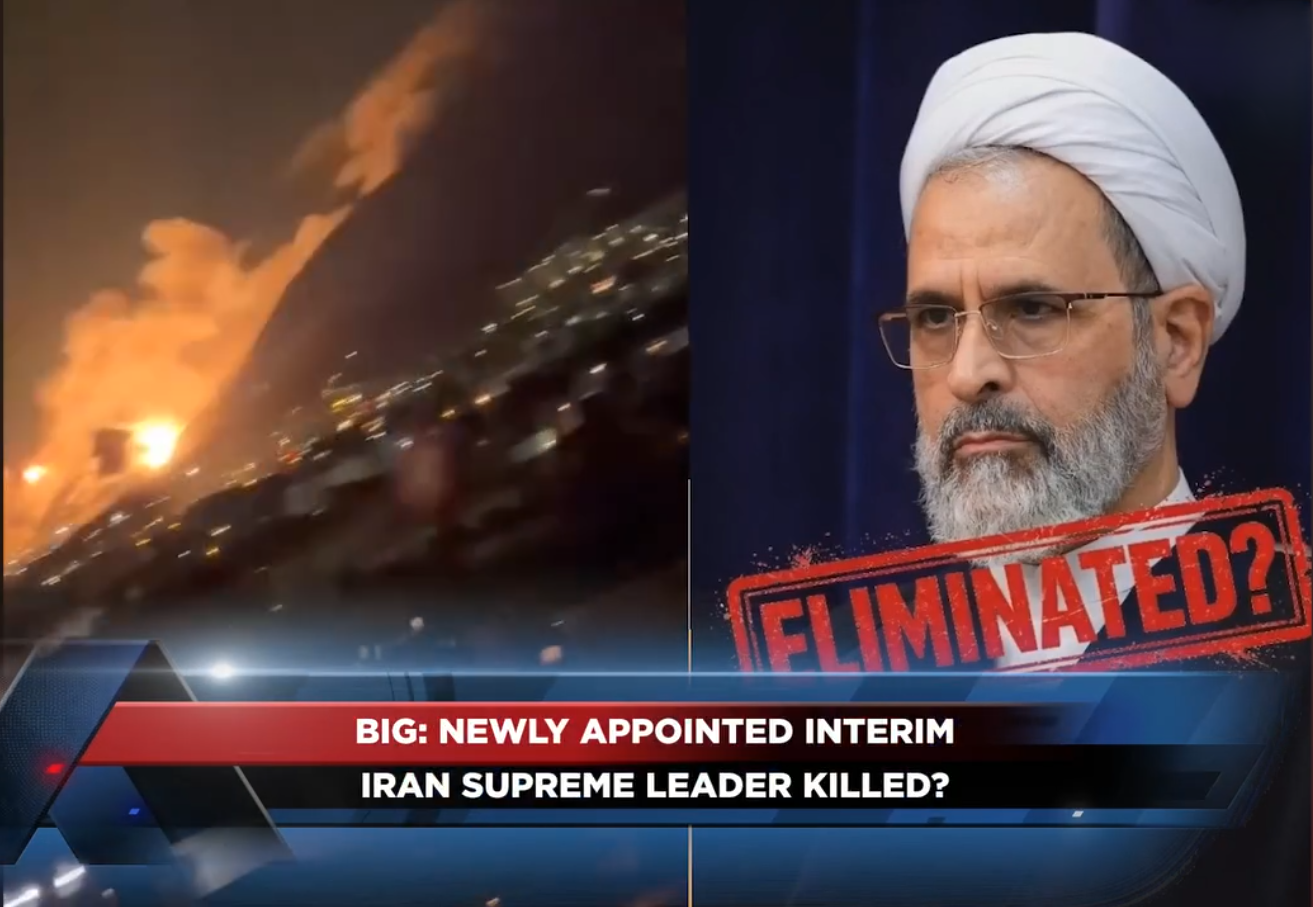
In the early days of March 2026, global newsfeeds lit up with dramatic claims: reports that Iran’s Supreme Leader, Ayatollah Ali Khamenei, had been killed in a joint U.S.–Israeli airstrike, followed by unverified social media posts suggesting Iran’s interim leader Ayatollah Alireza Arafi was also killed just hours after assuming temporary authority. Headlines around the world propagated these claims, though much of the information remains unconfirmed by independent verification.
Many major outlets — and even official representatives — have weighed in, but significant uncertainty still surrounds some of the core assertions. The blurred line between confirmed reporting and circulating rumors highlights a critical challenge of modern geopolitics: how misinformation and incomplete data can spread at the same speed as verified facts.
This article explores the details being reported, examines how and why misinformation spreads so quickly during geopolitical crises, breaks down what Iran’s constitution says about succession, and outlines possible geopolitical scenarios depending on how events unfold.
What Has Been Reported — and What Is Still Unverified
In recent days, multiple news organizations reported that Ayatollah Ali Khamenei, Iran’s Supreme Leader since 1989, was killed in a joint U.S.–Israeli military operation in Tehran. International outlets, including state media sources and foreign government statements, have echoed this claim, framing it as a pivotal moment in Middle Eastern geopolitics.
However, not all reports are consistent, and some sources describe denial or confusion about the facts on the ground. Some social media accounts have shared claims that Khamenei is still alive or has been seen in remote locations — assertions that lack credible verification and may be misinformation.
Adding to the confusion are unverified claims circulating on social platforms that Ayatollah Alireza Arafi — the cleric appointed to Iran’s interim leadership council — was killed hours after taking temporary control. These posts have been widely shared, yet Iranian state media and major international news agencies have not confirmed Arafi’s death.
In contrast, reputable outlets and constitutional scholars confirm that Ayatollah Alireza Arafi was named to Iran’s interim leadership council after Khamenei’s reported death, which is the verified transitional mechanism under Iran’s constitution when the office of Supreme Leader becomes vacant.
The discrepancy between circulating viral claims and verified reporting underscores how rapidly and unpredictably narratives can form during conflict.
Why Geopolitical Rumors Spread So Quickly
In today’s interconnected world, information travels instantly — but so does misinformation. During times of crisis, several factors combine to create fertile ground for unverified claims:
1. High Public Interest and Limited Verified Information
When a major global leader’s life is reported in jeopardy or lost, audiences around the world seek immediate updates. With verified confirmations sometimes lagging behind initial social media reports, gaps in reliable information are often filled with speculation.
2. Emotional and Polarizing Subject Matter
Stories involving the death of political figures, especially in conflict settings, evoke strong emotional reactions: shock, anger, relief, or fear. These emotions increase engagement and drive virality, sometimes regardless of factual accuracy.
3. Social Media Amplification
Platforms reward engagement. Content that shocks or outrages tends to be shared widely — even when it is unverified. Many viral posts fail to include source verification, leading audiences to interpret rumors as fact.
4. Actors With Political Motives
State and non-state actors may intentionally or unintentionally spread unverified claims to influence public perception, undermine opponents, or sow confusion. In conflict zones, information itself becomes a battleground.
5. Misinterpretation of Visuals and Text
Old images, unrelated footage, or misattributed posts can be rapidly shared alongside false claims, contributing to misinformation. Fact-checking and timing verification often lag behind sharing.
This combination of rapid dissemination, emotional resonance, and incomplete verification creates a complex environment in which rumors can take on lives of their own.
Historical Context: Iran’s Supreme Leadership and Its Constitutional Framework
Understanding Iran’s political structure helps explain why leadership succession — whether confirmed or rumored — is so significant internationally.
The Role of the Supreme Leader
The Supreme Leader of Iran is the highest authority in the country, wielding powers that extend beyond those of the presidency. The position holds ultimate control over:
-
The military, including the Islamic Revolutionary Guard Corps
-
Judicial and executive appointments
-
Domestic policy priorities
-
Strategic foreign relations and security policy
Ayatollah Ali Khamenei served as Supreme Leader from 1989 until reports of his death in 2026. Over his decades of rule, he shaped Iran’s ideological direction, expanded its foreign policy influence, and became a central figure in regional tensions.
Iran’s Constitutional Succession Mechanism
Iran’s constitution anticipates the possibility of a Supreme Leader’s death or incapacitation and outlines procedures to preserve governance continuity.
Article 111: Temporary Succession
According to Article 111 of the Iranian Constitution:
-
When the office of Supreme Leader is vacant or the Leader is unable to fulfill duties, a temporary council assumes the duties.
-
This council is composed of the President, the Chief Justice, and a senior cleric selected from the Guardian Council.
-
The council remains in place until the Assembly of Experts — an 88-member clerical body — elects a permanent successor.
This three-person interim leadership body is not the same as an individual Supreme Leader but serves as a constitutional bridge during transition.
In early March 2026, Iran’s Guardian Council and Expediency Discernment Council reportedly appointed Ayatollah Alireza Arafi as the clerical member of this council, alongside President Masoud Pezeshkian and Chief Justice Gholam-Hossein Mohseni-Eje’i.
The interim council’s existence is verified in multiple sources and reflects Iran’s constitutional response to the purported leadership vacuum.
Who Is Ayatollah Alireza Arafi?
Ayatollah Alireza Arafi is a senior Shia cleric and prominent figure in Iran’s religious and political establishment. He has held leadership roles, including positions within the Assembly of Experts and the Guardian Council — the body that vets candidates for key offices and oversees major constitutional functions.
Arafi’s appointment to the interim council places him at the center of a crucial transitional period. While rumors have circulated online claiming he was killed after assuming temporary authority, these remain unverified and are not corroborated by official or widely respected international news outlets.
This distinction — verified appointment vs. unverified death claim — highlights the central challenge of interpreting fast-moving reports in conflict zones.
How Rumors Can Erode Trust in Information
Misinformation during geopolitical crisis situations is not a new phenomenon, but its scale has grown with social media and global 24/7 news cycles. Rumors about leadership deaths can:
-
Create panic or uncertainty within domestic populations
-
Undermine trust in official sources
-
Be used strategically by rival governments or nongovernmental groups
-
Influence financial markets and military decision-making
For example, images from unrelated events, once shared with misleading captions, are often interpreted as evidence of real-time developments without verification. Fact-checking organizations devote significant resources to debunking such claims, but their corrections often reach smaller audiences than the original rumors.
International Reactions and Diplomatic Sensitivities
Even as rumors proliferate, some governments have responded to the broader news environment with their own statements. For instance, the Russian Foreign Ministry has reportedly expressed outrage over false reports regarding the death of Iran’s Supreme Leader, emphasizing the importance of confirming information before dissemination given the potential diplomatic repercussions.
Other regions and leaders have weighed in on the confirmed elements of the situation — especially the reported death of Ayatollah Khamenei — and have expressed concern about regional stability and the risk of broader conflict escalation.
Such reactions illustrate how misinformation can intersect with very real diplomatic consequences, making accuracy vital.
Hypothetical Scenarios if Leadership Transition Is Disrupted
The uncertainty around claims about Iran’s interim leadership raises important questions about stability and continuity. Below are a few hypothetical geopolitical scenarios analysts might consider — all clearly framed as hypothetical and not confirmed fact.
Scenario 1: Smooth Transition to a New Supreme Leader
In this scenario, Iran’s Assembly of Experts successfully convenes and elects a new Supreme Leader following constitutional procedures. The interim leadership council hands over duties, and domestic political institutions continue functioning without major internal disruption.
Under this outcome:
-
Iran’s foreign policy might remain steady
-
Regional actors could recalibrate their strategies
-
Markets might stabilize as uncertainty decreases
-
Diplomacy could re-open channels for negotiation
This is the ideal constitutional outcome, but depends on internal cohesion and political consensus.
Scenario 2: Internal Power Struggle Delays Successor Selection
If competing factions within Iran’s political and religious elite fail to agree on a successor, delays could occur. Power vacuums often invite internal jockeying, which could weaken central authority and embolden rival factions.
Potential consequences might include:
-
Internal unrest or protests
-
Hardline elements asserting influence
-
Fragmented decision-making in foreign affairs
-
Reduced coherence in economic policy
This scenario amplifies instability and creates opportunities for outside actors to influence outcomes.
Scenario 3: Escalation of Regional Conflict
Should claims of leadership deaths — confirmed or unverified — contribute to heightened tensions, Iran could respond militarily, either directly or through proxy forces.
Possible outcomes include:
-
Missile exchanges with neighboring states
-
Retaliation through allied militant groups
-
Disruption of shipping lanes in the Persian Gulf
-
Escalation of U.S.–Iran or Israel–Iran confrontations
In times of crisis, rumors themselves can inflame emotions and harden stances, increasing the risk of unintended conflict escalation.
Scenario 4: Diplomatic Negotiations and Conflict Resolution
Conversely, the shock of a leadership crisis — real or perceived — might motivate diplomatic engagement. Major powers could push for negotiations to prevent conflict expansion, particularly if the risk of misinformation undermining stability becomes apparent.
International actors including the U.N., European Union, Russia, and China might seek to mediate.
The Role of Responsible Reporting and Verification
Given how quickly rumors can expand, responsible reporting becomes essential. Journalistic institutions and news agencies emphasize verification through:
-
Multiple independent sources
-
Official statements from relevant governments
-
On-the-ground reporting when possible
-
Avoiding reliance on single, unverified social media posts
Consumers of news are also encouraged to approach viral claims critically, checking whether claims have citations from credible outlets or official entities.
Separating Fact From Rumor in a High-Tension World
As of now, the situation surrounding Iran’s leadership remains complex and unsettled. While some reports assert that Ayatollah Ali Khamenei has died and that Ayatollah Alireza Arafi has been appointed to oversee interim leadership, unverified claims about additional deaths should not be treated as confirmed.
This environment of partial information and rapid rumor-sharing highlights the challenges faced in modern geopolitical reporting. As events continue to unfold, it is essential to distinguish verified developments from speculation, to consider the constitutional framework guiding Iran’s political transition, and to understand how unconfirmed rumors can influence public perception, diplomatic relations, and regional stability.