Skip to content

Best lifestory

đź’” Help locate Chloe Messick đź’”

Posted on June 17, 2026 By admin No Comments on đź’” Help locate Chloe Messick đź’”

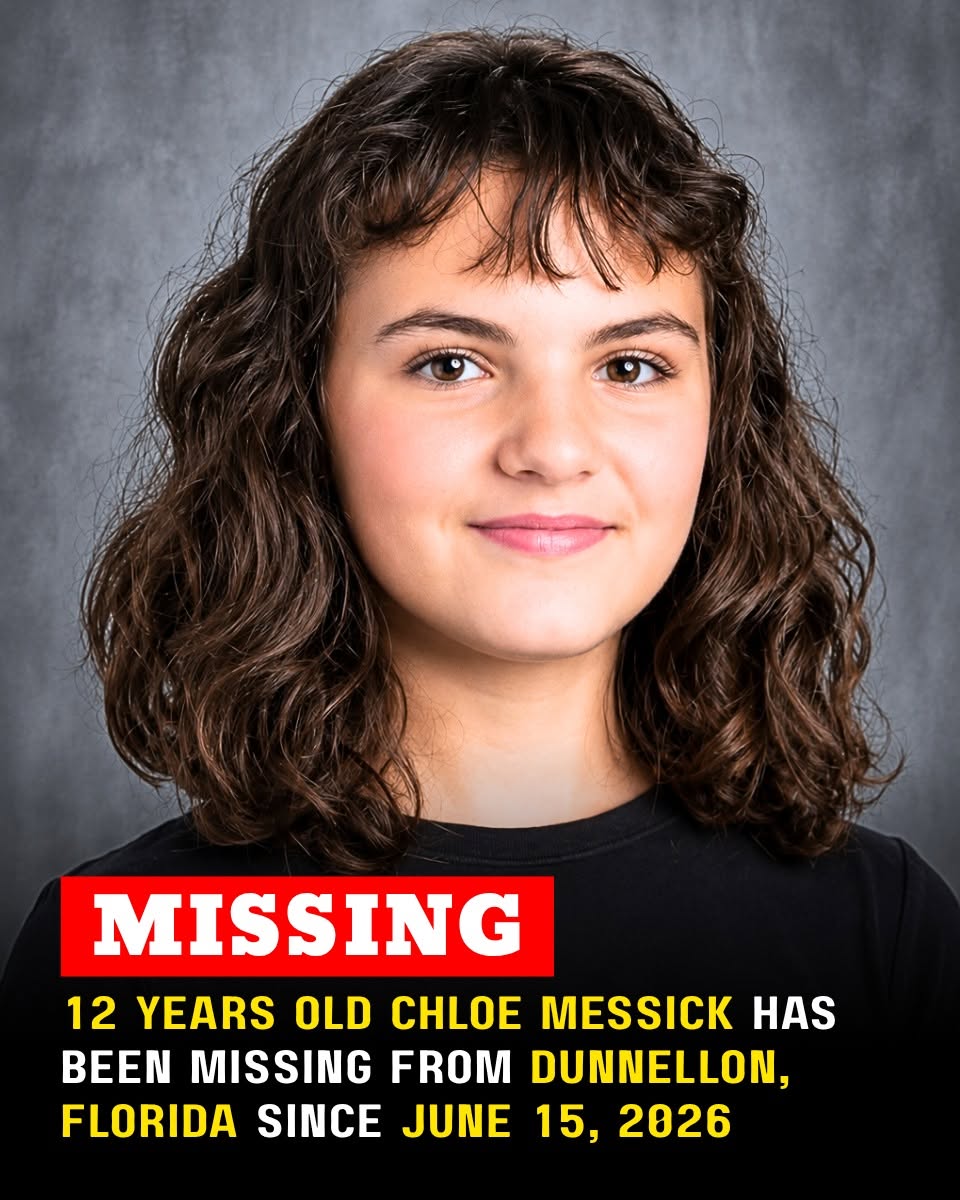
A missing-child alert out of Citrus County, Florida, drew urgent attention after 12-year-old Chloe Messick was reported missing from the Dunnellon area on June 15, 2026. The original alert asked the public to help share Chloe’s information as quickly and widely as possible so that anyone who may have seen her could contact law enforcement. According to the details shared in the alert, Chloe was last seen at approximately 5:58 a.m. in Dunnellon, Florida, and authorities believed she may have been heading toward the Ocala area. She was described in the notice as a 12-year-old girl with brown hair and brown eyes, and she was reportedly last seen wearing a peach-colored T-shirt, pink shorts, and either blue or red flip-flops. The Citrus County Sheriff’s Office Major Crimes Unit asked anyone with information to call 352-249-2790 and reference Case #26-00006169.

The alert spread quickly because cases involving missing children require immediate public awareness. In situations like this, even one sighting, one shared post, or one person recognizing a detail can help investigators narrow down where a child may have gone. The message shared by Missing and Murdered in America encouraged people to help get Chloe’s face and information in front of as many people as possible, especially across Citrus County, Dunnellon, Ocala, and nearby communities. The purpose of the alert was not only to inform the public, but also to create a wider safety net around a child who may have been traveling or moving through public areas during the early morning hours.

Law enforcement alerts often include clothing descriptions because those details can be crucial in the first hours of a search. In Chloe’s case, the peach-colored shirt, pink shorts, and flip-flops were important identifying details for anyone who may have been driving, walking, working, or visiting the area where she was last seen. Authorities also noted that she may have been headed toward Ocala, which gave the public a possible direction to watch. When a child is missing, investigators may rely on tips from residents, business owners, drivers, school staff, gas station employees, and people reviewing security footage near roads, stores, parks, and neighborhoods.

The Citrus County Sheriff’s Office later issued an update stating that Chloe had been located safe. That update is important because it changes how the story should be shared. Once a missing child has been found, posts and articles should no longer present the child as actively missing. Continuing to share outdated alerts without the update can cause confusion, overwhelm law enforcement phone lines, and keep fear circulating after the emergency has been resolved. The most responsible way to report on Chloe’s case now is to explain that a missing-child alert was issued, that the community was asked to help, and that officials later confirmed she was found safe.

This case is also a reminder of how quickly online communities can respond when a child is reported missing. Social media pages, local residents, and community safety groups often play a major role in spreading alerts beyond the immediate area where law enforcement first posts them. A missing-child notice can travel from one county to another within minutes, reaching people who may be on the roads, at work, or near the area mentioned in the alert. When the information is accurate and updated, that kind of public response can be extremely valuable. It can help create awareness while investigators continue their work through official channels.

At the same time, Chloe’s case shows why updates matter just as much as the first alert. When authorities announce that a child has been located safe, the public should share that update with the same urgency as the original missing notice. Doing so helps protect the child’s privacy, reduces panic, and ensures that people are working with the most current information. The safest public message now is that Chloe Messick was reported missing from Citrus County, Florida, on June 15, 2026, that the community was asked to remain alert, and that the Citrus County Sheriff’s Office later confirmed she was located safe.

For families, missing-child alerts are terrifying moments. Even when a child is found safe, the hours before that confirmation can be filled with fear, uncertainty, and desperate hope. Communities often respond with compassion because people understand how serious these situations can be. A shared post, a phone call to authorities, or a careful look around a neighborhood may feel small, but in a search for a child, small actions can matter. The public should always avoid spreading rumors, guessing about the circumstances, or contacting family members directly unless asked. The best action is to share verified information from law enforcement and report possible sightings through official numbers.

Chloe’s case ended with the update everyone hopes for in a missing-child situation: she was found safe. That outcome should be the focus of any follow-up coverage. The original alert served its purpose by getting her information out quickly, and the later update helped bring relief to the community. Anyone who previously shared the missing notice should now update their post, add that she has been located safe, or remove outdated wording that says she is still missing. Responsible sharing helps keep public safety information clear, accurate, and useful.

The case also highlights the importance of checking official sources before reposting urgent missing-person alerts. Missing-child posts can remain online long after the situation has changed. Sometimes people continue sharing them days, weeks, or even months later without realizing the person has already been found. Before sharing any alert, it is helpful to look for an update from the law enforcement agency named in the post. In this case, the Citrus County Sheriff’s Office was the agency connected to the alert, and its update confirmed Chloe was safe. That confirmation should guide how the story is written and shared going forward.

When a child is missing, communities should act with care, speed, and responsibility. When a child is found, communities should act with the same responsibility by helping spread the update. Chloe Messick’s case is a reminder that public awareness can be powerful, but accuracy is just as important as urgency. The most important information now is that Chloe was reported missing, authorities asked for the public’s help, and she has since been located safe.

As more people saw the alert, the message became a reminder of how important it is for communities to respond quickly but carefully when a child is reported missing. In the first hours after a missing-child notice is shared, the public often wants to help immediately, and that response can be powerful. People may share the post on social media, send it to friends in nearby areas, check neighborhood groups, or look more closely while driving through places mentioned in the alert. In Chloe Messick’s case, the original information focused on Citrus County, Dunnellon, and the possibility that she may have been heading toward Ocala. Those details helped direct public attention to the areas where a sighting might have been most useful. Even after a child is located safe, the way the public handled the alert remains important because it shows how fast information can move when people are paying attention.

When a missing-child alert includes a case number and a direct law enforcement contact, that information should always be treated as the safest path for tips. People should not try to investigate on their own, approach someone they only think may be the missing child, or spread guesses about where the child may be. The best response is to contact the agency listed in the alert and provide clear, factual details. That can include the time, location, direction of travel, clothing, and anything else that may help authorities. In Chloe’s case, the Citrus County Sheriff’s Office Major Crimes Unit was the agency named in the alert, and the case number gave callers a way to make sure their information was connected to the correct investigation. That kind of structure helps law enforcement sort through public tips more efficiently.

It is also important to remember that missing-child alerts often do not include the full circumstances of a case. The public may only see a small number of verified facts: the child’s name, age, last known location, last seen time, clothing description, possible direction of travel, and the agency handling the case. That limited information is intentional. Authorities generally share what is needed to help locate the child while protecting the child’s privacy and the integrity of the investigation. Because of that, people should avoid filling in the blanks with assumptions. In Chloe’s case, the responsible message is simple: she was reported missing, the public was asked to watch for her, and officials later updated that she was located safe.

The safe update is the most important part of the story now. When someone has been found, especially a child, the focus should shift from urgency to relief and responsibility. The original missing notice should not continue to circulate as if it is still active. Anyone who shared the alert can help by editing the caption, adding “located safe,” or sharing the official update. This matters because outdated missing-person posts can keep spreading long after the emergency is over. Someone may see the old post later and believe the child is still missing, which can cause unnecessary fear and confusion. It can also lead to calls or messages that are no longer needed, taking attention away from current emergencies.

Chloe’s case also shows how emotional these alerts can be for the public. A photo of a young child with the word “missing” immediately creates concern. Many people imagine their own family members, classmates, neighbors, or children in that situation, and they feel a strong need to help. That concern is understandable, and it is one reason missing-child posts spread so quickly. But compassion works best when it is paired with accuracy. Sharing verified information, avoiding rumors, and updating posts when a child is found are all part of helping responsibly.

For local communities, alerts like this also encourage people to pay closer attention to their surroundings. A missing child may pass through ordinary places: sidewalks, gas stations, convenience stores, parks, parking lots, bus stops, apartment complexes, or roads between towns. In the original alert, the mention of Dunnellon and the possible Ocala direction gave residents and travelers a reason to stay alert in those areas. A person who sees something that matches an alert may not always be sure, but they can still report what they observed to law enforcement. Even if the tip does not turn out to be connected, it may help investigators eliminate possibilities or build a timeline.

The clothing details in Chloe’s alert were also important because clothing can be easier for the public to notice than facial features from a distance. A peach-colored T-shirt, pink shorts, and blue or red flip-flops created a simple description that people could remember. In many missing-child cases, a person might only get a quick glance. They may remember colors, shoes, or the direction someone was walking before they remember exact facial details. That is why law enforcement and missing-person organizations often include what the child was last seen wearing. These details are not random; they are practical tools that help the public recognize someone quickly.

Although Chloe was located safe, the case still carries a broader message about how missing-child information should be shared. Before reposting any alert, people should look for the date, location, agency name, and any update. If the post is old, they should check whether the child has already been found. If the post does not list an official agency or contact number, it may be better to search for confirmation before sharing. This does not mean people should ignore alerts; it means they should help in a way that keeps information useful and current. In urgent situations, accuracy can matter just as much as speed.

Families and loved ones are often under extreme stress during the time a child is missing. Public attention can help, but it can also become overwhelming if people begin speculating or sending direct messages. The most respectful thing the public can do is follow official instructions and avoid turning the case into gossip. Children deserve privacy even when their names and photos are shared for safety reasons. Once they are found, that privacy becomes even more important. The child may need time, support, and space away from public attention. That is why follow-up coverage should stay focused on the confirmed outcome rather than trying to explain details that authorities have not released.

The role of pages like Missing and Murdered in America is often to amplify urgent alerts so they reach more people. When used responsibly, those platforms can help connect official information with a wider audience. A sheriff’s office post may reach local followers, but community pages can help spread the notice across county lines, especially when authorities believe the missing person may travel to another city or region. In Chloe’s case, because Ocala was mentioned as a possible destination, sharing beyond one immediate neighborhood made sense. The more people who saw the information in the right areas, the more likely it was that someone might notice something helpful.

However, the same speed that makes social media useful can also make it risky. Posts can be copied, screenshotted, reposted without updates, or shared out of context. A missing-child flyer may continue moving across the internet even after the child is home. That is why every person who shares these alerts has a small responsibility to keep them accurate. When an update appears, the update should travel too. “Located safe” should be shared with the same energy as “missing.” That simple action helps close the loop and prevents outdated fear from continuing.

The best public safety habits are simple. Share official alerts. Keep the original contact number visible. Do not alter important details. Do not add unconfirmed information. Do not accuse anyone. Do not post guesses about the child’s location. Do not contact people who may be connected to the case unless authorities ask the public to do so. Report possible sightings directly to law enforcement. And when the person is found, update or remove the missing notice. These steps protect the child, support investigators, and keep the community informed in a helpful way.

In the end, Chloe Messick’s case brought the kind of outcome every missing-child alert hopes for: she was located safe. The original alert asked people to look out for a 12-year-old girl from Citrus County who had last been seen early in the morning in Dunnellon. It gave a clothing description, a possible direction of travel, a law enforcement phone number, and a case number. The public was asked to help spread the information, and later the official update confirmed that she was safe. That is the key information that should remain attached to the story.

This case can also be used as a reminder for parents, schools, community groups, and local pages about how to handle urgent alerts. A missing-child post should be clear, factual, and easy to read. It should include the child’s name, age, location, time last seen, clothing, agency contact, and case number when available. It should not be overloaded with emotional claims or unverified details. The goal is to help someone recognize the child and know exactly who to call. Good information can move quickly without becoming confusing.

For readers who saw Chloe’s alert after she had already been found, the most helpful action is no longer to search but to share the safe update. That may feel small, but it matters. It helps reassure people who were worried, prevents unnecessary calls, and shows respect for the child and family. It also teaches others to check for updates before spreading old alerts. In a world where social media posts can travel for years, closing the information loop is an important part of community safety.

Chloe’s safe recovery is a moment of relief, but it should also encourage continued awareness for other missing children. Every case is different, and every alert deserves careful attention. Some children are found quickly, while others require longer searches and wider public assistance. The public cannot solve every case, but it can play a meaningful role by staying alert, sharing responsibly, and contacting authorities when they have real information. A single accurate tip can sometimes make a major difference.

The story should now be remembered not as an ongoing missing-child emergency, but as a resolved alert in which a child was found safe after law enforcement and the public were asked to help. The language around the case should reflect that. Chloe Messick was reported missing from Citrus County, Florida, after being last seen in Dunnellon on June 15, 2026. Authorities believed she may have been heading toward Ocala and asked anyone with information to contact the Citrus County Sheriff’s Office. The official update later confirmed she was located safe. That update should remain central wherever the post is shared.

Responsible reporting means keeping the child’s well-being first. It means not turning the alert into entertainment, not stretching the story with speculation, and not continuing to present the case as active when it is not. It means recognizing that behind every missing-child flyer is a real child, a real family, and a real law enforcement response. Chloe’s case ended with good news, and that good news deserves to be shared clearly.

Community awareness is strongest when it is accurate, compassionate, and current. Chloe’s alert showed how quickly people can come together around a child’s safety. The safe update showed why it is just as important to follow through after the first post. When people share both the alert and the resolution, they help create a more responsible public safety network. In this case, the message now is one of relief: Chloe Messick has been located safe, and the community can help by making sure that update reaches anyone who may still be seeing the original missing notice.

The safest way to continue sharing Chloe’s story is with care and accuracy. Her name and photo were first shared because there was concern for her safety, but now that she has been located safe, the public message should reflect relief rather than alarm. Every repost should make it clear that the alert is no longer active. This protects Chloe from unnecessary attention and helps the community stay focused on current missing-person cases that still need help. Her case is a reminder that people can make a difference by sharing quickly, checking updates, and always following official law enforcement information.
Photo

Post navigation

Previous Post: Paris Jackson Opens Up About Life, Family, and Personal Growth
Next Post: Police are urging everyone to stay away from this area

Leave a Reply Cancel reply

Your email address will not be published. Required fields are marked *

Recent Posts

  • Police are urging everyone to stay away from this area
  • đź’” Help locate Chloe Messick đź’”
  • Paris Jackson Opens Up About Life, Family, and Personal Growth
  • Binghamton police say a city resident shot his wife during…
  • Woman Falls to Her Death in Brazil After Rope Jump Crew Forget to Tie Safety Cord

Copyright © 2026 Best lifestory.

Powered by PressBook WordPress theme