Few criminal cases strike the public conscience as deeply as those involving children. When the safety and innocence of a baby become the center of a criminal investigation, the emotional reaction across communities is immediate and profound. That was exactly what happened when the story of seven-month-old Emmanuel Haro emerged in California, sparking a nationwide wave of grief, anger, and disbelief.
The case quickly became one of the most discussed criminal investigations in the country. What initially appeared to be a desperate search for a kidnapped infant soon transformed into a shocking murder investigation. At the center of it all were the baby’s parents: Jake Haro and Rebecca Haro.
Both parents were ultimately charged with murder in connection with their child’s death and with filing a false police report. Their arrest stunned the community and ignited fierce debate about parental responsibility, child protection systems, and how such tragedies can occur within families.
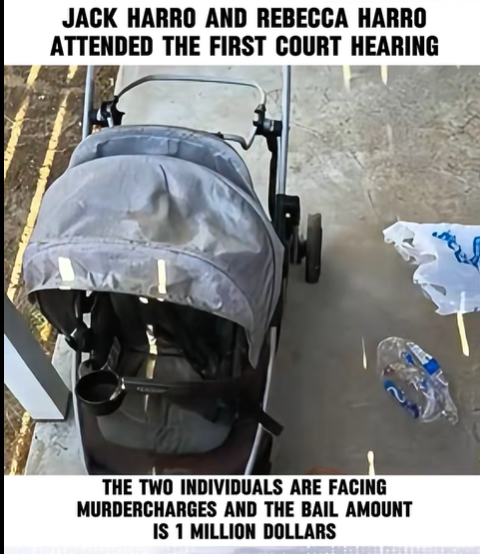
As the case moved into court, the judge set bail at $1 million for each parent, reflecting the severity of the accusations and the seriousness of the alleged crime.
What followed was a legal battle filled with disturbing allegations, emotional courtroom moments, and haunting questions about what truly happened to the baby.
The Disappearance That Sparked a Massive Search
A Disturbing 911 Call
The tragedy began with what seemed like a horrifying crime: the disappearance of a baby.
According to the initial story told by Rebecca Haro, she had been attacked in a parking lot while changing her baby’s diaper. She claimed that after the assault, she regained consciousness only to discover that her child had been abducted.
The report sent law enforcement agencies scrambling into action.
Missing infant cases are treated with the highest urgency, and authorities launched an immediate investigation. Officers searched nearby neighborhoods, reviewed surveillance footage, and canvassed the area for witnesses.
For days, investigators and volunteers searched tirelessly.
The community rallied around the missing child. Flyers were posted across towns. Social media lit up with appeals for information. Strangers shared the baby’s photo in hopes of bringing him home safely.
At that moment, many believed they were witnessing a kidnapping case that might still end in a miracle rescue.
But investigators soon noticed troubling inconsistencies.
Investigators Begin to Doubt the Kidnapping Story
Contradictions Emerge
As detectives began examining the circumstances surrounding the alleged abduction, they noticed details that did not align with the story.
Authorities carefully reviewed surveillance footage from the area where Rebecca claimed she had been attacked. Witness statements were also analyzed. Inconsistencies began to surface.
Investigators found little evidence that an abduction had taken place.
Instead, they discovered that the last confirmed sighting of baby Emmanuel occurred days earlier. Authorities believe the child was last seen alive on August 5, despite the kidnapping report being made on August 14.
This timeline raised a chilling possibility: the child may have already been dead when the alleged kidnapping was reported.
Gradually, suspicion shifted away from a mysterious attacker and toward the parents themselves.
The Arrest That Shocked the Community
Parents Charged With Murder
Only days after the disappearance report, law enforcement officials made a dramatic announcement.
Jake Haro and Rebecca Haro were arrested and charged with murder and filing a false police report in connection with their son’s disappearance and presumed death.
The case immediately captured national attention.
Authorities said they believed the baby was dead, though his remains had not yet been located. Search teams combed nearby desert areas and wilderness locations in hopes of finding evidence.
The arrests stunned neighbors who had initially sympathized with the couple.
Instead of grieving parents seeking help to find their missing child, investigators now believed they were dealing with a deliberate cover-up of a homicide.
A Dark Past Comes to Light
Previous Child Abuse Conviction
As journalists and investigators dug deeper into the background of Jake Haro, disturbing information began to emerge.
Several years earlier, Haro had been involved in a case involving another child.
In 2018, a 10-week-old daughter from a previous relationship suffered severe injuries, including brain trauma and multiple fractures. The injuries were so severe that the child later developed cerebral palsy and remains permanently disabled.
Jake Haro later pleaded guilty to child cruelty charges in connection with that incident.
Although the conviction resulted in legal consequences, critics later argued that the penalties had been far too lenient. Many began questioning whether stronger intervention could have prevented another tragedy.
For investigators examining the death of baby Emmanuel, this past case added a troubling layer of context.
Courtroom Drama Begins
The First Court Appearance
When the parents appeared in court for the first time, the atmosphere was tense.
Family members, reporters, and observers filled the courtroom. Many wanted answers to the same question:
What really happened to the baby?
Both parents entered pleas of not guilty to the charges during early hearings.
The judge ordered them to remain in custody with bail set at $1 million each, signaling the seriousness of the accusations and the potential risk of flight.
The courtroom proceedings were emotional. Relatives of the child attended hearings, some in tears, as prosecutors outlined the allegations against the couple.
Outside the courthouse, crowds gathered. Many carried signs demanding justice for the baby.
Prosecutors Reveal Their Case
A Story of Abuse and Deception
During the investigation, prosecutors developed a theory that painted a grim picture of what may have happened inside the family home.
Authorities suggested that the baby may have died as a result of abuse days before the kidnapping report was made.
Rather than report the death, investigators believe the parents attempted to stage a kidnapping in order to divert suspicion.
According to prosecutors, the fabricated kidnapping story involved an alleged assault in a parking lot. But evidence collected during the investigation contradicted that claim.
Eventually, investigators concluded that no kidnapping had taken place and that the story had been invented.
The false report became a key element of the criminal charges.
A Community Struggles to Understand
Grief, Anger, and Unanswered Questions
The case sent shockwaves through the community where the family lived.
Neighbors expressed disbelief that such a tragedy could happen so close to home.
Many residents had followed the initial search efforts closely. Some had even volunteered to help look for the baby when he was believed to be missing.
When the truth began to emerge, the reaction was overwhelming.
People spoke openly about their anger and sorrow. Social media filled with messages demanding justice for the infant.
The case also reignited discussions about how child protection systems work — and whether warning signs had been missed.
The Confession That Changed Everything
Jake Haro Pleads Guilty
In a dramatic turn during the legal process, Jake Haro eventually pleaded guilty to the murder of his son.
His plea ended months of speculation about his role in the case.
Under the plea agreement, he also admitted to filing a false police report and child endangerment charges.
The confession confirmed what investigators had suspected: the kidnapping story had been fabricated.
However, even after pleading guilty, Haro refused to reveal certain details about the crime. Authorities still do not know exactly how the child died or where his remains are located.
The lack of answers has continued to haunt the case.
Sentencing and Justice
A Life Sentence
Following the guilty plea, the court sentenced Jake Haro to 25 years to life in prison for the murder of his infant son.
The sentence reflected the severity of the crime and the impact it had on the community.
Prosecutors described the case as one of the most disturbing they had handled.
During sentencing hearings, emotional statements were delivered by relatives and prosecutors. Many spoke about the innocence of the child and the devastating loss felt by those who cared about him.
For many observers, the sentence was a moment of justice — but not closure.
Because the baby’s remains have never been found, the case still carries an element of haunting mystery.
Rebecca Haro’s Legal Battle Continues
Awaiting Trial
Unlike her husband, Rebecca Haro has maintained her plea of not guilty.
She remains in custody while awaiting further court proceedings.
Her defense team argues that prosecutors have not proven her direct involvement in the death.
However, prosecutors claim that she played a role in the alleged cover-up and the fabricated kidnapping report.
The legal battle surrounding her case is expected to continue for months or possibly years.
The Role of Media in the Case
Public Attention and True Crime Coverage
The Haro case quickly became a major topic in national media coverage.
Television networks, true crime podcasts, and online communities analyzed every new development.
The story contained elements that often capture public attention: a missing child, conflicting stories, a dramatic arrest, and courtroom revelations.
But for many observers, the intense media coverage also raised questions.
Some wondered whether the focus on sensational details overshadowed deeper issues such as child protection policies and social services intervention.
Lessons From a Tragic Case
The Importance of Child Protection
Cases like this often spark important discussions about how society protects vulnerable children.
Many experts emphasize that preventing child abuse requires cooperation between families, social services, medical professionals, and law enforcement.
Early warning signs can sometimes be overlooked.
When they are ignored, tragedies can occur.
Advocates for child welfare often point to cases like the Haro investigation as evidence that stronger systems for monitoring high-risk families may be necessary.
A Child Remembered
The Legacy of Baby Emmanuel
Despite the shocking allegations and courtroom drama, the heart of the story remains a single, innocent child.
Seven-month-old Emmanuel Haro never had the chance to grow up.
He never had the chance to experience childhood, school, friendships, or the simple joys that most children enjoy.
For many people following the case, remembering the victim is the most important part.
Community members have organized memorials and moments of silence in honor of the child.
The tragedy serves as a painful reminder of the importance of protecting the most vulnerable members of society.
A Case That Will Not Be Forgotten
The trial of Jake and Rebecca Haro is one of the most heartbreaking criminal cases in recent memory.
What began as a desperate search for a missing baby ultimately revealed a much darker truth.
The alleged kidnapping story collapsed under investigation, exposing a web of deception that led to murder charges against the parents.
With Jake Haro now serving a life sentence and Rebecca Haro still facing legal proceedings, the case continues to unfold in courtrooms and public debate.
Yet beyond the headlines and legal arguments lies the tragic loss of a young life.
For the community, the investigators, and those who followed the story, the name Emmanuel Haro will forever symbolize a tragedy that should never have happened.
And as the legal process continues, many hope that the final chapters of this case will bring not only justice — but also lessons that help prevent such tragedies in the future.
@user9921724916216 #News #breakingnews #fyp #tiktok #greenscreen #foryou #Crimes #new #foryoupage #baby #missing