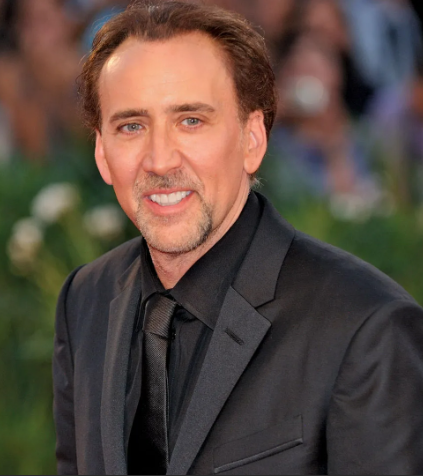
For decades, Nicolas Cage has stood as one of Hollywood’s most unpredictable and fascinating figures. Known for his intense performances, eccentric choices, and fearless approach to acting, Cage has built a career unlike any other.
From Oscar-winning roles to cult classics and unconventional films, he has never followed the traditional path of a Hollywood star.
But behind the bold personality and larger-than-life image lies a life shaped by struggle, loss, and personal challenges.
From a difficult childhood to financial collapse, troubled relationships, and deeply unsettling experiences, Cage’s journey reveals a far more complex and tragic reality than many fans realize.
Born Into Hollywood Royalty—But Raised Modestly
Nicolas Cage was born Nicolas Kim Coppola in 1964 into one of Hollywood’s most influential families.
His uncle, Francis Ford Coppola, is the legendary director behind films like The Godfather and Apocalypse Now.
His extended family includes creative talents like Sofia Coppola and Jason Schwartzman.
Yet despite this prestigious lineage, Cage did not grow up surrounded by luxury.
His father, August Coppola, was a literature professor who raised Cage and his brothers with modest means.
While other children in Beverly Hills arrived at school in expensive sports cars, Cage rode the bus.
This contrast left a lasting impression on him.
It created a sense of separation—not quite an outsider, but not fully part of the elite world his family name suggested.
Perhaps this tension helped shape the fiercely independent identity he would later adopt.
A Childhood Marked by Mental Illness
One of the most profound influences on Cage’s early life was his mother, Joy Vogelsang.
She struggled with severe mental health issues for much of his childhood, reportedly including schizophrenia and depression.
Her condition led to long periods of institutionalization.
For a young child, this was deeply confusing and painful.
Cage later described how his mother would enter altered mental states that lasted for years.
The instability created an environment that was far from typical.
But rather than breaking him, it pushed him inward.
He developed a rich imagination—a kind of mental refuge from the chaos around him.
This imaginative world would later become the foundation of his acting style.
His performances, often described as intense, surreal, or unpredictable, can be traced back to these early experiences.
They are not just artistic choices.
They are expressions of a mind shaped by emotional complexity.
The Loss of His Mother
Although his relationship with his mother was complicated, her death in 2021 marked another emotional chapter in Cage’s life.
Despite her struggles, she remained an important figure in his story.
Her passing brought a mix of grief, reflection, and closure.
It was a reminder of the difficult journey she endured—and the lasting impact she had on her son.
For Cage, it was not just the loss of a parent.
It was the closing of a chapter that had influenced him since childhood.
Love, Chaos, and Short-Lived Marriages
Cage’s personal life has often been as unpredictable as his film choices.
Over the years, he has been involved in several high-profile relationships—many of which ended in heartbreak or controversy.
One of the most talked-about was his marriage to Lisa Marie Presley, the daughter of Elvis Presley.
Their relationship was intense, passionate, and ultimately short-lived.
They married in 2002—but within just a few months, Cage filed for divorce.
The marriage lasted only about three months.
Though brief, it captured public attention due to its emotional intensity and the larger-than-life personalities involved.
Presley later compared their relationship to two “pirates” navigating stormy waters—suggesting that their similarities may have ultimately led to their downfall.
A Marriage That Lasted Only Four Days
If his relationship with Lisa Marie Presley was short, his marriage to Erika Koike was even more shocking.
In 2019, Cage married Koike in Las Vegas.
Just four days later, he filed for an annulment.
Yes—four days.
In legal documents, Cage claimed that he had been intoxicated at the time of the wedding and acted impulsively.
He also accused Koike of withholding important information about her past.
The situation quickly became public and added to the perception of Cage as unpredictable and eccentric.
While some viewed it as bizarre, it also reflected something deeper—a pattern of impulsive decisions that often led to personal turmoil.
A Terrifying Home Invasion
In 2007, Cage experienced an event that would leave anyone shaken.
While asleep in his Newport Beach home, he awoke to find a stranger standing in his bedroom.
The intruder was reportedly naked, wearing Cage’s leather jacket, and eating a frozen dessert.
It sounds surreal—almost like a scene from one of his films.
But for Cage, it was a terrifying reality.
At the time, his wife and young child were in the house.
The situation could have turned dangerous at any moment.
Although the intruder was eventually apprehended, the incident had a lasting psychological impact.
Cage later admitted that he could not continue living in the house afterward.
It was no longer a place of safety.
The Theft of a Priceless Comic
Cage’s passion for comic books is well known.
Among his prized possessions was a rare copy of Action Comics #1—one of the most valuable comic books in the world.
He purchased it for $150,000.
But in 2000, it was stolen from his home.
The loss was not just financial—it was deeply personal.
The comic represented his love for storytelling and his connection to the superhero world.
For over a decade, it remained missing.
Then, in an unexpected twist, it was discovered in a storage unit in 2011.
The recovery felt almost miraculous.
For Cage, it was a rare moment of good fortune in a life often marked by setbacks.
The Dinosaur Skull Controversy
Cage’s unusual purchases have often made headlines.
One of the most controversial was a dinosaur skull—a rare Tyrannosaurus bataar fossil he purchased for a significant sum.
However, it was later revealed that the fossil had been illegally smuggled from Mongolia.
When authorities discovered this, Cage cooperated fully and returned the artifact.
Although he was not charged with wrongdoing, the incident highlighted the risks of his extravagant lifestyle.
It also added to the perception of him as someone drawn to rare and unusual possessions—sometimes without fully understanding their origins.
Financial Collapse and Near Bankruptcy
At the height of his career, Cage was one of the highest-paid actors in Hollywood.
He reportedly earned tens of millions of dollars per year.
But with great wealth came excessive spending.
Cage purchased:
- Multiple luxury homes
- A private island
- Exotic pets
- Rare collectibles
- Expensive cars
At one point, his fortune was estimated at around $150 million.
But by 2009, it had nearly disappeared.
He reportedly owed millions in unpaid taxes.
The situation became so severe that he was forced to sell many of his properties.
He also filed a lawsuit against his business manager, accusing him of mismanagement.
The manager countered by blaming Cage’s spending habits.
Regardless of who was at fault, the result was the same:
Financial ruin.
Working to Survive
To recover from his financial crisis, Cage did something few A-list actors would consider.
He worked.
Relentlessly.
Between 2009 and 2022, he appeared in dozens of films—sometimes several per year.
Not all of these films were critically acclaimed.
Some were low-budget or went largely unnoticed.
This led to criticism and the perception that Cage had become a “B-movie actor.”
But the reality was different.
He wasn’t chasing prestige.
He was paying off debt.
Every role was a step toward financial stability.
And eventually, it worked.
He managed to rebuild his finances and regain control of his life.
Becoming the Internet’s Punchline
In the age of the internet, Cage became something unexpected:
A meme.
Clips of his most intense performances were edited, shared, and turned into viral jokes.
The term “Cage Rage” became widely used to describe his dramatic acting style.
While some fans appreciated the humor, Cage initially found it frustrating.
He felt that his work was being taken out of context and reduced to punchlines.
For an actor deeply committed to his craft, this was difficult to accept.
Over time, however, he learned to embrace it.
In fact, he leaned into his public image in the film The Unbearable Weight of Massive Talent, where he played a fictionalized version of himself.
It was a turning point.
Instead of resisting the narrative, he reclaimed it.
The Loss of His Father
Cage shared a close bond with his father, August Coppola.
As a professor of literature, August introduced him to art, cinema, and storytelling.
He played a major role in shaping Cage’s creative identity.
When his father passed away in 2009 from a heart attack, it was a devastating loss.
But his influence never faded.
Cage has often spoken about how his father continues to inspire his work.
Even years later, he honors him through personal decisions—including naming traditions within his family.
Finding Stability Later in Life
After years of turbulence, Cage appears to have found a sense of stability.
In 2021, he married Riko Shibata.
Unlike many of his previous relationships, this one has remained relatively private and grounded.
It suggests a shift in priorities.
A move away from chaos toward balance.
A Life of Contradictions
The story of Nicolas Cage is filled with contradictions.
He is:
- A Hollywood insider who chose to distance himself from his famous surname
- A wealthy star who faced financial collapse
- A respected actor who became an internet meme
- A man shaped by instability who built a career on creativity
These contradictions are what make his story so compelling.
The Meaning Behind the Madness
To some, Cage’s life may seem chaotic or even self-destructive.
But there is another way to look at it.
His choices—both good and bad—reflect a willingness to live fully and take risks.
He has never been afraid to fail.
Never afraid to stand out.
Never afraid to be different.
And in an industry that often rewards conformity, that is rare.
A Legacy Beyond the Screen
Today, Cage’s legacy is about more than just his films.
It is about resilience.
Adaptation.
And the ability to keep moving forward, no matter how difficult the circumstances.
His life has not been easy.
But it has been undeniably extraordinary.
And perhaps that is what defines him most.
Not perfection.
But persistence.
Reinventing Himself Through Acting
One of the most remarkable aspects of Nicolas Cage’s career is his ability to reinvent himself time and time again. While many actors become associated with a single type of role or a specific era, Cage has constantly shifted directions.
Throughout the 1980s and early 1990s, he began establishing himself as a talented and unconventional performer. His work in films like Raising Arizona showed audiences a comedic side that was both quirky and memorable. At the same time, his performance in Leaving Las Vegas revealed a deeply emotional and dramatic range.
It was this latter role that earned Cage the Academy Award for Best Actor, cementing his place among Hollywood’s elite performers.
But success did not make him predictable.
Instead of following the safe path of prestige films, Cage continued taking risks. He jumped between genres—action, drama, comedy, fantasy, and even experimental cinema.
This unpredictability became part of his identity.
To some critics, it was confusing.
To his fans, it was thrilling.
The Rise of the Action Hero
In the late 1990s, Cage reached another level of fame when he became one of Hollywood’s biggest action stars.
He appeared in blockbuster hits like The Rock alongside Sean Connery and starred in the high-energy thriller Con Air.
Another major success came with Face/Off, where he shared the screen with John Travolta in a unique action film that became a cult classic.
These films made Cage one of the most bankable actors of the era.
Studios trusted him to carry large productions, and audiences flocked to theaters to see his performances.
During this period, Cage was not only respected—he was a global superstar.
But with fame and success came pressure.
Maintaining that level of popularity proved difficult.
And over time, the industry began to change.
The Changing Landscape of Hollywood
As the film industry evolved in the 2000s, many actors from Cage’s generation faced new challenges.
The rise of superhero franchises, streaming platforms, and global blockbusters reshaped Hollywood’s priorities.
Mid-budget films—the kind that had once helped define Cage’s career—became less common.
Studios increasingly focused on massive franchises and recognizable intellectual property.
For an actor like Cage, who thrived on unique and unconventional storytelling, the shift created complications.
Roles became harder to find.
Studios became more cautious about casting choices.
And eventually, the phone stopped ringing as often as it once had.
Cage later reflected on this period with surprising honesty.
He admitted that the industry simply moved in a different direction.
Rather than fighting it, he adapted.
Finding Meaning in Unexpected Projects
While some critics dismissed the large number of films Cage appeared in during the 2010s, others began to see something remarkable in his choices.
Even in low-budget productions, he often delivered performances filled with passion and creativity.
Some of these films eventually developed strong cult followings.
Fans appreciated that Cage never seemed to phone in a performance.
Whether the movie was a major studio release or a small independent project, he approached each role with the same intensity.
This dedication earned him respect among filmmakers and younger actors.
It showed that for Cage, acting was not just a job.
It was a personal expression.
A craft he refused to abandon—even when circumstances became difficult.
A Critical Comeback
After years of mixed reception, Cage experienced a major critical resurgence in recent years.
One of the most notable examples came with the film Pig.
In the movie, Cage plays a quiet truffle hunter searching for his stolen pig.
On the surface, the premise sounds unusual.
But the film turned out to be a deeply emotional story about grief, memory, and identity.
Cage’s restrained performance surprised critics.
Instead of explosive emotions or eccentric behavior, he delivered a subtle and powerful portrayal.
Many reviewers called it one of the best performances of his career.
The film reminded audiences that beneath the eccentric persona was a truly gifted actor.
Embracing His Own Legend
Another major moment came with the release of The Unbearable Weight of Massive Talent.
In the film, Cage plays a fictionalized version of himself—a struggling actor dealing with financial problems and public perception.
The story cleverly mixes comedy, action, and self-awareness.
By portraying a version of himself, Cage acknowledged the myths and memes that had grown around his public image.
It was both humorous and surprisingly heartfelt.
Rather than denying the jokes about him, he embraced them.
The result was a film that celebrated everything people found fascinating about Nicolas Cage.
Fatherhood and Personal Growth
Beyond acting, one of the most important aspects of Cage’s life has been fatherhood.
He has several children, including his son Weston Cage.
Their relationship has had its ups and downs over the years.
Like many families, they faced challenges and periods of distance.
But despite the difficulties, Cage has always expressed pride in his children and their creative pursuits.
His son Weston followed a path in music and acting, carving out his own artistic identity.
Watching his children grow has been one of the most meaningful experiences in Cage’s life.
It has also helped him gain perspective on his own journey.
The Role of Creativity in Healing
Throughout Cage’s life, creativity has served as both an escape and a form of healing.
Growing up with a mother who struggled with mental illness forced him to confront emotional complexity at a young age.
Acting allowed him to channel those feelings into something productive.
It gave him a way to explore different identities, emotions, and stories.
This connection between art and personal experience is evident in many of his performances.
Even in the most unusual roles, there is often a sense of vulnerability beneath the surface.
It is this vulnerability that keeps audiences fascinated by him.
Learning From Mistakes
Like many people who experience sudden wealth and fame, Cage made mistakes along the way.
His financial troubles became widely publicized.
So did his unusual spending habits.
But over time, he acknowledged those mistakes and worked to correct them.
Instead of hiding from the consequences, he confronted them directly.
By continuing to work consistently, he managed to rebuild his financial stability.
This willingness to take responsibility is an important part of his story.
It shows that even celebrities must deal with the consequences of their choices.
A Reputation for Fearless Acting
One reason Cage remains such a compelling figure is his fearlessness as an actor.
He is willing to attempt performances that many others would consider risky or unconventional.
This approach sometimes leads to criticism.
But it also creates moments of brilliance.
Cage has described his acting style as a form of “nouveau shamanic” performance—a method that blends emotional intensity with physical expression.
For him, acting is not about subtlety alone.
It is about transformation.
Each character becomes a new experiment.
A new opportunity to explore the limits of storytelling.
The Influence of His Father
Even years after his death, August Coppola remains a guiding influence in Cage’s life.
As a literature professor, August introduced his son to classic films and great works of storytelling.
He encouraged curiosity, imagination, and intellectual exploration.
Cage has often credited his father with shaping his artistic sensibilities.
Many of the films and directors he admires were first introduced to him during childhood.
This early education in cinema helped create the foundation for his later career.
It also reinforced the idea that storytelling is more than entertainment.
It is a way of understanding the human experience.
A Man Who Refused to Conform
In many ways, Nicolas Cage’s entire career can be understood as a refusal to conform.
Even early in his career, he made the unusual decision to change his last name from Coppola to Cage.
He did this to avoid accusations of nepotism.
He wanted to succeed on his own terms.
This decision reflected a larger pattern in his life.
Cage has always resisted expectations.
He has taken roles others would reject.
He has embraced styles others would avoid.
And he has followed instincts that sometimes puzzled critics.
But this independence is also what makes him unique.
The Enduring Fascination With Nicolas Cage
Decades after his debut, Nicolas Cage remains one of the most talked-about actors in Hollywood.
Part of this fascination comes from his unpredictable nature.
You never quite know what he will do next.
But another part comes from the honesty of his journey.
His life has not been smooth or perfect.
He has faced public criticism, financial collapse, personal loss, and unusual controversies.
Yet through all of it, he has continued to create.
To act.
To experiment.
And to evolve.
A Legacy Still Being Written
Today, Nicolas Cage stands as a reminder that success does not always follow a straight path.
His life story includes moments of brilliance, chaos, hardship, and redemption.
Some actors build careers by carefully protecting their image.
Cage did the opposite.
He allowed the world to see both his triumphs and his failures.
In doing so, he became something rare in Hollywood:
A truly authentic figure.