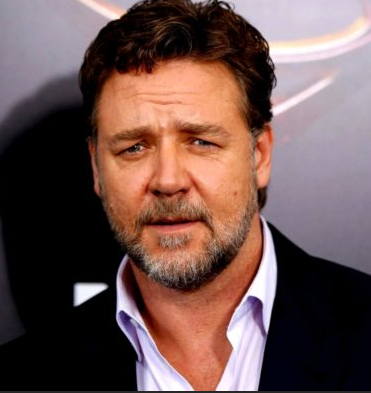
When Russell Crowe speaks, the film world listens. Known for his intensity, authenticity, and commanding screen presence, Crowe has long been considered one of the defining actors of his generation. So when he recently hinted at the possibility of retirement, it didn’t just spark curiosity—it sent a ripple through the entire entertainment industry.
In a candid and introspective moment, Crowe revealed that he has begun to question his place in the industry. Standing in front of a mirror, he described a moment of recognition that many aging actors eventually face: a realization that time is moving forward, and that the person staring back is no longer the same one who once dominated the screen.
“You are standing in front of the mirror, and go: ‘Who the f*** is that?’” he admitted.
It was a brutally honest statement—one that stripped away the glamour of Hollywood and replaced it with something far more human: uncertainty.
The Fork in the Road: Continue or Walk Away
For Russell Crowe, the question isn’t simply whether he still enjoys acting. It’s something deeper. It’s about purpose, relevance, and legacy.
He laid out two very different paths ahead of him.
On one side, there is the example of Ridley Scott—a filmmaker who continues to create, evolve, and explore new ideas well into his later years. Crowe has long admired Scott, particularly after their collaboration on Gladiator, and sees in him a model for artistic longevity.
On the other side lies a much quieter option: stepping away entirely.
“Or I will just stop and you will never hear from me again,” he said.
It is a stark contrast—continuing to create versus disappearing completely.
And at this moment, he hasn’t decided which path to take.
From Humble Beginnings to Global Stardom
To understand the weight of this decision, it’s important to look back at the extraordinary journey that brought Russell Crowe to this point.
His career began far from the bright lights of Hollywood. In the early 1990s, he was making a name for himself in Australian cinema, delivering performances that were raw, intense, and impossible to ignore.
His breakthrough came with Romper Stomper, where his portrayal of a violent and troubled character shocked audiences and critics alike. It was a performance that demanded attention—and it ensured that Crowe would not be overlooked for long.
From there, his rise was rapid.
The Role That Changed Everything
In 2000, Russell Crowe stepped into the role that would define his career: Maximus in Gladiator.
Directed by Ridley Scott, the film became a global phenomenon. It combined epic storytelling, emotional depth, and breathtaking action—and at the center of it all was Crowe.
His performance was powerful, restrained, and deeply human.
It earned him the Academy Award for Best Actor.
But more than that, it cemented his status as one of the most compelling actors in the world.
A Career Defined by Versatility
What set Russell Crowe apart was not just his intensity, but his range.
He refused to be confined to a single type of role.
In A Beautiful Mind, directed by Ron Howard, he portrayed mathematician John Nash with extraordinary sensitivity. It was a performance that required emotional vulnerability rather than physical strength, and he delivered it with remarkable precision.
In Master and Commander: The Far Side of the World, he took on the role of a determined naval captain, showcasing leadership, complexity, and quiet intensity.
And in Les Misérables, he surprised audiences by stepping into a musical role, proving that his talents extended beyond traditional acting.
Each performance added another layer to his legacy.
The Burden of Longevity
But with a long and successful career comes a unique set of challenges.
For Russell Crowe, one of the most significant is the question of longevity.
How long can an actor continue at the highest level?
And perhaps more importantly, how long should they?
The industry often celebrates youth, energy, and reinvention. But it can be less forgiving when it comes to aging.
Roles change. Expectations shift.
And actors are forced to adapt—or step away.
The Mirror Moment: A Universal Experience
Crowe’s reflection in the mirror is more than just a personal anecdote.
It’s a universal experience.
At some point, everyone faces the realization that they are no longer who they once were. Time changes appearance, energy, and perspective.
For actors, whose work is so closely tied to image, this realization can be particularly intense.
Seeing that change can lead to difficult questions:
Am I still the same performer?
Do I still have something to offer?
Do I want to continue?
For Russell Crowe, these questions are no longer theoretical—they are immediate and real.
The Influence of Ridley Scott
The mention of Ridley Scott is significant.
Scott represents a different way of approaching age in the creative world.
Rather than stepping back, he has continued to evolve, taking on new projects and exploring new ideas.
For Crowe, this presents a compelling alternative.
It suggests that aging does not have to mean ending.
It can mean transforming.
The Possibility of Walking Away
At the same time, Crowe has not ruled out a complete departure from acting.
The idea of simply stopping—of stepping away without fanfare or announcement—is both surprising and intriguing.
It suggests a desire for control.
A way of ending things on his own terms.
In an industry that often dictates the trajectory of careers, that kind of autonomy is rare.
A Legacy Already Secured
If Russell Crowe were to retire tomorrow, his legacy would already be firmly established.
He has:
- Won an Academy Award
- Delivered multiple iconic performances
- Worked with some of the most respected directors in the industry
- Earned the respect of audiences and peers alike
Few actors achieve that level of success.
Even fewer maintain it over decades.
Beyond Acting: A Multifaceted Career
Crowe’s contributions extend beyond acting.
He has explored music, releasing albums and performing as a musician.
He has been involved in philanthropic efforts, using his platform to support various causes.
These pursuits suggest that his identity is not limited to the screen.
Which raises an interesting possibility:
If he does retire from acting, it may not be an ending—but a transition.
The Emotional Weight of Letting Go
Retirement is not just a professional decision.
It is an emotional one.
For someone like Russell Crowe, acting has been a central part of his life for decades.
Letting go of that identity is not simple.
It involves:
- Accepting change
- Releasing expectations
- Redefining purpose
These are not easy steps.
But they are necessary for anyone facing a major life transition.
The Audience Perspective
For fans, the idea of Crowe retiring is difficult to accept.
His performances have been part of the cultural landscape for so long that it’s hard to imagine a film industry without him.
But his honesty also creates a deeper connection.
By sharing his uncertainty, he reminds audiences that even the most successful individuals face moments of doubt.
A Career That Reflects Evolution
One of the most remarkable aspects of Russell Crowe’s career is its evolution.
He has:
- Moved between genres
- Taken on diverse roles
- Adapted to changing industry trends
This adaptability suggests that retirement is not the only option.
Reinvention is always possible.
The Power of Choice
Ultimately, the most important aspect of Crowe’s situation is that the decision is his.
He is not being forced out.
He is not fading away.
He is choosing.
And that makes all the difference.
The Changing Face of Hollywood
The film industry that Russell Crowe entered in the early 1990s is not the same industry that exists today. Back then, the path to success was often defined by theatrical releases, critical reviews, and box office numbers. Today, the landscape has expanded into streaming platforms, global audiences, and rapidly shifting trends.
For a seasoned actor, this transformation can feel both invigorating and disorienting.
On one hand, there are more opportunities than ever before—new formats, new stories, and new ways to reach audiences. On the other, there is a sense that the rules are constantly being rewritten.
For someone like Crowe, who built his reputation during a different era of filmmaking, the question becomes even more complex:
Where do I fit in this new world?
It’s not a matter of talent or capability. It’s about alignment—finding roles, projects, and creative spaces that still feel meaningful.
And that search can be exhausting.
The Weight of Expectations
Another factor that cannot be ignored is the weight of expectations.
When an actor reaches the level of success that Crowe has achieved, every new role is measured against past greatness. Audiences don’t just watch—they compare.
Is this as powerful as Gladiator?
Is this as moving as A Beautiful Mind?
These comparisons, while inevitable, can become burdensome.
They create a standard that is almost impossible to surpass.
For younger actors, the pressure is to prove themselves.
For veterans like Crowe, the pressure is to outdo themselves.
And that is a far more difficult challenge.
Over time, this constant comparison can lead to a sense of fatigue—a feeling that no matter what you do, it will never quite capture the magic of what came before.
Art vs. Industry
At the heart of Crowe’s dilemma is a tension that many artists face: the conflict between art and industry.
Acting, at its core, is a creative pursuit. It’s about storytelling, emotion, and connection.
But Hollywood is also a business.
Decisions are influenced by budgets, marketability, audience demographics, and profit margins.
For an actor who values authenticity and depth, navigating this balance can be frustrating.
Do you choose roles that challenge you creatively, even if they are less commercially viable?
Or do you align with projects that guarantee visibility and success, even if they feel less fulfilling?
This is not a new question—but it becomes more pressing with time.
Because as the years pass, the desire for meaningful work often outweighs the desire for fame.
The Mirror as a Metaphor
Crowe’s “mirror moment” resonates so strongly because it functions as more than just a literal experience—it is a metaphor for self-examination.
The mirror reflects not just physical change, but internal evolution.
It forces a confrontation with identity.
Who am I now?
What have I become?
What do I still want?
For actors, whose identities are often intertwined with the characters they portray, this confrontation can be especially intense.
There is a risk of losing oneself in the roles, in the public image, in the expectations.
And when the external world begins to shift—when roles change, when appearances evolve—the internal sense of self can feel unstable.
The mirror, in this sense, becomes a moment of truth.
A pause.
A reckoning.
The Courage to Question
One of the most striking aspects of Crowe’s reflection is not the uncertainty itself, but his willingness to voice it.
In an industry that often prizes confidence and control, admitting doubt requires courage.
It challenges the narrative that successful individuals have everything figured out.
It reveals a more nuanced reality—that even at the peak of achievement, questions remain.
And perhaps that is what makes Crowe’s situation so compelling.
He is not reacting to failure.
He is responding to introspection.
That distinction matters.
Because it shifts the conversation from one of decline to one of choice.
Reinvention as an Alternative
While retirement is one possible path, reinvention remains another.
Many actors have successfully transitioned into different roles within the industry—directing, producing, mentoring, or even stepping into entirely new creative fields.
Crowe himself has already explored some of these avenues.
This raises an important question:
What does it mean to “leave” acting?
Does it mean stepping away from the camera entirely?
Or does it mean redefining one’s relationship with the craft?
Reinvention does not require abandoning the past.
It builds upon it.
It allows experience to inform new directions.
And for someone with Crowe’s depth of knowledge and perspective, the possibilities are vast.
The Role of Legacy
Legacy is a recurring theme in any discussion of retirement.
What will be remembered?
What will endure?
For Russell Crowe, legacy is not a concern—it is a certainty.
His body of work speaks for itself.
But legacy is not just about past achievements.
It is also about how one chooses to conclude—or continue—the journey.
Some artists choose to go out at their peak, preserving a certain image.
Others continue, embracing the evolution, accepting that not every project will be iconic.
Neither choice is inherently right or wrong.
But each carries its own implications.
Crowe’s awareness of his legacy suggests that whatever decision he makes will be intentional.
The Human Side of Stardom
It’s easy to forget that behind the accolades, the performances, and the public persona, there is a human being.
A person who ages.
Who reflects.
Who questions.
Crowe’s candid remarks strip away the illusion of invincibility that often surrounds celebrities.
They reveal vulnerability.
And in doing so, they make him more relatable.
Because the questions he is asking are not unique to actors.
They are universal.
Everyone, at some point, faces a moment of transition.
A moment where the path forward is unclear.
A moment where the past and the future collide.
Time as Both Ally and Adversary
Time plays a dual role in this narrative.
It is both an ally and an adversary.
On one hand, time brings experience, wisdom, and perspective.
It allows for growth.
For mastery.
For deeper understanding.
On the other hand, time introduces change—physical, emotional, and professional.
It alters perception.
It shifts opportunities.
It creates limitations.
For an actor, this duality is particularly pronounced.
Time enhances the craft, but it also reshapes the context in which that craft is practiced.
Navigating this balance is not easy.
And it requires a level of self-awareness that Crowe clearly possesses.
The Silence of Stepping Away
Crowe’s suggestion that he might simply disappear—without announcement, without ceremony—is a powerful one.
In a world that thrives on visibility, silence becomes a statement.
It represents a rejection of the need for validation.
A refusal to perform even in departure.
There is something almost poetic about the idea.
An actor who has spent decades in the spotlight choosing to exit quietly.
No final bow.
No grand farewell.
Just absence.
And in that absence, a kind of presence remains.
Because the work endures.
The performances remain.
The impact lingers.
The Audience’s Role in the Decision
While the decision ultimately belongs to Crowe, the audience plays an indirect role.
Actors exist in a relationship with their viewers.
Their work is experienced, interpreted, and remembered by others.
The connection between actor and audience is what gives the craft its power.
And so, when an actor considers stepping away, there is an awareness of what that means for those who have followed their journey.
It is not a responsibility—but it is a consideration.
Crowe’s honesty invites the audience into that process.
It transforms them from passive observers into engaged participants.
They are not just watching his career—they are witnessing his decision.
The Unanswered Question
Perhaps the most compelling aspect of this entire situation is that there is no resolution—at least not yet.
Crowe has not made a decision.
He stands at the crossroads.
And that uncertainty is what gives the story its energy.
Because it is ongoing.
It is evolving.
It is real.
There is no script.
No predetermined ending.
Only possibility.
What Comes Next
Whether Russell Crowe chooses to continue acting, reinvent himself, or step away entirely, one thing is certain:
His journey is far from insignificant.
Every path forward carries meaning.
If he continues, he does so with the weight of experience and the freedom to choose roles that truly matter to him.
If he reinvents, he opens new doors—not just for himself, but for others who look to him as an example.
If he walks away, he does so with a legacy that few can match.
In all scenarios, there is value.
There is impact.
There is purpose.
A Moment That Transcends One Actor
Ultimately, this is not just a story about Russell Crowe.
It is a story about change.
About identity.
About the passage of time.
It is about the moments in life when we are forced to pause and ask ourselves difficult questions.
Moments when the path forward is not defined by necessity, but by choice.
And in that sense, Crowe’s reflection becomes something larger.
It becomes a mirror for everyone.
Because at some point, we all stand at that same crossroads.
We all look at ourselves and wonder:
What now?
And like Crowe, we must decide.
Not based on expectation.
Not based on fear.
But based on what feels true.
The Quiet Power of Reflection
Moments like the one Russell Crowe described—standing in front of a mirror and barely recognizing the person looking back—are often quiet, private experiences. Yet they carry immense emotional weight.
For many people, those moments pass without much discussion. Life moves forward, responsibilities demand attention, and the questions raised by reflection are pushed aside.
But for artists, reflection is often part of the creative process itself.
Actors spend their careers examining human behavior, emotions, and motivations. They study what drives people, what breaks them, and what allows them to rise again. In many ways, actors become experts at portraying transformation.
The irony is that when their own transformations occur, the experience can feel just as unfamiliar as the characters they portray.
Crowe’s willingness to acknowledge that moment publicly suggests something important: even those who seem completely confident on screen are still navigating the same inner questions as everyone else.
A Career Measured in Moments
When people look back at Crowe’s career, they often focus on the milestones—the awards, the box office successes, the iconic roles.
But careers are rarely defined only by their biggest achievements.
They are also shaped by the quieter moments.
The roles that challenged an actor.
The projects that didn’t work out as expected.
The risks that felt uncertain at the time.
All of these experiences contribute to the full picture of an artist’s journey.
For Crowe, the story is not just about becoming a global star. It is about decades of dedication to a craft that demands emotional honesty and constant reinvention.
Every role added another piece to that story.
Every performance expanded the legacy he was building.
The Freedom of Uncertainty
There is also something liberating about not having all the answers.
Uncertainty often carries a negative connotation, suggesting confusion or instability. But it can also represent possibility.
When the future is not predetermined, new paths become available.
Crowe’s current moment—standing between continuation and retirement—embodies that openness.