A growing issue in California has garnered attention as lawmakers seek to tackle the increasing problem of vehicles using illegal license plate covers to obscure their identification. These covers, often marketed as a way to “protect” license plates from wear and tear, have been misused to hide or alter the characters on the plates, making it difficult for law enforcement to track vehicles.
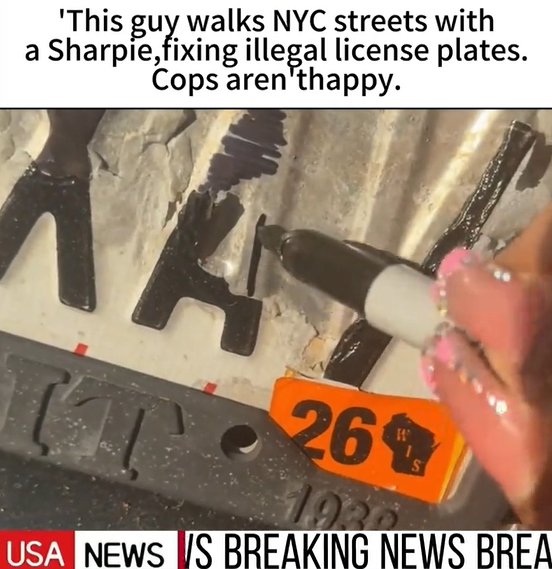
In an attempt to curb this practice, some individuals have gone even further by resorting to simple, low-tech methods. One individual, in particular, has been walking the streets of New York City armed with a Sharpie marker, making quick fixes to illegally obscured plates, essentially “correcting” them in real-time. His actions, which he claims are aimed at addressing a problem he perceives in the city, have drawn the ire of local law enforcement, and now lawmakers in California are turning their attention to this rising trend.
The story of this Sharpie-wielding individual is just the tip of the iceberg when it comes to illegal license plate covers, and it has spurred calls for stronger regulations. In California, lawmakers are now focusing on the retailers who sell these covers, which have become widely available and easy to obtain. Their argument is simple: these accessories are contributing to millions of dollars in lost revenue from tolls, traffic enforcement, and parking violations, and something needs to be done to stop this growing issue.
The Sharpie Fixer: A Controversial Approach
It all started when a local New Yorker was spotted walking down the streets of the city, Sharpie in hand, making adjustments to the license plates of cars that had illegal covers. According to reports, the individual was seen drawing over the obstructed numbers and letters of the plates, effectively “fixing” the illegally covered plates and making them visible again. His reasoning behind this unusual act was his belief that these plates were being used to evade tolls and traffic fines, and that he was performing a public service.
The act of using a Sharpie to “correct” a license plate may seem trivial at first glance, but it raises significant legal and ethical questions. While the intent may have been to make these plates visible to law enforcement, the fact remains that the individual was altering private property without permission. Additionally, the action itself could have unintentionally damaged the plates, making the situation more complex.
Law enforcement authorities were quick to respond, with many officers citing the act as illegal. Altering or defacing license plates, even with good intentions, can have serious legal consequences. In many places, tampering with license plates is a criminal offense, and the penalties can range from fines to more severe charges. The problem was compounded by the fact that many of the vehicles with altered or obscured plates were using these modifications to bypass traffic regulations, such as tolls and parking enforcement.
The individual’s actions also shed light on a growing issue in cities across the country—people deliberately obstructing their license plates to avoid being tracked. In New York and other urban centers, where tolls, parking fees, and traffic violations are a major source of revenue for local governments, this practice is costing millions in lost income.
License Plate Covers: A Growing Industry of Evasion
The use of illegal license plate covers is not just a problem in New York. In California, law enforcement officials have been increasingly concerned about the widespread availability and use of these products. Retailers, both online and in physical stores, have been selling covers designed specifically to obscure the numbers and letters on license plates, often marketed as a means to “protect” the plates from dirt, debris, and wear. However, many drivers are using these covers for far more nefarious purposes.
These covers, which are typically clear or tinted plastic sheets that fit over a license plate, can be easily purchased online and installed by vehicle owners in just a few minutes. Some are even designed with special features that make them difficult for cameras to read, including reflective coatings or tinted films that obscure the characters on the plate.
While the intended purpose of these covers may have been to protect plates from the elements, it has become clear that they are being misused by individuals who wish to avoid tolls, evade parking tickets, and even elude law enforcement during traffic stops. This has resulted in significant revenue losses for municipalities that rely on ticketing, tolling, and parking enforcement as a primary source of income.
In response to the rise of these covers, California lawmakers have begun to crack down on retailers who sell them. Assemblymember Anna N. Campbell, a vocal advocate for traffic safety, has introduced legislation aimed at reducing the sale of illegal license plate covers. The bill would impose stricter regulations on retailers who sell covers that are designed to obscure license plates, with fines and penalties for those who fail to comply.
“These covers are not just a nuisance; they are a direct attack on the integrity of our traffic enforcement systems,” Campbell said in a statement. “By allowing these products to be sold and used with impunity, we are losing millions of dollars in tolls, parking fines, and traffic violations. It’s time to take action.”
The Financial Toll: Millions in Lost Revenue
The impact of illegal license plate covers on city revenue is far-reaching. In California alone, the state loses millions of dollars each year due to toll evasion, unpaid parking fines, and other traffic violations that are not enforced because of obscured license plates. The use of these covers has become so widespread that it is now a significant concern for local governments struggling to balance their budgets.
One of the primary ways in which these covers affect revenue is through the evasion of tolls. In California, many highways and bridges use automated tolling systems that rely on cameras to capture the license plates of vehicles passing through tollbooths. When a vehicle’s plate is obscured by a cover, the camera may be unable to read it, leading to lost toll revenue. The result is that individuals who are using these covers to evade tolls are not contributing their fair share to the maintenance and upkeep of the state’s infrastructure.
Additionally, parking violations and fines are often difficult to enforce when license plates are obscured. Many cities rely on parking enforcement officers to issue tickets for parking violations, but when a vehicle’s license plate is hidden, it becomes nearly impossible to issue a fine. This creates a significant loophole for individuals who use these covers to avoid paying fines for illegal parking.
The financial impact of these evasion tactics extends beyond just tolls and parking violations. Law enforcement agencies also use license plate recognition (LPR) systems to track vehicles involved in criminal activity. Obscuring a license plate can make it difficult for authorities to identify suspects, making it harder to solve crimes and keep track of offenders.
The Crackdown: Legal Measures and Enforcement
As the issue continues to grow, lawmakers are stepping up efforts to curb the sale of illegal license plate covers. In addition to the legislation introduced by Assemblymember Campbell, the California Department of Motor Vehicles (DMV) has issued guidance to law enforcement officials regarding the identification and removal of these covers. The DMV has also started collaborating with online retailers to ensure that these products are not sold within the state.
The legal measures being taken against retailers selling illegal license plate covers reflect the growing recognition of the problem. While some individuals may view the use of these covers as a minor infraction, the reality is that they are contributing to a significant loss of revenue and compromising the effectiveness of law enforcement.
Retailers who continue to sell these products may face legal consequences, including fines and the possibility of being banned from operating within the state. The state’s crackdown is part of a broader effort to maintain the integrity of the traffic enforcement system and ensure that individuals who break the law are held accountable.
Public Reaction: Support and Criticism
The public’s reaction to the growing problem of illegal license plate covers has been mixed. Some individuals support the crackdown, arguing that the use of these covers undermines the system and makes it difficult for cities and states to collect the revenue they are owed. “I’ve seen these covers everywhere,” one California resident commented. “They’re a scam. They let people get away with not paying tolls or parking tickets. It’s about time something was done about it.”
Others, however, have criticized the crackdown, arguing that the covers serve a legitimate purpose in protecting license plates from damage. Many drivers who use the covers claim that they are simply trying to keep their plates in good condition and that they have no intention of evading the law. These individuals argue that the government should focus on other ways of enforcing traffic laws without punishing people for trying to preserve their vehicles.
Despite these criticisms, the overwhelming response from local governments, law enforcement, and lawmakers has been to focus on cracking down on the illegal use of license plate covers. They argue that the negative impact on public safety and revenue collection outweighs any potential benefits of using these products.
The Fight Against License Plate Evasion
The growing use of illegal license plate covers in California and other states has become a major concern for both law enforcement and local governments. While the covers may have originally been marketed as a way to protect license plates from wear and tear, they are now widely recognized as a tool for evading tolls, parking tickets, and traffic violations.
In response to this issue, lawmakers have introduced new legislation aimed at curbing the sale of these covers and holding retailers accountable. By cracking down on the sale and use of these products, the state hopes to recover millions of dollars in lost revenue and ensure that traffic laws are enforced fairly and consistently.
As this issue continues to unfold, it is clear that a balance must be struck between protecting drivers’ property and ensuring that the public is held accountable for their actions on the road. The fight against license plate evasion is just one example of the larger issues facing traffic enforcement, and it will likely remain a topic of discussion as lawmakers continue to address the challenges of the 21st century.
The Growing Problem of License Plate Evasion: An Economic and Public Safety Concern
The rise of illegal license plate covers has become an increasingly prevalent issue across the United States, particularly in major metropolitan areas like New York and California. These covers, which are primarily designed to protect license plates from dirt, weathering, and wear, have been widely misused to obscure the identification of vehicles. This practice is not just an inconvenience for toll authorities and law enforcement—it has substantial economic and public safety implications.
When license plates are obscured, the technology used to enforce traffic violations—such as automated toll collection systems and parking enforcement cameras—becomes ineffective. These systems rely on clear, readable license plates to capture information for issuing tickets and tracking vehicles. However, when drivers use license plate covers designed to obscure the characters or reflective film that makes the plate readable to automated systems, they are essentially gaming the system.
The loss of revenue from tolls, parking tickets, and even law enforcement violations can be substantial. In California alone, millions of dollars are lost each year due to license plate evasion, a problem that has been exacerbated by the rise of e-commerce platforms that make illegal license plate covers easily accessible to the public. In some cities, where automated tolling and parking enforcement are the primary means of generating revenue, the practice has undermined the effectiveness of these systems, leaving local governments unable to collect the necessary funds to maintain and improve transportation infrastructure.
The Role of Retailers: Selling Products That Facilitate Evasion
While many of the offenders who use license plate covers may do so with the intent to protect their plates, there is a significant portion of the population who are purchasing these covers specifically to evade tolls, parking tickets, or traffic enforcement. Retailers, both online and in physical stores, have played a major role in the widespread availability of these products. Online marketplaces such as Amazon, eBay, and other e-commerce platforms have become a haven for selling illegal license plate covers, sometimes under the guise of providing protective accessories.
For years, these products were sold with little regulation or oversight. Some retailers marketed these covers as “anti-theft” accessories, while others promoted them as “weatherproofing” or “privacy-enhancing” solutions. However, many buyers quickly realized that the real benefit of these covers was their ability to obscure a vehicle’s license plate from toll cameras, red light cameras, and other automated enforcement systems.
This practice has raised concerns about the ethical responsibility of retailers who profit from the sale of such products. While some sellers may be unaware of the illegal uses of their products, others may be knowingly contributing to a growing problem. This situation has led to calls for tighter regulations and restrictions on the sale of these license plate covers.
In California, where lawmakers have introduced legislation to address the issue, there has been significant backlash from retailers who sell these products. Many argue that it is difficult to regulate online marketplaces that operate across state and national borders. Some retailers have already begun removing certain types of license plate covers from their online stores in response to pressure from state lawmakers, but it remains to be seen whether this will have a meaningful impact on curbing the practice.
Technological Solutions: Cameras and Automated Systems to the Rescue
As technology continues to evolve, so too does the ability of law enforcement and toll authorities to track and identify vehicles. Automated License Plate Recognition (ALPR) technology, which uses high-resolution cameras and software to read and record license plate numbers, has become one of the most valuable tools in modern traffic enforcement. ALPR systems are used in everything from toll collection and parking enforcement to tracking stolen vehicles and identifying wanted criminals.
However, the rise of license plate covers that obscure plate numbers has presented a significant challenge for these systems. ALPR technology relies on clear, visible plates to function properly. When drivers use covers that obscure key parts of their plates, they effectively undermine the efficiency of the technology, making it impossible for toll booths and traffic cameras to read the plate numbers accurately. This forces authorities to rely on other methods—such as manual ticketing or in-person identification—to enforce laws, a much less efficient system.
As a response to this, some jurisdictions have started implementing more advanced ALPR systems that are better equipped to handle the challenges posed by these illegal license plate covers. For example, some newer systems are designed to capture images of vehicles from multiple angles, increasing the chances of obtaining a clear image of the license plate even if part of it is obscured. Other jurisdictions have explored the use of infrared cameras that can detect license plates even under poor lighting conditions, although these systems are still in the early stages of development.
These technological solutions, while promising, have limitations. They are expensive to implement, and not all jurisdictions have the budget to upgrade their existing systems. Additionally, there remains a risk that individuals will continue to exploit loopholes in the system by using more advanced license plate covers that can evade even the best camera systems. This ongoing technological arms race between evaders and law enforcement highlights the need for comprehensive policy changes in how license plates are regulated.
The Legal Landscape: Crackdown on Illegal Covers and Evasion Tactics
In response to the widespread issue of illegal license plate covers, state and local governments have begun taking more aggressive measures to curb the practice. One of the primary tools being used is legislation aimed at restricting the sale and use of these covers. In California, Assemblymember Anna N. Campbell has introduced a bill that would make it illegal to sell or distribute license plate covers that are designed to obscure or alter the readability of license plates.
The bill also proposes increased penalties for individuals caught using these covers to evade tolls, parking fines, or traffic violations. Fines for the illegal use of license plate covers could range from several hundred to several thousand dollars, depending on the circumstances. The goal of the legislation is not only to prevent toll evasion and improve traffic enforcement but also to reduce the broader impact of these covers on the state’s economy.
The legislation also targets retailers who sell these products. In California, retailers who continue to sell illegal license plate covers could face significant penalties, including fines and potential lawsuits. This measure is part of a broader crackdown on the sale of illegal products that contribute to public safety issues. Lawmakers have stressed that it is important to hold both manufacturers and retailers accountable for the sale of products that are used for unlawful purposes.
While the bill has faced opposition from some groups, including retailers and vehicle owners who argue that the covers serve legitimate purposes, there is growing support for the measure. Many see it as an essential step in restoring integrity to the tolling and parking enforcement systems and ensuring that drivers are held accountable for their actions on the road.
The Future of License Plate Regulation: What’s Next?
As the problem of illegal license plate covers continues to grow, the question remains: what will the future of license plate regulation look like? There are several avenues that lawmakers, law enforcement, and the public can pursue to address this issue and prevent further abuse.
One possibility is the development of new types of license plates that are more resistant to tampering or obscuring. Some have suggested the idea of creating plates with built-in features that make it impossible to hide or alter the numbers. For example, plates could be equipped with digital displays that change automatically, making it much harder for individuals to tamper with them. While such a system could be costly to implement, it would offer a more permanent solution to the problem.
Additionally, there could be a greater emphasis on public education campaigns that inform drivers about the consequences of using illegal license plate covers. These campaigns could be used to raise awareness about the financial and legal implications of toll evasion, as well as the importance of maintaining the integrity of the public safety and law enforcement systems.
Technological advancements may also play a key role in solving this issue. ALPR technology will continue to evolve, and more advanced camera systems will likely become available in the coming years. However, to make these technologies effective, lawmakers will need to ensure that they are supported by policies that discourage the sale and use of illegal license plate covers. Ultimately, a comprehensive approach that combines stricter regulations, public education, and technological advancements will be necessary to address this growing issue.