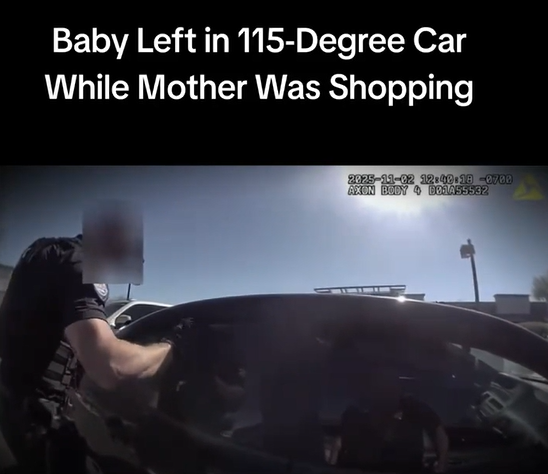
A recent incident in which a baby was left inside a locked car in 115-degree heat has raised concerns about child safety and parental responsibility. The alarming moment was captured on police body cam footage, showing the officers’ swift response after they discovered the baby alone inside a vehicle. The footage has sparked a broader conversation about the dangers of leaving children unattended in cars, especially in extreme heat.
The incident occurred when the mother of the child reportedly went shopping while her infant was left alone in the car, which was parked in a public lot. As temperatures soared to a dangerous 115 degrees outside, the child’s life was placed in jeopardy as the heat inside the car rapidly increased to even more extreme levels. Fortunately, a concerned passerby noticed the situation and immediately called the authorities, who responded quickly to rescue the baby.

This disturbing event has prompted many to reevaluate the risks of leaving children alone in cars, even for a short period, and has highlighted the importance of taking proper precautions to ensure children’s safety, particularly in extreme weather conditions.
The Emergency Response: Officers Rush to Rescue the Baby
The video footage captured by police body cameras shows officers arriving at the scene after a concerned bystander reported the baby inside the vehicle. Upon assessing the situation, the officers immediately sprang into action. One officer can be seen attempting to open the car door, which was locked. As the temperature inside the car was likely dangerously high, the urgency of the situation was evident.
The officer successfully opened the car door, and the baby, who appeared to be in distress, was quickly removed from the vehicle. The infant was visibly sweating, and the officers quickly checked for signs of overheating or heatstroke. Given the extreme heat outside, there were significant concerns about the potential health risks that the baby had been exposed to during the time the mother was away.
The officers were able to cool the child down and make sure that no lasting harm had been done. Emergency medical services were called to assess the child’s condition further, and the baby was monitored closely to ensure no heat-related injuries had occurred.
The Dangers of Leaving Children in Hot Cars
Leaving a child unattended in a vehicle can have life-threatening consequences, especially in extreme weather conditions. On a hot day, temperatures inside a parked car can rise rapidly, even if the windows are cracked or slightly open. Studies have shown that the temperature inside a car can increase by 20 degrees or more in just 10 minutes, making it an incredibly dangerous environment for a child, even for short periods.
In the case of this incident, with outside temperatures reaching 115 degrees, the temperature inside the vehicle would have climbed to dangerously high levels. The risk of heatstroke, dehydration, and other heat-related injuries increases exponentially in these conditions. Children, especially infants, are more vulnerable to heat-related illnesses because their bodies are less able to regulate temperature, and they dehydrate much more quickly than adults.
Even with the windows partially rolled down, the interior of a car can reach fatal temperatures in a very short time. Heatstroke can occur in just minutes, and it can be fatal if not treated immediately. In this case, the officers’ quick response likely prevented the child from experiencing severe health complications, but it is a sobering reminder of the risks that parents and caregivers face when they fail to properly consider the dangers of leaving children unattended in a car.
The Legal Consequences: Parental Responsibility
The legal consequences for leaving a child in a hot car can be severe, particularly if the child suffers harm as a result. In many states, laws exist that specifically prohibit leaving children unattended in vehicles, especially in extreme heat. Charges for neglect, child endangerment, or even criminal charges for child abuse can be filed against a parent or caregiver who leaves a child in a car unattended.
In this particular case, the mother was immediately questioned by law enforcement upon her return to the car. The mother was reportedly shocked when the police explained the potential dangers of her actions. While the intent may not have been malicious, the severity of the situation raised significant concerns for child welfare officials. In the event that the baby had suffered heatstroke or any injury, the consequences would have been far more serious.
Depending on local laws and the severity of the situation, the mother could face charges of child neglect or endangerment, particularly if there is evidence that the child was in the car for an extended period or that the situation was preventable. In some cases, authorities may remove the child from the home if they believe the child is at risk for future harm, and social services may become involved in ensuring the safety and well-being of the child moving forward.
While the mother may have acted out of a sense of urgency to complete her errands, it is crucial to recognize the dangers of leaving children unattended in cars and the legal responsibility of caregivers to protect their children at all times.
The Impact on the Community: Raising Awareness About Child Safety
This disturbing incident has sparked a conversation in the community about the importance of child safety and the steps that parents and caregivers can take to avoid making similar mistakes. Many concerned citizens have reached out to local news outlets and online forums to express their outrage over the mother’s actions and to stress the importance of being vigilant when it comes to leaving children in cars.
Experts in child safety have been quick to reiterate the dangers of leaving children unattended in hot cars. According to the National Highway Traffic Safety Administration (NHTSA), on average, more than 30 children die each year from heatstroke after being left in hot vehicles. Many of these deaths occur when a parent or caregiver accidentally forgets the child is in the car or leaves them unattended for just a few minutes while running errands.
Parents and caregivers are urged to take preventative measures to ensure that children are never left alone in a car, even for a brief period. One key recommendation from child safety experts is to establish a habit of checking the backseat before exiting the vehicle, to ensure that a child is not left behind. Another tip is to never leave children unattended in the car, even if the vehicle is parked in the shade or the windows are cracked.
This incident serves as a wake-up call for the community and underscores the need for better education and awareness around child safety. Parents and caregivers must be proactive in understanding the risks of leaving children unattended in cars, particularly in extreme heat, and take steps to prevent these tragedies from occurring in the future.
The Importance of Education and Prevention
Preventing incidents like this one requires widespread education and outreach to parents and caregivers. Many local government agencies, nonprofits, and child safety organizations are working to raise awareness about the dangers of leaving children in hot cars. Public service announcements, community events, and outreach programs are all part of efforts to educate parents and the general public about this pressing issue.
In addition to educational efforts, some states have introduced “Good Samaritan” laws that allow bystanders to break into a car to rescue a child if they believe the child is in danger. These laws are designed to provide protection for those who take action to save a child in distress, without fear of legal consequences. These types of laws empower the public to intervene in situations like the one captured in this video, potentially saving lives and preventing heatstroke-related injuries.
On the legislative side, lawmakers are also working to pass stricter laws regarding child safety in vehicles. In many states, bills have been introduced to require the installation of devices in vehicles that alert drivers when a child is left in the backseat. These devices have been shown to be effective in reducing the number of deaths related to children left in hot cars.
As awareness grows and legal protections increase, it is hoped that incidents like this one will become less common. The key to reducing these tragedies is not only through legislative measures but also through education and the active involvement of the community.
A Wake-Up Call for Parents and Caregivers
The incident involving the baby left in a hot car serves as a stark reminder of the dangers of leaving children unattended in vehicles, particularly in extreme heat. While the mother may not have intended harm, the consequences of her actions could have been disastrous. Fortunately, the quick response from law enforcement likely saved the child’s life, but the incident underscores the need for better education, stricter laws, and greater awareness surrounding child safety.
Parents and caregivers must take proactive steps to protect their children, ensuring they never leave them unattended in vehicles, even for a short period. By fostering a culture of awareness and responsibility, we can work to prevent these kinds of incidents from happening in the future.
Leaving a child in a car, even for just a few minutes, can be a moment of devastating regret for any parent or caregiver. This emotional burden can be especially difficult to cope with if the child is in danger, as it raises feelings of guilt, anxiety, and shame. Parents may not always be aware of how quickly a dangerous situation can unfold, but once they recognize the potential harm, it can leave them deeply disturbed.
In the case of this incident, the mother may have made a mistake out of the necessity of completing her errands quickly. However, the psychological toll of knowing she left her child in such a vulnerable situation cannot be overlooked. Often, parents who accidentally leave their children in cars do so with the best intentions, thinking they’ll only be gone for a few minutes. Unfortunately, it takes mere minutes for the temperature inside a car to rise to life-threatening levels. The mother in this case, having been unaware of the dangers of heatstroke, likely faced intense regret after realizing the possible harm she could have caused to her child.
For parents who unintentionally leave their children in hot cars, the emotional fallout can be immense. It’s not uncommon for parents to face self-blame and guilt, wondering how they could have made such a dangerous mistake. This emotional toll can lead to long-term stress, mental health struggles, and a decline in the parent’s ability to make sound decisions in the future. It’s important for those who find themselves in this situation to seek support and counseling to help process the event and come to terms with the mistakes made.
The Consequences of Leaving Children in Cars: Immediate and Long-Term Effects
The immediate effects of leaving a child in a hot car are severe and can include heatstroke, dehydration, brain damage, and even death. The temperature inside a vehicle can climb rapidly in the heat, causing a child’s body temperature to rise uncontrollably. Heatstroke occurs when the body’s core temperature exceeds 104°F (40°C), which can cause critical damage to organs, including the brain. Children, especially infants, are particularly vulnerable to heatstroke because their bodies are not as efficient at regulating temperature as adults.
Even if a child is not left in the car long enough to experience full-blown heatstroke, exposure to extreme heat can cause dehydration, dizziness, confusion, and difficulty breathing. The effects can be immediate, and if untreated, can escalate quickly. In severe cases, a child may lose consciousness, fall into a coma, or suffer permanent brain damage.
The long-term effects of exposure to heatstroke can be devastating, and children who survive heat-related incidents may face physical and cognitive impairments for the rest of their lives. These impairments can include learning disabilities, difficulty with motor skills, and issues with memory or concentration. For parents, the burden of knowing they put their child in harm’s way can be long-lasting and emotionally painful.
Why Parents Make This Mistake: Understanding the Mindset
It’s important to understand that leaving children in hot cars is not always a deliberate act of neglect or malice. Parents often make this mistake because they underestimate the dangers or are under pressure to accomplish multiple tasks in a short amount of time. Whether they need to run a quick errand, pick up groceries, or simply take a brief break, parents might not realize just how quickly temperatures inside a car can reach dangerous levels.
The phenomenon of “forgotten children” in cars is particularly common in situations where parents have changed their routine. A parent who may typically drop their child off at daycare may forget to do so on a busy morning if they’re distracted by other tasks. This is not a sign of poor parenting but rather an unfortunate byproduct of modern life’s fast-paced, multitasking environment. A parent might be so focused on the task at hand that they forget the child is still in the backseat. This is often referred to as “forgotten baby syndrome,” and it happens to parents from all walks of life.
However, despite the reasons behind these mistakes, they still result in dangerous consequences, and it’s essential that all parents recognize the potential risks involved when leaving a child in a vehicle, regardless of the circumstances. Awareness is the first step in preventing these tragedies, and all caregivers should be educated on the dangers and how to avoid such accidents.
The Role of Public Awareness and Education
To reduce the number of children left in cars, public awareness and education play a crucial role. Although laws exist to protect children from being left in vehicles, it is ultimately the responsibility of parents and caregivers to ensure their children are safe. Several public service campaigns have been launched over the years to educate parents about the dangers of leaving children in cars. These campaigns aim to provide practical solutions for remembering children, such as leaving a personal item—like a phone or handbag—on the child’s seat to remind the parent to check the backseat before exiting the vehicle.
Education campaigns have been successful in raising awareness about the dangers of heatstroke and the importance of never leaving a child alone in a car, even for a short period. These campaigns are often run by government agencies, nonprofit organizations, and child safety groups, which work together to provide resources to parents. One such initiative is the National Highway Traffic Safety Administration’s (NHTSA) “Look Before You Lock” campaign, which encourages parents to check the backseat before exiting the vehicle.
Another educational approach is to implement car safety technology designed to alert parents if a child is left in the backseat. Some modern vehicles now come equipped with sensors or alarms that notify the driver if a child is still in the backseat after the car is turned off. These advancements, combined with public education efforts, can help prevent tragedies by reminding parents to check their cars before leaving.
Technological Innovations: Solutions to Prevent Heatstroke
In addition to public education, there have been technological advancements aimed at preventing children from being left in hot cars. As mentioned, some new vehicles are now equipped with in-car technology that detects when a child is left in the backseat. These systems use weight sensors or other forms of detection to alert the driver before they leave the car.
Other technologies include “Hot Car” alarm systems that can be installed in vehicles. These systems work by monitoring the temperature inside the car, and when the temperature rises to dangerous levels, they send alerts to the parent’s smartphone or activate an alarm. Some systems are even linked to the car’s ignition, ensuring that an alarm is triggered when the engine is turned off and the doors are locked.
These innovations provide a vital tool in ensuring that children are never forgotten in hot cars. However, these technologies are not yet universal, and it’s crucial for parents to recognize that technology alone is not enough. Responsible parenting, constant awareness, and careful routine practices are still the most effective means of preventing this type of tragedy.
The Importance of Legislation: Stricter Laws and Penalties
In many states, laws exist that make it illegal to leave a child unattended in a car, and penalties for doing so can range from fines to criminal charges. In California, for example, lawmakers passed a law that makes it a criminal offense to leave a child under the age of six unattended in a vehicle, especially when the weather conditions are dangerous. The penalty for violating this law can be a misdemeanor charge, with possible jail time, and may also involve social services intervention.
Laws like these are crucial in sending a clear message that leaving children in cars is not only dangerous but also illegal. These laws help ensure that parents and caregivers are held accountable for their actions and serve as a deterrent to others who might think leaving a child in a car for “just a few minutes” is harmless.
In some cases, however, more severe consequences can arise, particularly if a child suffers harm. For instance, if a child were to die from heatstroke as a result of being left in a car, the responsible adult could face charges of child abuse or even manslaughter, depending on the circumstances and the outcome of the investigation.
These laws serve as an important safeguard for children’s safety and highlight the fact that no level of negligence is acceptable when it comes to the protection of vulnerable individuals.
The incident of a baby left in a hot car is a sobering reminder of the dangers posed by hot weather and the carelessness that can sometimes lead to such tragedies. While the mother may not have intended harm, the consequences of her actions could have been disastrous. Fortunately, the swift response from law enforcement likely saved the child’s life, but it serves as a stark warning about the importance of never leaving children unattended in a vehicle, regardless of the circumstances.
By raising awareness, implementing laws, and utilizing technology, society can work together to reduce the number of such tragic incidents. It is up to all parents and caregivers to prioritize safety and vigilance, making sure to never leave a child alone in a vehicle, even for a brief moment. With the proper education and preventative measures, we can ensure that these types of incidents become a rare occurrence and ultimately prevent future lives from being put at risk.