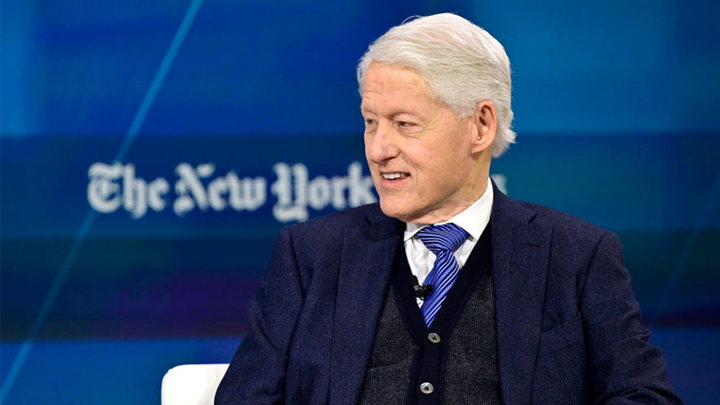
Former President Bill Clinton’s recent comments on the state of the Democratic Party have reignited debate within political circles, particularly as the party navigates internal shifts and prepares for upcoming midterm elections. Speaking after a series of high-profile primary victories by candidates backed by the Democratic Socialists of America, Clinton expressed confidence that the party remains in a strong position heading into the fall, stating that he believes Democrats are “in good shape” to achieve success. His remarks come at a moment when the Democratic Party is grappling with questions about its identity, direction, and the balance between its moderate and progressive wings.
The primary victories themselves have become a focal point in this conversation. Candidates such as Darializa Avila Chevalier, Brad Lander, and Claire Valdez secured wins in key New York races, drawing significant attention due to their alignment with progressive and socialist policies. These victories have been interpreted in different ways depending on perspective. For some within the party, they represent a growing momentum behind policies that emphasize economic reform, social equity, and expanded government involvement in key sectors. For others, they raise concerns about the party’s ability to appeal to a broader national electorate, particularly in swing districts where moderate positions have historically played a crucial role in securing victories.
Clinton’s response appears to reflect a broader confidence in the party’s adaptability. Throughout his political career, he has often aligned himself with more centrist positions, advocating for policies that seek to balance progressive goals with pragmatic considerations. His support for figures such as former New York Governor Andrew Cuomo in previous elections illustrates this tendency. However, his current comments suggest that he views the recent primary outcomes not as a threat, but as part of a dynamic political process that ultimately strengthens the party by engaging different segments of its base.
This perspective highlights a key aspect of modern political strategy: the need to accommodate a diverse range of viewpoints while maintaining a cohesive message. The Democratic Party, like many large political organizations, encompasses a wide spectrum of ideologies, from moderate centrists to more progressive activists. Managing this diversity is both a challenge and an opportunity. On one hand, it allows the party to address a variety of issues and appeal to different constituencies. On the other, it requires careful coordination to ensure that internal differences do not undermine overall electoral prospects.
The debate over the role of progressive candidates within the party is not new, but it has gained renewed urgency as election cycles become increasingly competitive. Supporters of the progressive movement argue that bold policy proposals can energize voters, particularly younger demographics, and create a sense of momentum that translates into higher turnout. They point to recent primary victories as evidence that these ideas resonate with a significant portion of the electorate. Critics, however, caution that positions perceived as too far left may alienate moderate voters and complicate efforts to win in more conservative or politically mixed regions.
Clinton’s statement that the party is in “good shape” suggests a belief that these internal debates, while significant, are ultimately manageable. It reflects confidence in the party’s ability to unify around shared goals once primary contests are concluded. This process of consolidation is a critical phase in any election cycle, as candidates and supporters shift their focus from internal competition to the broader challenge of competing against opposing parties.
The timing of Clinton’s comments is also notable given the broader geopolitical context. Tensions involving the United States and Iran have remained a prominent issue, with both countries navigating a fragile peace arrangement that has required careful diplomatic engagement. While Clinton did not directly address these tensions in detail, the intersection of domestic political dynamics and international developments adds another layer of complexity to the current environment. Voters often evaluate political leadership not only based on domestic policy positions but also on the ability to manage global challenges effectively.
In this sense, the Democratic Party’s approach to both internal debates and external issues will play a significant role in shaping its prospects in the upcoming midterms. The ability to present a unified front, articulate clear policy priorities, and respond effectively to emerging challenges will be key factors in determining electoral outcomes. Clinton’s confidence may reflect an assessment that the party has the resources, experience, and organizational structure necessary to navigate these demands.
At the same time, the reaction to his comments underscores the ongoing nature of the debate within the party. Political analysts, commentators, and party members have offered varying interpretations of what the recent primary results mean for the future. Some view them as a sign of transformation, indicating a shift toward a more progressive platform that could redefine the party’s identity. Others see them as part of a cyclical process in which different factions gain prominence at different times, without fundamentally altering the party’s overall direction.
The role of leadership in managing these dynamics cannot be overstated. Figures like Clinton, with decades of experience and a broad perspective on political strategy, often serve as voices of reassurance during periods of uncertainty. Their statements can influence how party members and supporters interpret events, providing a sense of continuity and stability. At the same time, newer leaders and emerging voices contribute to shaping the future direction of the party, bringing fresh ideas and perspectives that reflect changing social and economic conditions.
As the midterm elections approach, the focus will increasingly shift toward practical considerations such as candidate recruitment, campaign messaging, and voter outreach. These elements are essential in translating internal discussions into tangible electoral success. The ability to connect with voters, address their concerns, and present a compelling vision for the future will ultimately determine the effectiveness of any political strategy.
The influence of social media and digital communication also plays a significant role in shaping the current political landscape. Information spreads rapidly, and narratives can shift quickly based on new developments or emerging trends. This environment requires political parties to be agile and responsive, capable of adapting their messaging to address both opportunities and challenges in real time. The recent primary victories and Clinton’s subsequent comments have already generated significant online discussion, illustrating how quickly political events can become part of a broader national conversation.
In evaluating the implications of these developments, it is important to consider both short-term and long-term perspectives. In the immediate term, the focus is on the upcoming elections and the factors that will influence voter behavior. In the longer term, the question is how the party will evolve in response to internal debates and external pressures. Clinton’s assertion that the party is in a strong position suggests confidence in both timeframes, though the outcomes will depend on a variety of factors that continue to unfold.
Ultimately, the situation reflects the dynamic nature of modern politics, where change is constant and adaptation is essential. The Democratic Party’s ability to navigate these changes will be a key determinant of its success in the coming months and years. Clinton’s comments provide a snapshot of this moment, capturing both the challenges and the opportunities that lie ahead.
As discussions continue and the political landscape evolves, the significance of recent events will become clearer. For now, the combination of primary victories, internal debate, and leadership perspectives offers a complex picture of a party in transition, seeking to balance its diverse elements while preparing for the demands of a highly competitive electoral environment. Whether this balance can be achieved will be one of the central questions as the midterm elections approach, and the answer will shape the trajectory of the party and its role in American politics for years to come.
As the conversation surrounding Bill Clinton’s remarks continues to expand, it becomes increasingly clear that his comments are not simply about optimism for an upcoming election cycle, but about the broader evolution of the Democratic Party in a rapidly changing political environment. The confidence he expressed reflects a deeper belief in the party’s ability to adapt, absorb internal differences, and ultimately present a unified front when it matters most. However, that confidence also exists alongside a growing awareness that the challenges facing the party are more complex than in previous cycles.
One of the central issues shaping this moment is the shifting ideological balance within the Democratic Party. The recent success of candidates aligned with the Democratic Socialists of America has brought renewed attention to progressive policies that emphasize structural changes in areas such as healthcare, housing, labor rights, and economic inequality. These policies have gained traction among certain segments of the electorate, particularly younger voters who are increasingly engaged in political processes and eager for transformative change.
At the same time, there remains a strong presence of moderate voices within the party who advocate for a more incremental approach. These individuals often emphasize the importance of electability in diverse districts, arguing that broader appeal is essential for securing victories in competitive races. The tension between these perspectives is not necessarily a weakness, but it does require careful management to ensure that internal debates do not overshadow the party’s ability to communicate a clear and cohesive message to voters.
Clinton’s political legacy is closely associated with this centrist approach. During his presidency, he championed policies that sought to bridge ideological divides, focusing on economic growth, fiscal responsibility, and pragmatic governance. His endorsement of more moderate candidates in previous elections reflects this perspective, making his current expression of confidence in a party experiencing a surge in progressive influence particularly noteworthy. It suggests that he views these developments as part of a natural progression rather than a fundamental departure from the party’s core principles.
This interpretation aligns with a broader understanding of political parties as dynamic entities that evolve over time. Changes in demographics, economic conditions, and cultural attitudes all contribute to shifts in political priorities. For the Democratic Party, the challenge lies in integrating these changes in a way that strengthens its overall position rather than creating fragmentation. Clinton’s remarks can be seen as an attempt to frame the current moment in a positive light, emphasizing resilience and adaptability.
The role of primary elections in shaping party direction is also significant. Primaries serve as a testing ground for ideas, allowing different factions within a party to present their visions and compete for support. The victories of progressive candidates in New York demonstrate the ability of these ideas to resonate with voters in certain contexts. However, the transition from primary success to general election viability is a critical step that requires candidates to broaden their appeal and address a wider range of concerns.
This process often involves strategic adjustments in messaging and policy emphasis. Candidates who succeed in primaries may need to recalibrate their approach to connect with independent voters and those outside their core base. The ability to make these adjustments without losing authenticity is a key factor in determining electoral success. Clinton’s confidence suggests that he believes Democratic candidates are capable of navigating this transition effectively.
The broader political landscape also plays a role in shaping expectations for the midterm elections. Factors such as economic performance, public opinion on key issues, and the actions of opposing parties all influence voter behavior. In this context, the Democratic Party’s internal dynamics are only one piece of a larger puzzle. Clinton’s remarks may reflect an assessment that, despite internal debates, the party is well-positioned relative to external conditions.
At the same time, the importance of voter engagement cannot be overstated. Elections are ultimately decided by those who participate, and mobilizing support is a critical component of any successful campaign. Progressive candidates often emphasize grassroots organizing and community engagement as central elements of their strategy. These efforts can generate enthusiasm and increase turnout, particularly among groups that may have been less engaged in previous elections.
However, maintaining this level of engagement over time requires sustained effort and clear communication. Voters must feel that their concerns are being addressed and that their participation makes a difference. This is where the party’s ability to present a unified message becomes particularly important. While internal debates are a natural part of the political process, they must eventually give way to a collective focus on shared goals.
The intersection of domestic political developments and international issues adds another layer of complexity to the current environment. The ongoing tensions involving the United States and Iran, and the efforts to maintain a fragile peace arrangement, highlight the importance of leadership on the global stage. While Clinton did not elaborate extensively on these matters, the broader context suggests that voters may consider both domestic and international factors when evaluating candidates.
This dual focus underscores the need for comprehensive strategies that address a wide range of issues. Political leaders must be prepared to navigate both internal party dynamics and external challenges, demonstrating competence and adaptability in a variety of contexts. Clinton’s confidence may reflect a belief that the Democratic Party has the experience and resources necessary to meet these demands.
The influence of media and public discourse also plays a critical role in shaping perceptions of the party’s prospects. News coverage, social media discussions, and public commentary all contribute to the narrative surrounding political developments. Clinton’s remarks have already become part of this narrative, influencing how analysts and voters interpret the current situation.
In an era where information spreads rapidly, the ability to manage messaging and respond to developments in real time is essential. Political parties must be proactive in communicating their positions and addressing concerns, ensuring that their perspective is represented in the broader conversation. This requires coordination and clarity, as well as an understanding of how different audiences engage with information.
As the midterm elections draw closer, the focus will increasingly shift toward practical campaign efforts. Candidate recruitment, fundraising, advertising, and voter outreach will all play a role in determining outcomes. These elements require careful planning and execution, as well as the ability to adapt to changing circumstances.
Clinton’s statement that the party is in “good shape” suggests confidence in these operational aspects as well. It implies that the infrastructure necessary to support successful campaigns is in place and that the party is prepared to compete effectively. However, the ultimate test will be the results of the elections themselves, which will provide a clearer picture of how these various factors come together.
The broader implications of this moment extend beyond the immediate election cycle. The ongoing evolution of the Democratic Party will continue to shape its identity and influence its role in American politics. The balance between progressive and moderate perspectives, the integration of new ideas, and the ability to respond to changing conditions will all play a role in determining its future direction.
Clinton’s remarks offer a perspective that emphasizes continuity and resilience, suggesting that the party’s core strengths remain intact despite internal debates. Whether this perspective proves accurate will depend on how effectively the party navigates the challenges ahead.
In the meantime, the discussion sparked by his comments serves as a reminder of the complexity of modern politics. It highlights the interplay between individual perspectives, collective dynamics, and external factors, all of which contribute to shaping outcomes. For observers and participants alike, understanding these dynamics is essential for engaging with the political process in a meaningful way.
As events continue to unfold, the Democratic Party’s ability to translate its internal diversity into electoral success will remain a central question. Clinton’s confidence provides one answer, but the full picture will only emerge over time as campaigns progress and voters make their choices.
Ultimately, the significance of this moment lies not only in what was said, but in what it represents—a party in transition, navigating change while seeking to maintain unity and effectiveness in a highly competitive political environment. The outcome of this process will shape not only the upcoming midterm elections but also the broader trajectory of American politics in the years to come.
As the midterm elections draw even closer, the significance of Bill Clinton’s remarks continues to grow, not only as a reflection of his personal confidence but as an indicator of how seasoned political figures are interpreting the current moment. His perspective carries weight precisely because it is rooted in decades of experience navigating similar periods of transition, internal disagreement, and electoral uncertainty. That experience suggests an understanding that political parties are rarely static, and that moments of internal debate often precede periods of renewed clarity and direction.
One of the underlying themes in Clinton’s comments is the idea that electoral success is not determined solely by ideological positioning, but by the ability to translate ideas into a message that resonates with a broad audience. While progressive candidates have demonstrated strength in primary contests, the general election environment requires a different kind of engagement, one that addresses a wider range of concerns and priorities. This transition from primary to general election strategy is a critical phase, and it often determines whether early momentum can be sustained.
The Democratic Party’s ability to manage this transition will likely depend on how effectively it can integrate its diverse perspectives into a unified narrative. This does not mean eliminating differences, but rather finding common ground that can be communicated clearly to voters. Clinton’s confidence suggests that he believes such integration is achievable, and that the party’s internal diversity can ultimately serve as a strength rather than a liability.
At the same time, the broader political environment remains highly competitive and unpredictable. External factors, including economic conditions, international developments, and the actions of opposing parties, will all influence the outcome of the elections. In this context, the Democratic Party’s internal dynamics are just one part of a larger equation. Clinton’s remarks may reflect an understanding that, despite internal debates, the party is positioned to navigate these external challenges effectively.
Another important aspect to consider is the role of voter perception. In modern politics, perception often shapes reality, influencing how candidates and parties are viewed even before policies are fully examined. The narrative surrounding the Democratic Party—whether it is seen as unified or divided, moderate or progressive, stable or in transition—will play a significant role in shaping voter attitudes. Clinton’s statement can be interpreted as an effort to reinforce a narrative of strength and readiness, countering any perception of fragmentation.
This emphasis on perception highlights the importance of communication strategy in the current political landscape. Parties must not only develop policies and recruit candidates but also manage how those efforts are presented to the public. This involves crafting messages that are both clear and compelling, capable of addressing concerns while also inspiring confidence. The ability to do so consistently across different regions and voter groups is a key factor in achieving electoral success.
As the campaign season intensifies, the focus will increasingly shift toward these practical considerations. Debates, advertisements, public appearances, and grassroots efforts will all contribute to shaping the final outcome. Clinton’s confidence provides a backdrop for these activities, suggesting that the party enters this phase with a sense of preparedness and purpose.
In the end, his remarks serve as both a reflection of the current moment and a projection of what may lie ahead. They acknowledge the complexities of the political landscape while also expressing belief in the party’s capacity to navigate them. Whether this confidence will be validated by the results of the midterm elections remains to be seen, but it underscores a central theme of modern politics: that success often depends not only on the strength of individual ideas, but on the ability to bring those ideas together into a cohesive and effective strategy.
As voters prepare to make their decisions, the interplay between internal dynamics and external conditions will continue to shape the narrative. Clinton’s perspective adds one voice to that narrative, offering insight into how experienced leaders view the challenges and opportunities facing the Democratic Party. It is a perspective grounded in history, informed by experience, and focused on the belief that, despite uncertainty, the party remains well-positioned to compete in the months ahead.