Trump Says U.S. Negotiating From ‘Pure Strength’ as Iran Signals Willingness to Make a Deal
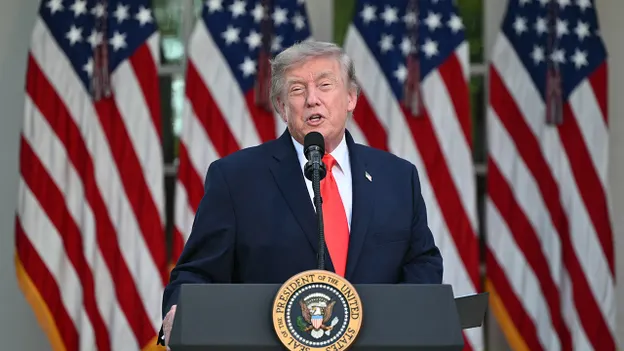
A new phase in the long-standing tensions between the United States and Iran appears to be taking shape, as President Donald Trump declared that negotiations between the two nations are now underway from what he described as a “position of pure strength.” The remarks, delivered during a dinner with American farmers at the White House Rose Garden, signal a shift in tone following recent military actions and escalating geopolitical tensions across the Middle East.
Trump’s statement was direct and emphatic. “We knocked the hell out of them, and now we’re negotiating from a position of pure strength,” he said, emphasizing that recent U.S. actions had altered the balance in ongoing discussions. According to the president, Iran is now eager to reach an agreement, suggesting that pressure applied by the United States has created an environment in which diplomacy is more likely to succeed.
The assertion that Iran “wants to make a deal very badly” marks a notable moment in the evolving relationship between the two nations. For years, negotiations have been marked by distrust, stalled agreements, and periodic escalations. Trump’s comments suggest that the current moment may represent a turning point, though details about the structure or content of any potential agreement remain unclear.
Central to the president’s remarks was the issue of nuclear weapons. Trump reiterated a longstanding position that Iran would not be allowed to develop or possess nuclear capabilities. “They will not have a nuclear weapon,” he stated firmly, adding that Iran has already agreed to that condition. This claim, if accurate, would represent a significant development in negotiations, as Iran’s nuclear program has been one of the most contentious aspects of its relationship with the United States and its allies.
However, as with many statements in the realm of international diplomacy, the situation is complex and layered. While Trump expressed confidence that Iran has agreed in principle to abandon nuclear ambitions, there has been no immediate independent confirmation from Iranian officials. Historically, such agreements have required detailed verification mechanisms, oversight by international bodies, and sustained compliance over time. Without these elements, claims of agreement often remain preliminary.
The president also addressed the status of the Strait of Hormuz, a critical global shipping route through which a significant portion of the world’s oil supply passes. Trump stated that the strait remains open, a point of reassurance for global markets that have been sensitive to any disruptions in the region. The stability of this waterway is crucial not only for energy markets but also for broader economic conditions, as any closure or disruption could have immediate and far-reaching consequences.
Beyond security and nuclear concerns, Trump introduced an economic dimension to the potential deal. He suggested that Iran could become a new market for American agricultural products, including wheat, soybeans, and corn. This idea reflects a broader strategy of linking diplomatic agreements with economic opportunities, particularly for domestic industries that have faced challenges in recent years.
According to the president, Iranian funds could be used to purchase these goods, addressing food shortages within Iran while simultaneously benefiting American farmers. This proposal highlights the interconnected nature of modern diplomacy, where economic incentives often play a role in shaping political outcomes. For U.S. farmers, the prospect of a new market represents a potential boost, especially in a global environment where trade relationships are constantly evolving.
At the same time, the suggestion raises questions about implementation. Any such arrangement would require careful coordination, financial mechanisms, and agreement on terms that satisfy both sides. It would also need to navigate existing sanctions, regulatory frameworks, and political considerations within both countries. While the concept may be appealing, translating it into reality would involve significant complexity.
The broader context of Trump’s remarks is essential to understanding their significance. The relationship between the United States and Iran has been marked by decades of tension, conflict, and intermittent attempts at diplomacy. From the Iranian Revolution in 1979 to more recent disputes over nuclear development and regional influence, the two nations have often found themselves at odds.
In recent years, efforts to negotiate agreements have faced numerous challenges. The withdrawal of the United States from previous arrangements, coupled with Iran’s subsequent actions, has created a cycle of escalation and response. Military actions, sanctions, and political rhetoric have all contributed to an environment where trust is limited and progress is difficult to achieve.
Against this backdrop, Trump’s assertion that negotiations are now taking place from a position of strength reflects a belief that pressure can lead to concessions. This approach has been a defining feature of his foreign policy strategy, emphasizing the use of economic and military leverage to achieve diplomatic goals. Supporters argue that such an approach forces adversaries to engage on more favorable terms, while critics question whether it leads to sustainable agreements.
The claim that Iran is willing to make a deal “very badly” is particularly noteworthy. It suggests that conditions within Iran, whether economic, political, or social, may be influencing its willingness to engage in negotiations. Economic sanctions, in particular, have had a significant impact on Iran’s economy, affecting everything from currency stability to access to goods and services. These pressures can create incentives for governments to seek relief through diplomatic means.
At the same time, Iran’s internal dynamics are complex. Decisions about negotiations and agreements are influenced by multiple factors, including political leadership, public opinion, and strategic considerations. While external pressure can play a role, it is not the sole determinant of policy decisions. Understanding Iran’s position requires a nuanced view that takes these factors into account.
The international community is also closely watching developments. Countries in the region, as well as global powers, have a vested interest in the outcome of U.S.-Iran negotiations. Stability in the Middle East has far-reaching implications, affecting energy markets, security alliances, and geopolitical balance. Any agreement between the United States and Iran would likely have ripple effects across multiple domains.
Allies of the United States may view the prospect of a deal with cautious optimism, recognizing the potential for reduced tensions while also seeking assurances that their own interests are protected. Meanwhile, other nations may approach the situation with skepticism, questioning the durability of any agreement and the likelihood of sustained compliance.
The role of verification and enforcement will be critical in determining the success of any potential deal. Previous agreements have included mechanisms for monitoring compliance, often involving international organizations such as the International Atomic Energy Agency. Ensuring that these mechanisms are robust and transparent is essential for building confidence among all parties involved.
Public reaction to Trump’s remarks has been mixed. Some view his statements as a sign of progress, suggesting that a new agreement could reduce tensions and create opportunities for cooperation. Others remain cautious, noting that previous negotiations have encountered obstacles and that initial optimism does not always translate into lasting results.
The domestic political landscape also plays a role in shaping perceptions. Foreign policy decisions often intersect with broader political debates, influencing how statements are received and interpreted. For some, Trump’s emphasis on strength aligns with a preference for assertive diplomacy. For others, it raises questions about the balance between pressure and engagement.
As discussions continue, the focus will likely shift to details. What specific terms are being negotiated? How will compliance be ensured? What role will other countries play in the process? These questions will be central to evaluating the substance of any agreement that emerges.
The economic dimension of the proposed arrangement, particularly the potential for agricultural exports, adds another layer of complexity. Linking diplomatic agreements to domestic economic benefits can create additional incentives for support, but it also requires careful coordination to ensure that expectations are met. For American farmers, the prospect of increased demand is appealing, but it depends on the successful implementation of broader agreements.
In the coming weeks and months, developments in U.S.-Iran relations will likely remain a focal point of international attention. Statements from both sides, as well as actions taken on the ground, will provide further insight into the direction of negotiations. While Trump’s remarks suggest confidence, the path to a finalized agreement is rarely straightforward.
Ultimately, the situation reflects the challenges and opportunities inherent in international diplomacy. Negotiations between nations with a history of tension require not only strategic thinking but also a willingness to navigate uncertainty. Success depends on a combination of factors, including leadership, communication, and the ability to align interests in a way that benefits all parties.
Trump’s declaration that the United States is negotiating from a position of “pure strength” encapsulates his approach to these challenges. Whether this approach will lead to a durable agreement remains to be seen. What is clear, however, is that the stakes are high, and the outcome will have implications that extend far beyond the immediate context.
For now, the message from the White House is one of confidence and opportunity. Iran, according to Trump, is ready to make a deal. The United States, he insists, is in a strong position to shape that deal. Between these two perspectives lies the reality of ongoing negotiations, where words must eventually be matched by actions and agreements must be tested by time.
As the world watches, the question remains not just whether a deal will be reached, but what kind of deal it will be—and whether it will bring the stability and progress that both sides, and the broader international community, are seeking.
As the narrative surrounding potential negotiations between the United States and Iran continues to evolve, attention is increasingly shifting toward what a finalized agreement might actually look like in practice. While President Donald Trump’s remarks emphasize strength and confidence, the reality of international diplomacy suggests that any agreement would require careful structuring, verification, and long-term commitment from both sides. The path from rhetoric to resolution is rarely direct, and history has shown that even the most promising negotiations can encounter unexpected obstacles.
One of the most critical elements in any potential agreement will be the framework for monitoring compliance. In previous efforts to limit Iran’s nuclear capabilities, international inspectors played a central role in verifying that commitments were being honored. These inspections involved access to facilities, ongoing data collection, and regular reporting to ensure transparency. Without such mechanisms, any agreement risks being viewed as incomplete or unreliable by both domestic and international observers.
At the same time, trust remains one of the most significant challenges. Decades of tension between the United States and Iran have created a deep sense of skepticism on both sides. Statements of intent, even when delivered with confidence, must be supported by tangible actions before they can alter that perception. For this reason, early steps in any agreement are likely to focus on measurable, verifiable outcomes that can build confidence over time.
Economic considerations will also play a central role in shaping the direction of negotiations. Iran’s economy has faced sustained pressure from sanctions, which have affected key sectors including energy, banking, and trade. These pressures have contributed to inflation, reduced access to global markets, and challenges in securing essential goods. In this context, the possibility of economic relief becomes a powerful incentive for engagement.
Trump’s suggestion that Iran could use its funds to purchase American agricultural products introduces a specific example of how economic cooperation might be structured. Such an arrangement would not only address food supply challenges within Iran but also provide direct benefits to U.S. farmers. However, implementing this kind of exchange would require the easing or restructuring of sanctions, as well as the establishment of secure financial channels that comply with international regulations.
The complexity of sanctions policy cannot be overstated. Sanctions are often layered, involving multiple legal frameworks and international agreements. Adjusting them requires coordination between government agencies, as well as communication with allies and international institutions. Any changes must be carefully calibrated to ensure that they support diplomatic objectives without undermining broader strategic goals.
In addition to economic factors, regional dynamics will influence the outcome of negotiations. Iran’s relationships with neighboring countries, as well as its involvement in regional conflicts, are closely monitored by both allies and adversaries of the United States. Any agreement that addresses nuclear issues may also need to consider these broader geopolitical factors to achieve lasting stability.
For countries in the Middle East, the prospect of a U.S.-Iran deal carries both hope and uncertainty. On one hand, reduced tensions between the two nations could lead to a more stable regional environment, potentially decreasing the likelihood of conflict. On the other hand, concerns remain about how such an agreement might affect existing alliances and security arrangements. These considerations will likely play a role in shaping the expectations and responses of regional leaders.
The global economic impact of negotiations is another key aspect to consider. The Strait of Hormuz, which Trump confirmed remains open, is a critical chokepoint for global energy supplies. Any disruption to shipping through this route can have immediate effects on oil prices, supply chains, and economic stability worldwide. Maintaining open access to the strait is therefore a priority not only for the United States and Iran but for the international community as a whole.
Trump’s emphasis on strength as a negotiating position reflects a broader strategic philosophy that prioritizes leverage in diplomatic engagements. This approach is based on the idea that demonstrating capability and resolve can influence the behavior of other nations, encouraging them to engage in negotiations under more favorable terms. While this strategy can produce results in certain contexts, it also carries risks, particularly if it leads to escalation or miscalculation.
The balance between pressure and diplomacy is delicate. Too much emphasis on pressure can harden positions and reduce the willingness to compromise, while too much emphasis on diplomacy without leverage can limit the ability to achieve desired outcomes. Successful negotiations often require a combination of both elements, carefully adjusted to the specific circumstances of the situation.
Public perception plays an important role in shaping the environment in which negotiations take place. Statements from leaders, media coverage, and public discourse all contribute to the narrative surrounding diplomatic efforts. Trump’s remarks, delivered in a public setting, are part of this narrative, influencing how both domestic and international audiences interpret the situation.
For supporters of the administration’s approach, the emphasis on strength and decisive action reinforces confidence in the direction of U.S. policy. For critics, it raises questions about the long-term sustainability of such an approach and the potential for unintended consequences. These differing perspectives highlight the complexity of evaluating diplomatic strategies in real time.
Within Iran, the response to U.S. statements is likely to be shaped by internal political dynamics. Different factions within the country may have varying views on the benefits and risks of engaging in negotiations. Economic pressures, public opinion, and strategic considerations all play a role in determining how the government responds to external developments.
The potential for a deal also raises questions about the timeline for implementation. Negotiations can take months or even years to reach a final agreement, particularly when multiple issues are involved. Even after an agreement is reached, the process of implementing its terms can be gradual, requiring ongoing coordination and monitoring.
In this context, expectations must be managed carefully. Early statements about progress or agreement can create optimism, but they do not guarantee immediate results. Both sides must navigate the complexities of translating broad commitments into detailed, actionable plans.
The agricultural component of Trump’s proposal highlights an interesting intersection between foreign policy and domestic economic priorities. For American farmers, access to new markets can provide opportunities for growth and stability. Linking these opportunities to diplomatic agreements creates a direct connection between international relations and local economic outcomes.
However, such connections also introduce additional considerations. Market access depends on infrastructure, logistics, and regulatory compliance, all of which must be addressed to ensure that proposed arrangements can function effectively. Additionally, fluctuations in global markets and domestic conditions can influence the viability of such agreements over time.
As negotiations continue, the role of communication will remain critical. Clear, consistent messaging can help build confidence among stakeholders, while ambiguity or conflicting statements can create uncertainty. Both the United States and Iran will need to manage their public communications carefully to support the progress of discussions.
The broader implications of a potential agreement extend beyond the immediate issues at hand. A successful deal could serve as a model for addressing other complex international challenges, demonstrating the value of combining strategic pressure with diplomatic engagement. Conversely, a failure to reach agreement could reinforce skepticism about the effectiveness of such approaches.
Ultimately, the situation reflects the intricate nature of modern diplomacy, where political, economic, and strategic factors are deeply interconnected. Trump’s assertion that the United States is negotiating from a position of “pure strength” provides a lens through which to view these dynamics, emphasizing the role of leverage in shaping outcomes.
Whether this approach will lead to a lasting agreement remains uncertain. What is clear is that the stakes are significant, not only for the United States and Iran but for the global community as a whole. The outcome of these negotiations has the potential to influence regional stability, economic conditions, and the future of international relations in profound ways.
As developments continue to unfold, attention will remain focused on the actions taken by both sides, as well as the responses of the international community. Each statement, each negotiation session, and each step toward or away from agreement will contribute to a narrative that is still being written.
In the end, the question is not simply whether a deal will be made, but what kind of deal it will be, how it will be implemented, and whether it will achieve the goals that both sides claim to seek. The answers to these questions will shape the next chapter in a relationship that has long been defined by tension, but which now stands at a potential turning p o i n t.