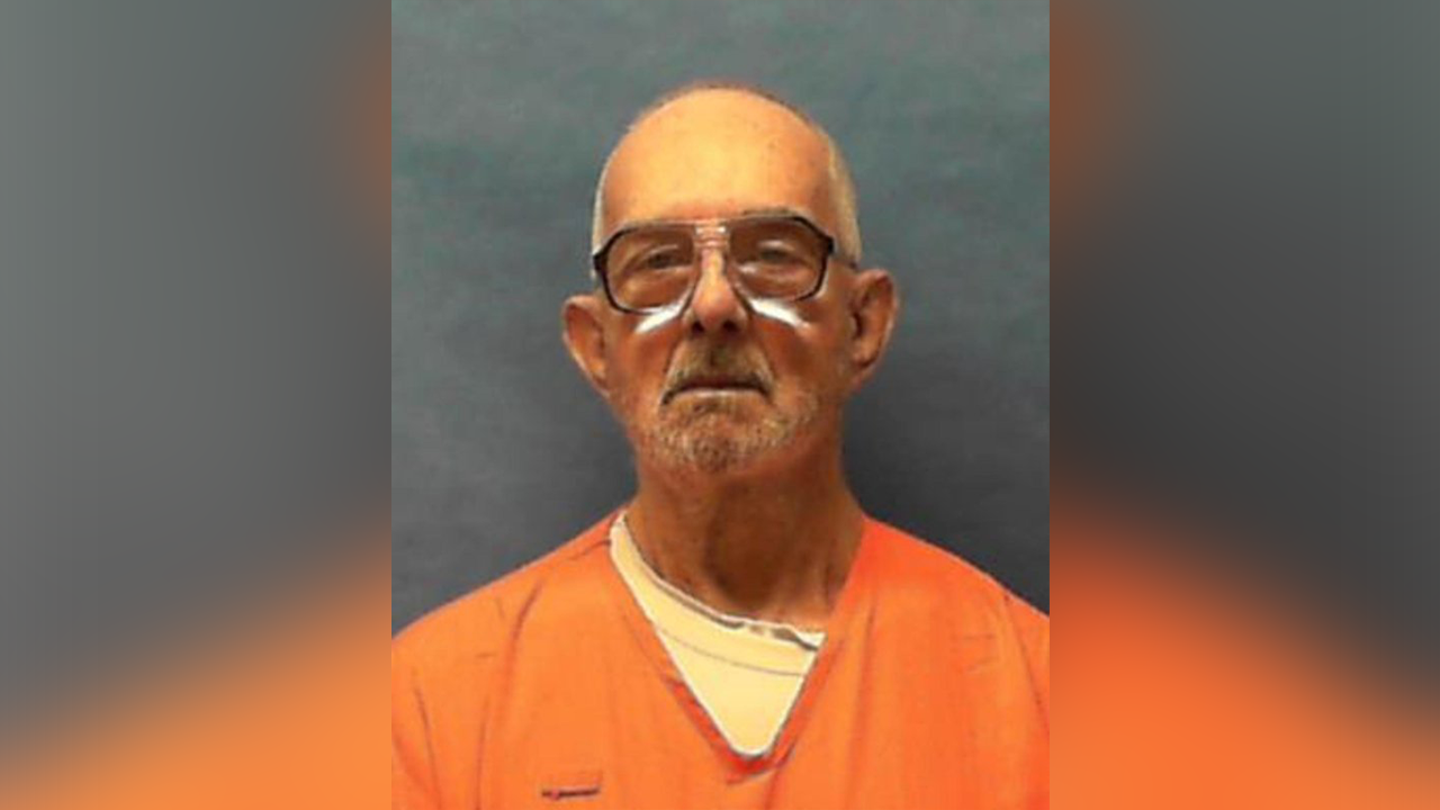
Florida executed 74-year-old Dusty Ray Spencer on Thursday evening for the murder of his wife more than three decades earlier, making him the oldest prisoner put to death in the state’s modern history and adding another execution to what has become one of the country’s most active capital punishment schedules. Spencer was pronounced dead at 6:10 p.m. on June 25 following a three-drug lethal injection at Florida State Prison near Starke. His execution closed the legal case against him, but it also reopened difficult questions about domestic violence, prolonged death-row imprisonment, the execution of elderly and seriously ill prisoners, and the increasingly frequent use of the death penalty in Florida.
The curtain covering the execution chamber was raised at the scheduled time of 6 p.m. Spencer was lying on a metal table with intravenous lines attached to his body as witnesses watched from a room separated by glass. A spiritual adviser stood nearby. When the prison warden asked whether he wished to make a final statement, Spencer apologized to the family and placed his fate in religious terms, saying he was committing his spirit and soul to God. The lethal drugs then began flowing.
After several minutes, Spencer stopped moving. The warden called his name and attempted to obtain a response. A medical professional examined him before officially declaring him dead. The entire procedure lasted only minutes, bringing an end to a case that had remained in Florida’s court and prison systems since the early 1990s.
Spencer was convicted of first-degree murder for the November 1991 killing of his wife, Karen Spencer. Prosecutors described the murder as the final act in a pattern of escalating violence inside the family’s home. The couple had operated a painting business together, but their personal and professional relationship had deteriorated. Karen reportedly wanted to separate from her husband and remove him from the business, creating a conflict that became increasingly dangerous.
The evidence presented in court showed that Spencer had attacked Karen during an earlier confrontation. Her teenage son was also assaulted when he attempted to protect her. In one incident, Spencer struck the teenager with a clothes iron, causing injuries serious enough to require medical treatment. Spencer was arrested, but the danger did not end while he was in custody. Prosecutors said he continued threatening Karen and indicated that he would kill her after his release.
Karen sought protection, but the threats were eventually followed by another violent confrontation. She was found dead inside her home after being attacked with a knife. Her wounds demonstrated the extreme force used against her, and investigators quickly focused on Spencer because of the earlier violence, his threats, and the collapsing marriage. He was arrested and charged with murder.
A jury convicted him in 1992, and he was sentenced to death. The legal process did not end there. Like many capital cases, Spencer’s conviction and sentence entered a long cycle of reviews, appeals, and challenges in state and federal courts. The Florida Supreme Court later ordered a new sentencing proceeding after finding that the original sentencing process had not handled certain considerations properly. Spencer was sentenced to death again in 1995.
For the next three decades, his attorneys pursued various arguments aimed at overturning the sentence or delaying the execution. Some challenges questioned aspects of the trial and sentencing. Others focused on changes in death penalty law, the length of time he had spent under a death sentence, and his declining physical condition as he grew older.
By the time Florida signed his death warrant, Spencer was suffering from serious health problems. His legal team argued that executing a severely ill 74-year-old man served no legitimate purpose and could expose him to unnecessary suffering. They maintained that his age, medical condition, and the decades he had already spent in prison should be considered before the state carried out the sentence.
The courts rejected those arguments. Judges concluded that age alone did not make the execution unconstitutional and that Spencer’s attorneys had not shown that Florida’s lethal injection procedure would violate the constitutional ban on cruel and unusual punishment in his particular case. His final requests for intervention were denied, including an appeal rejected by the U.S. Supreme Court only hours before the execution was scheduled to begin.
The legal fight emphasized an unusual feature of the case: Spencer was no longer the same age as the man convicted in 1992. He had entered death row in his early 40s and remained there until he was 74. More than three decades of imprisonment separated the crime from the punishment. During that time, witnesses aged, relatives died, court rules changed, and Florida’s political approach to capital punishment shifted repeatedly.
Supporters of the execution argued that this passage of time did not lessen Spencer’s responsibility for Karen’s murder. From that perspective, delays were largely the result of the extensive appeal process available to death-row prisoners. They argued that the state had an obligation to enforce the sentence imposed by the jury and courts and that the victim’s life should remain at the center of the case rather than the prisoner’s age at the time of execution.
Critics offered a different view. They questioned whether executing an elderly man after keeping him under a death sentence for more than 30 years represented justice or simply another form of prolonged punishment. They also argued that capital cases regularly take decades because the consequences of an error are irreversible. A rushed process could increase the risk of executing an innocent person or someone whose trial was legally unfair, while a prolonged process creates its own concerns about isolation, psychological suffering, and declining health.
Spencer’s execution became particularly significant because of his age. At 74, he was the oldest person executed in Florida since the United States Supreme Court allowed capital punishment to resume during the 1970s. Florida had previously executed prisoners in their 60s and early 70s, but no one older than Spencer during the modern death penalty era.
His record may not last long. Florida has scheduled another 74-year-old prisoner, Dennis Sochor, for execution in July. Sochor was convicted in the murder of a woman in 1981. Depending on his exact age when the sentence is carried out, he could match or exceed Spencer’s newly established state record.
Nationally, Spencer was not the oldest person executed in modern American history. That distinction belongs to Walter Leroy Moody Jr., who was 83 when Alabama executed him in 2018. Moody had been convicted in the 1989 mail-bomb killing of federal appeals court Judge Robert Vance. His execution demonstrated that the Constitution does not establish a maximum age beyond which a prisoner cannot be put to death.
The execution also highlighted Florida’s dramatic acceleration in carrying out death sentences. Spencer was the ninth prisoner executed by the state during 2026. Florida had already carried out a record number of executions in 2025, far exceeding the totals commonly seen during earlier years. The pace placed the state among the most aggressive users of capital punishment in the country.
Governor Ron DeSantis has defended the increased number of death warrants as a way of completing long-delayed sentences and delivering justice to victims’ families. His administration has argued that many prisoners awaiting execution were convicted decades ago and had already received extensive judicial review. Supporters say that continued delay weakens public confidence in the justice system and prevents a lawful sentence from being enforced.
Opponents say the rapid schedule increases pressure on defense attorneys, courts, prison staff, witnesses, and spiritual advisers. Capital cases often involve thousands of pages of records accumulated over decades. When execution dates are set close together, legal teams may have only weeks to investigate new claims, locate old evidence, examine changes in medical condition, and prepare emergency appeals.
The pace also raises practical concerns. Execution teams must prepare the chamber, verify procedures, obtain drugs, evaluate the prisoner, manage witnesses, and respond to last-minute court decisions. Although the public usually sees only the final minutes, the process involves extensive planning inside the prison system.
Florida uses a three-drug lethal injection protocol. The first drug is intended to render the prisoner unconscious. The second causes paralysis, and the third stops the heart. Supporters describe the method as controlled and humane when properly administered. Critics argue that if the first drug does not produce adequate unconsciousness, the prisoner could experience severe distress while being unable to move or communicate because of the paralytic drug.
Spencer’s attorneys connected those broader concerns to his medical problems. They argued that his physical condition could make the procedure more difficult or increase the possibility of complications. The state responded that its execution team was prepared to carry out the protocol and that the courts had repeatedly upheld Florida’s process.
Witness accounts indicated that the execution proceeded without an obvious extended delay. Spencer spoke his final words and then began breathing heavily after the drugs were administered. Within minutes, he became motionless. Officials completed the required checks before announcing his death.
No statement from Karen Spencer’s family was immediately released following the execution. The absence of a public statement should not be interpreted as an absence of emotion or impact. Families respond to executions in different ways. Some speak publicly about relief, justice, or closure. Others oppose the death penalty despite losing a loved one. Some avoid the media entirely because they do not want the worst event of their lives discussed again in public.
The idea of closure is often mentioned in capital cases, but victims’ relatives frequently describe a more complicated reality. An execution can end court proceedings and eliminate the possibility of another appeal, but it cannot reverse the murder. It does not restore the person who was killed or erase the years of grief experienced by surviving relatives.
Karen’s identity can also become overshadowed when public attention centers on the person being executed. Headlines naturally focus on the final event, the prisoner’s last statement, and the record created by his age. Yet the case began with Karen’s death and with a pattern of violence that reportedly placed both her and her teenage son in danger.
Her murder reflected a problem that extends far beyond one criminal case. Domestic violence often escalates gradually. It may begin with controlling behavior, threats, financial pressure, isolation, or intimidation before developing into physical assaults. Leaving an abusive relationship can be an especially dangerous period because the abusive partner may see separation as a loss of control.
In Karen’s case, the reported conflict over the marriage and family business was followed by serious violence, threats from jail, and eventually murder. The earlier attack and threats were warnings of the danger she faced. Her death became part of a long history in which victims sought separation or protection but remained vulnerable to retaliation.
The execution could punish the man convicted of killing her, but punishment alone does not prevent future cases. Prevention requires victims to have access to safe housing, confidential assistance, legal protection, financial support, and law enforcement responses that recognize escalating threats. It also requires family members, employers, schools, courts, and communities to take warning signs seriously.
The case therefore carries two very different stories. One concerns the final hours of a 74-year-old prisoner whose execution set a state record. The other concerns a woman killed decades earlier after violence inside her home had already escalated. The first story ended under bright lights inside an execution chamber. The second ended in 1991, long before most members of the public learned either name.
Debate over the death penalty often shifts attention between the offender and the victim. Supporters argue that opposition to execution can make the prisoner appear more important than the person murdered. Opponents answer that questioning government punishment does not excuse the crime or diminish the victim. They argue that a justice system can condemn murder while still rejecting execution.
Religious communities are similarly divided. Some support capital punishment as a proportionate response to intentional murder. Others emphasize mercy, redemption, and the belief that government should not take a life when secure imprisonment is available. Spencer’s final words, which included an apology and a religious appeal, placed those themes directly inside the chamber.
It is impossible to determine from a brief final statement how Spencer understood his actions after decades in prison. An apology at the end of a life may be deeply sincere, incomplete, self-protective, or some combination of those things. The people harmed by the crime are not obligated to accept it, and a final expression of regret cannot undo what happened.
His spiritual adviser’s presence reflected the limited forms of support available to a prisoner in the final moments. Death-row prisoners are typically allowed contact with attorneys, relatives, and religious advisers under controlled conditions before an execution. Their final day may include a last meal, visits, medical checks, and movement to a holding area near the death chamber.
Outside the prison, executions regularly attract both supporters and protesters. Some gather to remember the victim and support enforcement of the sentence. Others hold signs, pray, or call on the governor to grant clemency. These groups may stand within sight of one another while interpreting the same event in completely different ways.
Clemency serves as the final political safeguard after judicial appeals have ended. A governor or clemency board can reduce a death sentence to life imprisonment, even when the conviction remains valid. Supporters of clemency may raise questions about mental condition, age, remorse, unequal sentencing, trial problems, or humanitarian concerns. In Spencer’s case, no clemency action stopped the execution.
Florida’s death penalty system has undergone major legal changes since Spencer was sentenced. Court rulings altered how juries and judges participate in death sentences, and state lawmakers later changed the level of jury agreement required for a death recommendation. Those developments created repeated litigation over which rules applied to older cases.
Spencer’s sentence survived that shifting legal landscape. Courts ultimately concluded that the changes did not entitle him to relief sufficient to prevent the execution. His case demonstrates how a death sentence can pass through different eras of law while remaining enforceable.
The long timeline also carries a substantial financial cost. Capital trials require specialized attorneys, expert witnesses, extensive jury selection, separate sentencing proceedings, and automatic appeals. Studies have frequently found that death penalty cases cost more than comparable cases resulting in life imprisonment because of the additional procedures designed to protect against irreversible error.
Supporters argue that cost should not decide the punishment for the most serious crimes. Opponents answer that public money could instead support crime prevention, victim services, unsolved case investigations, or improvements in the wider justice system.
Questions of racial and economic inequality remain central to the national debate as well. Poor defendants depend heavily on the quality and resources of court-appointed legal teams. The location of the crime and decisions made by individual prosecutors can affect whether the death penalty is pursued. Critics contend that similarly serious murders may produce different sentences depending on the county, the victim, the defendant, and the political climate.
Spencer’s case did not turn on a claim that someone else committed the murder in the final appeals reported before his execution. Instead, his lawyers focused largely on legal, medical, and constitutional arguments. That distinction is important because opposition to an execution does not always depend on a claim of innocence. Some opponents believe the state should not execute anyone, including people whose guilt is firmly established.
Others support the death penalty in principle but oppose executing prisoners who are extremely old, severely ill, mentally impaired, or imprisoned for several decades. They question whether such executions still serve deterrence or public safety when the prisoner is already physically weak and securely confined.
Supporters respond that punishment is based on the crime and legal sentence rather than the prisoner’s condition decades later. They warn that allowing age to prevent execution could reward the delays created by repeated appeals. Under that argument, a prisoner should not avoid a lawful sentence simply because the judicial process lasted long enough for him to become elderly.
The disagreement reflects the competing purposes assigned to criminal punishment. A sentence can be intended to protect the public, discourage future crimes, rehabilitate the offender, express society’s condemnation, or impose retribution. Execution permanently incapacitates a prisoner, but life without parole can also prevent release. The strongest distinction is therefore retribution: whether certain murders deserve death as a moral and legal response.
Florida answered that question affirmatively in Spencer’s case. The jury recommended death, the sentencing court imposed it, appellate courts upheld it, and state officials ultimately carried it out. At 6:10 p.m., the legal sentence became irreversible.
His death entered the official record as Florida’s ninth execution of 2026 and the execution of the oldest prisoner in the state’s modern era. Those facts will likely appear in future histories of capital punishment, but they do not fully explain the human events beneath them.
Karen Spencer lost her life. Her son survived violence within the home and then the murder of his mother. Relatives lived through decades of hearings and appeals. Attorneys spent years arguing over trial records and constitutional standards. Prison employees prepared to end the life of an elderly inmate. Witnesses watched through glass. A spiritual adviser stood near the table. Outside, people debated whether the act represented justice or another killing.
The execution resolved the sentence but not the national argument. Florida’s next death warrant will bring many of the same questions back to the courts, prison, and public. Each case has different evidence and victims, but the larger debate remains familiar: whether the government should possess the power to deliberately end a prisoner’s life, how long that decision should take, and whether age or illness should ever place someone beyond execution.
For supporters, Spencer’s age did not erase the murder or weaken the sentence. For opponents, killing a 74-year-old after more than 30 years of confinement demonstrated the cruelty and futility of the system. Between those positions stood the family whose loss began the case.
Shortly after 6 p.m. on June 25, the curtains opened inside Florida State Prison. Minutes later, they closed on one of the state’s longest-running murder cases.
The legal process had lasted more than three decades.
The execution took approximately ten minutes.
The questions it left behind will last much longer.