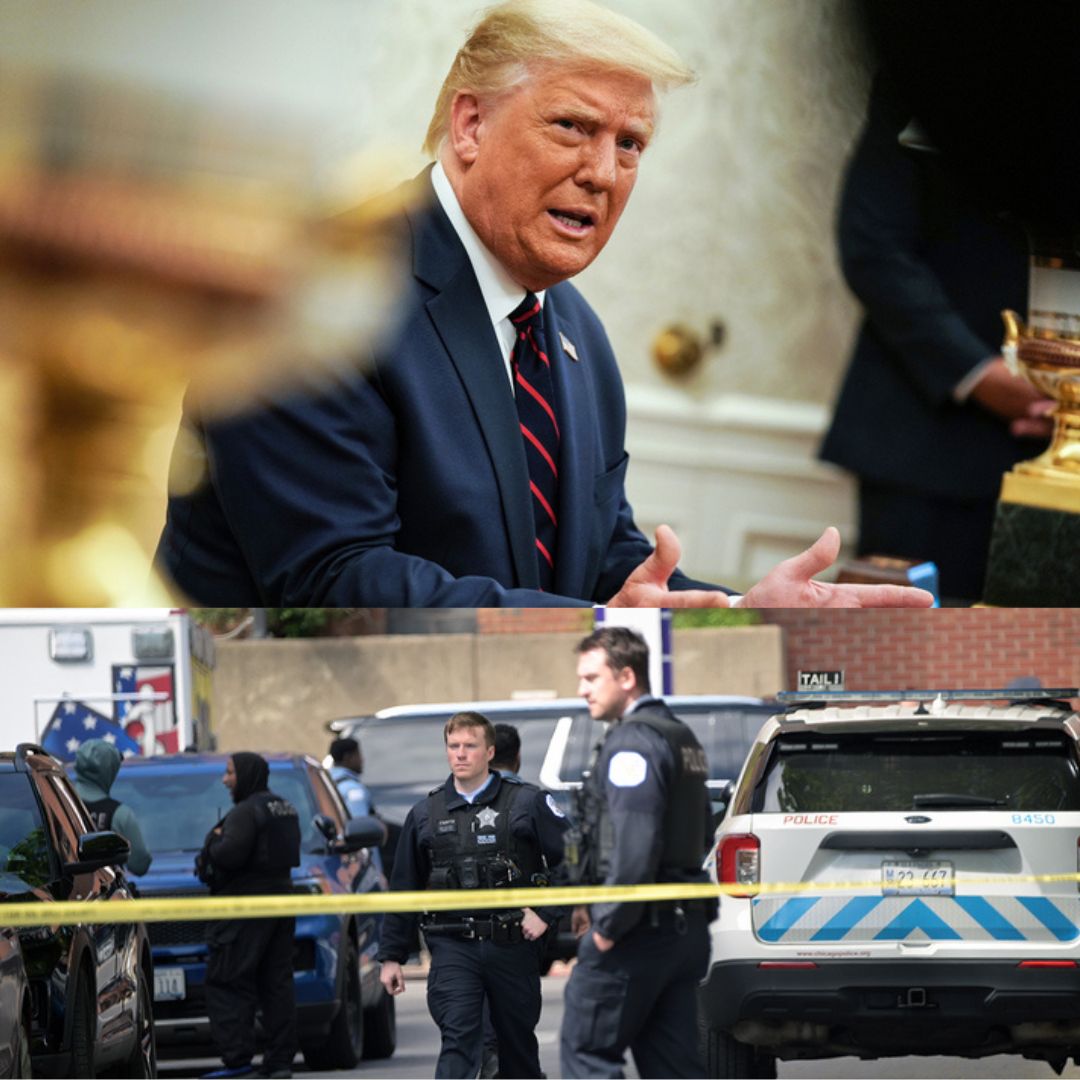
A wave of violence swept across Chicago over the weekend, leaving at least six people dead and dozens more injured in a series of shootings that have once again drawn national attention to the city’s ongoing struggle with gun violence. What began as isolated incidents quickly escalated into a broader pattern of shootings that unfolded across multiple neighborhoods, creating a sense of fear, frustration, and urgency among residents and officials alike. The scale and intensity of the violence have reignited debate over public safety, law enforcement strategies, and the role of federal intervention in addressing crime in major American cities.
According to official reports, a total of 39 people were shot over the course of the weekend, with incidents occurring in various parts of the city. Among the most alarming events was a mass drive-by shooting in the Princeton Park neighborhood, where a gathering of people was suddenly targeted by gunfire from a passing vehicle. Witnesses described a chaotic and terrifying scene as shots rang out, sending people scrambling for safety. Emergency responders rushed to the area, transporting victims to nearby hospitals as law enforcement began an intensive investigation into what had happened.
Authorities stated that the shooting involved suspects who opened fire from inside an SUV before fleeing the scene, leaving behind multiple victims suffering from gunshot wounds. The randomness and scale of the attack have raised serious concerns about the nature of violence in the city, particularly the increasing frequency of incidents involving multiple victims. For many residents, the event served as a stark reminder of how quickly ordinary moments can turn into life-threatening situations.
The timing of the violence added another layer of emotional impact. The shooting occurred during a period when communities were gathering to celebrate and reflect, turning what should have been a moment of unity into one marked by tragedy. Local officials expressed their sorrow and concern, emphasizing the need for continued efforts to address the root causes of violence while also ensuring immediate safety for residents.
Chicago Mayor Brandon Johnson responded to the incident with a statement expressing heartbreak and solidarity with the victims and their families. His remarks reflected a broader sense of grief shared by many in the city, as well as a recognition of the ongoing challenges faced by communities affected by violence. While acknowledging the pain caused by the events, he also pointed to the importance of resilience and collective action in confronting the issue.
As news of the weekend’s violence spread, it quickly became a focal point of national political discussion. Former President Donald Trump weighed in on the situation, using social media to highlight the severity of the incidents and to criticize local and state leadership. In his statement, Trump suggested that federal intervention could significantly improve safety in Chicago, referencing previous efforts to deploy National Guard troops in Washington, D.C., as an example of what he described as a successful approach to reducing crime.
Trump’s comments introduced a political dimension to the unfolding situation, sparking debate about the role of federal versus local authority in addressing urban crime. Supporters of his position argue that federal resources and coordination can provide additional support in high-risk situations, particularly when local systems are overwhelmed. Critics, however, contend that such approaches may oversimplify complex issues and overlook the importance of community-based strategies and long-term solutions.
The comparison to Washington, D.C., has become a central point of discussion in this debate. Trump has previously pointed to his decision to deploy National Guard troops in the nation’s capital as evidence of the effectiveness of strong federal action. While some observers agree that increased security presence can have an immediate impact, others caution that the long-term dynamics of crime require more comprehensive approaches that address underlying social and economic factors.
Back in Chicago, law enforcement agencies have been working to investigate each of the weekend’s incidents, collecting evidence, interviewing witnesses, and attempting to identify suspects. The scale of the violence has placed significant pressure on police resources, highlighting the challenges of responding to multiple events occurring in a short period of time. Officials have emphasized that all shootings remain under active investigation, with efforts focused on bringing those responsible to justice.
The broader context of gun violence in Chicago is complex and deeply rooted. The city has long faced challenges related to crime, with certain neighborhoods experiencing disproportionately high levels of violence. Factors such as economic inequality, access to resources, and historical patterns of segregation all contribute to the conditions in which violence can occur. Addressing these issues requires a multifaceted approach that goes beyond immediate law enforcement responses.
Community leaders and advocacy groups have stressed the importance of investing in prevention strategies, including education, employment opportunities, and youth programs. These initiatives aim to provide alternatives to violence and to address some of the underlying conditions that contribute to crime. While such efforts may not produce immediate results, they are widely seen as essential components of a long-term solution.
At the same time, there is a recognition that immediate safety concerns must also be addressed. Residents in affected neighborhoods often express a need for increased police presence and faster response times, particularly during periods of heightened activity. Balancing these immediate needs with broader prevention strategies remains one of the central challenges for policymakers and law enforcement officials.
The events of the weekend have also highlighted the emotional toll of ongoing violence on communities. For many residents, repeated exposure to such incidents creates a sense of insecurity and fatigue. The impact extends beyond those directly affected, influencing how people move through their daily lives and how they perceive their surroundings. This psychological dimension is an important but often overlooked aspect of the issue.
As discussions continue, there is growing attention to the role of data and analysis in understanding patterns of violence. By examining when and where incidents occur, as well as the factors that contribute to them, officials hope to develop more targeted and effective responses. Advances in technology and data collection have provided new tools for this type of analysis, offering the potential for more informed decision-making.
However, the use of data also raises questions about privacy and the potential for unintended consequences. Ensuring that such tools are used responsibly and ethically is an important consideration as cities explore new approaches to public safety. Transparency and community engagement are key components of building trust in these efforts.
The national attention generated by the weekend’s violence underscores the broader significance of the issue. While Chicago is often the focus of discussions about urban crime, similar challenges exist in other cities across the country. The factors contributing to violence are not unique to any one location, and solutions developed in one context may have relevance elsewhere.
Political reactions to the events are likely to continue evolving as more information becomes available and as different perspectives are brought into the conversation. The intersection of public safety and political discourse can be complex, with different stakeholders emphasizing different priorities and approaches. Finding common ground in this context is often difficult but remains essential for meaningful progress.
In the coming weeks, attention will likely remain focused on the outcomes of the ongoing investigations, as well as on any policy responses that may emerge. The effectiveness of these responses will be closely watched, both locally and nationally, as communities and leaders seek ways to address the challenges highlighted by the weekend’s events.
Ultimately, the violence that unfolded in Chicago serves as a reminder of the urgent need for sustained and coordinated efforts to improve public safety. While there are no simple solutions, the combination of immediate action and long-term investment offers a path forward. The question is not whether change is needed, but how it can be achieved in a way that is both effective and equitable.
The events of the weekend have left a lasting impression on those affected, reinforcing the importance of continued attention to the issue. As the city moves forward, the focus will remain on healing, accountability, and the search for solutions that can prevent such tragedies from occurring in the future.
As the aftermath of the violent weekend continues to unfold, deeper concerns are emerging about how such large-scale incidents are able to occur in rapid succession without early intervention. Law enforcement officials are now not only focused on identifying those responsible for individual shootings but are also examining whether there are broader patterns connecting these acts of violence. In situations where multiple incidents occur within a short timeframe, investigators often look for links such as gang activity, retaliatory attacks, or coordinated movements that may not be immediately visible to the public.
The sheer number of shootings reported over the weekend has intensified fears among residents who already feel vulnerable in neighborhoods where violence is a recurring issue. For many, the statistics are not just numbers but reflections of a lived reality where safety cannot be taken for granted. Families are increasingly concerned about allowing children to play outside, attend events, or even move freely within their own communities. This heightened sense of insecurity contributes to a cycle of fear that can have long-term social and psychological consequences.
At the same time, first responders and emergency medical teams faced an overwhelming situation as they worked to treat victims across multiple locations. Hospitals in the city reported a sudden influx of patients with gunshot wounds, requiring rapid coordination and resource allocation. Medical staff, already accustomed to dealing with trauma cases, described the situation as intense, with multiple victims arriving in quick succession. The ability of these systems to respond effectively highlights both the resilience of emergency services and the strain placed upon them during periods of heightened violence.
The role of firearms in these incidents is another critical area of discussion. While investigations into each shooting are ongoing, the prevalence of gun-related violence continues to be a central issue in public safety debates. Questions about how weapons are obtained, distributed, and used remain at the forefront of policy discussions. Efforts to address these questions often involve complex legal, social, and political considerations, making it difficult to reach consensus on solutions.
In the political arena, the events have further deepened divisions over how best to address crime. Statements from national figures have amplified the conversation, drawing attention not only to the violence itself but also to differing philosophies on law enforcement and public safety. Some advocate for increased policing and stricter enforcement measures, while others emphasize the need for community-based approaches and investment in social programs. These perspectives are not necessarily mutually exclusive, but finding a balance between them has proven challenging.
The suggestion of federal involvement, including the potential deployment of National Guard forces, has added another layer of complexity to the debate. While such measures can provide immediate support in certain situations, they also raise questions about jurisdiction, coordination, and the long-term effectiveness of external intervention. The experience in other cities has shown that while increased presence can deter certain types of crime, it does not address the underlying factors that contribute to violence.
Community leaders have been vocal in their calls for solutions that go beyond short-term responses. They emphasize the importance of addressing issues such as economic disparity, access to education, and availability of resources. These factors are often cited as contributing to the conditions in which violence can occur, and addressing them requires sustained commitment and collaboration across multiple sectors.
In neighborhoods directly affected by the weekend’s events, residents have begun organizing meetings and discussions aimed at finding ways to improve safety and support one another. These grassroots efforts reflect a determination to take action despite the challenges faced. Community members are exploring strategies such as neighborhood watch programs, partnerships with local organizations, and increased communication with law enforcement.
The impact on businesses in affected areas is also significant. Periods of heightened violence can lead to decreased foot traffic, reduced revenue, and concerns about long-term viability. Business owners must navigate the challenge of maintaining operations while ensuring the safety of employees and customers. This economic dimension adds another layer to the overall impact of violence, affecting not only individuals but also the broader community infrastructure.
Education systems are not immune to these effects either. Schools in areas affected by violence often face additional challenges, including ensuring student safety and addressing the emotional needs of those who may be impacted by nearby incidents. Teachers and administrators play a crucial role in providing support and stability, helping students navigate difficult circumstances while continuing their education.
The role of media coverage in shaping public perception is also an important consideration. High-profile incidents often receive significant attention, bringing awareness to the issue but also potentially influencing how it is understood. While coverage can highlight the seriousness of the situation, it can also contribute to a sense of fear or reinforce certain narratives. Responsible reporting is essential for providing accurate information while avoiding unnecessary alarm.
As investigations continue, the focus will remain on identifying those responsible for the shootings and ensuring that they are held accountable. This process involves gathering evidence, analyzing forensic data, and building cases that can stand up in court. While this work is essential, it is often time-consuming and complex, requiring coordination between multiple agencies and experts.
In the broader context, the events of the weekend serve as a reminder of the challenges faced by cities across the country in addressing violence. While each location has its own unique circumstances, many share common factors that contribute to crime. Understanding these factors and developing effective responses requires collaboration, innovation, and a willingness to engage with difficult issues.
The path forward will likely involve a combination of immediate actions and long-term strategies. Strengthening law enforcement capabilities, investing in community programs, and addressing systemic issues are all part of this process. Success will depend on the ability to integrate these approaches in a way that is both effective and sustainable.
For those directly affected by the violence, the focus remains on recovery and healing. Support services, counseling, and community resources play a vital role in helping individuals and families cope with the aftermath. These efforts are essential for rebuilding a sense of stability and resilience.
As the city moves beyond the immediate crisis, there will be opportunities to reflect on what has been learned and how it can inform future actions. The goal is not only to respond to current challenges but also to create conditions that reduce the likelihood of similar events in the future. This requires a commitment to continuous improvement and a willingness to adapt to changing circumstances.
The events in Chicago have once again brought attention to the urgent need for solutions that address both the symptoms and the causes of violence. While the road ahead is complex, the determination of communities, officials, and organizations to confront these challenges provides a foundation for progress. Whether through policy changes, community initiatives, or collaborative efforts, the search for effective solutions continues, driven by the shared goal of creating safer environments for all.
As the city begins to process the aftermath of the violent weekend, another pressing concern has started to surface—whether these incidents represent an isolated spike or part of a broader and more troubling trend. Analysts and law enforcement officials are now closely examining historical data to determine if patterns are emerging that suggest a shift in how violence is occurring. The clustering of shootings within such a short timeframe has raised alarms that the situation may not simply be random but could indicate escalating tensions between groups or evolving criminal activity.
Residents in affected areas have described a growing sense of unpredictability, where violence no longer seems confined to specific times or locations. This unpredictability has made it more difficult for individuals to feel secure, even during what would normally be considered safe hours. The idea that gatherings, celebrations, or routine outings could suddenly turn dangerous has altered the way many people approach their daily lives, reinforcing a climate of caution and vigilance.
Local organizations are increasingly stepping in to fill gaps where immediate responses may fall short. Community outreach groups have begun organizing support networks, offering assistance to victims and their families while also working to de-escalate tensions in neighborhoods. These efforts often involve mediation, youth engagement, and the promotion of non-violent conflict resolution strategies. While such initiatives may not receive the same level of attention as law enforcement actions, they play a critical role in addressing the human side of the crisis.
At the same time, there is growing discussion about the importance of early intervention, particularly among younger populations who may be at risk of becoming involved in cycles of violence. Programs aimed at providing mentorship, education, and opportunities for personal development are being highlighted as key components of long-term prevention. The challenge lies in ensuring that these programs are adequately funded, accessible, and sustained over time.
The economic dimension of the situation continues to be felt as well. In areas where violence has been concentrated, the impact on property values, business activity, and overall investment can be significant. Potential investors may hesitate to commit resources to neighborhoods perceived as unstable, creating a cycle where economic stagnation contributes to the very conditions that allow violence to persist. Breaking this cycle requires coordinated efforts that address both safety and economic opportunity.
Law enforcement strategies are also being reassessed in light of recent events. Officials are exploring ways to improve response times, enhance intelligence gathering, and increase coordination between different units. This includes the use of technology, data analysis, and community partnerships to identify potential risks before they escalate into incidents. While these approaches offer promise, they must be implemented carefully to ensure that they are both effective and respectful of civil liberties.
The role of leadership at both the local and national levels will continue to shape how the situation evolves. Public statements, policy decisions, and resource allocations all contribute to the overall response, influencing both immediate actions and long-term strategies. The interaction between different levels of government adds complexity to this process, as responsibilities and priorities must be aligned to achieve meaningful results.
Ultimately, the events of this weekend have underscored the urgency of addressing violence in a comprehensive and sustained manner. While immediate responses are necessary to restore order and ensure safety, lasting change will depend on the ability to address the underlying factors that contribute to such incidents. This includes not only enforcement and prevention but also broader efforts to strengthen communities and create environments where violence is less likely to occur.
As Chicago moves forward, the focus will remain on learning from what has happened and applying those lessons to future efforts. The path ahead is challenging, but it is also an opportunity to rethink approaches, strengthen systems, and work toward solutions that can make a lasting difference. The determination of those involved—residents, officials, and organizations alike—will play a crucial role in shaping what comes next.