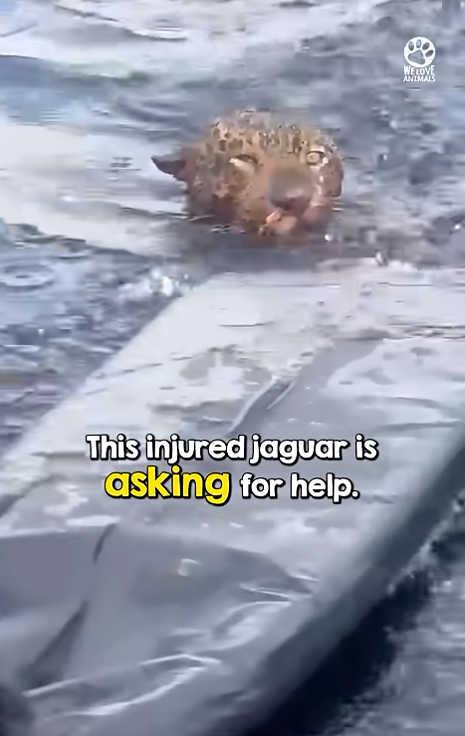
The video captures a rare and dramatic moment in the wild, showing the urgent rescue of an injured jaguar struggling to survive in open water. What begins as a calm scene quickly turns into a life-or-death situation as the powerful animal is seen swimming with visible difficulty, its movements slow and unsteady. It becomes immediately clear that something is wrong, as jaguars are typically strong swimmers and confident predators in their natural environment. In this case, however, the animal appears exhausted, disoriented, and in distress, suggesting that it has suffered a serious injury before ending up in the water.
As the jaguar continues to struggle, fate intervenes when a military boat happens to pass through the area. The personnel on board initially notice movement in the water but quickly realize it is not a typical wildlife sighting. As they approach closer, they identify the animal as a jaguar, a species rarely seen in such vulnerable conditions. The soldiers immediately sense urgency in the situation, recognizing that the animal is not only in danger but also in need of immediate assistance if it is to survive.
Upon closer observation, the crew makes a critical and alarming discovery. The jaguar appears to have sustained a severe injury, likely from a gunshot wound. This realization adds a new level of urgency to the situation, as the animal is not simply exhausted but actively wounded and losing strength. Despite the potential danger of approaching a wild predator, the soldiers understand that time is critical. The jaguar’s condition is worsening, and without intervention, it is unlikely to survive much longer in the water.
The military personnel face an immediate challenge. Being on a patrol or transport vessel, they do not have access to specialized wildlife rescue equipment. There are no proper animal containment tools, stretchers, or veterinary supplies on board. However, the urgency of the situation leaves no time to wait for external help. The team is forced to think quickly and improvise a solution that could allow them to safely retrieve the injured animal without causing further harm or putting themselves at unnecessary risk.
After a brief but focused discussion, the soldiers begin constructing a makeshift flotation device using materials available on the boat. They gather a heavy-duty mat along with strong ropes, carefully securing them in a way that can support the weight of the jaguar. Every action is performed with caution, as the animal remains unpredictable and could react defensively out of fear or pain. The goal is to create a stable platform that will allow the jaguar to rest without sinking back into the water.
Once the improvised rescue device is ready, the crew slowly lowers it into the river, positioning it near the struggling animal. The jaguar, still exhausted and barely able to maintain its position in the water, initially hesitates. The soldiers remain patient, avoiding sudden movements that could startle or further stress the animal. Gradually, the jaguar begins to understand that the floating structure offers support, and it starts moving toward it with difficulty.
After several tense moments, the jaguar manages to pull itself onto the makeshift raft. The moment is critical, as any sudden movement could cause it to fall back into the water or panic. However, the animal eventually secures its grip and settles onto the platform. Although clearly weak and in pain, the jaguar appears slightly more stable once it is out of the water, resting its body on the floating surface while the soldiers carefully maintain control of the situation.
With the jaguar now stabilized, the military crew begins the delicate process of transporting it toward land. This stage of the rescue requires extreme caution, as the animal remains wild and injured. Any sudden disturbance could trigger stress or defensive behavior. The soldiers work together to keep the makeshift raft balanced while slowly guiding it toward the shore. Throughout the journey, the focus remains on ensuring both human safety and the well-being of the injured animal.
Upon reaching land, additional support is already in place. A wildlife expert is called in to assist with the next steps of the rescue. Their presence is essential, as handling a wounded jaguar requires specialized knowledge and experience. Together with the military personnel, the expert carefully evaluates the animal’s condition and prepares for safe transfer. The jaguar is gently moved from the makeshift device, minimizing stress and avoiding further injury.
Once safely secured on land, the jaguar is transported to a veterinary clinic for urgent medical treatment. There, professionals assess the extent of its injuries, including the suspected gunshot wound, and begin necessary procedures to stabilize its condition. The priority is to prevent infection, control pain, and give the animal the best possible chance of recovery. The transition from river rescue to medical care marks a crucial turning point in the jaguar’s survival story.
The video highlights not only the vulnerability of wildlife in dangerous human-influenced environments but also the importance of quick thinking and cooperation in emergency situations. The actions of the military personnel demonstrate how adaptability and compassion can make a life-saving difference, even without specialized tools. Their decision to intervene rather than ignore the situation ultimately gives the jaguar a chance at survival that it would not have had otherwise.
It also serves as a powerful reminder of the risks faced by wild animals, particularly those affected by human activity. Injuries caused by weapons or environmental conflict can leave even the strongest predators helpless in situations they would normally dominate. In this case, the jaguar’s natural strength was not enough to overcome its injuries, making external intervention the only path to survival.
Ultimately, the rescue stands as an example of teamwork between humans and wildlife professionals working toward a shared goal: saving a life in critical condition. From the initial spotting in the water to the improvised rescue effort and final transfer to medical care, every step of the process played a vital role. The story leaves a lasting impression, showing how compassion and quick action can turn a near-tragedy into a hopeful outcome for one of nature’s most powerful yet vulnerable creatures.
After the jaguar is transferred to veterinary care, the focus shifts from immediate survival to long-term recovery. Wildlife veterinarians begin a full assessment to determine the severity of the injuries sustained in the water. Gunshot wounds in large wild animals are particularly complex because they often involve internal damage that is not immediately visible. The medical team works carefully to stabilize the jaguar, ensuring that it is kept calm while diagnostic procedures are carried out.
Sedation is used to minimize stress and prevent sudden movement that could worsen the injuries. Even in a weakened state, jaguars remain powerful animals, and handling them requires strict safety protocols. The veterinary staff works in coordinated steps, checking vital signs, cleaning wounds, and identifying any fragments or complications caused by the suspected gunshot impact. Every action is done with precision, as even small mistakes could lead to severe complications in such a fragile condition.
Meanwhile, the rescue team reflects on the urgency of the situation they encountered on the river. The military personnel involved in the initial rescue are often trained for human emergencies rather than wildlife interventions, yet their quick decision-making played a crucial role in saving the animal’s life. Without their intervention, the jaguar would likely have continued struggling in the water until exhaustion or drowning became inevitable. Their willingness to act outside of their usual duties highlights how unexpected situations can demand adaptability and compassion.
The wildlife expert who assisted at the shoreline also plays a key role in the ongoing care process. Their knowledge of large predator behavior helps bridge the gap between emergency responders and veterinary staff. Understanding how stressed wild animals react under pressure is essential, especially when dealing with injuries that may also affect behavior. In many cases, injured predators can become unpredictable, not out of aggression but due to confusion and pain. Proper handling ensures both human safety and animal welfare throughout the treatment process.
As treatment continues, attention is given not only to the physical wounds but also to the jaguar’s overall condition. Dehydration, fatigue, and shock are common in animals rescued from aquatic environments after prolonged struggle. The veterinary team administers fluids and medication to help stabilize internal systems while monitoring the animal’s response closely. Recovery in such cases is often uncertain, and the first 24 to 72 hours are considered critical.
Outside the clinic, the incident begins to draw attention as a powerful example of wildlife rescue under challenging circumstances. Situations involving large predators like jaguars are rare, and even rarer are successful interventions carried out without specialized equipment in the field. The story highlights the importance of coordination between military personnel, wildlife experts, and veterinary professionals when unexpected emergencies occur in remote environments.
The river setting itself adds another layer of complexity to the situation. Riverine ecosystems are often difficult to access, and rescue operations in such areas require quick improvisation. Boats passing through these regions are typically not equipped for animal rescue, which makes the creation of a makeshift flotation device even more remarkable. The use of simple materials like mats and ropes demonstrates how basic resources, when used creatively, can become life-saving tools in critical moments.
The jaguar’s struggle in the water also raises broader concerns about human-wildlife conflict in regions where natural habitats overlap with human activity. Gunshot injuries in wild animals are often linked to territorial disputes, illegal hunting, or accidental encounters. While the video does not provide details about how the jaguar was injured, the nature of the wound suggests a human-related cause. This adds a layer of urgency to conservation discussions, as apex predators like jaguars play an essential role in maintaining ecological balance.
In the aftermath of the rescue, the focus gradually shifts toward recovery and potential rehabilitation. If the jaguar responds positively to treatment, wildlife authorities may consider options for release back into a protected natural habitat. However, such decisions depend heavily on the animal’s ability to recover fully and regain strength. Releasing a severely injured predator too early could put it at risk again, while prolonged captivity requires careful management to ensure it does not lose its natural survival instincts.
The emotional impact of the rescue is also significant for those involved. Witnessing a large predator in distress is not a common experience, and the decision to intervene reflects both courage and empathy. For the military personnel, the encounter likely stands out as an unusual but meaningful moment in their service, where their actions directly contributed to saving a life outside of human conflict scenarios.
Wildlife experts often emphasize that such rescues, while dramatic, also serve as learning opportunities. Each case helps improve future response strategies, particularly in remote environments where access to specialized equipment is limited. The improvisation used in this situation may inspire better preparedness protocols for similar incidents in the future, ensuring that responders can act even when ideal tools are not available.
As news of the rescue spreads, it also helps raise awareness about the importance of protecting wildlife and preserving natural habitats. Jaguars, as apex predators, are vital to ecosystem stability, and their declining populations in certain regions have become a concern for conservationists. Stories like this highlight both the vulnerability and resilience of these animals, showing how human intervention can sometimes make the difference between life and death.
Ultimately, the rescue represents a rare intersection of danger, compassion, and cooperation across different fields. From the initial discovery in the river to the improvised rescue, and finally to the veterinary care that followed, every stage of the process played a critical role in giving the jaguar a chance at survival. It is a reminder that even in unpredictable and challenging environments, quick thinking and teamwork can lead to extraordinary outcomes.
As the jaguar continues its recovery under medical supervision, the focus of the team shifts toward monitoring long-term stability. Large wild animals that suffer traumatic injuries require continuous observation because complications can develop even after initial treatment appears successful. Infection, internal bleeding, or stress-related conditions can all impact recovery in the following days. For this reason, the veterinary team maintains a structured care routine, ensuring that every stage of healing is carefully documented.
One of the most important aspects of the jaguar’s treatment is pain management. Injured predators in captivity often experience high levels of stress due to confinement and unfamiliar surroundings. To reduce suffering, veterinarians administer controlled medication while also minimizing unnecessary human interaction. The goal is to allow the animal to stabilize physically without triggering additional psychological stress, which can slow recovery.
At the same time, specialists begin evaluating the possibility of rehabilitation. If the jaguar responds well to treatment, one of the key goals would be to return it to a suitable natural habitat. However, this process is complex and depends on several factors, including the severity of the injury, the animal’s ability to regain strength, and whether it can resume natural behaviors necessary for survival. In cases where full recovery is achieved, wildlife authorities often prefer reintroduction into protected environments where the animal can live safely away from human threats.
The incident also highlights the importance of rapid response in remote ecosystems. Without the unexpected presence of the military boat, the outcome could have been very different. In many remote river regions, emergency wildlife assistance is not immediately available, and animals in distress may not receive help in time. This rescue demonstrates how chance encounters, combined with decisive human action, can sometimes prevent a tragic outcome.
The collaboration between the military personnel and wildlife professionals is another key element of the story. Although their primary responsibilities are not focused on animal rescue, the soldiers demonstrated adaptability by responding quickly and using available materials to create a life-saving solution. The involvement of a wildlife expert ensured that the situation was handled safely and appropriately once the animal was brought to shore, bridging the gap between emergency response and specialized animal care.
In many ways, the rescue serves as a reminder of the unpredictable nature of field operations in remote environments. Whether on land or water, situations can change rapidly, requiring individuals to make fast decisions with limited resources. The success of this operation depended not only on physical action but also on communication, teamwork, and the willingness to act under pressure without hesitation.
From a broader perspective, the event also draws attention to the ongoing challenges faced by wildlife in regions where human activity overlaps with natural habitats. Gunshot injuries in large predators are often linked to conflicts with humans, whether through illegal hunting, self-defense situations, or accidental encounters. These issues continue to pose serious risks to species like jaguars, which already face habitat loss and population pressures in various parts of the world.
Conservationists often use incidents like this to emphasize the need for stronger protection measures and increased awareness. While this particular jaguar was fortunate enough to receive timely assistance, many other animals in similar situations may not survive long enough to be rescued. The story therefore becomes not only a rescue narrative but also a reflection of broader environmental concerns.
As the jaguar slowly regains strength, there is cautious optimism among the veterinary team. Recovery from such injuries is never guaranteed, but each positive sign increases the chances of survival. The animal’s progress is carefully tracked, and any improvement is treated as an important milestone in its rehabilitation journey.
For those involved in the rescue, the experience leaves a lasting impression. Witnessing an injured apex predator in such a vulnerable state is both rare and emotionally impactful. At the same time, seeing the animal given a second chance through coordinated effort reinforces the importance of intervention and care in unexpected situations.
Ultimately, the story stands as a powerful example of how cooperation across different fields—military response, wildlife expertise, and veterinary medicine—can come together in moments of crisis. It shows that even in remote and challenging environments, meaningful outcomes are possible when people act quickly and work together with a shared purpose.
The jaguar’s journey from distress in open water to medical care on land represents more than just a rescue; it reflects resilience, adaptability, and the impact of human compassion when applied in critical moments. While its full recovery will depend on time and careful treatment, the initial rescue has already secured its chance at survival.
In the end, the video leaves viewers with a strong reminder of the fragility of wildlife and the importance of protecting it. Every successful rescue carries a message about responsibility, awareness, and the role humans play in preserving the natural world.
In the hours following the initial rescue and stabilization, the focus of everyone involved gradually shifts from emergency intervention to long-term outlook. The jaguar’s condition remains serious, but the fact that it survived the journey from open water to veterinary care is already considered a significant success. In wildlife medicine, reaching a stable state after such trauma is often the most critical milestone, as it opens the door to further recovery possibilities that would otherwise not exist.
The veterinary team continues to monitor subtle changes in behavior, appetite, and physical response to treatment. Even small signs of improvement—such as increased alertness or reduced signs of pain—are carefully recorded as indicators of progress. These observations help determine whether the animal is responding positively to treatment or if additional interventions are needed. Every stage of care is approached with caution, knowing that large predators can deteriorate quickly if complications arise.
Outside the clinic, the story of the rescue continues to circulate among those who have seen the footage or heard about the incident. Many people are struck not only by the dramatic nature of the situation but also by the calm coordination that made the rescue possible. The image of a powerful predator being carefully lifted from danger by improvised means leaves a lasting impression, reinforcing the idea that survival in the natural world can often depend on unexpected moments of human intervention.
For conservation observers, the incident becomes another example of how fragile even the most dominant species can be when faced with injury or environmental threat. Jaguars, despite being apex predators, are not immune to the consequences of human activity or accidental harm. Their strength in the wild does not guarantee survival once they are injured, especially in environments like open water where exhaustion can quickly set in.
As the jaguar continues its recovery journey, the hope remains that it will regain enough strength to eventually return to a natural habitat where it can live freely once again. Until then, its progress serves as a quiet reminder of both vulnerability and resilience in the animal kingdom. Every small step forward in its healing process reflects the combined efforts of those who acted quickly when it mattered most.