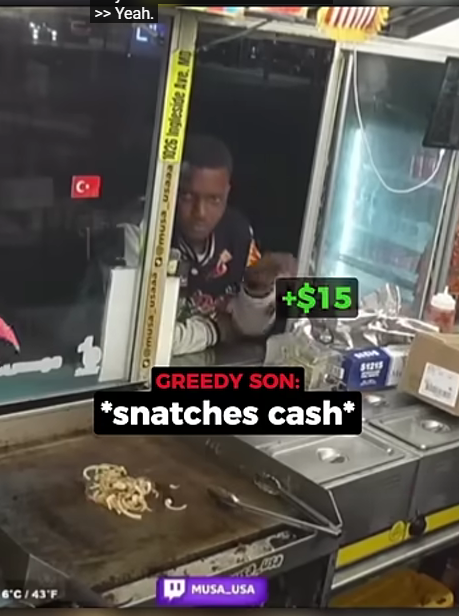
The video captures a surprisingly emotional and respectful moment between a street food vendor and the mother of a young man who had previously stolen money from the vendor’s tip jar, turning what could have remained a simple theft incident into a powerful example of personal accountability, integrity, and respect for hard work. The situation begins when a woman approaches a Turkish street food stand with a serious and determined expression, immediately signaling that she is not there as an ordinary customer but rather to address something important that had happened days earlier. As the interaction unfolds, she identifies herself as the mother of a young man who had recently taken money from the vendor’s tip jar, making it clear from the beginning that she has come specifically to confront the wrongdoing and make things right.
The video then references footage from approximately one week earlier, showing the original incident that led to the confrontation. During that earlier moment, the vendor was focused on preparing food for customers, working quickly and attentively as street vendors often do in busy public settings where multiple tasks must be handled at once. While the vendor’s attention was directed toward cooking and serving customers, the young man approached the stand and discreetly reached into the tip jar. The footage reportedly shows him taking cash from the jar not just once but twice, using the distraction of the busy environment to carry out the theft unnoticed at the time.
For many small vendors, tip jars represent more than spare change from customers. They often contain money that directly supports long working hours, daily expenses, and the small profits earned through physically demanding labor. Street vendors frequently work in difficult conditions, spending hours standing, cooking, cleaning, and serving customers in all types of weather. Because of this, theft from a tip jar can feel deeply personal, particularly when it targets money voluntarily given by appreciative customers in recognition of hard work and service.
When the mother approaches the stand, however, the tone of the interaction immediately separates itself from anger or confrontation. Rather than denying the incident or attempting to excuse her son’s behavior, she openly acknowledges what happened and asks the vendor how much money was taken. The vendor estimates that the stolen amount was around thirty dollars but responds politely and with restraint, even telling the woman that she does not need to repay him. His reaction suggests that he may not want to create further conflict or hardship for the family, choosing instead to show kindness despite what occurred.
The mother, however, refuses to accept that response. She insists that the money must be returned and makes it clear that she did not come simply to apologize verbally. Her determination reflects a strong sense of personal responsibility and moral accountability, as she explains that her son was not raised to behave in such a way. She acknowledges openly that he has made poor choices and admits that he tends to do “stupid stuff” when drinking, demonstrating a willingness to confront the issue honestly rather than minimize or avoid it.
Her response transforms the interaction from a simple repayment into a statement about values and character. Rather than protecting her son from the consequences of his actions or pretending the incident was insignificant, she takes direct responsibility for correcting the harm that was caused. This approach reflects a deeper belief that accountability matters even in situations involving relatively small amounts of money. For her, the issue is not just about thirty dollars but about principles such as honesty, respect, and taking responsibility for wrongdoing.
The mother also emphasizes her respect for the vendor and the work he does every day. She explains that the vendor provides a valuable service to the community and does not deserve to be stolen from, especially while working hard to earn an honest living. This part of the conversation highlights an important social dynamic often overlooked in similar situations: the recognition of labor and the dignity attached to honest work. By defending the vendor’s right to keep what he has earned, the mother reinforces the idea that stealing from hardworking individuals is not only financially harmful but morally wrong.
The vendor’s reaction throughout the interaction remains calm and humble, further shaping the emotional tone of the exchange. Even after learning that the mother came specifically to repay the stolen money, he continues to display understanding and restraint rather than anger. His willingness to initially decline repayment suggests empathy and perhaps recognition that the mother herself was not responsible for the theft. However, her persistence demonstrates that for her, restoring what was taken is essential regardless of the vendor’s generosity.
Eventually, the mother places the money directly back into the tip jar, symbolically undoing the theft committed by her son days earlier. This gesture carries emotional significance because it transforms the same jar that had been the target of dishonesty into a symbol of accountability and restitution. The act is simple, but it sends a strong message about correcting mistakes and taking responsibility for actions that harm others.
Before leaving, the mother offers a final blessing or kind remark to the vendor, bringing the interaction to a peaceful and respectful conclusion. The emotional impact of the moment comes not from dramatic confrontation but from the sincerity shown by both individuals involved. The vendor responds with patience and grace, while the mother demonstrates integrity and determination to uphold the values she believes her son should have followed in the first place.
The incident also highlights the broader importance of community accountability. In many situations involving theft or misconduct, families may avoid involvement out of embarrassment, denial, or fear of conflict. In this case, however, the mother chooses the opposite approach. She directly confronts the wrongdoing, acknowledges it publicly, and takes active steps to repair the damage. Her actions demonstrate how accountability can help rebuild trust even after negative behavior occurs.
Another important aspect of the interaction is how it contrasts with the expectations many people may have when watching videos involving theft or confrontation. Rather than escalating into anger, accusations, or hostility, the situation evolves into a meaningful conversation about values, responsibility, and respect. This unexpected shift is part of what makes the video emotionally impactful. Viewers initially see a theft but ultimately witness a moment of integrity and moral correction that changes the entire tone of the story.
The video also serves as a reminder of the challenges faced by small business owners and street vendors who often rely heavily on customer honesty and goodwill. Unlike large businesses with extensive security systems and financial protections, small vendors can be especially vulnerable to losses caused by theft, even when the amounts involved appear relatively minor. The mother’s recognition of this reality demonstrates empathy not only for the vendor as an individual but also for the effort required to maintain such a business.
In the end, the story becomes less about the theft itself and more about the response to it. The mother’s willingness to step forward, repay the money, and defend the value of honest work transforms the situation into a powerful example of personal integrity. Her actions reinforce the idea that mistakes can be acknowledged and corrected, and that accountability is often defined not by perfection but by the willingness to make things right after wrongdoing occurs.
Overall, the video presents a deeply human interaction centered on responsibility, dignity, and respect. It shows how a potentially negative situation can become an example of honesty and moral accountability when individuals choose to confront wrongdoing directly rather than ignore it. The emotional weight of the moment comes not from punishment or conflict, but from the quiet determination of a mother who refuses to allow her son’s actions to define the values she believes in.
The interaction also highlights the emotional complexity that often exists behind incidents involving theft, especially when family members become involved in addressing the consequences. While the original act of stealing from the tip jar was clearly wrong, the mother’s response introduces another layer to the story—one centered on shame, responsibility, and the desire to correct behavior before it becomes part of a larger pattern. Her willingness to personally approach the vendor suggests that she felt a deep sense of obligation not only to repay the money but also to restore some level of dignity and trust after her son’s actions damaged both.
For many parents, discovering that their child has stolen from someone can be deeply painful and embarrassing, particularly when the victim is a hardworking individual simply trying to earn a living. The mother’s comments about her son doing “stupid stuff” when drinking suggest frustration and disappointment, but also concern about the choices he has been making. Rather than pretending the behavior was acceptable or dismissing it as a harmless mistake, she openly acknowledges the seriousness of what happened. This honesty gives the interaction a level of emotional authenticity that resonates far beyond the amount of money involved.
The vendor’s response is equally important in shaping the tone of the exchange. Instead of reacting with anger or demanding repayment, he demonstrates patience and understanding from the beginning. His willingness to initially refuse the money reflects compassion and restraint, qualities that further elevate the interaction beyond a simple financial dispute. In many situations involving theft, tension and hostility dominate the conversation. Here, however, the calm demeanor of both individuals allows the moment to become constructive rather than confrontational.
This balance between accountability and compassion is one of the most powerful aspects of the story. The mother insists on doing what she believes is morally right, while the vendor responds with grace and humility. Neither side attempts to escalate the situation, and both appear focused on resolving the matter respectfully. The result is an interaction that feels unusually sincere, especially in a time when public confrontations are often characterized by defensiveness or conflict.
The setting of the incident also contributes to its emotional impact. Street food vendors are often viewed as symbols of hard work and perseverance. Many spend long hours preparing food, serving customers, and managing every aspect of their business personally. Tips are not just extra money; they are often direct expressions of appreciation from customers who recognize the effort involved in providing good service. Stealing from a tip jar therefore carries a symbolic weight beyond the dollar amount itself because it targets money that customers intentionally left to support someone’s labor.
The mother clearly understands this point, which is why she emphasizes that the vendor does not deserve to be treated that way. Her words reflect respect not only for the vendor as a person but also for the value of honest work in general. She recognizes that the vendor earns his living through effort and service, and she refuses to allow her son’s actions to go unanswered. By insisting on repayment even after the vendor says it is unnecessary, she demonstrates that accountability matters regardless of whether the victim demands compensation.
Another meaningful aspect of the interaction is the way it reflects personal values being upheld in real time. The mother repeatedly makes it clear that her son was not raised to steal, suggesting that she sees his actions as a violation of the principles she tried to teach him. This distinction is important because it shows that her decision to repay the money is not motivated by fear of punishment or public embarrassment alone, but by a genuine belief in right and wrong. She wants the vendor to know that the theft does not represent the values she stands for, and she takes active steps to reinforce that message.
The symbolic act of placing the money back into the tip jar also serves as a moment of restoration. The same jar that had previously been the target of dishonesty becomes the place where the wrongdoing is corrected. This small but meaningful gesture transforms the interaction into something larger than a repayment—it becomes a visible act of accountability and respect. In many ways, that moment represents the emotional turning point of the story, where the harm caused by the theft is replaced with an effort to make things right.
The video also demonstrates how powerful simple acts of integrity can be when captured in everyday situations. There are no dramatic speeches or aggressive confrontations, yet the sincerity of the interaction leaves a strong impression. Viewers are drawn not only to the original theft but to the unexpected humanity shown afterward. The mother’s refusal to ignore the situation and the vendor’s calm response create a moment that feels authentic and emotionally grounded.
From a broader perspective, the story serves as a reminder that accountability can strengthen communities rather than divide them. Instead of allowing resentment or anger to grow after the theft, the mother’s actions create an opportunity for mutual respect and understanding. Her willingness to personally address the issue reinforces the idea that people can still choose honesty and responsibility even after mistakes have been made.
The interaction may also resonate with viewers because it reflects values that many people feel are becoming less common in public life—taking responsibility, respecting hard work, and correcting wrongdoing without excuses. The mother could have ignored the incident entirely, especially since the amount stolen was relatively small. Instead, she chose to confront the situation directly, accepting discomfort and embarrassment in order to do what she believed was right. That decision is what transforms the video from a simple theft story into a meaningful example of character and integrity.
In the end, the emotional impact of the video comes from its simplicity. A hardworking vendor loses money through theft, but instead of the story ending with anger or punishment, it evolves into a moment of accountability and respect. The mother’s actions restore more than just the missing cash—they restore a sense of fairness and decency that leaves a lasting impression on everyone involved.