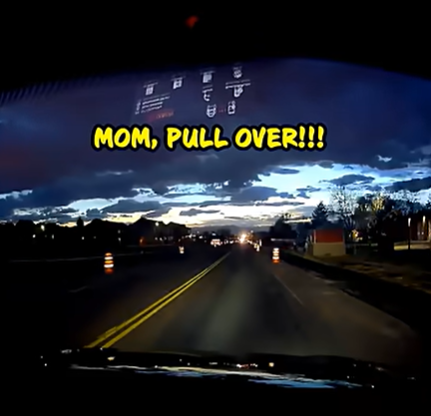
A frightening drive turned into a story of courage after an eight-year-old boy named Andrew helped save his mother’s life when she began choking behind the wheel. What could have become a tragic emergency instead became a powerful example of quick thinking, calm communication, and the importance of teaching children how to call for help.
The incident began while Andrew was riding in the car with his mother. During the drive, his mother suddenly began choking. The situation was serious enough that she had to pull the vehicle over to the side of the road. In that moment, Andrew was faced with something no child expects to handle: his mother was in danger, they were outside the normal safety of home, and he had to act quickly.
Despite being only eight years old, Andrew did not freeze. Once the car was stopped, he immediately called 911. That single decision became the turning point of the emergency. Many adults might panic in a situation like that, especially while watching a loved one struggle. Andrew was clearly frightened, but he still understood that calling emergency services was the fastest way to get help.
When the dispatcher answered, Andrew explained what was happening. His voice may have carried fear and stress, but he stayed focused enough to communicate the emergency. He told the dispatcher that his mother was choking and that they were outside the vehicle near the side of the road. That information was critical because first responders needed to understand both the nature of the emergency and where to go.
One of the most impressive parts of the story is Andrew’s ability to remain calm while speaking to the dispatcher. For a child, calling 911 can be intimidating. The person on the other end is a stranger, the situation is frightening, and the pressure feels enormous. But Andrew managed to answer questions and provide details while staying on the line. His calmness helped the dispatcher guide him and send help quickly.
The dispatcher also played a crucial role. Emergency dispatchers are trained to gather information, keep callers focused, and guide them through dangerous situations until help arrives. In this case, the dispatcher’s calm voice and instructions helped Andrew stay steady. The call became a lifeline between a scared child on the roadside and the emergency crews racing to the scene.
Because Andrew called quickly and gave useful information, first responders arrived within three minutes. In an emergency, those minutes matter. The faster help arrives, the better the chance of a good outcome. Andrew’s decision to call right away helped reduce the time his mother had to wait for professional assistance.
Firefighters and emergency personnel arrived at the scene and were able to help his mother. Their response ultimately saved her life. But before they could do their job, Andrew had to do his. He had to recognize the danger, make the call, speak clearly, stay with the dispatcher, and provide enough information for responders to find them. For an eight-year-old, that is extraordinary.
The story stands out because Andrew’s bravery was not loud or dramatic. He did not need to perform a heroic rescue by himself. His bravery was in staying present, making the right call, and not giving up even though he was scared. Sometimes courage looks like picking up the phone with shaking hands and asking for help.
The incident also shows why it is so important for children to know how to call 911. Many parents teach their kids emergency numbers, but it is easy to assume they are too young to actually use them. Andrew’s actions prove that even young children can make a life-saving difference when they know what to do. Teaching a child their address, how to describe their location, and when to call emergency services can matter in real situations.
In Andrew’s case, the emergency happened while they were on the road, which made the situation more difficult. If they had been at home, he may have been able to give a familiar address. But being pulled over outside meant he had to explain where they were as best he could. That added pressure makes his calm response even more impressive.
The fact that he stayed focused while distressed also shows remarkable maturity. He was not simply repeating memorized words. He was responding to a real emergency as it unfolded. He had to listen, answer questions, and remain close enough to understand what was happening with his mother. That kind of presence of mind is rare, especially for a child.
For his mother, the moment must have been terrifying. She was experiencing a medical emergency while driving, and her child was with her. Pulling over was an important first step because it got the car out of active traffic and created a safer place for help to arrive. Once she was stopped, Andrew was able to call for assistance.
The story also highlights the importance of emergency dispatchers as unseen heroes. They are not physically at the scene, but their guidance can shape the outcome. They help callers stay calm, collect information for responders, and provide instructions when needed. For Andrew, the dispatcher’s voice likely provided reassurance at one of the scariest moments of his young life.
The three-minute response time also shows how effective emergency systems can be when callers provide clear information quickly. Police, firefighters, and medical crews depend on dispatchers receiving accurate details. Andrew’s call helped activate that chain of response. His voice started the process that brought trained help to the roadside.
The emotional weight of the incident comes from the relationship at the center of it. This was not a stranger Andrew was helping. It was his mother. For any child, seeing a parent in danger is deeply frightening because parents are usually the ones who protect and comfort them. In that moment, the roles briefly reversed. Andrew became the one who had to protect his mother by getting help.
That role reversal makes his actions even more meaningful. He did not let fear stop him. He did not wait for someone else to notice. He did not run away from the situation. He stayed close, called 911, and followed the dispatcher’s guidance. His response showed both love and courage.
The incident may also remind parents and caregivers to have age-appropriate safety conversations with children. These conversations do not need to frighten children, but they can prepare them. Kids can learn how to unlock a phone, dial emergency services, say their name, describe what is wrong, and look for landmarks if they are away from home. Andrew’s story shows that this knowledge can become life-saving.
It is also important to teach children that they are allowed to call 911 during a real emergency, even if they are nervous. Some kids may worry they will get in trouble for calling the wrong number or may hesitate because they are unsure. Andrew did not hesitate. He understood that his mother needed help, and he acted.
The video summary suggests that Andrew was clearly distressed, which makes his calmness even more powerful. Being calm in an emergency does not mean feeling no fear. It means acting despite fear. Andrew was scared, but he still did the right thing. That is exactly what bravery is.
For the first responders, arriving to find that an eight-year-old had made the emergency call must have been striking. They were able to assist his mother because Andrew had already done the crucial first step. Emergency personnel often say that bystanders and callers are part of the rescue, and this case proves it. Andrew was the first link in the chain that saved his mother.
The story also shows how children can be more capable than adults sometimes realize. Adults often want to shield kids from difficult realities, and that is understandable. But children can learn simple emergency steps in a safe and calm way. When those steps are needed, they may remember them. Andrew remembered enough to act when it mattered most.
The incident likely left a lasting impression on everyone involved. For Andrew, it may be a memory of fear, but also one of pride. For his mother, it may be a reminder that her son’s quick thinking helped keep her alive. For the emergency dispatcher and first responders, it was a successful rescue made possible by a young caller who stayed on the line.
The roadside setting also adds to the seriousness of the moment. Emergencies outside the home can feel more chaotic because familiar resources are not nearby. There may be traffic, noise, confusion, and uncertainty about location. Andrew had to manage all of that while worrying about his mother. His ability to communicate under those conditions is what helped responders reach them quickly.
The video’s message is ultimately one of preparedness and courage. No one expects an eight-year-old to be placed in a situation like this, but Andrew rose to the moment. He did not need to know everything. He only needed to know the most important thing: call 911 and explain what was happening.
His actions also show the value of staying with the dispatcher until help arrives. In emergencies, callers may want to hang up, cry, or run around in panic. But staying on the line helps dispatchers continue gathering information and guiding the caller. Andrew’s willingness to remain engaged helped keep the situation organized until responders arrived.
The rescue is powerful because it shows how many people worked together even though they were not all in the same place. Andrew made the call. The dispatcher guided him and sent help. Firefighters and emergency personnel arrived quickly. Each role mattered. If any part of that chain had been delayed, the outcome could have been different.
For viewers, Andrew’s story is both emotional and inspiring. It is emotional because a child had to face a frightening emergency involving his mother. It is inspiring because he handled it with courage far beyond his age. His actions remind people that heroes are not always adults in uniforms. Sometimes, a hero is an eight-year-old boy on the side of the road, holding a phone and doing his best to save his mom.
In the end, Andrew’s quick thinking helped save his mother’s life. He recognized the danger, called 911, stayed calm enough to speak with the dispatcher, and helped guide first responders to the scene. His bravery turned a terrifying moment into a survival story, and his actions stand as a reminder that even a child can make a life-saving difference when they know how to ask for help.
Andrew’s story also shows how important it is for children to understand that emergencies are not moments to hide or wait. Many children might become overwhelmed if they saw a parent choking, especially in a car on the side of the road. They might cry, freeze, or hope an adult nearby would notice. Andrew was scared, but he understood that his mother needed help right away. That understanding helped him move from fear into action.
The fact that his mother was driving when the emergency began made the situation even more dangerous. A choking episode behind the wheel can put both the driver and passengers at risk. Pulling over was a critical step because it moved the car out of traffic and gave Andrew a safer place to call from. Once the vehicle was stopped, the emergency was still serious, but at least they were no longer moving on the road while his mother was struggling.
For a child, seeing a parent suddenly unable to function normally can be terrifying. Parents usually represent safety, guidance, and control. When Andrew’s mother began choking, that sense of safety was suddenly shaken. In that moment, Andrew had to do something many adults would find difficult: stay focused enough to communicate clearly with a dispatcher while someone he loved was in danger right beside him.
His ability to explain that they were outside the vehicle was especially important. Dispatchers need details that help them send the right responders to the correct place. If a caller is too panicked to describe the location, valuable time can be lost. Andrew’s calm answers helped emergency crews understand where to go and what kind of emergency they were responding to.
The dispatcher’s role cannot be overlooked. Speaking to a frightened child requires patience, clarity, and calm. The dispatcher had to ask questions in a way Andrew could understand while also keeping him focused. A good dispatcher does more than collect information. They become a steady voice during chaos. For Andrew, that voice likely helped him feel less alone while waiting for help to arrive.
The three-minute response time shows how every second mattered. Emergency services could arrive quickly because the call was made immediately and the information was clear enough to guide them. In medical emergencies, early action often makes the biggest difference. Andrew could not solve the entire problem himself, but he could start the chain of rescue, and he did exactly that.
The firefighters and emergency personnel who arrived were able to take over once they reached the scene. They had the training and equipment needed to help his mother. But their work depended on Andrew’s first step. Without the 911 call, they would not have known where to go. His bravery gave them the opportunity to save her.
The incident is also a reminder that children should know more than just the number 911. They should know what to say after they call. They should know their full name, their parent’s name, their home address, and how to describe surroundings if they are not at home. They should learn to look for street signs, store names, landmarks, or anything nearby that can help responders find them. Andrew’s situation happened on the road, which made location details more difficult, but he still managed to communicate enough for help to arrive quickly.
Parents can use stories like Andrew’s as a gentle teaching moment. The goal is not to frighten children with worst-case scenarios, but to empower them. A child can be told, “If something ever happens and an adult cannot help, you can call 911. Tell them what is wrong and where you are. Stay on the phone until they tell you what to do.” Simple lessons like that can make a huge difference.
Andrew’s courage also came from listening. In emergencies, it is not enough to make the call; the caller also has to follow instructions as best as possible. Andrew stayed on the line and listened to the dispatcher. That kind of cooperation helped keep the situation organized. Even though he was young and upset, he did not let fear completely take over.
The story may also make adults think about how they respond to emergencies around children. Children often watch and learn from adults before a crisis ever happens. If they are taught calmly and repeatedly what to do, they are more likely to remember. Practicing simple emergency steps at home can help children feel prepared without making them anxious.
Andrew’s actions are powerful because they show that bravery does not mean being fearless. He was clearly distressed, and that is completely understandable. But bravery is not the absence of fear. Bravery is doing what needs to be done while fear is present. Andrew was scared for his mother, but he still picked up the phone, explained the problem, and stayed with the dispatcher.
The emotional side of the story is especially strong because Andrew was helping the person who normally helps him. Children rely on parents for everything from comfort to protection. In this emergency, Andrew became the protector for a few critical minutes. His mother’s life depended on someone acting quickly, and he was the one who did.
That role reversal likely had a deep impact on both of them. His mother may always remember that her son saved her life by staying calm during the scariest moment. Andrew may remember the fear, the phone call, the sirens, and the relief when help arrived. Over time, that memory may become a source of pride, showing him that he is capable of handling difficult moments.
The story also highlights the importance of not underestimating children. Adults sometimes assume kids are too young to understand emergencies, but children can learn simple, life-saving steps. They do not need to know medical procedures or complicated instructions. They only need to know how to recognize danger, call for help, and answer basic questions. Andrew proved that an eight-year-old can do exactly that when it matters.
The quick arrival of first responders also shows the strength of teamwork in emergencies. Andrew, the dispatcher, firefighters, and emergency personnel all played different roles. Andrew was the caller. The dispatcher was the guide. The responders were the rescuers. None of them acted alone, but together they created the outcome that saved his mother.
This chain of action is what makes emergency response work. The person at the scene must call. The dispatcher must gather information and send help. The responders must arrive and provide care. If the first link is missing, the rest of the chain cannot begin. Andrew was that first link, and he held strong.
The roadside location could have added more confusion, especially if traffic was nearby or if Andrew was unsure exactly where they were. Children may know their home address, but they may not know road names or directions while traveling. That is why it is useful to teach kids to look around for clues: signs, buildings, mile markers, intersections, or recognizable places. Andrew’s ability to give enough location information helped overcome that challenge.
The incident also reminds families that emergencies can happen during ordinary routines. A simple car ride can suddenly become a life-threatening situation. No one expects it, and no one plans for that exact moment. But preparation helps people respond when the unexpected happens. Andrew’s quick action shows the value of having even basic emergency knowledge.
For first responders, arriving within three minutes likely made the difference between panic and rescue. They were able to assess the mother, provide immediate help, and stabilize the situation. Their work completed what Andrew started. The story is not only about a brave child, but also about the emergency system working the way it is meant to work.
Andrew’s story may inspire other children as well. When kids hear about someone their age helping in an emergency, they may realize they are capable too. It can make emergency preparedness feel less abstract. Instead of thinking, “Only adults can help,” they may understand, “I can call for help if I need to.”
The story also gives parents a chance to praise calm action rather than panic. Children should know that it is okay to feel scared. Andrew was scared, but he still acted. That is the lesson worth teaching: feelings do not have to stop you from doing the right thing. You can be afraid and still call 911. You can cry and still answer questions. You can feel overwhelmed and still help.