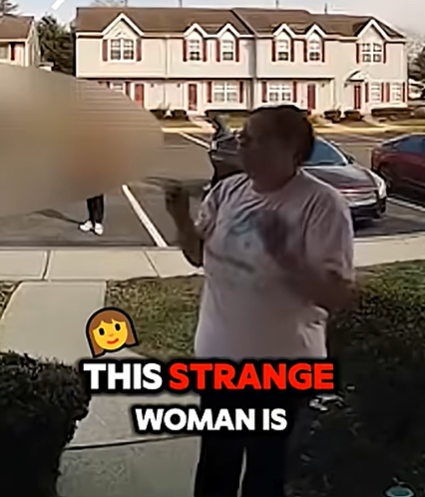
A tense doorbell camera encounter unfolded after a woman approached a homeowner’s front door demanding to see someone named David, or possibly Damon, despite the homeowner repeatedly explaining that no one by that name lived at the house. What began as a confused visit to the wrong address quickly turned into an aggressive confrontation, with the woman refusing to accept the homeowner’s explanation and eventually threatening violence.
The video begins with the woman standing near the front door of a residential home, speaking toward the doorbell camera. She appears convinced that a man named David is inside the house and demands that he come out. At one point, the name seems to shift or be confused with Damon, which adds to the uncertainty of the situation. From the start, it is clear that the woman believes she has arrived at the correct location, even though the homeowner calmly tells her otherwise.
The homeowner speaks through the doorbell camera system, keeping distance and avoiding direct confrontation. She tells the woman that no one named David lives there and suggests that she may have the wrong house. Her tone appears calm and controlled, which stands in contrast to the woman outside, who becomes increasingly agitated. Instead of accepting that she might have made a mistake, the woman insists that this is the right address because “this is where he told us to come.”
That statement becomes one of the more confusing parts of the encounter. It suggests the woman and the two people with her may have been sent to the house by someone else, or at least believed they had been given this location. But the homeowner clearly has no connection to the person they are looking for. She continues trying to explain that there is no David or Damon inside, and that the woman’s assumptions are wrong.
Despite the homeowner’s repeated clarification, the woman refuses to leave. Her frustration grows as she argues through the doorbell camera. She seems unwilling to believe that she may be at the wrong home, and her behavior becomes more confrontational. The situation is especially unsettling because the homeowner is inside her own house, being challenged by a stranger who is standing at her front door and demanding access to someone who does not live there.
The homeowner attempts to defuse the moment by giving more personal context. She explains that she only has a two-year-old son and does not have an older child who could be the person the woman is looking for. This explanation should have made the misunderstanding clear. If the homeowner only has a toddler, then the person being demanded is obviously not inside as an older son or family member. But the woman still does not immediately accept it.
The encounter becomes more alarming when the woman begins making threats. She suggests that if the homeowner is David’s mother, she is willing to physically fight her. That moment changes the tone of the video from a mistaken-address dispute to a possible safety concern. The homeowner is not only dealing with confusion, but with a stranger threatening violence at her front door.
Throughout the confrontation, two other individuals remain further back in the driveway. They do not appear to be directly involved in the conversation at the door, but their presence adds to the pressure of the situation. The homeowner is not facing just one person outside; there are multiple people on or near the property. Even if the others are only watching, their presence can make the situation feel more intimidating.
The homeowner’s decision to communicate through the doorbell camera rather than opening the door appears wise. By keeping the door closed, she maintains a physical barrier between herself and the aggressive visitor. Doorbell cameras are often used to see deliveries or speak to visitors, but in situations like this, they also provide safety and evidence. The homeowner can respond without putting herself directly in front of the person outside.
The woman’s insistence that “this is where he told us to come” shows how stubbornly she is holding onto her belief that the address is correct. But even if someone had given her that location, the homeowner is still under no obligation to let her inside or accept her accusations. A person can be mistaken about an address, and once the resident explains that the person being sought does not live there, the proper response is to leave and verify the information.
Instead, the woman escalates. Her refusal to accept the explanation makes the situation more tense with each exchange. She appears to treat the homeowner’s denial as suspicious, as if the homeowner is hiding someone. That kind of assumption can be dangerous because it turns a simple misunderstanding into a confrontation. The woman is no longer just asking a question; she is accusing the homeowner of being connected to someone she is looking for.
The homeowner continues to stay composed, which is one of the most important parts of the video. She does not match the woman’s aggression. She does not open the door to argue face-to-face. She repeats the facts calmly: there is no David there, she has a young child, and the woman has the wrong house. Her calmness helps prevent the situation from becoming even more chaotic.
The threat of violence, however, makes the encounter serious. A person standing at a front door and saying they are willing to fight the homeowner creates a safety risk, even if no physical contact happens. The homeowner cannot know whether the woman will leave, continue arguing, try to force entry, or return later. That uncertainty is exactly why doorbell footage can be important. It records the interaction and captures the visitor’s words and behavior.
The two people standing farther back also raise questions. They may have come with the woman to support her, help confront David, or simply observe. Their presence suggests this was not a random solo visit. The group may have arrived with a purpose, believing they were going to confront someone. That makes the mistaken address even more concerning, because the homeowner was suddenly placed in the middle of a conflict that had nothing to do with her.
The video also highlights the danger of acting on unverified information. If someone tells a group to go to a certain house, they should confirm the address before confronting the people who live there. Showing up angry at the wrong residence can frighten innocent people and create unnecessary risk. In this case, the homeowner appears to have no idea who the visitors are talking about, yet she is forced to handle their anger.
The woman’s behavior may also reflect how quickly people can become convinced of a story without evidence. She believes David is inside because someone told her to go there. But the homeowner’s explanation directly contradicts that belief. Instead of reassessing, the woman doubles down. That refusal to pause and consider the possibility of a mistake is what keeps the confrontation going.
For the homeowner, the experience was likely frightening. A stranger standing at the front door and making demands is unsettling enough. Hearing threats while knowing there are others nearby makes it worse. Even from behind a locked door, the homeowner has to think about her safety, her child’s safety, and whether the people outside might escalate.
The homeowner’s mention of her two-year-old son adds an emotional layer. She is not just protecting herself; she is also inside the home with a young child. That may be why her tone remains measured. She likely wants to calm the situation and get the strangers to leave without creating more danger. Her priority is not winning an argument, but keeping the home safe.
The woman outside, however, appears focused on finding the person she believes is inside. Her frustration may come from a separate conflict involving David or Damon, but whatever issue she has with that person does not justify threatening a homeowner. Even if she had been wronged by someone else, approaching a house aggressively and refusing to believe the resident creates a new problem.
The doorbell camera footage becomes central because it documents the homeowner’s calm responses and the visitor’s escalating behavior. If police or neighbors later need to understand what happened, the video provides a clear record. It shows that the homeowner told the woman she had the wrong house and that the visitor continued to argue and threaten despite that explanation.
The incident also shows why many homeowners rely on doorbell cameras for safety. Without the camera, the homeowner may have had to speak through the door without seeing clearly who was outside. If she had opened the door, the situation could have become more dangerous. The camera allowed her to observe, communicate, and document the encounter without removing the barrier between them.
For viewers, the most frustrating part may be how simple the misunderstanding should have been to resolve. The woman could have heard the homeowner’s explanation, apologized, and left to confirm the address. Instead, she treated the homeowner like part of the conflict. That choice turned a wrong-house visit into a threatening confrontation.
The situation is also a reminder that not every person who comes to a front door has harmless intentions. Some may be confused, angry, intoxicated, misinformed, or looking for someone who is not there. Homeowners should not feel pressured to open the door just because someone is demanding answers. Speaking through a camera, window, or locked door is a reasonable safety choice.
The woman’s threat also reveals how quickly verbal aggression can create fear even without physical action. Words matter, especially when spoken at someone’s home. A home is supposed to be a private and safe place. When someone brings hostility to the doorstep, the homeowner may feel violated and unsafe. The fact that the woman was apparently at the wrong house makes the threat even more disturbing.
The two people in the driveway remaining quiet may have prevented the confrontation from becoming worse, but they also did not appear to calm the woman down. In tense group situations, bystanders can play an important role by de-escalating, correcting misinformation, or encouraging someone to leave. Here, their presence seems mostly passive, leaving the homeowner to manage the woman’s anger alone through the camera.
The homeowner’s repeated explanations show patience. She does not simply say “go away” and end the conversation. She tries to make the situation clear by explaining that no one by that name lives there and that her only child is a toddler. That level of detail suggests she is trying to reason with the woman, not provoke her. But reasoning only works when the other person is willing to listen.
The encounter also shows how one false assumption can create a chain reaction. Someone may have given the woman the wrong address. She may have misheard a name. The person she was looking for may have lied about where he lived. Whatever the cause, the result was that an innocent homeowner had strangers at her door making accusations and threats.
In the end, the homeowner’s safest choice was to remain behind the door and continue using the camera. She had no reason to open the door to prove anything. She had already explained the truth. The burden was on the visitors to leave and verify their information, not on the homeowner to satisfy their demands.
The video serves as a strong reminder to stay calm when confronted by unexpected visitors, but also to take threats seriously. The homeowner did both. She did not escalate the argument, but she also did not expose herself by opening the door. She used the technology available to communicate safely and preserve evidence.
The woman’s behavior, meanwhile, shows the danger of confronting people based on uncertain information. If you are looking for someone and a resident says they do not live there, the responsible response is to step away, check the address, and avoid threatening anyone. Anger at the wrong door can quickly create legal trouble and put innocent people in fear.
At its core, the encounter is about a mistaken belief turning into a doorstep confrontation. The woman believed David or Damon was inside. The homeowner knew he was not. Rather than accepting that, the visitor became aggressive and threatened violence. The homeowner stayed calm, protected herself, and repeatedly explained the truth.
The presence of the doorbell camera likely prevented the incident from becoming a word-against-word dispute. It captured the woman’s demands, the homeowner’s responses, the mention of the wrong name, the threat, and the two people standing nearby. That footage helps show the full context of the encounter and why the homeowner had reason to be concerned.
The entire situation could have ended in seconds if the woman had accepted that she was at the wrong house. Instead, her refusal to listen turned a mistake into a frightening moment for a homeowner and her child. The video ultimately stands as a warning about the importance of verifying information, respecting private property, and never bringing threats to someone’s doorstep over a person who may not even be there.
The encounter also highlights how quickly a person’s front doorstep can become the center of someone else’s conflict. The homeowner did not invite the situation, did not know the person being demanded, and did not appear to have any connection to the dispute. Yet because the woman believed she had the correct address, the homeowner suddenly had to defend herself, explain her family situation, and manage a stranger’s anger from inside her own home.
That is what makes wrong-house confrontations so unsettling. The person inside may have no idea what is happening, while the person outside may already be emotionally charged. The homeowner is forced to respond to accusations without knowing the full story behind them. In this case, the woman outside seemed convinced that David or Damon was hiding inside, while the homeowner was just trying to make it clear that the name meant nothing to her household.
The confusion over the name also adds to the strange nature of the encounter. If the woman was not even consistent about whether she meant David or Damon, that makes her certainty about the house even harder to understand. It suggests there may have been miscommunication from the beginning. She may have been given the wrong name, the wrong address, or both. But instead of slowing down and checking the details, she stayed focused on confrontation.
The homeowner’s calm voice through the doorbell camera likely helped keep the situation from escalating further. When someone is yelling or threatening, it can be tempting to respond with the same energy. But matching aggression often makes the situation worse. The homeowner chose a different approach. She repeated the truth clearly, stayed behind the locked door, and avoided giving the woman a reason to become more hostile.
Her decision not to open the door was especially important. In many situations, people feel social pressure to answer face-to-face when someone is standing outside. They may feel rude for speaking through a camera or keeping a barrier closed. But this video shows why that barrier matters. Once threats are made, the safest choice is to keep distance. A locked door gives the homeowner time, protection, and control.
The presence of the two people standing back in the driveway makes the situation feel more serious because the woman was not alone. Even if they were not yelling or threatening, their presence could make the homeowner feel outnumbered. A single angry visitor is already stressful. A group arriving together to confront someone who supposedly lives inside the house can feel much more intimidating.
It is also unclear whether the two individuals were there to support the woman, witness the confrontation, or help find the person they were looking for. Their silence does not erase the pressure created by their presence. From the homeowner’s perspective, she could see multiple strangers near her property, one of them making threats, and she had to decide how to protect herself and her child without knowing what they might do next.
The woman’s statement that she was willing to “whoop” the homeowner if she was David’s mother is particularly alarming because it shows she was ready to transfer her anger onto someone else. Even if the homeowner had been related to David, that would not justify threatening her. But the fact that she was not connected at all makes the threat even more unreasonable. The woman was prepared to punish the wrong person based on an assumption.
This is where the encounter becomes more than a misunderstanding. A misunderstanding can be corrected with information. The homeowner gave that information repeatedly. The problem was that the woman outside did not accept it. Once she refused to accept the explanation and added threats, the situation became a safety concern.
For homeowners, the video is a reminder that they do not have to solve a stranger’s problem at the door. If someone comes to a house demanding another person and refuses to leave after being told they are wrong, the homeowner’s responsibility is not to continue debating. The safest step may be to end the conversation, document the situation, and contact authorities if the person remains aggressive.
Doorbell cameras have changed how these moments unfold. In the past, a homeowner might have had to look through a peephole, crack the door open, or speak through a closed door without seeing everything outside. With a camera, the homeowner can see who is there, record the exchange, and communicate without exposing herself. In this case, that technology likely helped her stay calm because she had a way to respond safely.
The footage may also protect the homeowner if the situation is reported later. If the woman or the people with her made false claims about the encounter, the recording would show what actually happened. It would show that the homeowner repeatedly denied knowing David or Damon, explained that only a young child lived there, and did not invite the confrontation. That kind of record can be important when threats are involved.