The Interrogation of Zachary Davis: A Case of Shock, Silence, and Unanswered Questions
Introduction
The interrogation of Zachary Davis remains one of the most unsettling moments in modern true-crime discussion because it does not fit the emotional pattern many viewers expect after a family murder. In the video, a 15-year-old boy sits before investigators after the death of his mother, Melanie Davis. Instead of crying, shaking, or showing obvious panic, he appears strangely calm. At moments, he laughs. When asked about his feelings, he gives answers that seem almost empty. For many viewers, that reaction becomes just as disturbing as the crime itself.
But the case cannot be understood only through a few minutes of interrogation footage. Behind the video is a larger story involving family loss, mental health concerns, juvenile justice, adult criminal court, a confession, an attempted house fire, a surviving brother, and a legal system forced to decide whether a teenager’s disturbed behavior excused or explained his actions. Official court records state that Zachary Everett Davis was 15 when he killed his mother and attempted to kill his brother by setting the family residence on fire; he was later convicted of first-degree premeditated murder, attempted first-degree premeditated murder, and aggravated arson.
The interrogation became infamous because of its emotional contradiction. A child had lost his mother, yet he did not act like a grieving son. He had confessed to a terrible act, yet he did not appear overwhelmed by guilt. His laughter seemed to disturb even experienced investigators because it suggested either emotional detachment, psychological disturbance, nervous confusion, or a chilling absence of remorse. The difficulty of the case is that all of those interpretations were discussed in different forms during the legal process.
The Night That Changed the Davis Family
The crime took place in August 2012 in Tennessee. According to the Tennessee Court of Criminal Appeals, on the evening of August 10, 2012, Zachary Davis struck his mother in the head with a sledgehammer, started a fire in the home’s game room, and left the residence while his mother and older brother were still inside. In the early morning hours of August 11, authorities found him and took him into custody.
That sequence of events is central to why prosecutors treated the case as more than a sudden emotional outburst. The fire was not treated as an accident. The state argued that it was part of an attempt to kill Zachary’s brother as well. CBS News reported at the time that Davis was accused of killing his mother while she was sleeping and then setting the house on fire while his older brother was also asleep inside.
The presence of the surviving brother made the case even more complicated. This was not only the killing of a parent; it was also an alleged attempt to destroy the home and leave another family member to die. In that sense, the crime was both intimate and expansive. It began in a bedroom, but it quickly became a house fire, an emergency response, a search for the missing teenager, and a criminal investigation.
The image that many people remember from summaries of the case is Zachary walking alone after the incident. True-crime accounts describe him being found several miles from the home, carrying a backpack, with evidence connecting him to the crime. Official court records state that detectives located him around 6:15 a.m. walking down the street with a backpack before he was transported to the Sumner County Sheriff’s Office.
That moment matters because it gave investigators a direct path into the interrogation. He was not found hiding in the house. He was not found beside his mother. He was away from the scene, walking alone, after a fire and a death had already been discovered. From the beginning, the investigation focused not only on what happened inside the home but also on what Zachary did afterward.
The Start of the Interrogation
The interrogation footage is disturbing because it captures Zachary in a situation where most people would expect panic or grief. He was a minor, his mother was dead, his brother had survived a fire, and the police were questioning him about events that would determine the rest of his life. Yet the tone of the conversation, as described in reports and legal records, was unusually calm.
Court records show that law enforcement advised Zachary of his Miranda rights and that detectives questioned whether they could speak to him without a parent or guardian present. His parents were unavailable, and officers attempted to contact other family members. The juvenile court authorized police to question him without a parent or guardian present, and the trial court later concluded that his waiver of rights was knowing and voluntary.
That legal issue became important on appeal. Because Zachary was only 15, his defense argued that the interrogation should have been suppressed. The defense pointed to his age, his lack of a parent or guardian during questioning, and his mental health issues. The appellate court, however, upheld the trial court’s decision. It noted that the detectives explained his rights, that he could read and write English, that he answered questions, and that he also declined to answer some questions, which the court interpreted as evidence that he understood his right to remain silent.
This matters because the interrogation was not merely a piece of media later watched by the public. It was evidence. It became part of the legal battle over whether Zachary understood what he was doing, whether he was competent, whether his statements could be used, and whether his mental condition affected his responsibility.
The Laughter That Shocked Viewers
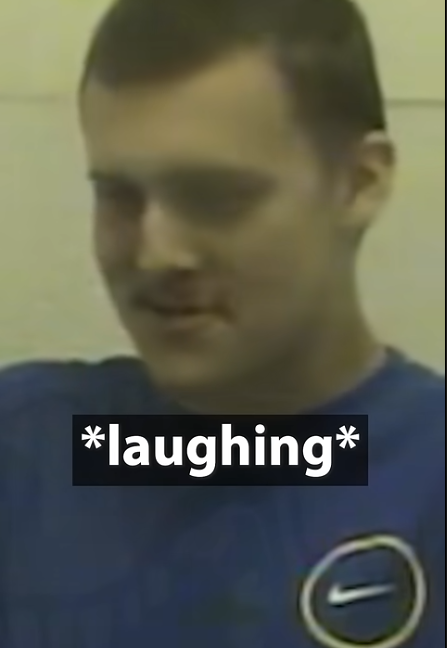
One of the most widely discussed parts of the interrogation is Zachary’s laughter. During questioning about his mother’s death, he was reportedly seen laughing. When asked why he was laughing, he said he did not know. To viewers, that reaction can feel almost impossible to process. Laughter is normally associated with amusement, relief, embarrassment, or nervousness. In the context of murder, it feels grotesquely out of place.
But emotional reactions during interrogation can be difficult to interpret. Some people laugh when they are anxious. Some laugh when they are overwhelmed. Some laugh because they are dissociated from the seriousness of the moment. Others laugh because they genuinely lack empathy or remorse. The problem is that the same outward behavior can have different causes. In Zachary’s case, that ambiguity became part of the larger debate over whether he was mentally ill, manipulative, detached, or some combination of those things.
The court record later noted that the trial court considered his lack of remorse and emotional detachment during sentencing. The trial court described him as having shown no remorse and referred to statements indicating he laughed during the attack. The sentencing court viewed these facts as relevant to the seriousness of the offense and the need to protect the public.
That does not mean every viewer should become an armchair psychiatrist. A video clip can show behavior, but it cannot fully diagnose motive, mental illness, or moral awareness. Still, the laughter became the symbol of the case because it appeared to erase the ordinary emotional boundaries people expect between a child and his mother. It made the public ask: How could someone laugh while discussing the death of the person who raised him?
“I Didn’t Feel Anything”
Another chilling part of the interrogation is Zachary’s reported answer when asked how he felt after killing his mother. He said he did not feel anything. That statement has followed the case for years because it seems to express a total emotional void.
In ordinary moral language, remorse matters. People expect a person who has done something terrible to feel guilt, horror, regret, fear, or grief. When the answer is “nothing,” the mind searches for an explanation. Was he numb? Was he mentally ill? Was he trying to sound frightening? Was he unable to connect emotionally to what he had done? Was he protecting himself from the reality of the crime? Or was he simply telling the truth about an absence of feeling?
The court proceedings repeatedly returned to this question of mental and emotional state. Mental health professionals evaluated Zachary, and the defense argued that he suffered from serious mental illness. Some testimony discussed schizophrenia, delusions, voices, and his claimed belief that his deceased father had instructed him to kill his mother. However, the trial court ultimately found him competent to stand trial, and the jury rejected the defense theory that his mental condition prevented criminal responsibility for premeditated murder.
The phrase “I didn’t feel anything” is powerful because it compresses the whole case into one emotional absence. It suggests a boy who was either deeply psychologically unwell, profoundly detached, or morally unreachable in that moment. The legal system had to decide what that absence meant. The public, watching the interrogation later, often reacted with fear and disbelief.
Planning, Fire, and the Question of Intent
The prosecution’s case depended heavily on intent. First-degree premeditated murder requires more than the fact that someone died. It requires proof that the killing was intentional and planned. In Zachary’s case, prosecutors argued that his actions before and after the killing showed deliberation.
Court records state that after killing his mother, Zachary set a fire in the residence using whiskey as an accelerant. The state charged him not only with murder but also with attempted first-degree murder and aggravated arson.
The fire was especially important because Zachary’s brother was still inside the house. If the fire had spread, the case could have involved another death. The brother’s survival changed the legal outcome, but not the seriousness of the allegation. To prosecutors, the fire showed that Zachary’s actions extended beyond the killing of his mother. It suggested a broader plan to harm his brother and destroy the scene.
CBS News reported that police said Zachary was carrying a notebook containing a letter confessing to the murder when he was arrested. The same report noted that he was charged with first-degree murder, attempted first-degree murder, and aggravated arson.
That notebook became part of the broader picture of premeditation. To the prosecution, the written material, the weapon, the fire, the backpack, and the act of leaving the home all supported the argument that Zachary knew what he was doing. To the defense, those same facts existed inside a larger context of mental illness, emotional disturbance, and adolescent dysfunction.
This is why the case is so difficult. A person can plan something and still be mentally ill. A person can be mentally ill and still understand right from wrong. A person can behave bizarrely and still be legally responsible. The law does not ask whether someone is normal. It asks narrower questions: Did he understand the nature of the act? Did he understand that it was wrong? Could he form the required intent? Was he competent to stand trial? Those questions shaped the case from beginning to end.
Mental Health and the Defense Argument
From the beginning, Zachary’s mental health was not a side issue. It was central. His attorney argued that people around him had known something was wrong. CBS News quoted his attorney as saying that teachers, neighbors, and family knew something was deeply wrong, and that his school and mother knew, but “nothing was done.”
In court, mental health experts disagreed about Zachary’s competency and state of mind. Some professionals believed he was incompetent or severely impaired. Others concluded he was competent to stand trial. The appellate decision describes multiple evaluations, including periods of inpatient forensic evaluation, and notes that some experts found him competent while others expressed concerns about his mental illness and ability to assist in his defense.
The defense also raised the claim that Zachary heard his deceased father’s voice. According to accounts of the trial, the defense argued that he believed his father had instructed him to kill his mother. This claim, if accepted fully, could support an argument that psychosis distorted his judgment. But prosecutors challenged the timing and credibility of that claim, and the jury ultimately found him guilty.
Mental illness does not automatically equal legal insanity. This is one of the most misunderstood parts of criminal law. A defendant may be depressed, psychotic, emotionally disturbed, or developmentally impaired and still be legally responsible if the court finds that he understood his actions and their wrongfulness. In Zachary’s case, the trial court acknowledged mental health issues but still found competency, and the jury convicted him.
This does not make the mental health evidence irrelevant. It remains essential to understanding how a 15-year-old could reach such a violent point. It also raises broader questions about warning signs, intervention, adolescent psychiatric care, grief, family support, and whether systems around troubled teenagers recognize danger early enough.