It started as a call for help, the kind of call that carries urgency but not always clarity. A mother, shaken and fearful, reached out to law enforcement after receiving what she described as death threats directed at her family. In her mind, the situation was already serious enough to demand immediate action. Threats, especially those involving harm, do not feel abstract to the person receiving them—they feel real, imminent, and dangerous. When she made that call, she wasn’t thinking about legal thresholds or procedural standards. She was thinking about safety, about protection, about what might happen if nothing was done.
When officers arrived at the home, the atmosphere was tense but controlled. The responding officer approached the situation in the way he had been trained—calm, measured, and focused on gathering information. He listened to the mother’s account, asked questions, and assessed what evidence was available. From a law enforcement perspective, these steps are essential. Acting too quickly without sufficient cause can create legal complications, and every decision must be grounded in what can be justified within the law. That balance—between urgency and procedure—is one of the most difficult aspects of policing.
As the conversation continued, the gap between expectation and reality began to widen. The mother expected immediate intervention, something visible and decisive that would address the threat she felt. The officer, however, explained that without concrete evidence—something that could establish probable cause—they could not take certain actions, such as forcing entry into another property or making an arrest. He mentioned the need for “articulable evidence,” something that could be presented clearly and stand up to scrutiny. To him, it was a straightforward explanation of legal limits. To her, it sounded like hesitation in the face of danger.
Frustration built quickly.
The mother questioned the reasoning, her voice rising as she tried to understand how a direct threat could not be enough. From her perspective, the situation was already beyond the point of caution. She was not asking for a theoretical response—she wanted protection. The officer, maintaining his position, continued to explain the constraints he was working under. It was not a refusal to help, but a limitation on how that help could be provided. The difference between those two interpretations became the center of the conflict.
As emotions escalated, the conversation shifted from discussion to argument. The tone changed. What had started as an attempt to resolve a concern became a back-and-forth exchange, each side holding onto their understanding of what should happen next. The mother’s frustration was visible, rooted in fear and a sense of urgency. The officer’s response remained structured, focused on explaining the law rather than responding emotionally. That contrast made the situation more difficult to resolve, not less.
Eventually, the officer reached a point where he decided to disengage. Without the necessary evidence to proceed further, and with the conversation no longer productive, he began to leave. In many situations, this is the natural conclusion—an officer cannot remain indefinitely when there is no actionable step to take. But for the mother, his departure felt like abandonment. The issue had not been resolved in her eyes, and the threat she believed existed had not been addressed.
She followed him outside.
The argument continued, now in a more public setting. The shift in location did not reduce the tension—it amplified it. Outside, the exchange became more direct, less controlled by the structure of the initial interaction. The mother accused the officer of being dismissive, of not taking her concerns seriously. The officer responded by reiterating that he had explained the situation and the legal boundaries clearly. Each statement reinforced the divide between them, rather than bridging it.
It was at this point that the situation took another turn.
The mother’s son approached.
From the officer’s perspective, any new individual entering an already tense situation introduces uncertainty. The son’s demeanor was described as aggressive, his words direct and confrontational. He told the officer to “get out of my face,” a statement that, in that moment, carried more than just frustration—it signaled escalation. For law enforcement, perceived threats or aggressive behavior can quickly change how a situation is handled. What had been a verbal dispute now had the potential to become physical.
The officer reacted immediately.
He moved to place the teen under arrest.
The transition from argument to physical action was sudden, but in the officer’s assessment, necessary. In these moments, decisions are made quickly, based on training and perception of risk. The attempt to restrain the teen led to a struggle. Resistance, movement, and attempts to pull away turned the arrest into a physical confrontation. Within seconds, the situation that had begun as a call about threats had become something entirely different.
The takedown happened quickly.
The officer brought the teen to the ground, attempting to gain control and secure him in handcuffs. The movement was forceful, but controlled within the context of the situation. Physical struggles are unpredictable, and officers are trained to end them as quickly as possible to reduce risk to everyone involved. On the ground, the struggle continued briefly before control was established.
Throughout this, the mother’s reaction intensified.
She shouted, her voice filled with urgency and distress. In that moment, she disclosed something that added a new layer to the situation—she stated that her son was autistic. She argued that the officer should not be touching him, suggesting that his condition required a different approach. The claim introduced a complex issue, one that often requires sensitivity and awareness. However, in the middle of a physical altercation, the officer’s focus remained on securing the situation safely.
From the outside, the scene was chaotic.
What had begun as a request for help had turned into a confrontation involving raised voices, physical struggle, and heightened emotion. Each person involved was reacting based on their perspective. The mother saw her son being restrained and felt the need to intervene verbally. The officer saw resistance and responded with the actions he believed were necessary to maintain control.
Once the situation stabilized, the legal consequences began to take shape.
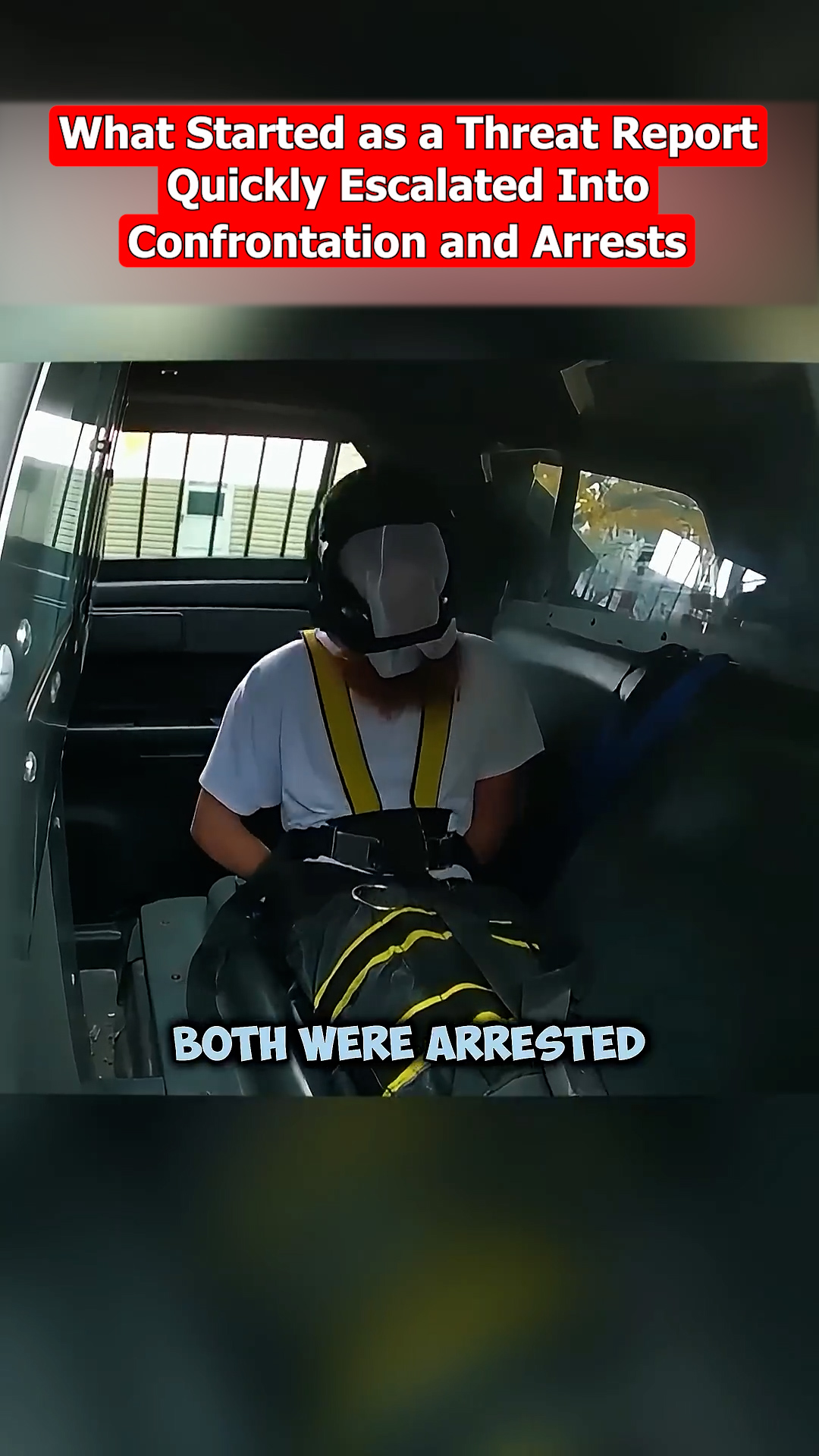
The teen was charged with assault and resisting arrest. These charges reflected the officer’s account of aggressive behavior and the physical struggle that followed. The mother was also charged—obstruction, based on her actions during the incident and the way she engaged with the officer as the situation escalated. What had started as a report of threats had now resulted in two arrests, shifting the focus entirely.
Incidents like this highlight the complexity of interactions between civilians and law enforcement.
They are rarely defined by a single moment. Instead, they unfold through a series of decisions, reactions, and interpretations. In this case, the initial issue—the reported threats—remained unresolved in the way the mother had hoped. The lack of immediate action created frustration, which led to argument, which led to escalation. Each step built on the previous one, creating a chain of events that became difficult to reverse once it had begun.
From a broader perspective, the case raises questions about communication and expectation. When someone calls for help, they often expect a solution that matches the urgency they feel. When that solution is not possible, explaining why becomes just as important as the decision itself. But explanation does not always resolve emotion. In high-stress situations, people respond to how they feel as much as to what they are told.
For law enforcement, the challenge is maintaining clarity under pressure.
Officers must operate within legal boundaries, even when those boundaries are difficult to explain or accept in the moment. They must assess risk, respond to behavior, and make decisions quickly, often without the benefit of complete information. In this case, the officer’s actions were guided by those principles, even as the situation became more volatile.
For the family involved, the experience likely felt very different.
What began as a search for protection ended with confrontation and arrest. The shift from one to the other can feel sudden, even if it develops gradually. The emotional impact of that transition is significant, especially when it involves family members and deeply personal concerns.
As the case moves forward, the legal process will determine the outcomes based on the facts presented. Charges, evidence, and testimony will shape how the situation is understood in a formal setting. But beyond the legal resolution, the incident serves as a reminder of how quickly situations can escalate when expectations, communication, and emotion collide.
In the end, the story is not just about what happened, but about how it happened.
A call for help.
An explanation that didn’t satisfy.
An argument that grew.
A confrontation that turned physical.
And consequences that followed.
Each step connected to the next, forming a sequence that transformed a single moment of concern into something far more complex.