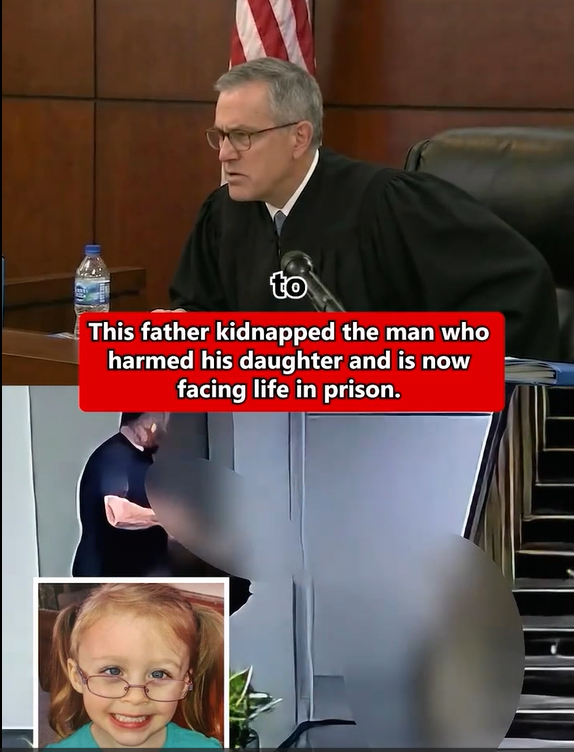
In a heart-wrenching case that blurs the lines between justice and revenge, a father found himself facing life in prison after kidnapping the man who harmed his daughter. The emotional devastation of seeing his child suffer at the hands of another person drove him to take matters into his own hands. While his actions were undoubtedly driven by love and a desire to protect his daughter, they also raised complex questions about the limits of justice, the consequences of vigilantism, and the emotional toll of dealing with trauma.
The Psychological Toll of Protecting a Child
The instinct to protect one’s child is deeply ingrained in every parent. It is a natural and primal response, one that often overrides rational thinking in moments of crisis. For this father, the violation of his daughter’s well-being was an affront to every protective instinct within him. The psychological toll of witnessing harm befall a child can be overwhelming, and in cases like this, it can lead to a breakdown in the ability to process emotions in a healthy way.
Parental love often drives individuals to extremes in moments of danger. The overwhelming urge to ensure the safety of a child can sometimes lead to actions that, while intended to protect, may end up causing further harm. The father’s decision to take matters into his own hands by kidnapping the perpetrator reflects not only his intense feelings of helplessness and outrage but also the deep emotional pain he felt for his daughter.
Vigilante Justice: The Line Between Justice and the Law
Vigilante justice, or the act of taking the law into one’s own hands, is a concept that has existed throughout history, often glamorized in popular culture. However, in real life, vigilante justice poses significant ethical and legal questions. In the case of this father, his emotional reaction to the trauma his daughter faced pushed him to act outside the bounds of the law, believing that justice could only be served through his own intervention.
While it’s easy to understand the intense emotional drive behind his actions, the reality is that taking justice into one’s own hands is both dangerous and illegal. The justice system is in place to ensure that perpetrators of crimes are held accountable, but it must also protect the rights of all individuals involved, including the accused. By kidnapping the man who harmed his daughter, the father violated the legal process and set the stage for potential legal consequences that could affect his life forever.
The Desire for Justice vs. the Need for Legal Processes
In cases of abuse or harm to a loved one, it is easy to see how the line between justice and revenge can become blurred. The father’s actions, though driven by a desire to protect his daughter, were ultimately a form of revenge. While the emotional devastation he felt is understandable, it is important to recognize the importance of due process and the role of law enforcement in handling such cases.
The justice system exists to provide a fair trial and ensure that punishment is meted out according to the law. This system is meant to protect both the victims and the accused, ensuring that justice is served in a way that respects human rights and prevents further harm. However, when individuals take matters into their own hands, the system can break down, resulting in more harm, not less.
The Legal Consequences of Taking the Law into One’s Own Hands
While the father may have felt justified in his actions, the legal consequences were swift and severe. Kidnapping, no matter the reason, is a serious crime. The law does not allow individuals to seek revenge, even in cases where their loved ones have been harmed. This father, despite his understandable desire for justice, now faces the full weight of the legal system and the potential for life imprisonment.
It is important to note that the legal system exists to maintain order and protect the rights of all citizens. When people take the law into their own hands, they risk undermining the very system that is designed to protect them. In the case of this father, his desire to protect his daughter ultimately led to a situation where he could no longer protect her—his actions have now placed both him and his daughter in an even more difficult position.
The Dangers of Vigilantism in a Civilized Society
Vigilantism often arises from a sense of frustration with the justice system’s perceived inefficiency. In this case, the father likely believed that the legal system would not adequately punish the individual responsible for harming his daughter. While this perception may be shared by others who feel that the justice system has failed them, taking matters into one’s own hands is never the answer. Vigilantism perpetuates a cycle of violence and disorder, and it undermines the very principles of justice that society is built on.
A civilized society relies on the rule of law to ensure fairness, accountability, and peace. While there may be times when the system falls short, it is through legal channels and social advocacy that change can occur. Encouraging the public to support the legal system and work within it to seek justice is essential to maintaining order and reducing the likelihood of future acts of vigilante violence.
The Impact of Trauma on Parents and the Desire for Revenge
Witnessing or learning of the abuse of one’s child can leave deep emotional scars on parents. The anger, helplessness, and devastation felt by parents who have seen their children harmed can lead to intense emotional reactions. While some parents are able to channel these emotions into advocacy, counseling, or legal action, others may feel compelled to take matters into their own hands.
The emotional toll of trauma on parents is profound, and in this case, the father’s decision to kidnap the perpetrator was likely influenced by a rush of emotions driven by his desire to protect his daughter. When parents are consumed by rage and sorrow, their ability to think rationally can become clouded. This is why it is crucial for parents who have experienced trauma to seek support from professionals who can help them navigate their emotions in a healthy and constructive way.
The Need for Emotional Support and Counseling
In the aftermath of such incidents, parents who have been victimized by the abuse of their children need emotional and psychological support. Therapy and counseling are essential tools in helping parents cope with their feelings of helplessness, anger, and grief. These services can help individuals process their emotions in a healthy way and avoid taking destructive actions that can have long-term legal and emotional consequences.
It is also important to recognize that the child who was harmed may also need psychological support to process the trauma they have endured. Counseling can help them cope with their emotions and develop healthy coping mechanisms for dealing with the pain they have experienced.
Justice vs. Revenge: The Complex Morality of a Father’s Actions
The actions of this father, while undoubtedly driven by love and an overwhelming desire to protect his daughter, raise complex moral questions. On one hand, his actions can be seen as a desperate attempt to right a wrong—something many parents might relate to. On the other hand, his actions are illegal and have opened the door to further harm, not just for him but for his family.
The Morality of Seeking Revenge
Revenge is a powerful emotion, and while it is easy to sympathize with someone who has been wronged, seeking revenge often leads to unintended consequences. In this case, the father’s decision to kidnap the man responsible for harming his daughter may have provided a momentary sense of justice, but it also resulted in legal charges that could devastate his life and the life of his daughter.
In the end, justice and revenge are often not the same thing. True justice comes through the legal system, where the rule of law governs and ensures that accountability is maintained. Revenge, on the other hand, can perpetuate a cycle of violence, causing more harm than good.
The Role of the Justice System in Protecting Children and Families
The justice system is designed to protect the rights of all individuals, including victims of abuse. However, in order for this system to be effective, it must be supported by strong legal frameworks, social services, and mental health resources that address the needs of families in crisis.
Ensuring Accountability and Protection for Victims
One of the key roles of the justice system is to hold perpetrators accountable for their actions. This ensures that victims receive the justice they deserve while also preventing future crimes. In cases of child abuse, the justice system must provide a safe space for victims to be heard and for perpetrators to be prosecuted to the full extent of the law.
In this case, while the father’s desire for justice is understandable, the legal system is better equipped to ensure that justice is served in a fair and accountable way. The legal system must work to provide safety for victims while ensuring that perpetrators face appropriate consequences for their actions.
Healing from Trauma: The Need for Mental Health Support for Families
While legal consequences are essential, it is just as important to provide long-term emotional support for families who have been affected by trauma. In the case of this father and daughter, both will need psychological support to heal from the emotional scars of their ordeal. Victims of abuse, as well as their families, need therapy, counseling, and community support to move forward and reclaim their lives.
Healing from trauma is a process, and it requires time, support, and a willingness to seek help. Through counseling and community resources, families can begin to rebuild and recover from the pain caused by violence and abuse.
When a child is harmed, the psychological impact on the entire family can be profound and far-reaching. In cases of abuse, the emotional distress experienced by the victim often extends to the parents and close relatives. The father’s actions in this case were born from an overwhelming desire to protect his child, but they also represent a deeper psychological response to trauma. For the father, witnessing his daughter’s suffering likely triggered a range of powerful emotions, from rage and helplessness to guilt and confusion.
Parental Instincts and the Desire to Protect
The instinctual drive to protect one’s child from harm is deeply ingrained in every parent. This primal urge is often stronger than any sense of reason or logic. For many parents, the desire to act in the face of injustice becomes so powerful that it clouds judgment, leading them to make decisions that they might not otherwise consider. This phenomenon is what often drives parents to take matters into their own hands when they feel that their child has been wronged.
In this case, the father’s actions were undoubtedly motivated by love and an overwhelming need to ensure his daughter’s safety. His desire to see justice done is understandable, but the manner in which he sought that justice—through kidnapping—was not the appropriate course of action. While this may have been an emotional reaction to an unbearable situation, it brings to light the challenges that parents face when trying to navigate their emotions and the need for legal processes in the face of trauma.
The Emotional Consequences for the Child
In this case, the child has undoubtedly been traumatized not just by the abuse but by the subsequent events involving her father’s actions. Children are highly impressionable, and exposure to conflict, violence, or illegal activities can have lasting emotional consequences. While the child may feel safe knowing that her father sought to protect her, the reality of the situation is much more complex.
The father’s decision to take matters into his own hands may offer a temporary sense of justice or security, but it also places the child in an emotionally difficult situation. Children may struggle to understand the legal consequences of their parents’ actions and may carry feelings of guilt or confusion. It is essential for children who witness or are affected by such events to receive counseling and mental health support to help them process their emotions and begin healing from the trauma they have experienced.
The child’s mental health will likely be impacted by the events surrounding this case for years to come. While they may feel protected in the short term, they may experience deep feelings of loss, fear, and even anger as they grow older and understand the gravity of the situation. It is crucial that the child has access to therapy or counseling services to help them process the events and understand their feelings in a safe and supportive environment.
Legal Consequences: The Impact of Vigilantism
While the father’s actions in this case were driven by love and a desire for justice, they also represent a violation of the law. Vigilantism, or taking the law into one’s own hands, has long been a topic of debate. In many cases, it arises from frustration with the legal system’s perceived inefficiency. When individuals feel that the justice system has failed them, they may feel justified in seeking their own form of retribution. However, vigilantism undermines the very principles of justice and fairness that the legal system is meant to uphold.
The Role of the Justice System in Protecting Victims
The justice system is designed to ensure that crimes are investigated thoroughly, that the accused are given a fair trial, and that victims receive appropriate restitution. While it is understandable that parents may feel compelled to act in the face of injustice, the legal system is the appropriate mechanism for holding perpetrators accountable. By taking matters into his own hands, the father violated the legal process and jeopardized his ability to seek true justice.
The justice system is not perfect, and there are undoubtedly cases where victims feel that the legal system has failed them. However, the solution is not to resort to vigilantism. Instead, it is crucial for individuals to work within the legal framework to ensure that justice is served. This includes supporting victims’ rights, advocating for changes in the law when necessary, and holding perpetrators accountable through the courts.
In this case, the father’s decision to kidnap the man who harmed his daughter has led to serious legal consequences for him. While he may have acted out of love, the law cannot condone such actions, as they undermine the foundation of legal justice. It is essential for society to reinforce the importance of due process and work to strengthen the legal system so that victims of crime can feel confident that justice will be served.
The Thin Line Between Justice and Revenge
One of the most difficult aspects of situations like this is the moral and ethical ambiguity that surrounds vigilante justice. While the father’s actions were driven by an intense desire for justice, they also crossed the line into revenge. Justice, in its true form, seeks to right wrongs through fair and impartial means. Revenge, on the other hand, is driven by personal emotion and often leads to further harm.
Revenge vs. Justice: The Moral Dilemma
The moral dilemma faced by this father is one that many individuals would likely empathize with. In cases where a loved one has been harmed, the desire to exact revenge on the perpetrator can be overwhelming. However, while revenge may offer a temporary sense of satisfaction, it rarely leads to long-term healing. Instead, it perpetuates a cycle of harm and violence that leaves emotional scars on all involved.
In the case of this father, while his actions were fueled by a desire for justice, they ultimately caused more harm. Not only did he risk his own freedom and face the possibility of life in prison, but his actions also placed his family in a difficult and dangerous position. True justice is not about punishing the perpetrator to satisfy personal emotions; it is about ensuring that the law is upheld, that victims receive restitution, and that society is protected from further harm.
The father’s decision to resort to kidnapping as a form of justice is a stark reminder of the complexities of morality. While the desire for revenge may be strong, it is essential to resist the temptation to act impulsively and instead rely on the legal system to ensure that justice is served in a fair and impartial manner.
The Role of Support Systems for Families in Crisis
In situations where trauma and emotional distress are at play, it is essential for families to have access to support systems that can help them navigate the aftermath of such events. For the father and his daughter, this support should come in the form of legal advocacy, mental health counseling, and community resources.
Therapy and Counseling for Victims and Families
Victims of trauma, especially those who have witnessed or been involved in violent acts, require specialized mental health support. In this case, both the father and the daughter will likely need therapy to help them process their emotions and deal with the aftermath of the traumatic events. Therapy can help individuals gain insight into their feelings, develop coping mechanisms, and address any feelings of guilt, shame, or anger.
For the father, counseling can help him process his decision to take matters into his own hands and deal with any emotional turmoil he may be experiencing. For the daughter, therapy is essential to help her understand what happened, cope with the trauma, and learn how to navigate the emotional consequences of the situation.
Legal and Social Support for Families
In addition to therapy, families in crisis may need legal support to navigate the aftermath of such events. In this case, the father faces legal consequences for his actions, and he will need an attorney to represent him in court. It is crucial that victims of domestic violence, or any type of abuse, have access to legal advocates who can guide them through the legal process and ensure that their rights are protected.
Social services also play a crucial role in supporting families after traumatic events. These services can help families find temporary housing, financial assistance, and other resources that will help them rebuild their lives and recover from the emotional damage caused by the incident. By connecting families to the right resources, social services can provide a much-needed safety net for those in crisis.
The Importance of Prevention and Education
While the legal system plays a crucial role in responding to incidents like this, it is equally important to focus on prevention and education. By teaching individuals about healthy conflict resolution, anger management, and the importance of relying on the legal system for justice, we can reduce the likelihood of vigilantism and prevent future crimes from occurring.
Community Education on Healthy Conflict Resolution
Education on healthy conflict resolution is essential for preventing domestic violence and other forms of abuse. By teaching people how to resolve conflicts without resorting to violence or retaliation, we can create a society where individuals feel empowered to address their problems in peaceful, constructive ways. This education should be made widely available in schools, workplaces, and community centers.
Additionally, anger management programs and counseling services should be accessible to those who struggle with controlling their emotions. By offering these resources, we can help individuals learn how to process their feelings in a healthy way and prevent violent or impulsive actions.
The case of the father who kidnapped the man who harmed his daughter is a tragic reminder of the complexities of justice, revenge, and morality. While the father’s actions were driven by an intense desire to protect his daughter, they also violated the principles of due process and the rule of law. As a society, we must continue to advocate for justice that upholds the rights of all individuals, ensures accountability, and provides support for those affected by trauma.
In addition to legal intervention, it is crucial that families in crisis have access to the emotional, psychological, and social support they need to heal. Through therapy, counseling, and community resources, families can begin to rebuild their lives and move forward in a healthy and constructive way.
True justice is not about revenge—it is about ensuring fairness, healing, and protection for all involved. We must work together to create a society that prioritizes empathy, support, and legal accountability, so that individuals can find justice without resorting to vigilantism.