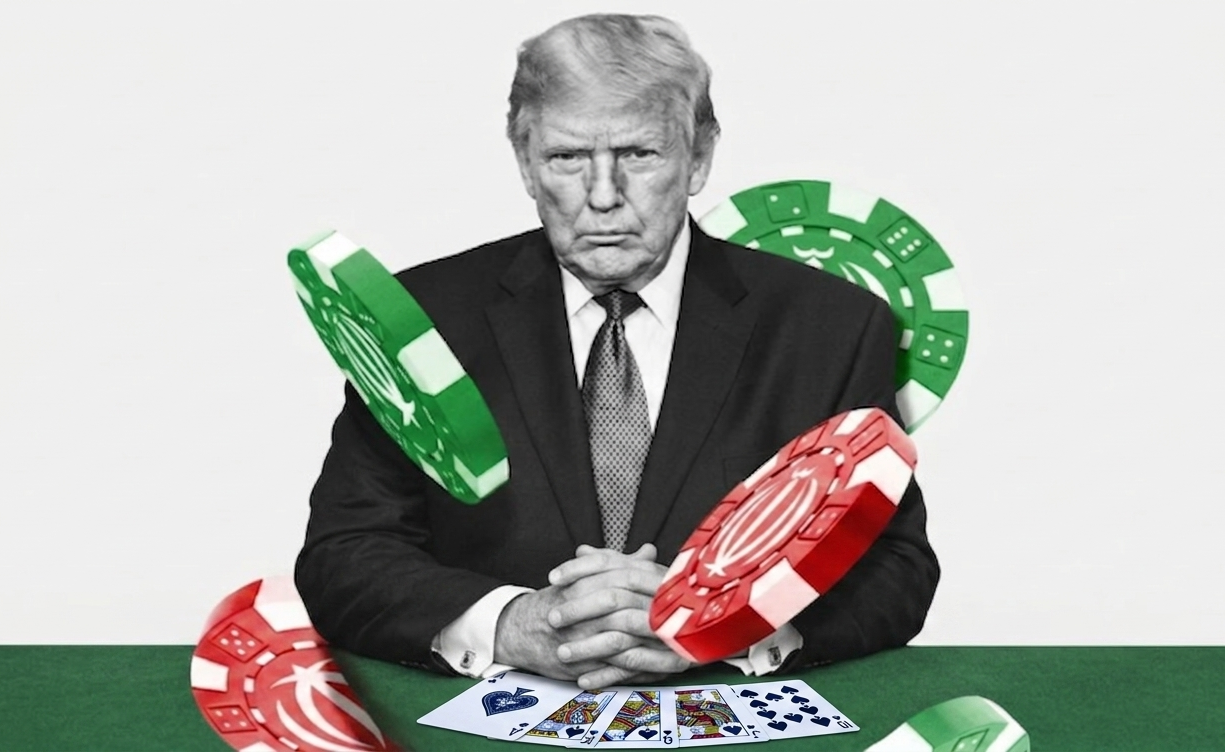
In recent days, global attention has once again shifted toward the volatile relationship between the United States and Iran, with Donald Trump at the center of a rapidly escalating geopolitical crisis. What began as fragile diplomatic engagement has now deteriorated into one of the most serious confrontations in recent years, raising fears of military conflict, economic disruption, and global instability.
At the heart of the crisis lies the strategic and highly sensitive Strait of Hormuz — a narrow passage through which nearly one-fifth of the world’s oil supply flows daily. Any disruption in this region has immediate and far-reaching consequences, not only for the Middle East but for global markets and international security.
⚠️ The Collapse of Diplomacy
The current situation did not arise overnight. For months, there had been ongoing but fragile negotiations between the United States and Iran aimed at easing tensions, addressing nuclear concerns, and preventing further military escalation. These talks, however, were marked by deep mistrust on both sides.
According to officials close to the matter, the negotiations reached a breaking point after disagreements over sanctions relief and Iran’s nuclear program intensified. The United States insisted on stricter limitations and monitoring, while Iran demanded immediate economic relief and guarantees against future policy reversals.
When talks finally collapsed, the fallout was swift and dramatic.
🚢 The Blockade Decision
In what many analysts are calling a bold and risky move, Donald Trump authorized a U.S. naval blockade in the Strait of Hormuz. This decision represents a significant escalation, as blockades are widely considered acts of war under international law.
The stated goal of the blockade is to prevent Iranian oil exports and to pressure Tehran into returning to negotiations under revised conditions. However, critics argue that such a move could provoke retaliation and spiral into open conflict.
Military assets have already been repositioned in the region. U.S. naval fleets, supported by allied forces, have increased their presence, conducting patrols and monitoring maritime traffic. Meanwhile, Iran has issued warnings that any interference with its shipping routes will be met with force.
🌍 Why the Strait of Hormuz Matters
To understand the gravity of the situation, it is essential to grasp the importance of the Strait of Hormuz. This narrow waterway connects the Persian Gulf to the Arabian Sea and serves as a critical artery for global energy supplies.
Every day, millions of barrels of oil pass through this route, supplying major economies across Asia, Europe, and beyond. Countries like China, India, Japan, and many European nations rely heavily on oil shipments that transit through this corridor.
A blockade or military conflict in this region could:
- Disrupt global oil supplies
- Trigger massive price spikes
- Cause economic instability worldwide
- Increase the risk of broader regional war
Even minor incidents in the Strait have historically led to significant market reactions. A full-scale blockade, therefore, represents an unprecedented level of risk in the modern energy landscape.
📈 Immediate Economic Shockwaves
Markets have already begun reacting to the unfolding crisis. Oil prices surged sharply, reflecting fears of supply disruptions. Investors, wary of uncertainty, have started shifting assets into safer investments such as gold and government bonds.
Energy-dependent industries are particularly vulnerable. Airlines, transportation companies, and manufacturing sectors face rising costs, which could eventually translate into higher prices for consumers.
Financial markets have also shown signs of volatility. Stock indices in major economies experienced fluctuations as traders attempted to assess the potential long-term impact of the situation.
Economists warn that prolonged instability could lead to:
- Inflation driven by energy costs
- Slower global economic growth
- Disruptions in international trade
- Increased financial market volatility
🪖 Military Posturing and Risk of Conflict
Beyond economic implications, the most immediate concern is the possibility of military confrontation. Both the United States and Iran possess significant military capabilities, and the region is already heavily militarized.
The U.S. maintains a strong presence in the Middle East, including naval fleets, air bases, and allied partnerships. Iran, on the other hand, has developed asymmetric warfare strategies, including missile systems, naval mines, and regional proxy forces.
Experts point out that the risk of miscalculation is particularly high in such tense environments. A single incident — such as a naval encounter, a missile test, or an accidental engagement — could rapidly escalate into a broader conflict.
Iran has previously demonstrated its willingness to challenge U.S. forces in the region, and its leadership has made it clear that it will not accept restrictions on its sovereignty without resistance.
🏛️ Domestic Political Reactions
Back in the United States, Trump’s decision has sparked intense debate. Supporters argue that strong action is necessary to counter Iran’s influence and protect global security. They see the blockade as a demonstration of resolve and leadership.
Critics, however, warn that the move could entangle the United States in another prolonged conflict in the Middle East. They question whether all diplomatic avenues were fully exhausted before resorting to such drastic measures.
Members of Congress from both parties have called for briefings and greater transparency regarding the administration’s strategy. Some lawmakers are pushing for limits on military engagement, emphasizing the need for congressional approval in matters that could lead to war.
Public opinion remains divided, reflecting broader political polarization within the country.
🌐 Global Reactions
The international community has responded with concern and caution. Allies of the United States have expressed support for diplomatic solutions while urging restraint. European leaders, in particular, have emphasized the importance of de-escalation and dialogue.
Countries heavily dependent on Middle Eastern oil have voiced alarm over the potential disruption of supply routes. Many are exploring contingency plans, including alternative energy sources and strategic reserves.
Meanwhile, rival powers are closely monitoring the situation. The crisis presents both risks and opportunities, potentially reshaping alliances and geopolitical dynamics.
🔍 A Turning Point
What makes this situation particularly significant is that it represents more than just a bilateral dispute. It is a test of international norms, economic resilience, and global leadership.
The decisions made in the coming days and weeks could determine whether the crisis is contained or allowed to escalate into a larger conflict. Diplomatic channels, though strained, are not entirely closed, and there remains a possibility — however slim — for renewed negotiations.
Power, Politics, and Pressure — Inside the Escalation
As the situation between the United States and Iran intensifies, the crisis has moved beyond immediate military posturing and into a broader arena shaped by politics, economics, and strategic influence. At the center remains Donald Trump, whose decisions are now influencing not just regional dynamics, but the global balance of power.
This phase of the crisis is defined not only by actions taken, but by the pressure building behind the scenes—within governments, across alliances, and throughout global markets.
🏛️ Strategic Calculations Behind the Blockade
While the blockade of the Strait of Hormuz appears sudden, analysts suggest it is the result of calculated strategic thinking.
Trump’s approach has long emphasized leverage through economic and military pressure. By targeting one of Iran’s most critical economic lifelines—its oil exports—the administration aims to force Tehran into a position where returning to negotiations becomes unavoidable.
From a strategic standpoint, the blockade serves multiple purposes:
- Economic Pressure: Severely limits Iran’s ability to generate revenue from oil exports
- Psychological Impact: Demonstrates U.S. willingness to escalate beyond sanctions
- Global Signal: Sends a message to allies and adversaries about U.S. assertiveness
However, such a strategy carries inherent risks. Unlike sanctions, which operate within economic frameworks, a blockade directly challenges sovereignty and invites immediate confrontation.
🧠 Iran’s Response Strategy
Iran’s leadership has responded with a mix of defiance and calculated restraint. Public statements emphasize resistance, national pride, and readiness to defend territorial and economic interests.
However, beneath the rhetoric lies a more complex strategy.
Iran is unlikely to engage in direct, large-scale military confrontation with the United States unless absolutely necessary. Instead, it may rely on asymmetric tactics designed to exert pressure without triggering full-scale war. These could include:
- Harassment of naval vessels in the Gulf
- Use of fast attack boats and drones
- Deployment of naval mines in key shipping lanes
- Cyber operations targeting infrastructure
- Activation of allied proxy groups across the region
Such tactics allow Iran to increase costs and uncertainty for the United States and its allies while maintaining plausible deniability.
This approach has been a cornerstone of Iran’s defense strategy for years, allowing it to operate effectively despite having a smaller conventional military force.
🌍 The Role of Global Powers
The crisis has drawn the attention of major global players, each with its own interests and strategic considerations.
🇨🇳 China
China, as one of the largest importers of Middle Eastern oil, has a direct stake in the stability of the Strait of Hormuz. Any disruption threatens its energy security and economic growth.
Beijing has called for restraint and diplomacy, while quietly assessing alternative supply routes and increasing strategic reserves.
🇷🇺 Russia
Russia views the situation through a geopolitical lens. Instability in the Middle East can drive up global energy prices, benefiting Russian exports. At the same time, Moscow seeks to expand its influence by positioning itself as a mediator.
🇪🇺 European Union
European nations are caught in a delicate position. While maintaining alliances with the United States, they have consistently supported diplomatic engagement with Iran.
European leaders are now working urgently to revive negotiations, fearing that escalation could destabilize the region and trigger a refugee crisis.
💰 Economic Warfare and Market Volatility
As tensions escalate, economic warfare has become a central element of the conflict. The blockade is not just a military maneuver—it is an economic weapon with global consequences.
Oil markets have reacted sharply. Prices have surged, reflecting fears of reduced supply and increased risk. This has triggered ripple effects across multiple sectors:
- Transportation: Rising fuel costs impact airlines and shipping industries
- Manufacturing: Increased energy costs raise production expenses
- Consumers: Higher prices for goods and services due to inflation
Investors are also adjusting their strategies. Traditional safe-haven assets such as gold and U.S. Treasury bonds have seen increased demand, while riskier investments have experienced volatility.
Global supply chains, already strained from previous disruptions, face renewed uncertainty. Companies are reevaluating logistics, sourcing, and contingency planning.
🪖 The Military Balance
The military dimension of the crisis continues to evolve. The United States maintains overwhelming conventional superiority, with advanced naval fleets, aircraft carriers, and air power deployed in the region.
However, military analysts caution against underestimating Iran’s capabilities.
Iran’s strengths lie in:
- Geographic advantage in the Persian Gulf
- Extensive missile arsenal
- Experience in asymmetric warfare
- Network of regional allies and proxy forces
A direct conflict would likely not resemble traditional warfare. Instead, it could involve:
- Disruption of shipping lanes
- Missile strikes on strategic targets
- Cyber attacks on critical infrastructure
- Regional spillover involving neighboring countries
Such a conflict would be complex, unpredictable, and costly for all parties involved.
🗳️ Domestic Pressure on Trump
Back in the United States, Donald Trump is facing increasing pressure from multiple fronts.
Political Landscape
Lawmakers are divided. Some support a strong stance against Iran, while others warn of the risks associated with escalation. Debates over war powers and executive authority have intensified.
Public Opinion
Public sentiment is mixed. While some view the blockade as a necessary show of strength, others fear the possibility of another prolonged conflict in the Middle East.
Media and Narrative
Media coverage has amplified the stakes, with analysts, commentators, and former officials offering competing perspectives. The narrative surrounding the crisis is shaping public perception and political momentum.
📣 Information and Influence
In today’s digital age, information itself has become a battleground.
Both the United States and Iran are engaged in shaping narratives, influencing public opinion, and managing perceptions. Social media platforms, news outlets, and official communications are being used to:
- Justify actions
- Rally domestic support
- Influence international audiences
- Undermine opposing narratives
Misinformation and propaganda add another layer of complexity, making it more difficult for observers to distinguish fact from interpretation.
⚖️ Legal and Ethical Questions
The blockade has also raised important legal and ethical questions.
Under international law, blockades are typically considered acts of war. This has prompted debates among legal experts regarding:
- The legality of the U.S. action
- The justification under self-defense principles
- The role of international institutions
Humanitarian concerns are also emerging. Any disruption to shipping can impact not just oil, but also essential goods, potentially affecting civilian populations.
🔄 The Possibility of De-escalation
Despite the rising tensions, pathways to de-escalation still exist.
Diplomatic efforts, though strained, have not completely collapsed. Backchannel communications, third-party mediation, and international pressure could create opportunities for renewed dialogue.
Possible steps toward de-escalation include:
- Temporary suspension of the blockade
- Confidence-building measures
- Gradual easing of sanctions
- Framework agreements for future negotiations
However, such outcomes require political will, compromise, and trust—factors currently in short supply.
What Comes Next — Scenarios, Consequences, and the Global Future
As the crisis surrounding Donald Trump, the United States, and Iran continues to unfold, the world now faces the most critical question of all: what happens next?
The blockade of the Strait of Hormuz has pushed the situation into uncharted territory. With tensions high and stakes even higher, multiple outcomes are possible—ranging from diplomatic breakthroughs to full-scale conflict.
This final part explores the most realistic scenarios, their consequences, and what they could mean for global stability in the months and years ahead.
🔮 Scenario 1: Controlled De-escalation
The most hopeful outcome is a controlled de-escalation of tensions.
In this scenario, backchannel diplomacy—often conducted quietly through intermediaries—begins to take effect. Global pressure from allies, economic concerns, and the risk of unintended escalation push both sides toward compromise.
The United States could agree to ease or partially lift the blockade in exchange for:
- Renewed nuclear negotiations
- Increased transparency from Iran
- Temporary agreements on regional security
Meanwhile, Iran might respond by:
- Reducing military activity in the Gulf
- Committing to limited nuclear restrictions
- Engaging in confidence-building measures
This scenario would not resolve all underlying tensions, but it could prevent immediate conflict and stabilize global markets.
However, such an outcome requires both sides to step back from hardline positions—something that may be politically difficult, especially for a leader like Donald Trump, who has built a reputation on strength and unpredictability.
⚔️ Scenario 2: Limited Military Conflict
A more concerning possibility is a limited military confrontation.
This could begin with a relatively small incident, such as:
- A naval skirmish in the Persian Gulf
- A drone strike on military assets
- A missile launch targeting strategic locations
Even if unintended, such events can quickly escalate.
In this scenario:
- The United States might conduct targeted strikes on Iranian military infrastructure
- Iran could retaliate through missile attacks or proxy operations
- Shipping routes in the Strait of Hormuz could become highly dangerous or temporarily closed
While both sides may attempt to avoid full-scale war, the risk of escalation remains constant. History has shown that conflicts often expand beyond initial expectations.
The global consequences would be immediate:
- Sharp spikes in oil prices
- Severe market volatility
- Disruptions in international trade
🌍 Scenario 3: Regional War
The most dangerous outcome is a broader regional war.
In this scenario, the conflict expands beyond the United States and Iran, drawing in neighboring countries and regional allies. The Middle East, already a complex web of alliances and rivalries, could become the center of a large-scale conflict.
Potential developments include:
- Involvement of Gulf states aligned with the United States
- Activation of Iran-backed groups in multiple countries
- Attacks on critical infrastructure such as oil facilities and ports
This type of conflict would not be contained easily. It could spread across borders, destabilize governments, and create long-term humanitarian crises.
The impact on the global economy would be profound:
- Oil supply disruptions on an unprecedented scale
- Long-term inflation across multiple sectors
- Declines in global trade and economic growth
Such a scenario is widely viewed as a worst-case outcome, but one that cannot be entirely ruled out given the current trajectory.
💰 Global Economic Fallout
Regardless of which scenario unfolds, the economic implications are already becoming clear.
The Strait of Hormuz is not just a regional concern—it is a global lifeline. Any sustained disruption could reshape the world economy.
Key Economic Risks:
- Energy Crisis: Rising oil prices increase costs across all industries
- Inflation: Higher transportation and production costs lead to price increases for consumers
- Market Instability: Financial markets react to uncertainty with volatility
- Supply Chain Disruptions: Delays and increased costs affect global trade
Countries may begin accelerating shifts toward alternative energy sources, reducing dependence on Middle Eastern oil over the long term.
However, such transitions take time, meaning the short-term impact could be severe.
🧠 The Human Factor
Beyond strategy and economics, the crisis is ultimately shaped by human decisions.
Leaders on both sides face immense pressure:
- Political expectations at home
- Strategic considerations abroad
- The need to appear strong while avoiding catastrophic outcomes
Donald Trump is known for bold and unconventional decision-making. This unpredictability can be both a strategic advantage and a source of instability.
Similarly, Iran’s leadership must balance internal expectations with external threats, navigating a complex environment where any perceived weakness could have domestic consequences.
📊 The Role of Public Opinion
Public perception plays a critical role in shaping the trajectory of the crisis.
In the United States:
- Support for strong action may rise initially
- Concerns about prolonged conflict could grow over time
In Iran:
- National unity may strengthen in response to external pressure
- Economic hardship could influence public sentiment
Globally, citizens are watching closely, with many calling for restraint and diplomacy.
The way this crisis is communicated—through media, political messaging, and public discourse—will influence how far leaders are willing to go.
🌐 Long-Term Geopolitical Impact
Even after the immediate crisis is resolved, its effects will linger.
This situation could lead to:
- Shifts in global alliances
- Increased militarization of key regions
- Changes in energy strategies worldwide
- Greater emphasis on economic resilience
Countries may rethink their dependence on critical chokepoints like the Strait of Hormuz, investing in diversification and alternative routes.
The balance of power in the Middle East—and potentially beyond—could be reshaped.
⚖️ Lessons from History
History offers valuable lessons about crises like this.
Similar situations in the past have shown that:
- Escalation can happen quickly and unexpectedly
- Diplomacy, even at the last moment, can prevent conflict
- Economic pressures often play a decisive role
The current crisis echoes elements of past confrontations, but also introduces new variables, including advanced technology, cyber warfare, and global interdependence.