The Clip That Spread Like Wildfire
It starts the way most viral clips do. A bold “Breaking News” banner flashes across the screen, dramatic music implied even in silence, and a headline that immediately hooks attention: rapper Offset shot near a Florida casino.
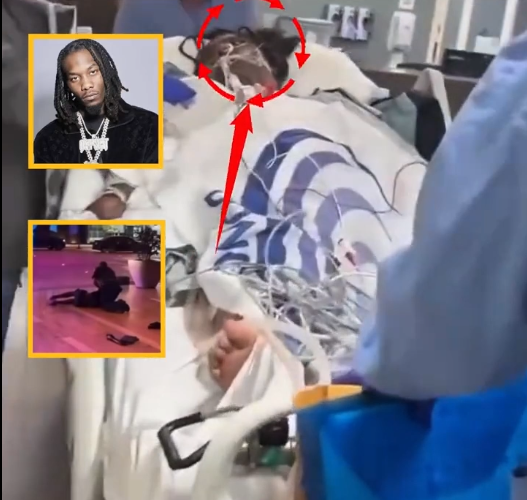
Within seconds, the viewer is pulled into a sequence of frantic visuals. A man on a hospital stretcher. Medical staff moving quickly through what looks like an emergency corridor. Red arrows and circles drawn over the footage to guide the eye. Insert images of Offset layered into the frame, reinforcing the claim. A smaller clip shows a chaotic nighttime scene with flashing police lights outside a building that resembles a casino floor or hotel entrance.
The pacing is urgent. The editing is deliberate. The message is clear. Something serious has happened, and it involves a major celebrity.
But as with many viral videos circulating across platforms like TikTok, Facebook, and Instagram, the real story is not always what the clip claims.
Why Offset Is Always a Target for Viral Claims
Offset is not just any artist. As a member of the rap group Migos and a solo performer, he has spent years in the public spotlight. His lifestyle, past controversies, and high profile relationship with Cardi B have made him a frequent subject of headlines.
That level of visibility creates a perfect storm for misinformation.
When a celebrity has:
- A recognizable face
- A history of being in the news
- A large and reactive fanbase
They become an easy anchor for viral narratives. Whether true or not, attaching their name to a dramatic situation guarantees engagement.
This is exactly what appears to be happening with this video.
Dissecting the Hospital Scene
The most striking part of the footage is the hospital sequence. A man lies on a stretcher, partially covered, with medical staff surrounding him. The clip suggests urgency, possibly even life threatening injuries.
But several details stand out on closer inspection.
First, the patient’s face is partially obscured. While the video uses arrows to point at the individual, there is no clear, verifiable moment where the identity can be confirmed as Offset.
Second, the environment lacks identifiable markers. Hospitals typically have signage, badges, or visible branding. In this footage, everything feels generic, making it difficult to determine where or when it was filmed.
Third, the overlays themselves are a red flag. The arrows, circles, and inserted images of Offset are not part of original footage. They are added later, often to guide viewers toward a specific conclusion.
This kind of editing is common in misleading content. It does not prove anything on its own. Instead, it suggests an attempt to shape perception.
The Casino Footage and Police Presence
Another segment shows flashing lights, what appears to be police vehicles, and people standing around in a large, open indoor space. The caption “Offset” appears at the bottom, reinforcing the connection.
At first glance, it looks convincing. Police lights often signal something serious. Crowds gathering suggest an incident. The setting resembles a casino or hotel lobby.
But again, context is missing.
There is no audio confirmation of what happened. No visible signage identifying the location. No clear link between the hospital scene and the police footage.
In fact, scenes like this are incredibly common in busy entertainment venues. Casinos frequently deal with:
- Medical emergencies
- Security incidents
- Routine police presence
Without verified context, the footage could be from an entirely unrelated situation.
The Anatomy of a Viral Misinformation Clip
This video follows a familiar formula that has become increasingly common online.
Step 1: Use a recognizable name
Offset is immediately identifiable and draws attention.
Step 2: Add urgency
“Breaking News” creates a sense that the viewer must watch immediately.
Step 3: Combine unrelated footage
Hospital scenes, police lights, and crowd shots are stitched together.
Step 4: Guide the viewer visually
Arrows, circles, and inserted images remove ambiguity and push a narrative.
Step 5: Keep it short and emotional
There is no time for analysis. The viewer reacts rather than questions.
This formula works because it taps into instinct. People are naturally drawn to dramatic events, especially involving celebrities.
The Role of Social Media Algorithms
Platforms like Facebook, TikTok, and Instagram reward engagement. The more people watch, like, comment, and share, the more widely a video spreads.
Content like this thrives in that environment.
It triggers:
- Shock
- Concern
- Curiosity
Viewers may not verify the information before reacting. They share it quickly, often with captions like “Is this real?” or “Pray for him,” which only accelerates its reach.
The algorithm does not distinguish between accurate and misleading content. It simply amplifies what people interact with.
Has Offset Actually Been Shot?
At the time of analyzing this type of viral content, there is no verified, credible reporting confirming that Offset was shot near a Florida casino.
Major incidents involving celebrities typically appear quickly in:
- Established news outlets
- Official police statements
- Verified social media accounts
In cases where something serious happens, information spreads through reliable channels within minutes or hours.
The absence of such confirmation is important.
It suggests that the video is either:
- Misleading
- Taken out of context
- Entirely fabricated
Why People Believe It
Even when evidence is weak, videos like this still convince a large number of viewers.
There are a few reasons for that.
Visual persuasion
Seeing a person on a stretcher feels real. It creates an emotional reaction that overrides skepticism.
Familiar faces
When a known figure like Offset is inserted into the narrative, it becomes easier to accept.
Fast consumption
Short form content does not encourage deep thinking. People scroll quickly and move on.
Repetition
When multiple accounts share the same clip, it creates the illusion of confirmation.
The Impact on Celebrities
False claims like this are not harmless.
For artists like Offset, they can lead to:
- Panic among fans
- Damage to reputation
- Unnecessary media attention
- Personal stress
Family members, friends, and collaborators may also be affected. Imagine waking up to see your name trending alongside claims of being shot, with no basis in reality.
This is one of the hidden costs of viral misinformation.
The Audience’s Role in Amplification
It is easy to blame the creators of misleading content, but the audience plays a role as well.
Every share, comment, or like contributes to visibility.
Even skepticism can help spread the video. Comments like “This is fake” still count as engagement, pushing the content further into feeds.
Breaking this cycle requires a shift in behavior:
- Pausing before sharing
- Checking reliable sources
- Recognizing manipulation tactics
Red Flags to Watch For
This video contains several warning signs that apply to many similar clips.
- Overuse of “Breaking News” graphics without a known source
- Heavy editing with arrows, circles, and overlays
- Lack of clear audio or identifiable context
- No confirmation from credible outlets
- Emotional framing designed to provoke reaction
Learning to spot these signs can make a big difference in how people interpret content.
The Culture of Viral Drama
There is a broader trend at play here. Online culture increasingly rewards dramatic, high intensity content.
Stories involving:
- Violence
- Celebrity incidents
- Unexpected events
tend to perform better than ordinary news.
As a result, some creators intentionally blur the line between reality and fiction. The goal is not accuracy. It is attention.
From Clip to Narrative
One of the most interesting aspects of this video is how it transforms disconnected footage into a single story.
A hospital scene becomes evidence of injury.
A police presence becomes proof of a crime.
An inserted image becomes confirmation of identity.
None of these elements are verified on their own. But when combined, they create a convincing narrative.
This is the power of editing.
The Speed of Misinformation
In the past, false stories took time to spread. Today, they can reach millions within hours.
All it takes is:
- One compelling video
- A few high engagement shares
- Algorithmic amplification
By the time the truth catches up, the original claim has already shaped public perception.
Offset’s Public Image and Media Attention
Offset’s career has been closely followed by both fans and media. From music releases to personal life events, he remains a constant topic of discussion.
This level of attention means that any rumor involving him gains traction quickly.
Even unverified claims can:
- Trend on social media
- Spark debates
- Generate thousands of comments
It creates an environment where misinformation can thrive.
The Blurring Line Between News and Entertainment
Videos like this exist in a gray area between journalism and entertainment.
They use the visual language of news:
- Headlines
- Breaking banners
- Urgent tone
But they lack the standards of verification and accountability that real journalism requires.
For many viewers, the difference is not always clear.
How to Verify Claims Like This
When encountering a video that makes serious claims, a few simple steps can help separate fact from fiction.
Search for coverage from established news organizations
Check official social media accounts of the person involved
Look for statements from law enforcement or representatives
Pay attention to inconsistencies in the video itself
If none of these support the claim, skepticism is justified.
The Real Story Behind the Video
While the clip presents a dramatic scenario, the evidence does not support the claim that Offset was shot near a Florida casino.
Instead, it appears to be a constructed narrative using:
- Unverified hospital footage
- Unrelated scenes
- Edited overlays
The result is a video designed to capture attention rather than convey truth.
Why This Keeps Happening
As long as viral content is rewarded, similar videos will continue to appear.
They are easy to produce, require minimal resources, and can generate significant engagement.
For creators chasing views, the incentive is clear.
The Responsibility of Platforms
Social media platforms face ongoing challenges in dealing with misleading content.
Automated systems can detect some issues, but many videos slip through.
Balancing:
- Free expression
- User engagement
- Information accuracy
is a complex task.
When Familiar Faces Become Digital Currency
There is something almost predictable about the way certain celebrities get pulled into viral chaos. Offset fits perfectly into that pattern. His image carries weight, his name sparks immediate recognition, and his presence alone is enough to turn an otherwise ordinary clip into something that feels urgent and important. In a space where attention is the most valuable asset, recognizable figures become a kind of digital currency. The more familiar the face, the easier it is to sell a story, even when the story itself has little grounding in reality.
What makes this even more effective is how quickly the brain fills in gaps. A viewer does not need full confirmation. They just need a suggestion. Once Offset’s image appears alongside scenes of chaos, the mind begins connecting dots automatically. It is not a conscious decision. It is instinctive. That instinct is exactly what these videos rely on.
The Illusion of Continuity
One of the most subtle tricks in the video is how it creates a sense of continuity between completely separate clips. The hospital footage feels connected to the casino scene, even though there is no real evidence linking the two. This illusion is built through timing, pacing, and visual cues rather than facts.
The viewer sees flashing lights, then a stretcher, then a familiar face inserted into the frame. The sequence feels logical, almost like a timeline unfolding in real time. But when you slow it down and look carefully, the connections start to fall apart. The lighting changes. The environments do not match. The people involved show no clear interaction with each other. Yet the brain still wants to believe it is one continuous story.
That is the power of editing. It does not just show events. It shapes how those events are understood.
Emotional Weight Over Factual Accuracy
The video does not try to prove anything in a traditional sense. It does not rely on statements, witnesses, or verifiable details. Instead, it leans heavily on emotional weight. The urgency of a hospital scene carries a certain gravity. The presence of police lights signals danger. The suggestion of violence creates immediate concern.
These elements are enough to override the need for evidence. When emotions are high, the demand for accuracy tends to drop. People react first and question later, if they question at all.
This is why the format works so well. It does not need to be true. It just needs to feel true for a few seconds.
The Role of Silence in the Footage
Another interesting aspect of the clip is what it does not include. There is no clear audio explaining what is happening. No voices confirming identities. No official statements being made in real time. That absence of sound is not a weakness. In many ways, it is an advantage.
Silence allows viewers to project their own assumptions onto the footage. Without dialogue to guide interpretation, the visuals take over completely. The added text and graphics step in to fill the gap, directing the narrative in a way that feels natural but is actually highly controlled.
In a strange way, the lack of audio makes the video more flexible. It can be interpreted differently by different viewers, but still push the same core idea.
The Recycling of Unrelated Footage
There is a strong possibility that parts of the video were taken from entirely unrelated incidents. Hospital scenes, police activity, and crowded public spaces are recorded every day. These clips often exist online long before they are repurposed into something new.
By taking fragments from different sources and combining them, creators can build a completely new narrative. The original context is stripped away, leaving only the most visually striking moments. Once those moments are stitched together, they become something else entirely.
This recycling process is one of the key engines behind viral misinformation. It allows content to be produced quickly without the need for original material. All that is required is a basic understanding of what captures attention.
The Speed of Belief
What stands out is not just how fast the video spreads, but how quickly people decide what they believe about it. In many cases, that decision happens within seconds. A quick glance, a strong headline, and a familiar face are enough to form an opinion.
After that initial reaction, everything else becomes secondary. Even if contradictory information appears later, the first impression tends to stick. This is known as the anchoring effect, where the initial piece of information heavily influences how subsequent details are interpreted.
In the case of this video, the anchor is clear. Offset has been shot. Everything else in the clip exists to support that idea, whether it actually does or not.
The Social Layer of Virality
Beyond the video itself, there is another layer that contributes to its spread. The way people interact with the content adds meaning to it. Comments, reactions, and shares all create a sense of collective attention.
When someone sees thousands of others reacting, it reinforces the idea that the video matters. It creates a kind of social proof. If everyone is talking about it, it must be important. If it is important, it must be real.
This feedback loop is powerful. It turns individual reactions into a larger wave that carries the content further than it could go on its own.
Offset’s Image in the Digital Age
Offset’s public image plays a major role in how believable the claim feels. As part of Migos and through his solo career, he has been associated with a lifestyle that media often portrays as high risk and unpredictable. Whether that portrayal is fair or not is a separate question, but it influences perception.
When viewers see a headline suggesting something violent has happened to him, it does not feel completely out of place within the narrative that has been built around him over the years. That familiarity lowers the barrier to belief.
It is not just about what the video shows. It is about what people already think they know.
The Blending of Real and Fabricated Elements
What makes the video particularly effective is how it mixes real looking footage with clearly added elements. The hospital scene feels authentic. The police lights look genuine. But the overlays and inserted images introduce a layer of manipulation.
This blend creates a confusing space where it becomes difficult to separate what is real from what is added. The authenticity of some elements lends credibility to the rest, even when that credibility is not deserved.
It is a kind of visual persuasion that works on a subconscious level. The viewer does not analyze each component individually. They take in the whole picture and react to it as a single piece of information.
The Absence of Verified Reporting
In situations where something serious actually happens to a public figure, there is usually a rapid response from credible sources. News organizations, official representatives, and verified accounts begin sharing information almost immediately.
The lack of that response in this case is significant. It creates a gap between what the video claims and what can be confirmed. That gap is where doubt should begin, but in many cases, it is simply ignored.
Instead of looking for confirmation, viewers rely on the video itself as the primary source. That shift in trust from established channels to viral content is one of the defining characteristics of the current media landscape.
The Design of the Thumbnail and Opening Frame
Even before the video starts, the thumbnail plays a crucial role. A dramatic image, often featuring Offset’s face alongside emergency visuals, sets the tone instantly. It creates an expectation of urgency and seriousness.
The opening frame then reinforces that expectation with bold text and attention grabbing graphics. By the time the actual footage begins, the viewer is already primed to interpret everything through a specific lens.
This front loaded design is intentional. It ensures that even a brief glance is enough to communicate the core message.
The Psychology of Shock Content
Shock is one of the most reliable drivers of engagement. Content that surprises or disturbs tends to hold attention longer and provoke stronger reactions. The idea that a well known artist has been shot taps directly into that response.
It creates a moment of disbelief followed by a need to understand what happened. That need keeps the viewer watching, even if the video does not provide real answers.
Shock also increases the likelihood of sharing. People are more inclined to pass along something that feels intense or alarming, especially if they believe others should know about it.
The Subtle Influence of Visual Markers
The arrows, circles, and captions in the video might seem simple, but they play a critical role. They act as guides, telling the viewer exactly where to look and what to focus on.
Without these markers, the footage might feel ambiguous. With them, it becomes directed. The viewer is no longer interpreting the scene freely. They are being led toward a specific conclusion.
This technique reduces uncertainty and increases confidence in the narrative being presented, even when that confidence is misplaced.
The Cultural Appetite for Instant Updates
There is a growing expectation that news should be immediate. People want updates as events happen, not hours or days later. This demand creates an opening for content that appears to deliver real time information, even when it does not.
The video positions itself as a breaking update, something happening right now. That sense of immediacy makes it feel valuable. It suggests that the viewer is getting information before others.
In reality, the speed of delivery often comes at the cost of accuracy. But by the time that becomes clear, the content has already done its job.
The Long Tail of Viral Misinformation
Even after a video like this is debunked or loses momentum, its impact does not disappear immediately. Copies continue to circulate. New versions appear with slight variations. The core idea lingers in public memory.
Some people will remember seeing something about Offset being shot, even if they later learn it was not true. That lingering impression can shape future perceptions and reactions.
This long tail effect makes misinformation difficult to fully erase. Once it spreads, it becomes part of the broader conversation in a way that is hard to undo.