In the grand narrative of space exploration, history often remembers the monumental moments—the launches that shake the earth, the landings that redefine human possibility, and the discoveries that reshape our understanding of the universe. Yet, behind those defining milestones lies a quieter, equally vital story: the constant, meticulous problem-solving that allows astronauts to survive and operate in one of the most unforgiving environments imaginable.
During the early phase of the Artemis II mission, one such moment unfolded—not in the propulsion systems or navigation software, but within a far more personal and essential component of spacecraft design: the onboard sanitation system. What might seem trivial on Earth quickly becomes mission-critical in orbit. And for the Artemis II crew, addressing a malfunction in their spacecraft’s toilet system became an early and instructive demonstration of adaptability, engineering precision, and the realities of deep-space travel.
A Routine System Becomes a Mission Priority
Roughly six hours into flight, as the crew settled into their first operational cycle, a problem was identified within the Orion spacecraft’s waste management system. Specifically, the issue centered on the toilet’s fan mechanism, a component that plays a far more critical role in space than its terrestrial counterpart.
On Earth, gravity ensures that waste is directed downward and contained within plumbing systems. In microgravity, however, there is no such natural force. Instead, airflow becomes the primary method of guiding and securing waste. The fan within the system creates suction, effectively pulling liquids and solids into the appropriate containment units. Without it, the system cannot function as intended.
NASA officials later confirmed that the malfunction stemmed from a controller issue—an internal component responsible for regulating the fan’s operation. As a result, while the system retained limited functionality for solid waste, it was temporarily unable to handle liquid waste in a controlled manner.
For the crew, this was not merely an inconvenience. It was a disruption to one of the most fundamental aspects of daily life aboard the spacecraft.
Contingency Measures in Action
In response to the malfunction, the crew immediately implemented contingency procedures. NASA has long anticipated the possibility of such issues, and astronauts are trained extensively in alternative methods of waste management. One such solution is the use of the Collapsible Contingency Urinal (CCU), a bag-and-funnel system designed for situations where the primary system is unavailable.
While effective, the CCU is not intended for extended use. It requires careful handling, secure storage, and eventual disposal through controlled venting procedures. Its use underscores the importance of restoring the primary system as quickly as possible.
The transition to contingency operations was seamless, reflecting the crew’s training and preparedness. Yet it also highlighted the importance of redundancy and adaptability in spacecraft design—principles that have guided NASA’s engineering philosophy for decades.
Troubleshooting in Microgravity
Addressing a mechanical issue in space presents unique challenges. Unlike terrestrial repairs, where technicians have access to tools, stable footing, and immediate support, astronauts must operate in a weightless environment with limited resources. Every movement must be deliberate, every component carefully managed.
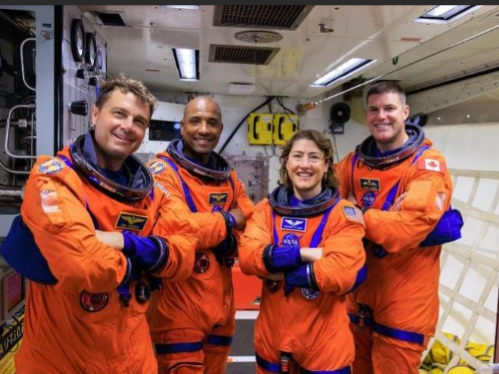
Mission specialist Christina Koch took the lead in resolving the issue. Acting as what could be described as a “space systems technician,” she worked through a series of diagnostic and repair steps transmitted from Mission Control.
These instructions were not generic. Engineers on the ground monitored the system in real time, analyzing data streams and adjusting their recommendations based on the spacecraft’s conditions. The process involved removing specific components, inspecting connections, and resetting elements of the control system.
Simultaneously, Mission Control executed remote troubleshooting measures, including system reboots and performance checks. This collaboration between ground and crew exemplifies the integrated nature of modern space missions, where expertise is distributed across multiple locations yet functions as a cohesive unit.
The Importance of Airflow in Space Sanitation
To fully appreciate the significance of the repair, it is necessary to understand the role of airflow in space-based sanitation systems. In microgravity, the absence of gravitational pull means that waste does not naturally settle. Instead, it can float freely, posing both hygiene and operational risks.
The fan within the system generates a controlled airflow that directs waste into containment areas. It also helps maintain a stable environment within the system, preventing the escape of particles or odors into the cabin.
Historically, the absence or failure of such systems has led to well-documented challenges. During the Apollo era, astronauts relied on rudimentary waste management solutions, including adhesive bags. These methods were functional but far from ideal, often leading to discomfort and, in some cases, unintended complications.
The development of advanced sanitation systems represents a significant evolution in spacecraft design, reflecting a broader commitment to crew well-being and operational efficiency.
A Successful Resolution
After a series of carefully executed steps, the repair was completed successfully. Mission Control confirmed that the system was once again fully operational, restoring normal functionality for both liquid and solid waste management.
The communication from the ground was characteristically precise, reflecting NASA’s emphasis on clarity and procedure. Instructions were provided regarding the system’s operation, including recommendations to allow the fan to reach full speed before use and to maintain operation briefly afterward.
The response from the crew was one of relief and professionalism. While the issue may not have carried the dramatic weight of other potential malfunctions, its resolution was nonetheless a significant achievement.
Post-Repair Procedures
With the primary system restored, attention turned to managing the waste generated during the interim period. The CCU units used during the malfunction required proper disposal, a process that involves venting their contents into space.
This procedure is not as simple as it might appear. Releasing material from the spacecraft can produce minute thrust forces, which in turn can affect the vehicle’s orientation and trajectory. As such, the timing of disposal must be carefully coordinated with the spacecraft’s guidance, navigation, and control systems.
Mission Control initially advised the crew to delay disposal to avoid any potential impact on these systems. Once conditions were deemed suitable, the crew was authorized to proceed, completing the process without incident.
The Broader Context of Artemis II
The Artemis II mission represents a critical step in NASA’s broader Artemis program, which aims to return humans to the Moon and establish a sustainable presence there. Unlike its predecessor, Artemis I, which was an uncrewed test flight, Artemis II carries astronauts, making it the first crewed mission in the program.
As such, it serves as a comprehensive test of the Orion spacecraft’s systems, from propulsion and navigation to life support and habitation. Identifying and resolving issues during this mission is not only expected but essential.
The toilet malfunction, while seemingly minor, falls squarely within this objective. It provided an opportunity to evaluate the system’s performance, test contingency procedures, and refine operational protocols. The lessons learned will inform future missions, including those that venture deeper into space.
Human Factors in Space Exploration
One of the key takeaways from this incident is the importance of human factors in mission design. Spacecraft are not merely vehicles—they are living environments. Every system, no matter how small, contributes to the crew’s ability to function effectively.
Comfort, hygiene, and routine play significant roles in maintaining physical and psychological well-being. A malfunction in any of these areas can have ripple effects, impacting morale and performance.
By addressing the issue promptly and effectively, the Artemis II crew demonstrated the resilience and adaptability that are essential for long-duration missions. Their experience underscores the need for robust, reliable systems that support not just survival, but quality of life.
Engineering Lessons and Future Implications
From an engineering perspective, the incident offers valuable insights. The identification of a controller malfunction highlights the importance of component reliability and redundancy. It also underscores the need for systems that can be repaired in-flight, using available tools and procedures.
Future iterations of spacecraft design will likely incorporate these lessons, refining both hardware and software to minimize the likelihood of similar issues. At the same time, training protocols will continue to emphasize the importance of troubleshooting and adaptability.
The ability to address unexpected challenges is a defining characteristic of successful missions. In this sense, the Artemis II crew’s experience contributes to a broader body of knowledge that will shape the future of space exploration.
A Reminder of the Realities of Spaceflight
While public attention often focuses on the dramatic aspects of space missions, incidents like this serve as a reminder of the everyday realities faced by astronauts. Spaceflight is not just about exploration—it is about living and working in an environment where even the simplest tasks require careful consideration.
The successful resolution of the sanitation system issue may not dominate headlines, but it represents a fundamental aspect of mission success. It highlights the interplay between technology, human ingenuity, and operational discipline.
Mission Update: Artemis II Crew Resolves Onboard Waste Management System Malfunction During Early Flight Operations
In the grand narrative of space exploration, history often remembers the spectacular moments: rocket launches that shake the earth, astronauts floating weightlessly against the backdrop of space, and the triumphant return of humanity to distant celestial bodies. Yet, beneath these monumental achievements lies a quieter, often overlooked reality — the small, practical challenges that define daily life beyond Earth.
During the early hours of NASA’s Artemis II mission, one such challenge emerged. While far from the dramatic imagery typically associated with spaceflight, it was no less important. In fact, it was essential.
Approximately six hours into the mission, the Artemis II crew encountered a malfunction in one of the spacecraft’s most critical onboard systems: the waste management unit. Specifically, a failure in the toilet’s airflow system temporarily rendered it unable to perform one of its primary functions.
What followed was not panic or confusion, but a calm, methodical response that demonstrated the true essence of human spaceflight — adaptability, teamwork, and problem-solving under pressure.
A Routine System, A Critical Function
To understand the significance of the issue, one must first appreciate the complexity of something as seemingly ordinary as a toilet in space.
On Earth, gravity does most of the work. Waste naturally moves downward, guided by simple physics. In space, however, there is no such luxury. Without gravity, everything — including liquids and solids — floats freely. Managing human waste in such an environment requires carefully engineered systems that rely on airflow, suction, and precise control mechanisms.
In the Orion spacecraft used for Artemis II, fans play a crucial role in this process. They create the airflow necessary to guide waste into the appropriate containment areas, ensuring both hygiene and safety for the crew.
When NASA confirmed shortly after launch that there was a problem with the toilet fan, it immediately became clear that this was not a trivial inconvenience. Without proper airflow, liquid waste could not be directed into the system safely.
In practical terms, this meant that while astronauts could still use the toilet for solid waste, urination required an alternative solution.
Immediate Impact on the Crew
The timing of the malfunction — just hours into the mission — added an additional layer of urgency. The crew was still in the early phase of their journey, adjusting to microgravity conditions and completing initial system checks.
With the toilet partially inoperable, at least one astronaut had to resort to using a backup system: the Collapsible Contingency Urinal (CCU), a bag-and-funnel device designed for precisely such situations.
While effective, the CCU is far from ideal for long-term use. It is intended as a temporary workaround, not a primary solution.
The situation underscored a fundamental truth of space travel: redundancy is essential, but restoring primary systems is always the priority.
Diagnosing the Problem
NASA engineers quickly identified the root cause of the malfunction as a faulty controller within the toilet’s airflow system.
On Earth, replacing or repairing such a component would be straightforward. In space, however, every action must be carefully planned, executed, and monitored.
The Artemis II mission is, at its core, a test flight. Its purpose is not only to travel through space but to identify and resolve exactly these kinds of issues. Every anomaly provides valuable data that will improve future missions, including those that aim to land humans on the Moon once again.
Mission Control in Houston began working immediately, analyzing telemetry data and developing a step-by-step repair procedure.
A Crew Member Steps In
Mission Specialist Christina Koch took on the responsibility of executing the repair.
Working in microgravity presents unique challenges. Tools must be secured to prevent them from floating away. Components behave differently without weight. Even the simple act of applying force requires careful control.
Guided by instructions from Mission Control, Koch began disassembling parts of the toilet system. Each step was communicated clearly, with engineers on the ground monitoring the system in real time.
The process involved both physical adjustments and remote troubleshooting measures, including cycling the system on and off to reset its components.
This collaboration between astronaut and ground team is a hallmark of modern spaceflight. It is not just about the individuals in space or the engineers on Earth — it is about the seamless integration of both.
The Moment of Resolution
After several careful adjustments and system checks, the fix was successfully implemented.
Mission Control conducted a series of evaluations to ensure the system was functioning properly. Once satisfied, they delivered the message the crew had been waiting for:
The toilet was fully operational again.
The response from the spacecraft was immediate and lighthearted. Despite the seriousness of the situation, there was a sense of relief — and even humor.
Such moments are a reminder that astronauts, despite their extraordinary roles, are still human. They experience the same basic needs and the same sense of relief when those needs are met.
Cleanup and Secondary Procedures
With the primary system restored, attention turned to cleanup.
The CCU used during the malfunction needed to be emptied. Under normal circumstances, this would involve venting its contents into space through the spacecraft’s disposal system.
However, even this routine action required careful timing.
Mission Control initially instructed the crew to prepare for disposal, but moments later issued a correction. The release of waste, even in small quantities, could generate a slight thrust. In the precise environment of space navigation, even minimal forces can affect a spacecraft’s trajectory or orientation.
This is where the concept of Guidance, Navigation, and Control (GNC) becomes critical. Every action aboard a spacecraft must be evaluated not only for its immediate purpose but for its potential impact on the vehicle as a whole.
The crew was instructed to wait until conditions were optimal. Later, once it was safe to proceed, the disposal was carried out without issue.
Lessons from a Small Problem
At first glance, fixing a toilet may seem like a minor footnote in the story of a mission designed to return humans to the Moon.
In reality, it is anything but minor.
Space exploration is not just about reaching distant destinations. It is about sustaining human life in environments that are fundamentally hostile to it. Every system, no matter how mundane it may seem, plays a vital role in that effort.
The Artemis II toilet is particularly significant because it represents the first waste management system designed for a crewed deep-space mission in decades.
Unlike missions confined to low Earth orbit, Artemis II ventures farther, where immediate return is not an option. Systems must be reliable, and crews must be prepared to handle any issue that arises.
The Historical Context
The challenges faced by the Artemis II crew are not new.
During the early days of space exploration, astronauts did not have access to advanced waste management systems. On Apollo missions, for example, astronauts relied on plastic bags attached to their bodies — a solution that was far from comfortable or convenient.
One infamous moment during the Apollo 10 mission involved a piece of waste floating freely inside the spacecraft, highlighting the limitations of early technology.
Compared to those conditions, the systems aboard Artemis II represent a significant advancement. Yet, as this incident demonstrates, even the most sophisticated technology is not immune to failure.
Engineering for the Future
One of the primary goals of Artemis II is to identify and resolve issues before they can affect future missions.
The data collected from this incident will be invaluable. Engineers will analyze every aspect of the malfunction, from the initial failure to the repair process and the system’s performance afterward.
This information will inform the design of future spacecraft, ensuring that similar issues can be prevented or addressed more efficiently.
It is a continuous cycle of improvement — a process that has defined space exploration since its earliest days.
The Human Element
Beyond the technical details, this incident highlights the human side of space exploration.
Astronauts are trained to handle complex systems and unexpected challenges, but they are also individuals living and working in an extraordinary environment.
Moments like this — dealing with a malfunctioning toilet — bring a sense of normalcy to an otherwise extraordinary experience.
They remind us that even in the vastness of space, the fundamentals of human life remain the same.
A Mission Defined by Adaptability
Artemis II is a test flight in every sense of the word.
Its success is not measured solely by its trajectory or its distance traveled, but by its ability to identify and resolve challenges.
The toilet malfunction, and the crew’s response to it, exemplify this mission objective perfectly.
It is a testament to the preparation, training, and collaboration that make human spaceflight possible.
Looking Ahead
As the Artemis program continues, the lessons learned from this mission will play a crucial role in shaping the future of space exploration.
From the design of spacecraft systems to the training of astronauts, every detail matters.
The successful resolution of this issue is a small but significant step toward the larger goal of returning humans to the Moon — and eventually, sending them even farther.
In the grand scheme of space exploration, fixing a toilet may not seem like a headline-worthy achievement.
But it is precisely these kinds of challenges that define the reality of living and working in space.
The Artemis II crew’s ability to diagnose, address, and resolve the issue demonstrates the resilience and ingenuity that are essential for the future of human spaceflight.
As humanity prepares to venture deeper into the cosmos, it is worth remembering that every great journey is built on countless small victories.
And sometimes, those victories come in the most unexpected forms.