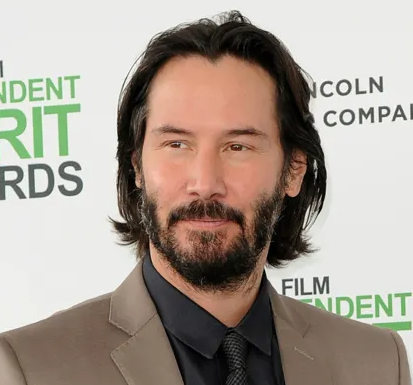
The Man Behind the Myth
In an industry often defined by ego, spectacle, and relentless self-promotion, Keanu Reeves stands apart in a way that feels almost surreal. He is not just another Hollywood star with blockbuster credentials and global fame—he is something far rarer. Over the years, he has quietly built a reputation not only for his work on screen, but for the way he carries himself off it. While audiences know him as the face of franchises like The Matrix and John Wick, those who pay closer attention recognize a deeper story—one shaped not by success alone, but by profound personal loss.
The internet has, at times, labeled him “the saddest man in Hollywood.” It’s a phrase that spreads easily, attaching itself to viral posts and emotional narratives. But that description, while rooted in truth, barely scratches the surface. It simplifies a life that is anything but simple. Because what defines Keanu Reeves is not just the tragedies he has endured, but the way he has responded to them. His story is not just about sorrow—it is about transformation. It is about choosing compassion when bitterness would be easier, and kindness when indifference would be expected.
Early Absence and the First Wounds
Long before fame, before red carpets and film premieres, Keanu Reeves experienced a form of loss that shapes many lives in quiet, lasting ways. His father left when he was just three years old, creating an absence that would echo through his childhood. While not uncommon, such an early departure often leaves questions that linger for years—questions about identity, belonging, and stability.
For Reeves, this absence did not manifest in loud rebellion or public struggle. Instead, it became part of a quieter emotional landscape, one that would later inform his worldview. Growing up without a consistent paternal figure meant learning independence early, but it also meant carrying a subtle sense of disconnection. These early experiences rarely define a person entirely, but they often lay the groundwork for how one responds to future challenges.
Friendship and Loss: The Death of River Phoenix
By the early 1990s, Keanu Reeves had begun to establish himself in Hollywood. It was during this period that he formed a close friendship with River Phoenix, an actor equally admired for his talent and sensitivity. Their bond went beyond professional respect—it was personal, genuine, and deeply rooted.
In 1993, that bond was abruptly severed. River Phoenix died from a drug overdose at just 23 years old. The loss was sudden, shocking, and devastating. For Reeves, it was not just the loss of a colleague, but of a friend who understood him in ways few others could.
Grief of this kind does not fade quickly. It lingers, reshaping how one views life and relationships. It introduces a new awareness of fragility—the understanding that even those closest to us can be gone without warning. For Keanu Reeves, this loss marked the beginning of a pattern that would define much of his emotional life.
The Unimaginable Pain of Losing a Child
If the loss of a friend is devastating, the loss of a child is something else entirely. In 1999, Keanu Reeves and his partner Jennifer Syme were expecting a daughter, Ava Archer Syme-Reeves. It was a moment filled with anticipation and hope—a new chapter that promised joy and meaning.
But that chapter never began.
Their daughter was stillborn.
There are no easy words to describe such a loss. It is a grief that defies logic, one that cuts deeper than most people can imagine. It is not just the loss of a life, but the loss of a future—the dreams, the moments, the possibilities that will never come to pass.
For Reeves, this tragedy was not just a personal blow. It was a rupture in the very foundation of his life.
A Second Blow: The Death of Jennifer Syme
As if the loss of their child were not enough, tragedy struck again just 18 months later. In 2001, Jennifer Syme died in a car accident.
The timeline is almost unbearable to consider. Within a short span of time, Keanu Reeves lost both his child and the woman he loved. It was a sequence of events that could have broken anyone.
And yet, what followed was not a descent into public despair, but something far quieter—and far more remarkable.
Choosing Empathy Over Bitterness
Faced with such overwhelming loss, many people might retreat inward. Some might grow bitter, angry at the world for what has been taken from them. Others might withdraw completely, choosing isolation over connection.
But Keanu Reeves chose a different path.
Instead of allowing grief to harden him, he allowed it to soften him. Instead of closing himself off, he became more open, more aware of the pain others carry. This transformation did not happen overnight, nor was it likely a conscious decision at first. But over time, it became clear: his suffering had given him a deeper capacity for empathy.
Caring for Family: A Decade of Devotion
Another defining chapter in Reeves’ life came when his sister, Kim, was diagnosed with leukemia. For many, such a diagnosis would be overwhelming. For Reeves, it became a call to action.
He stepped into the role of caregiver, dedicating years to supporting her through treatment and recovery. This was not a brief period of assistance—it was a long-term commitment, one that required time, energy, and emotional strength.
During this time, Keanu Reeves reportedly put much of his professional life on hold. He prioritized family over career, demonstrating a level of devotion that is rare in any field, let alone one as demanding as Hollywood.
Quiet Generosity: Giving Without Recognition
One of the most fascinating aspects of Reeves’ story is his approach to generosity. Unlike many public figures, he does not seek recognition for his charitable actions. In fact, he often goes out of his way to avoid it.
He established a private foundation to support children’s hospitals and cancer research, choosing not to attach his name to it. This decision reflects a philosophy that values impact over credit. For Keanu Reeves, the act of giving is not about public image—it is about making a difference.
This approach extends beyond formal philanthropy. Stories have emerged over the years of him helping strangers, supporting colleagues, and making personal sacrifices for the benefit of others. These are not isolated incidents, but part of a consistent pattern of behavior.
The Matrix and a Remarkable Gesture
When The Matrix became a global success, it transformed Reeves into one of the biggest stars in the world. The film’s impact on cinema was immense, and its success brought significant financial rewards.
But what Reeves did with those rewards is what truly stands out.
Reports suggest that he gave away a large portion of his earnings from the film—tens of millions of dollars—to the special effects and costume teams. His reasoning was simple: they were essential to the film’s success, and they deserved recognition and financial security.
This gesture was not widely publicized at the time. It became known gradually, through accounts from those involved. And it reinforced a growing perception: Keanu Reeves was not just different—he was exceptional.
Everyday Kindness in an Extraordinary Life
While large gestures capture headlines, it is often the smaller acts that reveal the most about a person. In Reeves’ case, these acts are numerous and consistent.
He has been seen taking public transportation, interacting with people without pretense or entitlement. He has helped stranded motorists, engaged with fans in genuine ways, and treated colleagues with respect regardless of their status.
These moments may seem minor, but they reflect a deeper philosophy. They suggest that kindness is not something reserved for special occasions, but something practiced daily.
Redefining Success in Hollywood
In a world where success is often measured by wealth, fame, and influence, Keanu Reeves offers a different perspective.
For him, success appears to be less about what he has achieved and more about how he has lived. It is reflected in his relationships, his actions, and his ability to remain grounded despite extraordinary circumstances.
This perspective challenges conventional ideas about what it means to “make it” in Hollywood. It suggests that true success is not just about reaching the top, but about how you treat others along the way.
The Power of Resilience
Resilience is often defined as the ability to recover from adversity. But in Reeves’ case, it goes beyond recovery. It is about transformation.
He did not simply endure his losses—he allowed them to shape him in meaningful ways. He became more compassionate, more aware, and more connected to the experiences of others.
This kind of resilience is rare. It requires not just strength, but openness—the willingness to feel deeply, even when it hurts.
A Legacy Beyond Film
As time goes on, the legacy of Keanu Reeves continues to grow. While his films will always be a significant part of that legacy, they are no longer the whole story.
He has become a symbol of something larger: the idea that kindness and empathy can exist even in the most competitive environments. That success does not have to come at the expense of humanity.
And that even in the face of profound loss, it is possible to choose a path that leads not to bitterness, but to compassion.
What makes the story of Keanu Reeves even more compelling is not just the scale of the tragedies he endured, but the consistency of the person he remained afterward. In Hollywood, it is often easy to track a person’s transformation through fame—many become more guarded, more distant, or more consumed by the pressures of maintaining their status. But Reeves seemed to move in the opposite direction. The more success he achieved, the more grounded he appeared to become. It’s a rare reversal of expectations, especially in an industry where image is everything and vulnerability is often hidden behind carefully curated personas.
There is something deeply revealing in how he carries himself in ordinary moments. Stories from fans and strangers alike often describe encounters that feel almost disarming in their simplicity. There is no sense of hierarchy in the way Keanu Reeves interacts with people. No visible barrier between celebrity and stranger. That absence of ego is not something that can be easily manufactured or performed—it has to come from somewhere real. And in his case, it seems to come from a life that has taught him, repeatedly, how fragile everything can be.
Grief has a way of reshaping priorities. For some, it narrows the world, making everything feel smaller and more distant. For others, it expands it, creating a heightened awareness of what truly matters. Reeves appears to fall into the latter category. The losses he experienced did not make him detach from the world—they made him more attentive to it. More aware of the struggles that others carry, even when those struggles are invisible. That awareness is what many people interpret as empathy, but in his case, it feels deeper than that. It feels practiced, lived, and earned.
Another aspect of his life that often goes overlooked is how he has navigated fame without becoming dependent on it. Many actors, once they reach a certain level of recognition, build their identity around that attention. It becomes a source of validation, something they rely on to maintain a sense of purpose. But Keanu Reeves has always seemed slightly detached from that dynamic. He participates in the industry, but he does not appear to be consumed by it. There is a sense that he could walk away at any moment and still remain fully himself.
This detachment may be rooted in the experiences that shaped him. When you have faced the kind of personal losses that Reeves has, the allure of fame can start to feel less significant. Awards, box office numbers, and public recognition may still matter professionally, but they lose their emotional weight. They become secondary to the relationships and moments that truly define a life. And perhaps that is why he has been able to maintain such a consistent sense of humility over the years.
It is also worth considering how his approach to kindness differs from the way it is often portrayed in the media. In many cases, acts of generosity are framed as extraordinary, as something that stands out precisely because it is rare. But with Keanu Reeves, kindness does not feel like an exception—it feels like a default. It is not something he turns on for specific moments; it is something that appears to guide his behavior consistently. That consistency is what makes it so impactful. It suggests that empathy is not just a reaction, but a principle.
There is a quiet discipline in living that way. It requires patience, awareness, and a willingness to remain open, even when it would be easier to close off. It also requires a certain level of emotional resilience. Being empathetic means allowing yourself to feel, to connect, and to care. And for someone who has experienced as much loss as Reeves, that openness is not something to be taken lightly. It is a choice that has to be made again and again.
In many ways, his life challenges the idea that suffering inevitably leads to cynicism. It is a common narrative—the belief that hardship hardens people, that it makes them less trusting and more guarded. And while that can certainly be true, Keanu Reeves offers a different example. His story suggests that suffering can also deepen compassion, that it can create a greater capacity for understanding rather than a withdrawal from it. This does not mean that the pain disappears or becomes easier—it simply means that it is transformed into something else.
That transformation is perhaps the most remarkable aspect of his journey. It is not about overcoming tragedy in the traditional sense, where the past is left behind and replaced with something new. Instead, it is about integrating those experiences into a broader understanding of life. The losses he endured are still part of him, but they do not define him entirely. They exist alongside his kindness, his generosity, and his ability to connect with others.
Another layer to his story is the way it resonates with people across different backgrounds and experiences. You do not need to be a fan of his films to be moved by his life. The themes that run through it—loss, resilience, empathy—are universal. They speak to something fundamental about the human experience. And in a world that often feels divided, stories like his have a way of bringing people together, reminding them of shared emotions and common ground.
It is also important to recognize that Reeves does not present himself as a hero in this narrative. He does not frame his actions as extraordinary or seek recognition for them. In many ways, his humility is what makes his story so powerful. It allows people to see themselves in it, to believe that they, too, can choose empathy over indifference, kindness over detachment. His example does not feel unattainable—it feels human.
As time goes on, the public perception of Keanu Reeves continues to evolve. While he will always be associated with iconic roles and blockbuster success, there is a growing recognition that his true impact extends far beyond the screen. He has become a symbol of something that is often missing in public life: genuine, consistent compassion. Not the kind that is performed for attention, but the kind that exists quietly, shaping interactions and decisions in ways that are not always visible.
This quiet influence may ultimately be his most enduring legacy. Films can be revisited, performances can be analyzed, but the way a person makes others feel has a different kind of permanence. It lingers in memories, in stories shared between people, in the small moments that leave a lasting impression. And in that sense, the legacy of Keanu Reeves is not confined to a single medium—it exists in the lives he has touched, directly and indirectly.
There is also a broader lesson in his story about the nature of strength. In many narratives, strength is associated with dominance, control, and the ability to withstand pressure without breaking. But Reeves offers an alternative definition. His strength lies in his openness, in his willingness to remain compassionate despite everything he has been through. It is a quieter form of strength, but no less powerful. In fact, it may be more so, because it requires vulnerability.
Vulnerability is often seen as a risk, something to be avoided or minimized. But in the case of Keanu Reeves, it appears to be a source of connection. By allowing himself to feel deeply, he creates space for others to do the same. This is not something that can be easily quantified or measured, but its impact is undeniable. It is reflected in the way people speak about him, in the admiration that goes beyond his professional achievements.
As his career continues, it is likely that he will take on new roles, explore different projects, and continue to evolve as an artist. But regardless of what he does next, the foundation of his story remains the same. It is a story of loss, yes, but also of resilience, empathy, and the choices that define a life. It is a reminder that even in the face of profound hardship, it is possible to choose a path that leads toward connection rather than isolation.
And perhaps that is why his story resonates so deeply. It does not offer easy answers or simple resolutions. Instead, it presents a more complex, more nuanced view of what it means to live and to feel. It acknowledges the reality of pain while also highlighting the possibility of growth. It shows that empathy is not something that exists in spite of suffering, but often because of it.
In the end, the life of Keanu Reeves is not defined by a single narrative. It is not just about tragedy, or success, or kindness. It is about the interplay of all these elements, the way they come together to create something uniquely human. And in that complexity, there is something profoundly inspiring—a reminder that even in a world that often feels harsh and unpredictable, there is still space for compassion, for understanding, and for the quiet, powerful act of choosing to care.